Be Amazed

Scripture Focus: Matthew 7.28-29
28 When Jesus had finished saying these things, the crowds were amazed at his teaching, 29 because he taught as one who had authority, and not as their teachers of the law. 

Reflection: Be Amazed
By John Tillman

Matthew and Luke (Luke 6.12-49), draw on imagery from Moses at Sinai when recording the Sermon on the Mount. Out in the wilderness, a leader goes up a mountain. A small group goes with him. Crowds follow below. From the mountain come moral teachings that define a new way to live for a new community.

The crowds following Jesus were a mix of society. Among them would be religious authorities and experts, average Jewish citizens, Roman officials, pagans, Greeks, and of course outcasts from all walks of life. Those who find beauty in Jesus’ words today are similarly diverse. Passages and principles from Matthew 5-7 are well-known and admired. Even those who reject religion, recognize that these teachings describe a beautiful way to live. Even today, the crowds are amazed at Jesus’ teaching.

Jesus’ teaching is a guide, an invitation, to live life in a way that is life-giving. These teachings are tied to Jesus’ authority and to the Law. Jesus often said, “You have heard it said…but I say to you…” Jesus wasn’t canceling or replacing the Law. He was correcting bad interpretations. (Matthew 5.21-22, 27-28, 31-32, 33-34, 38-39, 43-44)

The Law, as it had been taught for centuries, had cracks and corruptions. The poor, outsiders, and widows slipped through these cracks. Many provisions in the law meant to support them were given legal loopholes allowing religious exemptions to true righteousness. (Mark 7.10-13) This is just one example of the blindness and corruption of the religious leaders of the time.

We can’t disconnect Jesus from his divinity when considering his challenging words. If his divine claims are false, all his teachings are only the ideas of a madman. If Jesus is God, as we believe, then he is the ultimate fulfillment of the Law and the ultimate authority in our lives. What corruption do we need Jesus to confront today? What cracks need to be filled in? What sins do we need to escape? 

The Sermon on the Mount isn’t just fluffy ideas about being nice to one another. It describes a kind of exodus. The power structures and selfish principles of the world are overturned one by one and, for those willing, an escape from brutality and greed opens up. His teaching excited the outcasts and frustrated or shocked those in power. It still does today.

Climb the mountain. Join the crowd. Be amazed at Jesus’ teachings. Let them shock, offend, and correct you.

Divine Hours Prayer: A Reading
He went back again to the far side of the Jordan to the district where John had been baptizing at first and he stayed there. Many people who came to him said, “John gave no signs, but all he said about this man was true”; and many of them believed in him. — John 10.40-42

Today’s Readings
Genesis 46 (Listen 4:47
Matthew 7 (Listen 3:31)

Read more about Killing With our Hearts
Some of the most popular sayings of Jesus are here in Matthew’s fifth chapter. So are many of the most ignored sayings of Jesus.

Read The Bible With Us
It’s never too late to join our Bible reading plan. Immerse in the Bible with us at a sustainable, two-year pace.


https://mailchi.mp/theparkforum/m-f-daily-email-devotional

Following and Fishing

Scripture Focus: Matthew 4.18-21
18 As Jesus was walking beside the Sea of Galilee, he saw two brothers, Simon called Peter and his brother Andrew. They were casting a net into the lake, for they were fishermen. 19 “Come, follow me,” Jesus said, “and I will send you out to fish for people.” 20 At once they left their nets and followed him. 

21 Going on from there, he saw two other brothers, James son of Zebedee and his brother John. They were in a boat with their father Zebedee, preparing their nets. Jesus called them, 22 and immediately they left the boat and their father and followed him. 

Acts 4.13
13 When they saw the courage of Peter and John and realized that they were unschooled, ordinary men, they were astonished and they took note that these men had been with Jesus.

Reflection: Following and Fishing
By John Tillman

It’s interesting that Matthew emphasizes that at least one-third of the 12 were fishermen. Jesus’ closest disciples, the three, were all fishermen.

We aren’t told the occupations of most of the disciples, but we know they were politically and economically diverse. Among them were those very close to the High Priest (John 18.15-16), those close to Herod (Luke 8.3), those advocating rebellion against Rome (Matthew 10.4), and those working for Rome (Matthew 9.9-11). Matthew had been a Roman tax collector. He was hated because of his collaboration with the occupiers and for having a lavish lifestyle and sinful friends.

Perhaps Matthew highlighted the fishermen because he recognized that they would be more sympathetic to his Jewish audience. Eventually, these simple tradesmen would stand before the most learned council of religious experts and stump them with their understanding of scripture and of God. The council would note that although they were “ordinary” they “had been with Jesus.” (Acts 4.13) By simply being with Jesus, they had “seen the Father” (John 14.9) more clearly than many on the council. How did that happen?

When they started, the disciples may only have understood how to fish or how to collect taxes for an empire. But they learned how to fish for people and how to distribute the blessings of the Kingdom of Heaven.

In the Evangelical Commentary on the Bible, Knox Chamblin points out a two-stage process of being a disciple. The Greek word translated disciple is mathētēs, which means one who learns. However, Chamblin says, “A disciple is not first a learner, but a follower. Jesus calls first for a commitment to his person, which in turn entails obedience to his teaching.”

You don’t have to know everything before following Jesus. You just have to be willing to follow him. The disciples were often confused, often wrong, often frightened, and often in danger. But the longer they were with Jesus, the more fearless, the more reliable, and the more knowledgable they became.

You may be, like the disciples, confused or fearful and you may not have a perfectly formed theology. Follow him. In doing so, you will be formed by him. He will show you what God is like. (Colossians 1.15) He’ll teach you to fish.

The disciples left their tax collecting booths and fishing nets to follow Jesus. What will you leave in order to spend time with Jesus in scripture and prayer?

Whatever it is, it will be worth it.

Divine Hours Prayer: The Call to Prayer
Proclaim the greatness of the Lord our God and worship him upon his holy hill; for the Lord our God is the Holy One. — Psalm 99.9

Today’s Readings
Genesis 43 (Listen 5:02
Matthew 4 (Listen 3:09)

This Weekend’s Readings
Genesis 44 (Listen 4:38Matthew 5 (Listen 6:03)
Genesis 45 (Listen 4:10Matthew 6 (Listen 4:35)

Read more about Who Needs Anger?
“Why are you angry?” is a great question I need to remind myself of often, especially in this particular season where there is so much anger being spewed…

Read more about A Restoring Sabbath
Think and pray about ways in which you can abstain from technology’s addictive elements, while still using its powerful tools to spur your spiritual growth.

Good Things Coming True

Scripture Focus: Matthew 2.4-5, 15, 17, 23
4 When he had called together all the people’s chief priests and teachers of the law, he asked them where the Messiah was to be born. 5 “In Bethlehem in Judea,” they replied, “for this is what the prophet has written

15 And so was fulfilled what the Lord had said through the prophet

17 Then what was said through the prophet Jeremiah was fulfilled

23 So was fulfilled what was said through the prophets

Reflection: Good Things Coming True
By John Tillman

A narrator’s voice often influences how we perceive a story. The TV series, Arrested Development, featured a narrator who inserted his own opinion about what was happening. He often pointed out contradictions or lies by the main characters. In one scene, Gob (pronounced Job) is lying about having slept with someone.

     Gob: I did and it was disgusting.

     Narrator: They didn’t. But it would have been.

The narrator’s voice often inserts itself into Matthew’s Gospel, but Matthew isn’t pointing out bad things or lies. He’s telling us when good things come true.

The word “fulfill” occurs more in Matthew’s Gospel than in any other Gospel. Fifteen times, Matthew either says a prophecy has been fulfilled or records Jesus saying something must happen to fulfill the prophets.

Each Gospel author has a focus. Mark focused on Jesus being powerful, yet a servant. Matthew focuses on Jesus as the prophesied king, the Son of David, the Messiah, or Christ. He highlights prophecies concerning the messianic kingship of Jesus.

Many religions prophesy the future. This includes the non-spiritual religions of science, politics, and economics. With forecasts, polling data, and analysis, these prognosticators make promises too. But how do we uncover the truth? What prophecies can we trust?

In the mystery Knives Out, the detective Benoit Blanc describes the process of uncovering the truth using an analogy of watching the arc of a thrown ball. Once you understand the ball’s arc, finding where it will land is a simple matter of mathematics.

Matthew wants us to understand the arc of the previously fulfilled promises pertaining to Jesus to build trust. By looking at the path of past promises, we can trust the trajectory of Christ’s promises today. Every promise God has made will land—will be made “yes” in Christ Jesus. (2 Corinthians 1.20)

If God, over millennia, can order the occurrence of events so that Jesus is born in the proper place, the proper clan, sojourn in Egypt, return to live in the correct obscure village, and fulfill the minutiae of other messianic prophecies, surely he is worthy of us trusting to him our tomorrow?

Jesus is not only called “Faithful and True,” he has proved to be so. Like Matthew, as we serve Jesus, we may need to explain to others the fulfillment of yesterday’s promises so that they can join us in trusting the promises of salvation. Good things are coming true.

Divine Hours Prayer: The Refrain for the Morning Lessons
Those who sowed with tears will reap with songs of joy.
Those who go out weeping, carrying the seek, will come again with joy, shouldering their sheaves. — Psalm 126.6-7

Today’s Readings
Genesis 41 (Listen 7:30
Matthew 2 (Listen 3:18)

Read more about Previsualizations of Promises
One day we will be ultimately freed and the world we are meant to live in will be rebuilt. This will be the ultimate fulfillment of all God’s promises.

Read more about False Promises and Threats
Lord, we are besieged with false promises and threats…pacification instead of peace and retribution instead of righteousness.

An Accepting Father

Scripture Focus: Matthew 1.24-25
24 When Joseph woke up, he did what the angel of the Lord had commanded him and took Mary home as his wife. 25 But he did not consummate their marriage until she gave birth to a son. And he gave him the name Jesus.

Reflection: An Accepting Father
By John Tillman

Headings in scripture are not part of the original texts. There are no hard or fast guidelines on what sections should get a heading and which should not. Though these headings are not part of the Inspired Word of God, they are inspired by the Word. They are inserted by the scholars, editors, and publishers of the particular printings of the Bibles we choose. Their function is merely to help readers visually scan or skim for the section we are looking for.

Between verses 17 and 18 of the first chapter of Matthew, many English Bibles include a heading. The simplest heading is in The Message, which says, “The Birth of Jesus.” The NLT gets theological, saying, “The Birth of Jesus the Messiah.” The ESV inserts the Greek title for Messiah, saying, “The Birth of Jesus Christ.” The NKJV mentions Mary, saying, “Christ born of Mary.” The HCSB uses a fancier word for birth, saying, “The Nativity of the Messiah.” The NASB adds the Holy Spirit’s role, saying, “The Conception and Birth of Jesus.” The KJV and WEB leave this section of scripture unadorned, saying nothing at all.

But the NIV adds a radically different heading, with an emphasis on relationships and story: “Joseph Accepts Jesus as His Son.” It’s like a mini-devotional all laid out in six words.

Most of what we know about Joseph comes from Matthew. No author recorded his words, but Matthew recorded his heart and motivations. Joseph was faithful to the law—a righteous man. Yet despite what it seemed that Mary had done, he was merciful, not demanding the law’s punishment. He was a cautious man and obedient to God’s will. 

As with his ancestor, Joseph, (Genesis 37.5-7; 40.8) God spoke to Joseph of Nazareth in dreams. (Numbers 12.6; Matthew 1.20; 2.13) Joseph understood the implications of Isaiah, of the name, “Immanuel” and the name, “Jesus.” As surely as Mary welcomed Jesus, Joseph did as well. This dreamer, Joseph, was willing to take in this mysterious son who was not his son.

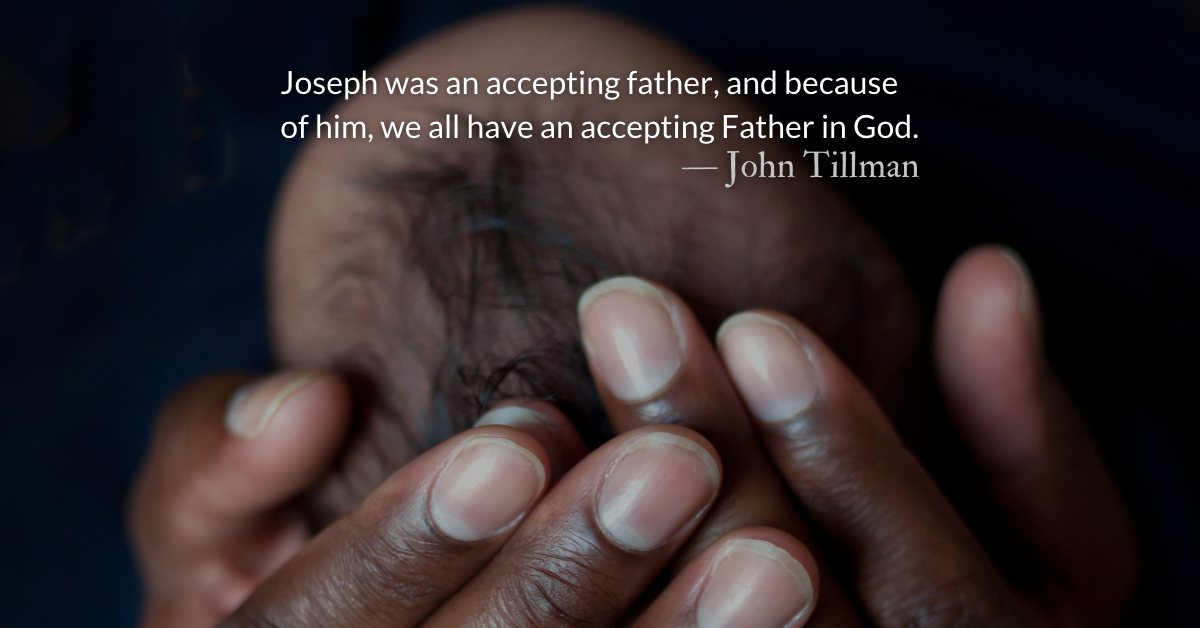
The “son of David,” Joseph, accepted The Son of David, Jesus, as his son. Because of this, we can be accepted by Jesus the Son of David as sons and daughters of God. Joseph was an accepting father, and because of him, we all have an accepting Father in God. Despite what we have done, God is merciful, accepting us as his children.

Divine Hours Prayer: The Greeting
I put my trust in your mercy; my heart is joyful because of your saving help. — Psalm 13.5

Today’s Readings
Genesis 40 (Listen 2:59
Matthew 1 (Listen 3:29)

Read more about Dream Like Joseph
May we pray and dream as Joseph did. For only with a spiritual connection can we do what we must as a part of our calling.

Support our Work
The Park Forum strives to provide short, smart, engaging, biblical content to people across the world for free with no ads. Please consider supporting our work.

Peace Amidst Chaos — Peace of Advent

Scripture Focus: Nehemiah 2.11-13; 16-18
​​11 I went to Jerusalem, and after staying there three days 12 I set out during the night with a few others. I had not told anyone what my God had put in my heart to do for Jerusalem. There were no mounts with me except the one I was riding on. 

13 By night I went out through the Valley Gate toward the Jackal Well and the Dung Gate, examining the walls of Jerusalem, which had been broken down, and its gates, which had been destroyed by fire. 

16 The officials did not know where I had gone or what I was doing, because as yet I had said nothing to the Jews or the priests or nobles or officials or any others who would be doing the work. 

17 Then I said to them, “You see the trouble we are in: Jerusalem lies in ruins, and its gates have been burned with fire. Come, let us rebuild the wall of Jerusalem, and we will no longer be in disgrace.” 18 I also told them about the gracious hand of my God on me and what the king had said to me. 

They replied, “Let us start rebuilding.” So they began this good work. 

Matthew 5.14-16
14 “You are the light of the world. A town built on a hill cannot be hidden. 15 Neither do people light a lamp and put it under a bowl. Instead they put it on its stand, and it gives light to everyone in the house. 16 In the same way, let your light shine before others, that they may see your good deeds and glorify your Father in heaven.

Reflection: Peace Amidst Chaos — Peace of Advent
By John Tillman

In the dark, Nehemiah dreams of peace.

Peace not only means the absence of conflict but the absence of chaos. In Nehemiah’s day, Jerusalem was not at war but was a chaotic shambles. Proverbs tells us that a city without walls is like a person with no self-control. (Proverbs 25.28) Walls provided defense from attack but also the dignity of control—control of identity, control of commerce, and control of destiny. The gate of the city represented all these things.

Instead of being surrounded by dignity, Jerusalem was surrounded by enemies. Sanballat was from the north in Samaria. Tobiah was from the east in Ammon. Geshem was from the southeast. These leaders held generational hatred of the Jews. Seeing them reestablish their Temple and worship was bad enough. Seeing Jerusalem reinforced with a wall was even worse. A rebuilt Jerusalem would disrupt their political and economic interests. In the midst of these enemies, God prepared a place of peace.

In modern life, a physical wall means little to our peace. Chaos flows into the devices in our pockets. Not many of us are at war, but many of us are surrounded by chaos instead of peace. 

We can build a spiritual wall of refuge around our minds and hearts that is reinforced with the stones of scripture and the mortar of prayer. Within those walls, we find in the darkness a table of light set before us. Surrounded by enemies, a chair of fellowship is pulled out for us to rest. 

In the 23rd Psalm, the psalmist described his shepherd, the God of Israel, as preparing a table of fellowship and provision in the midst of enemies. This is the kind of God we serve. This is also the nature of Jesus’ birth. He is born helpless amidst those who will try to kill him to stay in power. This is the kind of life Jesus lived. He wandered, homeless among those who twisted the law to steal widows’ homes.

The way Christ revealed himself to the world, a light shining in the darkness, is also the way we are to reveal him to the world. If we are to be, like Jerusalem, a city on a hill, then we must remember that Jesus is the ever-open gate through whom anyone can enter his peace.

To chaos and darkness, Jesus brings light and a place of peace. So may we all.

Divine Hours Prayer: The Request for Presence
May God be merciful to us and bless us, show us the light of his countenance and come to us.
Let your ways be known upon earth, your saving health among all nations. — Psalm 67.12

Today’s Readings
Nehemiah 2 (Listen 3:42)  
Revelation 11 (Listen 3:24)

Read more about Supporting Our Work
Our donors make this work ad-free and available without cost! Please consider becoming a one-time or monthly donor!

Read more about Peace from Strife
When you are constantly on edge from conflict, it is easy to expect the answer to your crisis will come in the form of a fight.