Doubt and Joy — Joy of Advent

Scripture Focus: Ezra 6:22
22 For seven days they celebrated with joy the Festival of Unleavened Bread, because the Lord had filled them with joy by changing the attitude of the king of Assyria so that he assisted them in the work on the house of God, the God of Israel.

Matthew 2:19-20
19 After Herod died, an angel of the Lord appeared in a dream to Joseph in Egypt 20 and said, “Get up, take the child and his mother and go to the land of Israel, for those who were trying to take the child’s life are dead.”

Reflection: Doubt and Joy — Joy of Advent
By Erin Newton

The eye of God was watching over the Israelites as they were threatened by local enemies. But I bet they were scared, anxious, and nervous. The older generation, the ones who wept at the sight of the temple foundation, carried the burdens of trauma. They remembered being forcibly taken from their land. They watched their cities be razed to the ground. The Babylonians attempted to remove their cultural identity.

The king who granted permission for them to rebuild was not the same king they appealed to now. They probably worried about how he would react. Would he honor the decision of a former king? Would he retaliate by creating a new, restrictive law? Would he ignore them?

God’s people had been through the valley of the shadow of death. They became prisoners of war when the Babylonians destroyed Judah. A foreign king terrorized their lives. Could they trust another king to be different?

Trauma sets a person on edge. It is easy to become hypervigilant and skeptical. Worst-case scenarios run through the mind. What might happen?

When Jesus was born, Herod pursued the newborn king with tyrannical fury. He didn’t hesitate to kill other children to get to Jesus. Mary and Joseph carried the weight of that moment. It was a time of anxiety and fear. What will God do?

Their relocation to Egypt was not permanent. God removed the threat through natural causes. Herod died. In a dream, God sent a messenger to tell them it was safe to go home.

Sometimes God works in miraculous ways. For the Israelites who were rebuilding the temple, the answer to their appeal to Darius was better than anyone expected. Permission to rebuild was confirmed but also expanded. God inclined the heart of Darius to fully fund the costs of construction and grant protection from any further interference. A feast of joy ensued.

God works through his creation. Sometimes the answer is time and waiting for change. God works through miracles. Sometimes the answer is a baby born of a virgin or a foreign king financing the construction of a temple he would never use.

Joy, at times, feels out of reach. We worry; we fear; we doubt. How can this all work out? Isn’t he supposed to be watching over us? The joy of Advent is wrestling with our questions and waiting for God to answer.

Divine Hours Prayer: The Refrain for the Morning Lessons
I will exalt you, O God my King, and bless your Name forever and ever. — Psalm 145.1

Today’s Readings

Ezra 6 (Listen 4:24
Revelation 5 (Listen 2:39)

Read more about Supporting Our Work
For the same amount you spend per month on streaming content, you can support ad-free biblical content throughout the year.

Read more about One Worth Rejoicing In — Joy of Advent
The Lord is coming, who is our source of victory and joy. We are waiting for him and he is searching for us.
Peril and Joy — Joy of Advent

Scripture Focus: Ezra 5:5
5 But the eye of their God was watching over the elders of the Jews, and they were not stopped until a report could go to Darius and his written reply be received.

Matthew 2:10-12
10 When they saw the star, they were overjoyed. 11 On coming to the house, they saw the child with his mother Mary, and they bowed down and worshiped him. Then they opened their treasures and presented him with gifts of gold, frankincense and myrrh. 12 And having been warned in a dream not to go back to Herod, they returned to their country by another route.

Reflection: Peril and Joy — Joy of Advent
By Erin Newton

The foundations of the temple were laid, and a mix of joy and grief resided over the people. As soon as they set out to do the work of God, they were met with resistance. Enemies of Judah and Benjamin bribed officials to frustrate their plans (Ezra 4.4-5). They accused the Israelites of dishonoring King Artaxerxes (Ezra 4.14). The work was stalled. But God would not be hindered.

Haggai and Zechariah, two prophets, called the people to return to their work. Despite the support from the prophets, they were met with more resistance. A local governor questioned their right to rebuild. Eager to bring punishment, he took names. But the eye of their God was watching over them.

The work of God can be dangerous. It can be unpopular. Motives can be questioned. Efforts can be confounded.

When the Magi came to visit Jesus, they were filled with the joy of his advent. Joy brimmed over. Overjoyed, they were face to face with God. They worshiped Jesus and offered their gifts. But the eye of God was watching over them. They were warned in a dream not to return to Herod. Herod, enraged with power and jealousy, soon called for the murder of every infant boy in Bethlehem.

But the eye of God was watching over them. Another warning was given and Joseph and Mary fled with infant Jesus to Egypt.

The Magi could have returned to Herod and faced his interrogation. Mary and Joseph could have stayed in Bethlehem and faced the executioner. The Israelites were face to face with authorities who wanted to stop the temple rebuilding and didn’t hesitate to take names.

The road to worshiping God can be dangerous. Being faithful to God’s call is like following a path with hills and valleys and perils. Our brothers and sisters around the world face greater threats than some of us will ever know. All because they seek to worship God.

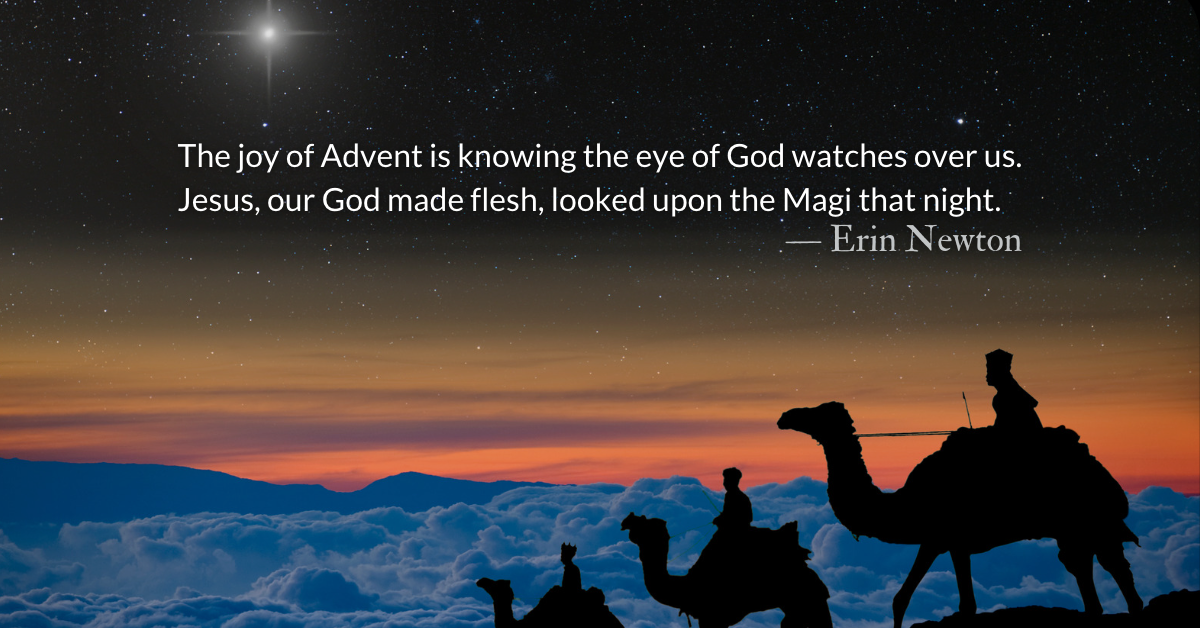
The joy of Advent is knowing the eye of God watches over us. Jesus, our God made flesh, looked upon the Magi that night. The same God who had watched over the Israelites in Jerusalem. The same God who sent a messenger to warn Joseph. The same God who sees you now.

As we reflect upon Advent this year, consider how he watches over us. “The Lord will watch over your coming and going both now and forevermore” (Psalm 121.8).

Divine Hours Prayer: The Greeting
My lips will sing with joy when I play to you, and so will my soul, which you have redeemed. — Psalm 71.23

Today’s Readings
Ezra 5 (Listen 3:02
Revelation 4 (Listen 2:09)

Read more about Supporting Our Work
Donor-supported content > Ad-supported content. Especially when it’s biblical content. Donate to support biblical content with no ads and no agendas.

Read more about The Exodus and The Return
The testimony of Ezra tells us that kings come and go, but it is the Lord who is our only hope and protector.

Grief and Joy — Joy of Advent

Scripture Focus: Ezra 3:11b-13
11b And all the people gave a great shout of praise to the Lord, because the foundation of the house of the Lord was laid. 12 But many of the older priests and Levites and family heads, who had seen the former temple, wept aloud when they saw the foundation of this temple being laid, while many others shouted for joy. 13 No one could distinguish the sound of the shouts of joy from the sound of weeping, because the people made so much noise. And the sound was heard far away.

Matthew 2:16-18
16 When Herod realized that he had been outwitted by the Magi, he was furious, and he gave orders to kill all the boys in Bethlehem and its vicinity who were two years old and under, in accordance with the time he had learned from the Magi. 17 Then what was said through the prophet Jeremiah was fulfilled:

18 “A voice is heard in Ramah,
    weeping and great mourning,
Rachel weeping for her children
    and refusing to be comforted,
    because they are no more.”

From John: Advent has parallels in many parts of scripture. We look forward this week to Erin’s reflections comparing the return of the exiles in Ezra to the truths of Christ’s coming at Christmas and to his second Advent which we also look forward to at this time of year.

Reflection: Grief and Joy — Joy of Advent
By Erin Newton

What if Christmas is not the greatest time of the year? What if there is nothing merry?

The holidays are marked by stress, depression, and anxiety. For Christians, it is a perplexing mix: joy for Jesus’ birth and the painful reality that December 25 does not end all sorrow.

As we read through Ezra, the Israelites return to the Promised Land. Exile was over. The temple, however, was in ruins. God’s dwelling place was a pile of rubbish.

The people set out to rebuild the temple, albeit in a more humble and meager size. When the foundations were laid, the response was mixed. The younger crowds rejoiced with praise and jubilation. The older crowds wept with grief.

For these older travelers, the journey has been traumatic and painful. In decades gone by, they had filled their hearts with dreams of a happy future. Solomon’s Temple, the first temple now in ruins, was majestic and praiseworthy. But all those dreams were cut down. Their lives had become beacons of pain and loss.

Yes, this new temple was worth celebrating but even this happy moment was a reminder of their grief.

Advent, too, holds both pain and joy.  Like those who would come to a pile of rubbish to worship God, the Magi visited the incarnate deity in a humble home. It was a time of celebrating and worshiping the newborn king.

Words of praise and joy were likely heard that night when the Magi came to visit. This new foundation had been laid. Not just a place to meet with God. But now it would be God with us!

Mary would cherish the honor and privilege of raising Jesus and caring for his mortal body. But other mothers would weep. Although Jesus had come, the world was still pierced with darkness. Herod’s pride would cause the death of innocent children and the grief of their parents.

We know that the season of Advent is a time to rejoice. We try to be happy. Holidays sometimes include a newly empty seat at the table. Sometimes the phone is silent because of severed relationships. Sometimes the financial burden of the holidays makes for a meager and sparse Christmas.

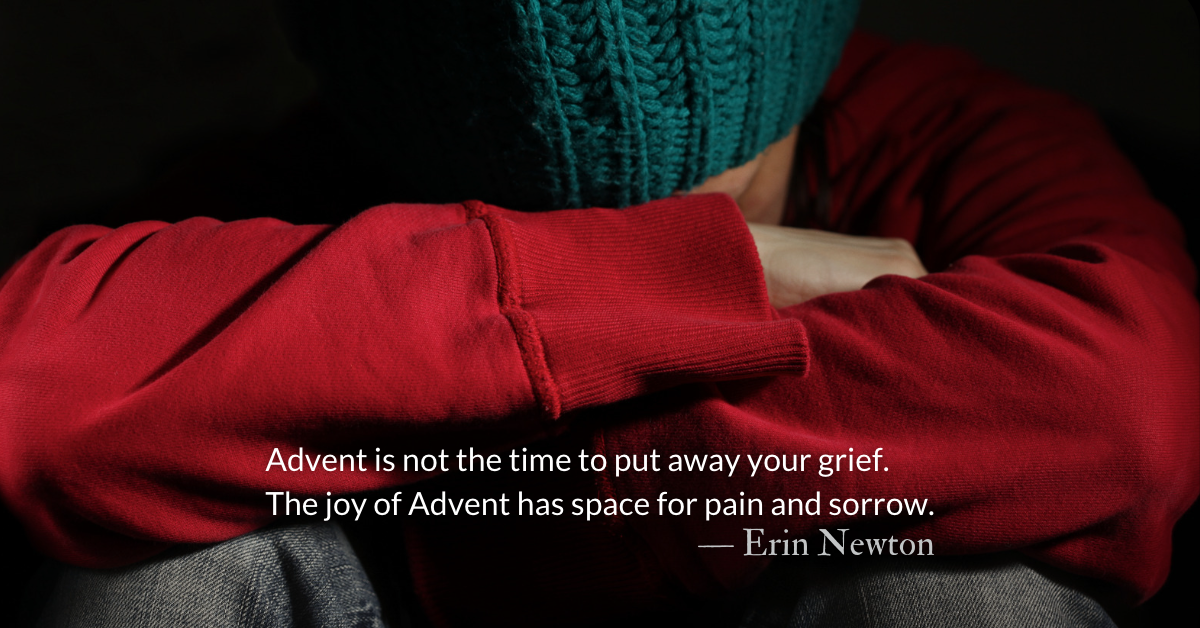
Advent is not the time to put away your grief. The joy of Advent has space for pain and sorrow. May we let the sound of joy and grief collide into one voice to our God.

Divine Hours Prayer: The Refrain for the Morning Lessons
On this day the Lord has acted; we will rejoice and be glad in it. — Psalm 118.24

Today’s Readings
Ezra 4 (Listen 4:27
Revelation 3 (Listen 3:53)

Read more about Supporting Our Work
God works in the world through Christians changed by the Bible. Help us provide free biblical content with no ads and no agendas.

Read more about It Came Upon The Midnight Clear — Carols of Advent Peace
Sears suffered from illness, depression, and an eventual breakdown…In the aftermath of his personal struggles, he wrote “It Came Upon the Midnight Clear”

O Come, O Come, Emmanuel — Carols of Advent Hope

Scripture Focus: Hebrews 10:5-7
5 Therefore, when Christ came into the world, he said:
“Sacrifice and offering you did not desire,
    but a body you prepared for me;
6 with burnt offerings and sin offerings
    you were not pleased.
7 Then I said, ‘Here I am—it is written about me in the scroll—
    I have come to do your will, my God.’”

Isaiah 7:14
Therefore the Lord himself will give you a sign: The virgin will conceive and give birth to a son, and will call him Immanuel.

Matthew 1:20-23
20 But after he had considered this, an angel of the Lord appeared to him in a dream and said, “Joseph son of David, do not be afraid to take Mary home as your wife, because what is conceived in her is from the Holy Spirit. 21 She will give birth to a son, and you are to give him the name Jesus, because he will save his people from their sins.”

22 All this took place to fulfill what the Lord had said through the prophet: 23 “The virgin will conceive and give birth to a son, and they will call him Immanuel” (which means “God with us”).

Reflection: O Come, O Come, Emmanuel — Carols of Advent Hope
By Jon Polk

Somewhere across Italy in the 6th century, a series of Latin chants for the season of Advent began to take shape. By the 8th century, these chants, the “O Antiphons,” were being sung in monasteries and convents around the world.

For over twelve centuries, the seven “O Antiphons,” known also as the “Great Advent Antiphons” or more simply, the “Great Os,” have been sung or recited at vespers from December 17th through 23rd, preceding the “Magnificat of Mary” sung on Christmas Eve.

Around the 12th century, the chanted antiphons were converted into a metrical Latin poem bearing the title, “Veni, Veni, Emmanuel.” This hymn was discovered and translated into English by John Mason Neale in 1851, published in his Hymns Ancient and Modern as “O Come, O Come, Emmanuel.”

The original “O Antiphons” consist of seven passages focused on the meaning of the Incarnation. As might be expected from a series of monastic chants, the resulting hymn is theologically dense, each verse consisting of a Messianic title from scripture with additional explanation.

O Sapientia (Wisdom)
1 Cor. 1:24, “Christ… the wisdom of God”

O come, Thou Wisdom from on high,
And order all things, far and nigh

O Adonai (Lord)
Ex. 3:15, “The LORD, the God of your fathers”

O come, Adonai, Lord of might,
Who to Thy tribes, on Sinai’s height

O Radix Jesse (Root of Jesse)
Isa. 11:10, “the Root of Jesse will stand”

O come, Thou Rod of Jesse, free
Thine own from Satan’s tyranny

O Clavis David (Key of David)
Isa. 22:22, “the key to the house of David”

O come, Thou Key of David, come
And open wide our heav’nly home

O Oriens (Dayspring)
Luke 1:78, “the dayspring from on high” (KJV)

O come, Thou Dayspring, from on high,
And cheer us by Thy drawing nigh

O Rex Gentium (King of the Nations)
Jer. 10:7, “King of the nations” 

O come, Desire of nations, bind
All peoples in one heart and mind

O Emmanuel (God with Us)
Isa. 7:14, “The virgin… will call him Immanuel.”

O come, O come, Emmanuel,
And ransom captive Israel

The first letters of the titles in reverse is an acrostic of the Latin, “ero cras,” meaning “I will be there tomorrow,” a sentiment appropriate for Advent as we await the return of Christ.

Before we rush into the joyful exuberance of the Christmas season, distracted by parades, pageants, and presents, the calm and quiet “O Come, O Come” reminds us that all the trimmings and trappings of the season are temporary. Our true hope and longing is for another Kingdom where the coming Messiah King soothes our doubts, heals our afflictions, wipes our sorrowful tears, and rescues us from captivity to sin.

Rejoice! Rejoice! Emmanuel
Shall come to thee, O Israel.

Listen: O Come, O Come Emmanuel by Sixpence None the Richer
Read: Lyrics from Hymnary.org

From John: I was excited to see Jon writing on the O Antiphons since I was only introduced to them last year when the church I attend used them as the focus of our Advent season. You can check out more info about them on our church’s website, including a video explaining their history, sermons from last year, and pictures of an art gallery focused on the O Antiphons. (You can even spot me and my wife, Melissa, looking at the art in the gallery.)

Divine Hours Prayer: The Small Verse
Keep me, Lord, as the apple of your eye and carry me under the shadow of your wings.

Today’s Readings
Daniel 12 (Listen 2:40)
Hebrews 10 (Listen 5:33)

Read more about Supporting Our Work
We believe Christians, changed by the Bible, will change the world. We need your help to provide biblical content for free with no ads and no agendas.

Read more about One Worth Rejoicing In
Leaders…shrivel before our eyes like a diseased root…but there is a leader coming, the “Root of David”, who will set all things right.

Truth That Surpasses the Legend

Scripture Focus: 1 Kings 10.1-7
1 When the queen of Sheba heard about the fame of Solomon and his relationship to the Lord, she came to test Solomon with hard questions. 2 Arriving at Jerusalem with a very great caravan—with camels carrying spices, large quantities of gold, and precious stones—she came to Solomon and talked with him about all that she had on her mind. 3 Solomon answered all her questions; nothing was too hard for the king to explain to her. 4 When the queen of Sheba saw all the wisdom of Solomon and the palace he had built, 5 the food on his table, the seating of his officials, the attending servants in their robes, his cupbearers, and the burnt offerings he made at the temple of the Lord, she was overwhelmed. 
6 She said to the king, “The report I heard in my own country about your achievements and your wisdom is true. 7 But I did not believe these things until I came and saw with my own eyes. Indeed, not even half was told me; in wisdom and wealth you have far exceeded the report I heard.

Matthew 12.42
42 The Queen of the South will rise at the judgment with this generation and condemn it; for she came from the ends of the earth to listen to Solomon’s wisdom, and now something greater than Solomon is here.

Reflection: Truth That Surpasses the Legend
By John Tillman

Solomon, with no enemies of consequence, settled in the peace established by his father, had great opportunity, great wealth, and was blessed with great wisdom. Using these gifts, he pursued God through the building of the temple. He also pursued answers to life’s great questions, as cataloged in Ecclesiastes.

Solomon, like many leaders, eventually fell into corruption, however, for a time, he was a great influence on the world. He was a legend in his own time. There are many legends of ruthless, rich, and powerful kings. Solomon’s legend, in contrast, was about “his relationship with the Lord.” 

The Queen of Sheba came to evaluate that legend. Like any noble visitor, the queen carried expensive gifts, but the most precious cargo to her was an exacting examination of puzzles and riddles. A doubter, she debated with Solomon, attended banquets, and observed his worship at the Temple.

It is likely that people we know have big and difficult questions about faith. We may feel queasy about people’s questions. We aren’t Solomon’s equal in any realm, much less that of wisdom. What if we don’t know the answers?

We don’t need to fear questions, even if we don’t know the answers. Someone greater than Solomon is here with us—Jesus.

Every time Jesus mentions Solomon, it’s to point out something greater than Solomon. A flower’s glamour exceeds Solomon’s robes and the wisdom of Jesus’ teaching exceeds that of Solomon.

We may not be as widely known as Solomon, as wealthy, or as wise. But followers of Christ have some commonalities with Solomon. Because of Christ, we are settled at peace with God the Father. We have no enemies of consequence who can break through his protection. We are blessed through the Holy Spirit with the wealth and wisdom of Christ. His mind, his love, and his wisdom are accessible to us. Using these gifts we can pursue God, serving and worshiping him in the temple of our bodies and that of the universal church. We also can proclaim that answers to life’s great questions are found through Christ in the Bible.

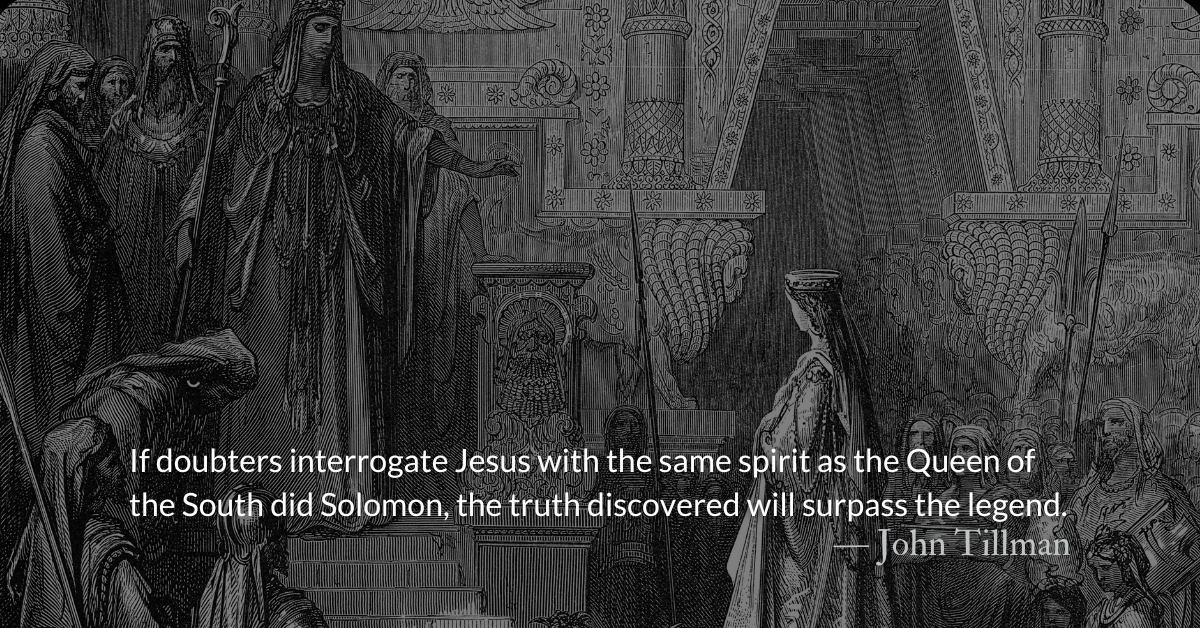
Accept unbelievers’ questions as precious gifts. When they express doubts, honor and respect their vulnerability. Humbly admit your own doubts or ignorance. Speak of Jesus—encourage them to seek him. If doubters interrogate Jesus with the same spirit as the Queen of the South did Solomon, the truth discovered will surpass the legend.

From John: A ministry I have become familiar with in the past couple of years that welcomes doubters and their questions as precious gifts is called Alpha. During the pandemic (when we had to do them on Zoom) I helped with launching the first Alpha courses at the church I attend and our church is still hosting them in person and now off-site in the community with great success. If you are in the DFW area, check out my church’s Alpha and if not, find one near you to attend and invite your doubtful friends to attend with you.

Divine Hours Prayer: The Greeting
I will confess you among the peoples, O Lord; I will sing praises to you among the nations.
For your loving-kindness is greater than the heavens, and your faithfulness reaches to the clouds. — Psalm 108-3-4


– From The Divine Hours: Prayers for Summertime by Phyllis Tickle.

Today’s Readings*
Ezekiel 7(Listen 4:32)
Romans 10(Listen 3:21)

This Weekend’s Readings
Ezekiel 8(Listen 3:21)Romans 11(Listen 5:23)
Ezekiel 9(Listen 2:05)Romans 12(Listen 2:58)

*We have diverted into 1 Kings and Ephesians for this week. Devotionals on our daily readings will continue next week.

Read more about Solomon’s Folly
None of us are Solomon but…Any of us can apply a God-given skill, like wisdom, in a foolish and sinful way.

Read more about God of the Weak and Doubtful
You who doubt… He calls. He loves. He holds out his hand, and trusts the gospel, to all of us doubters.