Waves of Mercy

Scripture Focus: Jonah 1.4-6
4 Then the Lord sent a great wind on the sea, and such a violent storm arose that the ship threatened to break up. 5 All the sailors were afraid and each cried out to his own god. And they threw the cargo into the sea to lighten the ship.
But Jonah had gone below deck, where he lay down and fell into a deep sleep. 6 The captain went to him and said, “How can you sleep? Get up and call on your god! Maybe he will take notice of us so that we will not perish.”

Matthew 8.24-26
24 Suddenly a furious storm came up on the lake, so that the waves swept over the boat. But Jesus was sleeping. 25 The disciples went and woke him, saying, “Lord, save us! We’re going to drown!”
26 He replied, “You of little faith, why are you so afraid?” Then he got up and rebuked the winds and the waves, and it was completely calm.

Reflection: Waves of Mercy
By Erin Newton

Jonah is the story of the “scandal of God’s mercy” (William Brown). As a prophet during the reign of Jeroboam II, Jonah was sent to Nineveh to preach repentance. The Assyrian kingdom was notorious for their warfare and ruthless tactics. Ancient depictions from statues and reliefs show actions that would be considered war crimes today. It is no wonder Jonah wished for their judgment rather than their repentance.

On his path to avoid bringing peace to his enemy, Jonah finds himself aboard a ship tossed about by the chaotic sea. Turbulent waters are referenced on a number of occasions to highlight the presence of unrestrained chaos, threatening uncertainty, and the frailty of humanity. God let loose the waves around Jonah’s boat and the people were terrified. Jonah is fast asleep, oblivious to the threats and pleas of the crew around him. When he is woken up, they beg him to join in praying to any deity who will save them from their peril.

The mercy of God is shown in the calming of the storm once Jonah is thrown into the sea. The prophet, a unique chosen person by God, should have been the blessed recipient of God’s grace. Instead, he is swallowed by a fish entering into days of darkness (perhaps even death). The sailors, on the other hand, experience the immediate relief of chaos.

Another man was found sleeping in a boat during a violent storm at sea. When Jesus’ disciples were filled with terror at the possibility of their boat capsizing and drowning at sea, they made similar pleas as we see in Jonah 1. With a word, the waves are restrained and the waters are stilled. Jesus is not thrown overboard but would soon enter into days of darkness and death. This “sign of Jonah” would bring salvation to the enemies of God.

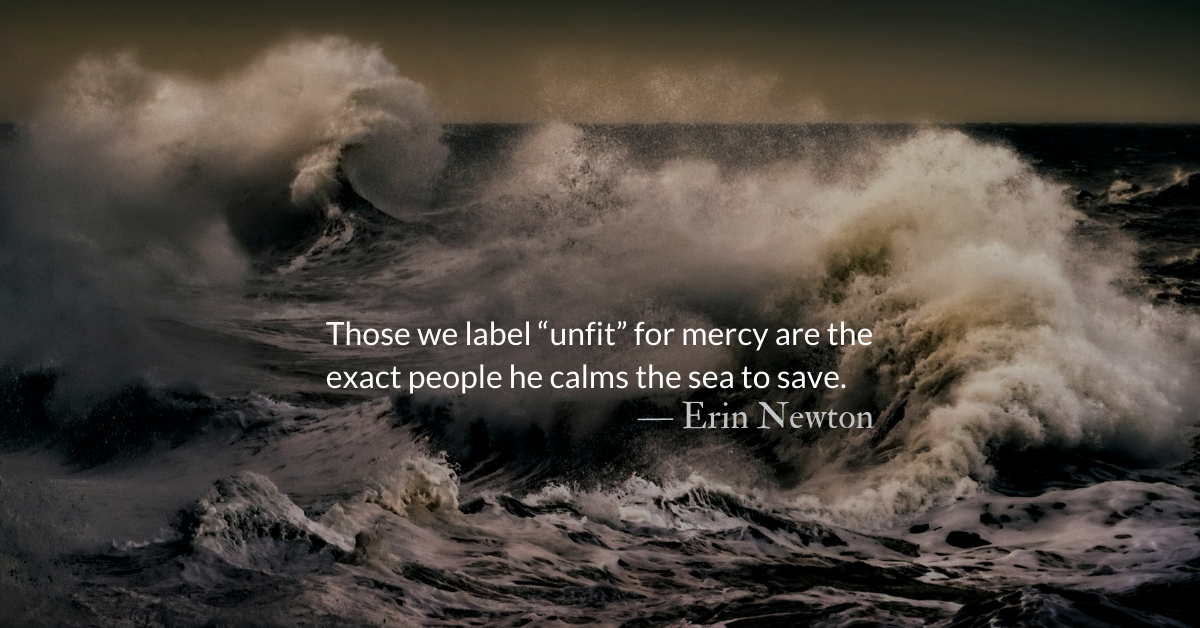
While the book of Jonah highlights the reluctance of a prophet to bring good news to a people he considered unworthy, the larger message is the scope of God’s mercy. It is a story about how we all wish to see vengeance and justice in our time. Yet, if we read the story with eyes focused only on humanity, we miss the far more important truth about God. He loves those we find repulsive. Those we label “unfit” for mercy are the exact people he calms the sea to save.

Divine Hours Prayer: The Refrain for the Morning Lessons
The Lord is near to those who call upon him, to all who call upon him faithfully. — Psalm 145.19

Today’s Readings
Jonah 1 (Listen – 2:29)
John 13 (Listen – 5:06)

Read more about The Sign of Jonah and The Cross
Jonah’s emotional path is like a photo negative of Christ’s.

Read more about Prayer for Older Brothers
God, your mercy is a mystery to me.
I see the sins of others and I am scandalized.
How could such a one be accepted?
Beyond Selfish Thankfulness

Jonah 1.1-3
The word of the Lord came to Jonah son of Amittai: “Go to the great city of Nineveh and preach against it, because its wickedness has come up before me.”

Reflection: Beyond Selfish Thankfulness
By John Tillman

On a day of Thanksgiving we take a brief look at a selfish prophet—Jonah.

Jonah was a prophet of national status. Second Kings tells us that Jonah prophesied that God would restore Israel’s borders through Jeroboam II, Israel’s longest reigning and most outwardly successful king. However, Jeroboam II was an evil king who maintained the evil practices of the kings before him, and the Bible is clear that God saved Israel at this time for the sake of his name and because of the suffering of the people, and not due to Jeroboam’s repentance, leadership, or greatness.

Jonah was likely thankful for God’s mercy on his own country and people, despite their evil leadership. But then, Jonah is called to prophesy to another evil nation. Nineveh was the capital of the Assyrian empire that had been threatening and oppressing the northern kingdom of Israel for years.

And Jonah ran. He ran not to avoid God’s punishment for his sins, but to avoid being the instrument of God’s mercy for others’ sins. Jonah thought he could selfishly carry God’s mercy away.

A God who does not treat us as we deserve is also a God who often does not treat our enemies as we might feel they deserve. It is hard to be thankful for God’s mercy to others. We’d more often, like Jonah, set up a watch party to view their destruction.

Jonah’s only moment of thankfulness is one of selfishness. He is thankful for the plant that shades him from the burning sun. But he is scornful of God’s mercy that shaded Nineveh from God’s burning anger.

We too often, like Jonah, feel responsible that those who have wronged us should not “get away with it.” But in God’s timing, nothing goes unpunished. Assyria eventually suffered all the destruction and punishment their evil practices deserved. But in this moment, mercy was offered, and mercy was accepted. And Jonah had to learn to be thankful for it.

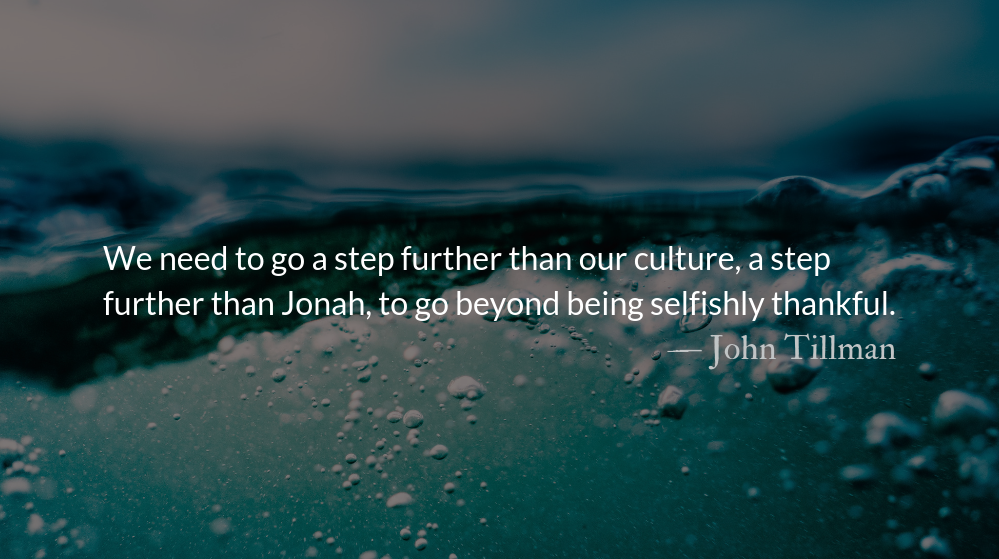
It is wonderful to have a national holiday focused on thankfulness. But we need to go a step further than our culture, a step further than Jonah, to go beyond being selfishly thankful.

May we be selflessly thankful for the mercy that God may choose to display even to those who we deem unworthy.
May we be thankful to be agents of forgiveness to those who do not know their right hand from their left.

Prayer: The Call to Prayer
Come, let us bow down, and bend the knee, and kneel before the Lord our Maker. For he is our God, and we are the people of his pasture and the sheep of his hand.  — Psalm 95:6-7

– Prayer from The Divine Hours: Prayers for Autumn and Wintertime by Phyllis Tickle.

Prayers from The Divine Hours available online and in print.

Today’s Readings
Jonah 1 (Listen – 2:29)
Luke 6 (Listen – 6:46)

Additional Reading
Read More about Resisting in Faith
Daniel embraces civility and service to his enemies. Daniel embraced civility even when he was under the direct threat of death.

Read More about Face Like Flint :: A Guided Prayer
In what ways are we willing to accept victory with Christ but not suffering? Where do we reach for our swords, when Christ calls out, “No more of this!”…and heals the one we would attack? Are we willing to heal our enemies?

Support our Work
Each month over 22,000 Park Forum email devotionals are read around the world. Support our readers with a monthly or a one time donation.

Show Buttons
Hide Buttons
Spur a spiritual rhythm of refreshment right in your inbox
By joining this email list you are giving us permission to send you devotional emails each weekday and to communicate occasionally regarding other aspects of the ministry.
100% Privacy. We don't spam.