
Mistakes for Good? — Readers’ Choice

Scripture Focus: Genesis 48:17-19
17 When Joseph saw his father placing his right hand on Ephraim’s head he was displeased; so he took hold of his father’s hand to move it from Ephraim’s head to Manasseh’s head. 18 Joseph said to him, “No, my father, this one is the firstborn; put your right hand on his head.”
19 But his father refused and said, “I know, my son, I know. He too will become a people, and he too will become great. Nevertheless, his younger brother will be greater than he, and his descendants will become a group of nations.”

Originally published on February 15, 2023, based on readings from Genesis 48.

Readers’ Choice posts are selected by our readers:
Brian, Washington D.C. — Thanks for this reflection and your beautiful perspective. After years of thinking about what happened to the church where I worked…I have come to these conclusions: The Lord used the destruction of this congregation to scatter anointed lay people to other churches that needed fresh ideas and new gifts…And I learned about the grace of our Lord who loved the man who brought the damage. The Lord allowed him to learn and now he is a humble servant…And I learned about the grace of God for me, as I was filled with anger and judgment…God allowed me to see what He was doing so that I could gain wisdom and patience. God is good.

Reflection: Mistakes for Good? — Readers’ Choice
By Erin Newton

God can take something meant for evil and make it work for good. But what about mistakes? Can God take a human mistake and use it for good?

As Jacob lays on his deathbed, Joseph brings his two sons to see their dying grandfather. Jacob blesses the boys with promises given to his own sons. But the grandsons are blessed out of order! Ephraim, the younger, is given the elevated blessing, a firstborn’s portion. Manasseh, the oldest, is blessed as a second-born.

Jacob is blind, and Joseph assumes his crossed arms were an accident. Jacob continues by granting Ephraim the greater blessing.

Joseph only sees a mistake being made. (He even tries to jump in to correct his father.) He bases his assumptions on how things ought to be. He has done everything right, reconciled with his brothers, and visited his ailing father. This should be a straightforward situation; nothing can go wrong.

Like the story of Joseph’s enslavement and deportation to Egypt, God worked through situations that looked hopeless or bound for misery. We are accustomed to looking at tragedies and preaching to our hearts that God can work something good out of them. But what about things that look haphazard? What about the events that look like someone messed up? 

The text never really indicates if God divinely inspired Jacob to switch the blessing order or if a mistake was made that Jacob accepted. The blessing was done, and the results could not be changed.

How many times do we look at a situation and assume that someone has made a mistake? If it’s a small thing, we don’t give it a second thought. But what about the big mistakes—the doctor who missed a diagnosis, the airline that lost your luggage, the distracted driver that hit your car, or the cashier who overcharged you?

When these things happen, we fault the person for making a mistake. We think, “If only they had done it right, I wouldn’t be suffering right now!” We cling to an “if-only” faith.
Jesus was blamed for an “if-only” scenario. “If only you had been here, Lazarus would not have died” (John 11.32).

It is easier to blame someone for making a mistake rather than trusting God to work among errors. God works through perceived irregularities. Think of the “if-only” times in your life. Hear God say, “I know, son, I know.”


Divine Hours Prayer: The Call to Prayer
Come and listen, all you who fear God, and I will tell you what he has done for me. — Psalm 66.14


– From The Divine Hours: Prayers for Summertime by Phyllis Tickle.

Today’s Readings
1 Samuel 21-22 (Listen 6:35)
Revelation 2 (Listen 4:59)

Read more about Supporting Our Work
Our donors support ad-free content that brings biblical devotionals to inboxes across the world. Please consider joining them.

Read more about Becoming a Blessing
Our broken world seeks righteousness.
Bring it through us.
Our lost world seeks truth.
Speak it through us.
Urban Legends and Good Shepherds — Readers’ Choice

Scripture Focus: John 10.11-15
11 “I am the good shepherd. The good shepherd lays down his life for the sheep. 12 The hired hand is not the shepherd and does not own the sheep. So when he sees the wolf coming, he abandons the sheep and runs away. Then the wolf attacks the flock and scatters it. 13 The man runs away because he is a hired hand and cares nothing for the sheep.

14 “I am the good shepherd; I know my sheep and my sheep know me—15 just as the Father knows me and I know the Father—and I lay down my life for the sheep.

Originally published on January 10, 2023, based on readings from John 10.

Readers’ Choice posts are selected by our readers:
Barbara, Tennessee — Wow, thank you, John! That is a terrible legend that I thought was legit animal husbandry! And it was taught to us by manipulative shepherds. Some of our adult children are still in need of the Lord for healing.

Brian, Washington D.C. — Thank you for this remarkable reflection. Such a good word for me today.

Jon, Hong Kong/TX — This is a nice piece. I think I may have been the one who told you it was Eddie Van Halen. At least, that was the story that I used to pass around as well.

Reflection: Urban Legends and Good Shepherds — Readers’ Choice
By John Tillman

In the 90s, listening to Phil Keaggy, I heard a story from a friend.

“Phil’s the world’s greatest guitarist. One night, on Johnny Carson, Jimi Hendrix was asked, ‘What’s it like to be the world’s greatest guitarist?’ He said, ‘I don’t know. Ask Phil Keaggy.’”

“So cool,” I thought at the time. I spread the tale often as I shared my love of Phil Keaggy.

Years later I heard another Keaggy fan begin the same story. I was shocked when, instead of Jimi Hendrix, it was Eddie Van Halen on the talk show. Every other detail was identical. My heart fell. I realized the stories weren’t true.

To put it kindly, they were urban legends. To be more direct, they were lies. Lies I had spread over and over. I felt sick and angry. My friends and I had been duped.

Worse than urban legends about guitarists are urban legends about God. Recently, I was reminded of an old “preacher story” about shepherds and lambs.

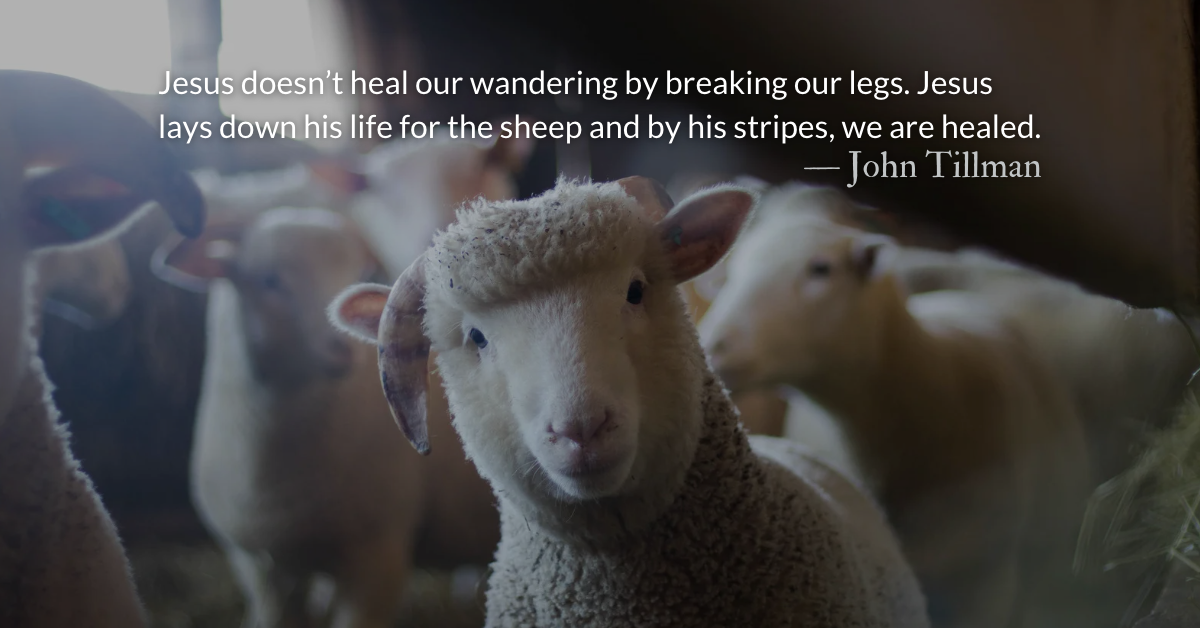
Supposedly, a shepherd would break a wandering lamb’s leg and carry it as the leg healed. By caring for the lamb and holding it close, it would bond with him and never wander again. This act of “tough love” allegedly explained how God wounds us to keep us close to him. Authoritative and abusive leaders have used this metaphor to justify “wounding” parishioners with “tough love” because they are “good shepherds.”

To put it kindly, this metaphor is a myth—a “rural legend” instead of an “urban” one. To be more direct, it is a lie. Nowhere in records of animal husbandry or the Bible is there a description of shepherds breaking the legs of sheep in this way. Worse than damaging our understanding of human shepherds, this story damages our understanding of Jesus, the true good shepherd.

Don’t be duped into thinking that Jesus treats his sheep in this way. Abusive “hired hands” may wound their sheep or leave them unprotected from the wolves. But Jesus, the good shepherd, rushes in to face the wolf.

Jesus doesn’t heal our wandering by breaking our legs. Jesus lays down his life for the sheep and by his stripes, we are healed. Jesus’ body is broken for his sheep, and by him we are whole.

You may have been wounded by a foolish or wicked shepherd. But you can still be healed by Jesus, the good shepherd.

Music: “Jesus Is The Great Shepherd” from Live From Lawrence, Kansas (November 1974) by Phil Keaggy and Paul Clark

Divine Hours Prayer: The Greeting
O God, you have taught me since I was young, and to this day I tell of your wonderful works. — Psalm 71.17

– From The Divine Hours: Prayers for Summertime by Phyllis Tickle.

Today’s Readings
1 Samuel 20 (Listen 6:3)
Revelation 1 (Listen 1:51)

Read more about Tendencies of Unfaithful Shepherds
May we, and our shepherds be more like Jesus. May we seek and support earthly shepherds like him.

Read The Bible With Us
It’s never too late to join our Bible reading plan. Immerse in the Bible with us at a sustainable, two-year pace.

https://mailchi.mp/theparkforum/m-f-daily-email-devotional

Timbrels to Tears — Readers’ Choice

Scripture Focus: Judges 11.34-40
34 When Jephthah returned to his home in Mizpah, who should come out to meet him but his daughter, dancing to the sound of timbrels! She was an only child. Except for her he had neither son nor daughter. 35 When he saw her, he tore his clothes and cried, “Oh no, my daughter! You have brought me down and I am devastated. I have made a vow to the LORD  that I cannot break.”

Originally published on July 28, 2023, based on readings from Judges 11.

Readers’ Choice posts are selected by our readers:
Erin, Texas — I appreciated the focus on the daughter’s faithfulness and how the community honored her despite her father’s hasty decision. It is a reminder of the goodness of God to look upon the vulnerable and those who are victims of others’ destructive decisions.

Reflection: Timbrels to Tears — Readers’ Choice
By Liz Daye
In a moment, everything changed. What was supposed to be a celebration, transformed into anguish. “Why?!” Jephthah lamented, tearing his clothes in grief. “My daughter, you have brought me disaster. You are the cause of my ruin!” Why did his daughter have to run out the front door and, in his words, ruin everything? He had crafted a plan, after all. If God granted him victory in battle, Jephthah vowed to offer the next thing that came out of his home as a sacrifice.

But who exited first? His only daughter.

Jephthah idolized the outcome of his victory. And I wonder what if instead of keeping his awful vow, Jephthah repented making it in the first place? Repentance framed by grace is an invitation that is always available. Jephthah missed it because of his own pride and fear. As I ponder Jephthah’s story, I can’t help but recall the times I have also attempted to negotiate with God for what I thought was a really good reason, whilst leaving God out of the conversation entirely.

Yet throughout Jephthah’s idolatrous plotting and failure to consider the possibility of her presence, God was noticeably silent. God never signed off on any of this mess. May this remind us that our faith is not a formula, nor is faithfulness a series of divine negotiations that we can manipulate to somehow land in our favor. What if faith is always an invitation towards humility and grace? 

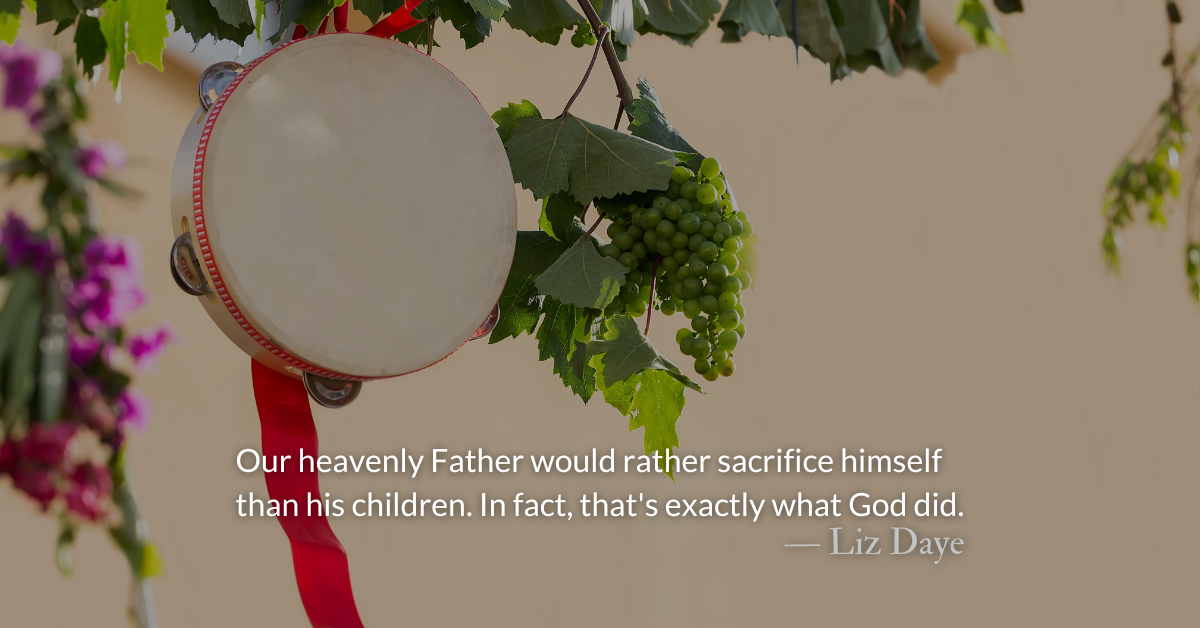
And had Jephthah consulted God before making that vow, he would have remembered that God is in control, but not controlling. God is “gracious and merciful, slow to anger and abounding in steadfast love;” love for Israel, for Jephthah, and for his daughter. And even after, repentance is always an option. Repentance is always available. Had repentance been present in this story, it bears wondering, how could it have altered the trajectory? But even here, we don’t have to wonder what God is like. Our heavenly Father would rather sacrifice himself than his children. In fact, that’s exactly what God did.

Like Miriam in the desert, Jephthah’s unnamed daughter was a timbrel towing prophetess. The daughters of Israel honored her legacy, rather than Jephthah’s. This annual remembrance points to a God who does not sign off on the sins we commit against one another, regardless of the skillfulness of our theological gymnastics. For God loves to lift the lowly.


Divine Hours Prayer: The Call to Prayer
Know this: The Lord himself is God; he himself has made us, and we are his; we are his people and the sheep of his pasture. — Psalm 100.2

– From The Divine Hours: Prayers for Summertime by Phyllis Tickle.


Today’s Readings
1 Samuel 17 (Listen 8:59)
1 John 5 (Listen 3:00)

This Weekend’s Readings
1 Samuel 18 (Listen 4:30), 2 John (Listen 1:50)
1 Samuel 19 (Listen 3:43), 3 John (Listen 1:51)

Read more about Supporting Our Work
For less than a streaming subscription, you can support ad-free content that brings biblical devotionals to inboxes across the world. Please join our donors

Read more about Rulers with Borrowed Scepters
Jesus is the king we are waiting for—every other ruler is using a borrowed scepter.

Time Tested Devotion — Readers’ Choice

Scripture Focus: Colossians 4.2-6
2 Devote yourselves to prayer, being watchful and thankful. 3 And pray for us, too, that God may open a door for our message, so that we may proclaim the mystery of Christ, for which I am in chains. 4 Pray that I may proclaim it clearly, as I should. 5 Be wise in the way you act toward outsiders; make the most of every opportunity. 6 Let your conversation be always full of grace, seasoned with salt, so that you may know how to answer everyone.

Originally published on October 21, 2022, based on readings from Colossians 4.

Readers’ Choice posts are selected by our readers:
Cheryl, South Dakota — Thank you! This touched my soul! I look forward to applying it to my daily life again. I have used this process before, didn’t realize it had a name.

Barbara, Tennessee
— Reminder of this examen came at a perfect time for this. I’ve been awake for a couple of hours stewing unhealthily! This is helping me move on. Thank you, Lord!

Reflection: Time Tested Devotion — Readers’ Choice
By John Tillman

One time-tested way of devoting oneself to prayer is the prayer of Examen. First published in 1548 in the Spiritual Exercises, by Saint Ignatius, this prayer has been used throughout the Church, by both clergy and laypersons.

There are many versions of the Examen, including the version at this link. The Examen is adaptable and customizable. As you implement it and get it into your memory, you can use the prayer at any time.

Pray the Examen regularly and it will tutor you in practicing the presence of God. When you are more sensitive to his presence and leading, you can become a reliable source of God’s influence and action, no matter where you go.

For a simple, short version of the Examen, use the following five actions: Awareness, Analysis, Admission, Acceptance, Anticipation.

Awareness: Pause. Relax. Release any concerns your mind is holding. Become aware that you are in God’s presence and have been continually…when you are settled peacefully, thank God for his presence and ask for his grace to be more aware of him, especially in the next few minutes.

Analysis: Review moments from the past day or week in which you sensed God’s presence with you. When and how did you sense him? How did you interact with God or act on God’s prompting or on God’s behalf? … Celebrate moments in which Christ’s grace, love, and righteousness shone through you. Humbly acknowledge that these moments were empowered by the Holy Spirit and not yourself. 

Admission: As you review you will also recall shortcomings and failures. Confess sins with the knowledge that Jesus has forgiven you. Confess not just actions of sin, but motivations behind them. (Not just that you shouted in anger but that you have an unhealthy desire for dominance and control rooted in a failure to trust God…)

Acceptance: Celebrate that, through Jesus, you are forgiven, reinstated, and accepted. This is the good news, the gospel! In addition, celebrate that Christ is at work in and through us for our sanctification and perfection.

Anticipation: Look forward to tomorrow with faith and anticipation of the presence of Christ going before you and being with you. Ask for grace to be more aware of his presence with you going forward, and close with the Lord’s prayer or another prayer chosen from scripture.

The Lord’s Prayer:
Our Father in Heaven, holy is your name.
Your kingdom come and your will be done on earth as it is in heaven.
Give us today our daily bread.
Forgive us our debts as we forgive our debtors.
Lead us not into temptation but deliver us from evil. Amen.

*We will return to prayers from The Divine Hours: Prayers for Summertime, tomorrow.


Today’s Readings
1 Samuel 16 (Listen 3:45)
1 John 4 (Listen 2:58)

Read more about Mustard Seed Prayers
Allow your prayer to be shaped and rewritten by your relationship with God.

Read more about Breathing Prayers
Breath prayers are simply short prayers which can be said “in a breath.” These are often taken from scripture.

The Crowned Thorn — Readers’ Choice

Scripture Focus: Judges 9:15, 19
15 “The thornbush said to the trees, ‘If you really want to anoint me king over you, come and take refuge in my shade; but if not, then let fire come out of the thornbush and consume the cedars of Lebanon!’
19 So have you acted honorably and in good faith toward Jerub-Baal and his family today? If you have, may Abimelek be your joy, and may you be his, too! 

Originally published on July 7, 2023, based on readings from Judges 9:15, 19.

Readers’ Choice posts are selected by our readers:
Brian, Washington D.C. — This is a brilliant reflection. This is yet another reason that shows how the Bible speaks to us today. Thank you so much!

Reflection: The Crowned Thorn — Readers’ Choice
By Erin Newton

Abimelek sought power through his own self-promotion, persuasion, and craftiness. He won the hearts of the people who later raised his authority above the typical judge and crowned him king. He established his slogans, “I am one of you!” “I am better than all of them!”

His immediate use of power was bloodshed. Abimelek slaughtered his opponents and set up a posse of “reckless scoundrels.” He ruled through terror and force. The ordained mark of leadership of previous judges was the presence, voice, and appointment by God. Abimelek was a rogue. He nominated himself and listened only to himself.

By the grace of God, Jotham survived Abimelek’s murderous episode. In a parable, he called the people to consider the leader they had chosen. Abimelek was not an olive tree providing oil for divine worship. He was not a fig tree bringing life-giving food to the community. He was not a vine that bears the grapes that make wine for celebrations. He was a thornbush. There is nothing beneficial to the plant that hurts you when you seek it as refuge.

The succession of authority is often a tenuous event whether the passing of power is on a local or national scale or within municipal or religious communities. People begin to promote themselves seeking to diminish the worthiness of an opponent and create doubt about anyone other than themselves. The story of Abimelek stands as an opportunity to mark the features of a bad leader.

  •  A bad leader creates a self-centered world. There is no room for sympathy, grace, mercy, or compassion unless it is self-serving.
  •  A bad leader welcomes more power. Like Abimelek, the power granted initially is quickly laid aside for more power and prestige.
  •  A bad leader divides the community. Quick to establish an “us vs. them” mentality, bad leaders avoid negotiations.
  •  A bad leader invites violence. If an opponent cannot be silenced through the passing of power, bad leaders will silence all supposed opponents through bloodshed.
  • A bad leader is not a safe harbor for the community. The security offered by the bad leader wounds the community instead.

Jotham’s parable ends with a plea for introspection. Has their appointed leader done good things? Or is their leader guilty and dishonorable? Leaders should be a joy to the community, not a thorn.

Are we appointing leaders of our churches, organizations, or governments that are more like a nettle than a balm?


Divine Hours Prayer: The Call to Prayer
Taste and see that the Lord is good; happy are they who trust in him! — Psalm 34.8


– From The Divine Hours: Prayers for Summertime by Phyllis Tickle.

Today’s Readings
1 Samuel 15 (Listen 5:46)
1 John 3 (Listen 3:21)

Read more about Marks of Leadership — Selflessness
Tests of leadership are almost always connected to selflessness.

Read more about Supporting Our Work
Please consider becoming a donor. Support ad-free content that brings biblical devotionals to inboxes across the world.