Cultivation Means Tending

Matthew 10.6-7
Go rather to the lost sheep of Israel. As you go, proclaim this message: ‘The kingdom of heaven has come near.’

Reflection: Cultivation Means Tending
By John Tillman

Cultivation begins with destruction, but continues with tenderness and care. On cultivated ground, the soil density, moisture, depth, and chemical balance is carefully controlled. Seeds are planted. Young plants are carefully spaced and precisely watered.

Cultivation creates an environment for growth that is unnatural—that is supernatural. We remove threatening plants. We destroy harmful insects. We take measures to keep out damaging wildlife. We use technology to mitigate weather extremes. When the soil and the environment are ready, we tenderly introduce the seed.

Studying agriculture is fascinating. So many of the plants we eat today, that we think of as “natural” are cultivated. For example, Native American peoples cultivated natural grasses over centuries, creating maize and the corn we know today.

A similar history is found with wine and grapes, with apples, and many other plants. We cultivate, strengthen, protect, and grow the seed. Across the history of the world, peoples have adapted their calendars, lifestyles, and cultures to the needs of their main crop. We care for the seed and the seed changes us.

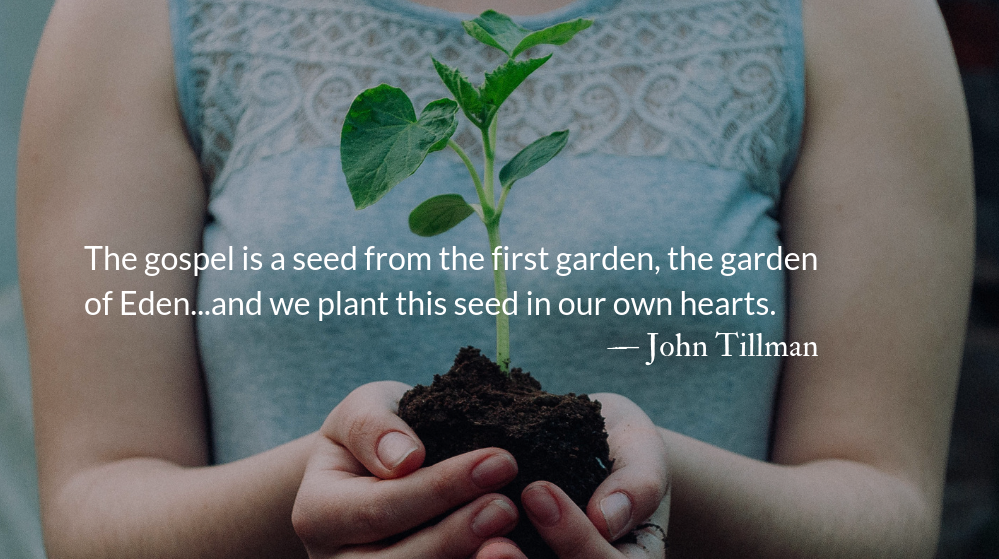
The seed we care for, and the seed that changes us, is the gospel. The gospel is a seed from the first garden, the garden of Eden. The seed of the woman, Jesus himself, is our salvation and we plant this seed in our own hearts. When we cultivate our faith, we must carefully plant and nurture the early growth of gospel teaching so that it grows strong, healthy, and productive.

This seed changes us more than we change it. We begin by tenderly caring for our young faith, protecting it from difficulties. When it has grown strong, it tenderly protects us, sheltering and supporting us through difficult times and famines of life.

It is for this reason that we work to encourage deepening the roots of our faith through intellectually honest and challenging devotionals and by studying the best writings of ancient and modern Christian thinkers, pastors, and authors.

We must tenderly care for faith as it grows. This is true of our own faith and the faith of others.

Whose faith are you tending? What seeds of the gospel are you planting? How are you adapting the rhythm of your life to tend the seed? How are you creating a supernatural environment around you to prepare the ground for the seed of the gospel?

Prayer: The Request for Presence
Teach me your way, O Lord, and I will walk in your truth; knit my heart to you that I may fear your Name. — Psalm 86:11

– Prayer from The Divine Hours: Prayers for Autumn and Wintertime by Phyllis Tickle.

Prayers from The Divine Hours available online and in print.

Today’s Readings
Genesis 11 (Listen – 3:47)
Matthew 10 (Listen – 5:07)

Additional Reading
Read More about Forging Faith :: Throwback Thursday
This is one of the most difficult teachings of Christianity: you are not yet perfect and must be shaped.

Read More about Resisting in Faith
Daniel lived undefiled, resisted the whims of an evil government, and influenced the course of an empire through simple faith and regular practice of spiritual disciplines.

How far will you travel in God’s Word this year?
On January 1st we restarted our two year Bible reading plan in Genesis and the Gospel of Matthew. Join us on the journey. We read the Old Testament over two years and the New Testament and Psalms each year.

Read with us at a sustainable pace. Subscribe and invite friends to join you using this link.

Where will a journey through the Bible take your faith in the coming year? Jesus calls each of us, saying, “Follow me.”

Cultivation Starts With Destruction

Matthew 9.36-38
When he saw the crowds, he had compassion on them, because they were harassed and helpless, like sheep without a shepherd. Then he said to his disciples, “The harvest is plentiful but the workers are few. Ask the Lord of the harvest, therefore, to send out workers into his harvest field.”

Reflection: Cultivation Starts With Destruction
By John Tillman

Cultivation is an act of peace, community, and faith. However, cultivation often begins with the smell of fire, the wielding of sharpened metal tools, and the sounds of chainsaws.

Jesus told the parable of the sower to portray the power of the gospel, not to imply that we should disdain cultivation for simply “scattering” the seed. Instead, he emphasizes the importance of cultivated ground to the gospel’s success.

Cultivated ground must be carved out of the wild brush, moor, or forest. Trees must be felled. Brush, thorns, and grasses must be burned. Rocks and other obstacles must be broken up, destroyed, and removed. But natural obstacles to cultivation are not our only concern. We also have an enemy who sows obstacles in our fields.

Immediately after the parable of the sower, Jesus tells the parable of the tares, which relates closely to our situation today. Among the wealth of cultivated, gospel teaching available, cultural ideas and worldly philosophies get scattered in with the good seed and grow up among our people. Our adversary desires to leave us no space in our land for cultivation.

Historians tell us that salting the earth was more ceremonial than functional. Sowing enough salt into farmland to poison crops for an extended time was too expensive for common practice. When this type of warfare was described in the Bible it was intended more as retribution and punishment than military strategy.

Our adversary’s goal is spiritual starvation and humiliation.
He hems us in with thorns.
He salts our fields with sin.
He sows tares amidst our wheat.
When he tears down our walls, he buries the broken stones in our furrows to break our plows.

This is why the first step of cultivating faith is destruction. And we must start in the field of our own heart, not pointing across the fence at someone else.

May the scripture help us to plow up and destroy the cultural idols, trends, teachings, and brands that hinder our growth.
May we invite the Holy Spirit’s fire to burn what we never should have planted.
May we work in our heart to weed out our prejudices and assumptions.
May we practice generosity that our jealousies may be poisoned.

Salting the earth is an act of war. Cultivation is an act of loving resistance.

Prayer: The Call to Prayer
Taste and see that the Lord is good; happy are they who trust in him! — Psalm 34:8

– Prayer from The Divine Hours: Prayers for Autumn and Wintertime by Phyllis Tickle.

Prayers from The Divine Hours available online and in print.

Today’s Readings
Genesis 9-10 (Listen – 7:18)
Matthew 9 (Listen – 4:56)

Additional Reading
Read More about Cultivating is Supernatural
Cultivation is not natural. It is supernatural. We give plants a safer, healthier place to grow than exists naturally, and they give us better food in greater quantities.

Read More about A Sign of Immaturity
May we, through our spiritual disciplines, develop a mature faith that cultivates signs and miracles of mercy and grace for others, not an immature faith that demands signs of favor and blessing for ourselves.

How far will you travel in God’s Word this year?
On January 1st we restarted our two year Bible reading plan in Genesis and the Gospel of Matthew. Join us on the journey. We read the Old Testament over two years and the New Testament and Psalms each year.

Read with us at a sustainable pace. Subscribe and invite friends to join you using this link.

Where will a journey through the Bible take your faith in the coming year? Jesus calls each of us, saying, “Follow me.”

Cultivation Requires Planning

Matthew 8.1
When Jesus came down from the mountainside, large crowds followed him.

Reflection: Cultivation Requires Planning
By John Tillman

“As the park is to the city, so the Word is to life.”

These words have communicated the vision of The Park Forum since the very beginning of our ministry, drawing inspiration from Central Park in New York City. The park’s natural-seeming environment is an engineering marvel of the 19th century, and nearly every bucolic hill, meadow, treeline, and body of water are the result of artistic, and purposeful design.

Frederick Law Olmsted, and Calvert Vaux’s winning concept prevailed over 32 other submissions. The design represented a microcosm of New York State, with the southern section showcasing more formal features, evoking the city and its suburbs, and the northern parts reflecting the more rural upstate regions.

The park’s website describes in detail the enormous amount of labor that went into achieving those plans, describing it as one of New York’s largest public works projects:

“After blasting out rocky ridges with more gunpowder than was later fired at the Battle of Gettysburg, workers moved nearly 3 million cubic yards of soil and planted more than 270,000 trees and shrubs.”

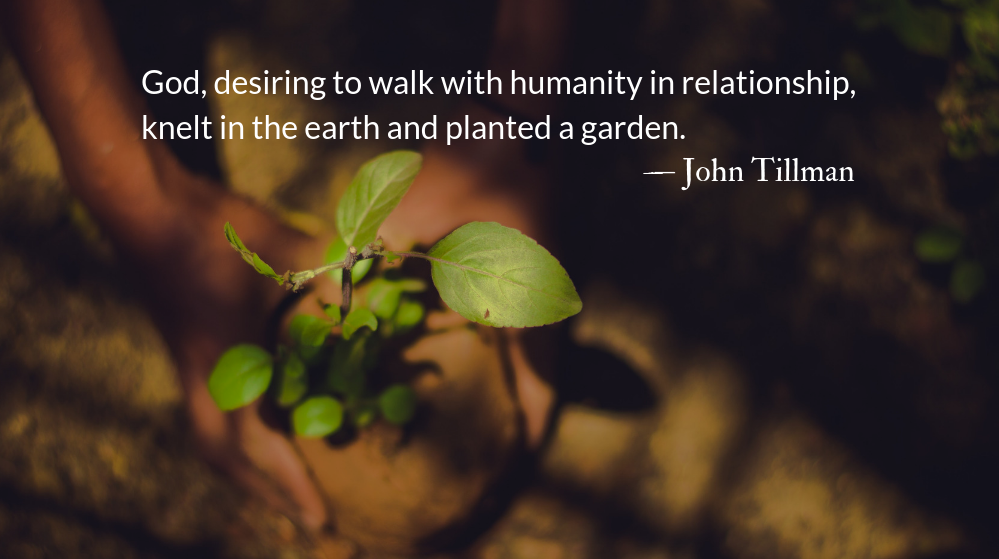
No park or garden is “natural.” Even the garden of Eden was planted by the Lord after the creation of the plants and animals. God, desiring to walk with humanity in relationship, knelt in the earth and planted a garden. We, in our pursuit of a deepening walk of faith, need to follow his example of supernatural cultivation.

Our faith depends on God. But for a mustard seed faith to grow, it must be cultivated. For a fig tree to bear fruit, it must be cared for. For a branch that is connected to the vine to be “even more fruitful” it must be pruned. What you harvest in your spiritual life, depends not just on what you sow, but how you care for it.

Cultivation may yield a harvest of beautiful sights, such as trees, fields, and flowers. It may yield a harvest of nutritious food, such as grains, vegetables, or fruit. In either case, it begins with planning before planting.

Do you have a plan to cultivate your spiritual growth?

The Park Forum is a tool that can help you, and those you share it with, follow a plan to plant and cultivate God’s Word in the midst of daily life. Invite someone to walk through God’s Word with you, experiencing spiritual rhythms that will bring a harvest of faith.

Prayer: The Greeting
Out of Zion, perfect in its beauty, God reveals himself in glory. — Psalm 50:2

– Prayer from The Divine Hours: Prayers for Autumn and Wintertime by Phyllis Tickle.

Prayers from The Divine Hours available online and in print.

Today’s Readings
Genesis 8 (Listen – 3:06)
Matthew 8 (Listen – 4:09)

Additional Reading
Read More about Light for the Next Step
Walking daily in this Word, meditating on it, breathing it in and out, making it a part of our thoughts and our prayers, charges an inner light of the Holy Spirit that we can trust to give us the next step.

Read More about Meditation in Spiritual Rhythm :: Throwback Thursday
Begin with reading or hearing. Go on with meditation; end in prayer…Reading without meditation is unfruitful; meditation without reading is hurtful; to meditate and to read without prayer upon both, is without blessing.

How far will you travel in God’s Word this year?
On January 1st we restarted our two year Bible reading plan in Genesis and the Gospel of Matthew. Join us on the journey. We read the Old Testament over two years and the New Testament and Psalms each year.

Read with us at a sustainable pace. Subscribe and invite friends to join you using this link.

Where will a journey through the Bible take your faith in the coming year? Jesus calls each of us, saying, “Follow me.”


Cultivation Is Supernatural

Matthew 7.7-8
Ask and it will be given to you; seek and you will find; knock and the door will be opened to you. For everyone who asks receives; the one who seeks finds; and to the one who knocks, the door will be opened.

Reflection: Cultivation Is Supernatural
By John Tillman

On the Monday of the first full workweek of each year, the new year starts in earnest. The hustle of the holidays is over, and humdrum returns. Out of office replies are turned off and the traffic on roads, trains, and elevators returns to normalcy.

There is no question that observing the turning of the year is a godly and valuable practice for Christians. Only last week, we read of God setting the heavens, like a clock, to help us mark the passing of time. The stars and moon are fulfilling the design of their creator when we use them to find our place in the year, to know when to plant, harvest, and rest.

The beginning of the year, in modern culture, is a time of planting. Rather than planting seeds, we plant habits that we hope to grow to maturity in the new year. Whether it is a new business practice that we hope will bring an increase of dollars, or a new exercise regimen we hope will bring a reduction of pounds—we plant.

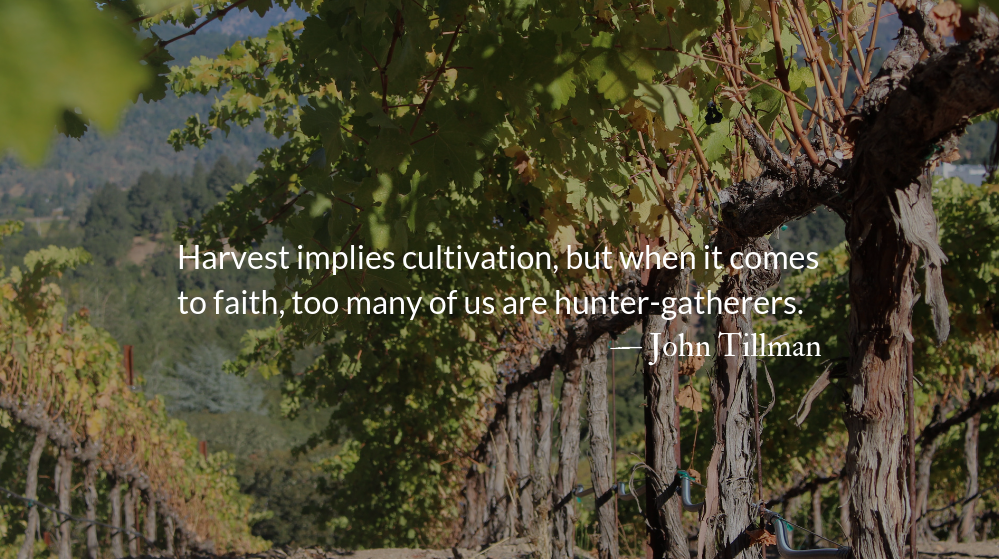
But truly abundant harvests aren’t accomplished by merely planting a seed. Harvest implies cultivation, but when it comes to faith, too many of us are hunter-gatherers. We bounce from devotional to podcast to church attendance to online streaming to small group—seeking maturity like berries in bushes or figs on trees. And sometimes the trees are barren.

A stronger faith, and a greater crop yield comes when we invest in cultivation. Cultivation is not natural. It is supernatural. We give plants a safer, healthier place to grow than exists naturally, and they give us better food in greater quantities. By this, whole communities are nourished and strengthened.

How will you cultivate faith this year? What are you planting? How are you preparing the soil? How are you clearing the old growth? How are you nourishing the new growth? How are you protecting it from climate, from pests, and from weeds and thorns?

Bear fruit this year. Cultivate your faith.

Cultivation takes community. Ask friends to join you in cultivating your faith with us this year. Send them this link to sign up for our email devotionals.

Prayer: The Refrain for the Morning Lessons
Let the words of my mouth and the meditation of my heart be acceptable in your sight, O Lord, my strength and my redeemer. — Psalm 19:14

– Prayer from The Divine Hours: Prayers for Autumn and Wintertime by Phyllis Tickle.

Prayers from The Divine Hours available online and in print.

Today’s Readings
Genesis 7 (Listen – 3:18)
Matthew 7 (Listen – 3:31)

Additional Reading
Read More about Better Things to Do
Amos is clear that if we don’t value worshiping God, the punishment is a famine. Not a famine of profit, or water, or food. A famine of the Word of God.

Read More about Learning to Pray :: Readers’ Choice
“This is a dangerous error,” warns Dietrich Bonhoeffer, “to imagine that it is natural for the heart to pray.” The great theologian, who lost his life in a Nazi concentration camp in 1945, was no stranger to unanswered prayer.

How far will you travel in God’s Word this year?
On January 1st we restarted our two year Bible reading plan in Genesis and the Gospel of Matthew. Join us on the journey. We read the Old Testament over two years and the New Testament and Psalms each year.

Read with us at a sustainable pace. Subscribe and invite friends to join you using this link.

Where will a journey through the Bible take your faith in the coming year? Jesus calls each of us, saying, “Follow me.”


A Restoring Sabbath

Matthew 4.1-2
Then Jesus was led by the Spirit into the wilderness to be tempted by the devil. After fasting forty days and forty nights, he was hungry.

Reflection: A Restoring Sabbath
By Dena Dyer

I’m sick of the constant “ding” of Facebook messages, tweets, and emails. My shoulders ache from the tension of trying to fit too much into an already-packed schedule. And my head hurts from trying to remember all the people who need something from me.

What about you? Are you tired of 24/7 restaurants, instant messaging, and the strain of trying to pack one more thing into a week full of obligations? If so, you’re not alone…and our numbers are growing.

Peter Smith of the Courier-Journal reports that Dr. Matthew Sleeth, a former emergency room physician, is encouraging stressed-out folks to consider an ancient principle: keeping the Sabbath. Sleeth is the founder of the Christian ministry “Blessed Earth” and the author of several books, including the new release, 24/6: The Prescription for a Happier, Healthier Life.

The biblical Sabbath God commanded his children to take in the Ten Commandments included “not just work-free days, but also allowing pastures to rest and not harvesting a field completely, leaving gleanings for the poor and hedgerows as a sanctuary for wildlife,” says Sleeth.

He notes that a day of rest doesn’t necessarily mean “a day of just kicking back. It can involve such deliberate activities as walking and light gardening. What it does mean is powering down the laptop and smartphone. And slowing down enough to listen.”

*This devotional was originally posted as a part of The High Calling devotional series.

From John:
Many key leaders in technology have been public about taking strong measures to reduce technology use by their families and especially their children.

As you begin this year, think and pray about ways in which you can abstain from technology’s addictive elements, while still using its powerful tools to spur your spiritual growth.

Weekly sabbaths teach us that the sabbath doesn’t condemn the week of work, but it blesses it and redeems it. Sabbath is not a punishment to be endured but a blessing. Use a fast or sabbatical this month to reset your ideas about technology and how you will use it in 2019.

Prayer: The Refrain for the Morning Lessons
I sought the Lord, and he answered me and delivered me out of all my terror. — Psalm 34:4

– Prayer from The Divine Hours: Prayers for Autumn and Wintertime by Phyllis Tickle.

Prayers from The Divine Hours available online and in print.

Today’s Readings
Genesis 4 (Listen – 3:54)
Matthew 4 (Listen – 3:09)

This Weekend’s Readings
Genesis 5 (Listen – 3:18) Matthew 5 (Listen – 6:03)
Genesis 6 (Listen – 2:48) Matthew 6 (Listen – 4:35)

Additional Reading
Read More about The Value of Words
Words and writers are undervalued in the marketplace. But encouraging words? They are remarkably undervalued. Our purpose at The Park Forum is to produce words that are filled with life, not death.

Read More about Supporting Our Work
When you donate to The Park Forum, you are investing in sharing God’s word, primarily. But you are also investing in words of life, words of encouragement, and words to build up our readers across the world in love.

How far will you travel in God’s Word this year?
On January 1st we restarted our two year Bible reading plan in Genesis and the Gospel of Matthew. Join us on the journey. We read the Old Testament over two years and the New Testament and Psalms each year.

Read with us at a sustainable pace. Subscribe and invite friends to join you using this link.

Where will a journey through the Bible take your faith in the coming year? Jesus calls each of us, saying, “Follow me.”