
A Prayer of Harvesters — Guided Prayer

Scripture Focus: Luke 10.2-3
2 He told them, “The harvest is plentiful, but the workers are few. Ask the Lord of the harvest, therefore, to send out workers into his harvest field. 3 Go! I am sending you out like lambs among wolves.

Reflection: A Prayer of Harvesters — Guided Prayer
By John Tillman

We are to pray for harvesters to be sent. Yet, we are also sent as harvesters.

This weekend, pray this prayer as one sent into the field. Pray over yourself the instructions Jesus gives to his followers. And remember that when Jesus sent the disciples into “the fields” he was sending them into the cities. As he sent them, so he sends us. 

A Prayer of Harvesters
“The harvest is plentiful, but the workers are few…”
There is much work to be done, Lord.
We see it in the eyes of the suffering
In the stumbling of the wandering
In the outbursts of the desperate
Send us to the field—into our cities.

“Go! I am sending you out like lambs among wolves…”
Send us not as sharp-toothed predators, Lord…
Not preying on others but praying for them
Send us not as sword-wielding soldiers, Lord…
Not with battle-hardened nerves but prayer-softened hearts

“When you enter a house, first say, ‘Peace to this house…’”
Make us peace-bringers, hosts of heaven’s peace, and messengers of its goodwill.
May your Spirit arrest enmity in our presence and may amity grow from our steps.

“Heal the sick who are there and tell them, ‘The kingdom of God has come near to you…’”
Make us healers who first do no harm to the hurting.
Just as you came near to us, let us come near to the hurting and make them whole with the resources and blessing of your kingdom.
Let us heal them…
Of sickness
Of pride
Of rage
Of hate
Of loneliness
Of fragility
Of every malady, division, and fracture.

“But when you enter a town and are not welcomed, go into its streets and say, ‘Even the dust of your town we wipe from our feet as a warning to you. Yet be sure of this: The kingdom of God has come near.’”
Not all will hear us, Lord but perhaps they will hear another.
We do not know their future. So let us warn only, and never condemn.
If they send us and our message away, Lord, let us leave no doubt that your kingdom has come to them, and let us leave no doubt that the way is open for them to follow us.

Divine Hours Prayer: The Small Verse
Today if you shall hear his voice, harden not your heart.

– From The Divine Hours: Prayers for Springtime by Phyllis Tickle.

Today’s Reading
Exodus 28(Listen 5:54)
Luke 10(Listen 5:40)

This Weekend’s Reading
Exodus 29(Listen 6:23)Luke 11(Listen 7:33)
Exodus 30(Listen 5:06)Luke 12(Listen 7:42)

Read more about One Thing Needed
We can’t say, “Well, I’m a Mary,” and ignore details. We can’t say, “Well, I’m a Martha,” and ignore relationships.

Read more about Supporting Our Work
Please consider joining our donors. Your donations support ad-free content that brings biblical devotionals to inboxes across the world.
Choices and Hard Hearts—Readers’ Choice

Readers’ Choice Month:
This September, The Park Forum is looking back on readers’ selections of our most meaningful and helpful devotionals from the past 12 months. Thank you for your readership. This month is all about hearing from you. Submit a Readers’ Choice post today.

Today’s post was originally published, on February 24, 2021, based on Exodus 7.1-5 and Luke 10.10-12, 16
It was selected by reader, Wade, from Texas. 

Scripture Focus: Exodus 7.1-5
1I have made you like God to Pharaoh, and your brother Aaron will be your prophet. 2 You are to say everything I command you, and your brother Aaron is to tell Pharaoh to let the Israelites go out of his country. 3 But I will harden Pharaoh’s heart, and though I multiply my signs and wonders in Egypt, 4 he will not listen to you. Then I will lay my hand on Egypt and with mighty acts of judgment I will bring out my divisions, my people the Israelites. 5 And the Egyptians will know that I am the Lord when I stretch out my hand against Egypt and bring the Israelites out of it.”

Luke 10.10-12, 16
10 But when you enter a town and are not welcomed, go into its streets and say, 11 ‘Even the dust of your town we wipe from our feet as a warning to you. Yet be sure of this: The kingdom of God has come near.’ 12 I tell you, it will be more bearable on that day for Sodom than for that town.
16 “Whoever listens to you listens to me; whoever rejects you rejects me; but whoever rejects me rejects him who sent me.”

Reflection: Choices and Hard Hearts—Readers’ Choice
By John Tillman

Pharaoh’s heart is the prototypical story about hardened hearts in the Bible. His story affects how we see the topic and the process of how a heart is hardened. Nearly half of the occurrences of the word “harden” in the NIV text are in reference to Pharaoh or the Egyptians.

We also see hardened hearts and the response of Christ’s messengers to them in our reading from Luke. God used Moses as a stand-in and had Moses use Aaron as a prophet. Jesus sends his 72 followers out as prophets of his message as well. 

“Whoever rejects you rejects me and the one who sent me,” Jesus said. Whoever rejected the apostles or other disciples, rejected Jesus, and rejected God the Father. When Pharoah rejected Aarron, he rejected Moses, and he rejected Yahweh.

In both stories, God’s messengers carried his peace. They performed miracles, healings, and signs. Yet there were those who missed (or denied) the miracles. Jesus knew some would reject his messengers. God knew Pharaoh would reject his messengers. In doing so, these hearers were rejecting God himself and bringing judgment on themselves.

Before we think of ourselves as messengers of God, we first need to consider ourselves with sober judgment.

Are we people of peace (Luke 10.5-6) or Pharaohs relying on violence? (Exodus 5.14-15, 20-21) Are we rejecting God by rejecting his messengers because they don’t look the way or sound the way we think they should? (“In Amaziah’s Shoes: Amos 7.10-17)

The scriptures contrast moments of Pharaoh hardening his own heart and God hardening it. (Exodus 4.21; 7.3; 8.15, 32; 9.12-34; 10.20, 27; 11.10) Even Pharaoh gets multiple chances to do the right thing. When he fails to see the miracles for what they are and refuses to heed God’s messengers, God gives him over to the path of rebellion he chose. 

Hardened hearts happen in stages. Our choices matter. Our hearts are hardened or softened day after day. Do we hear and obey? Our hearts will grow softer, more sensitive, and better able to obey in the future. Do we hear and turn away? Our hearts will grow harder, colder, less able to respond to the loving call of God.

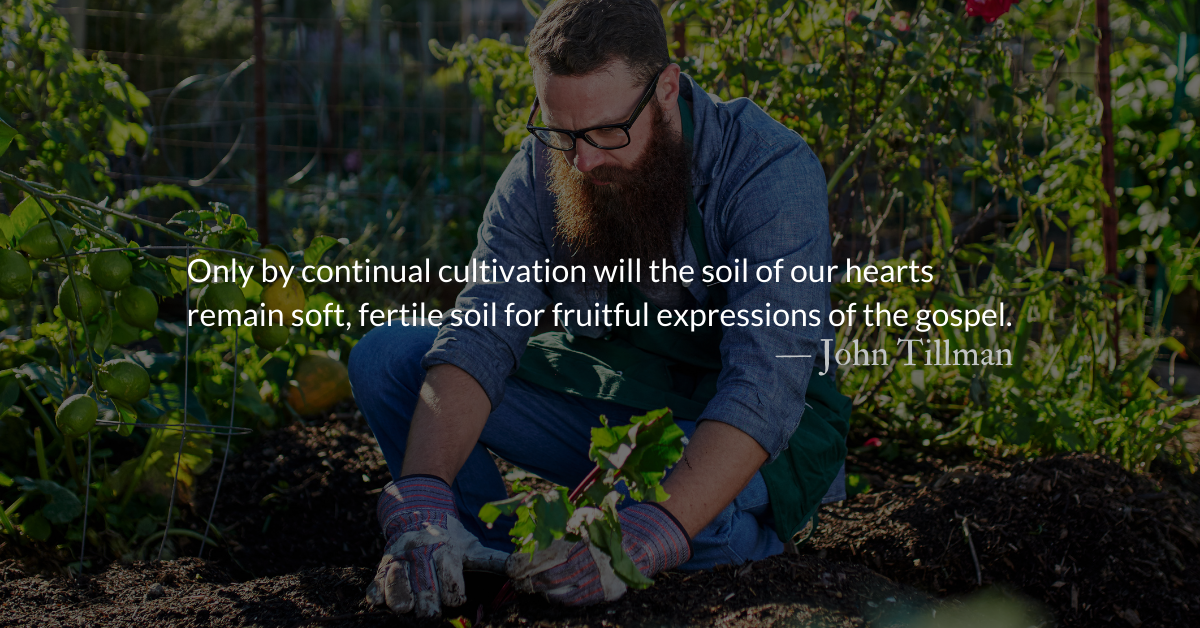
Softening your heart is something that occurs not in one single moment, but rather through a lifelong process. Untended, our hearts harden and lean away from God. Only by continual cultivation will the soil of our hearts remain soft, fertile soil for fruitful expressions of the gospel.

Divine Hours Prayer: The Call to Prayer
Love the Lord, all you who worship him; the Lord protects the faithful, but repays to the full those who act haughtily. — Psalm 31.23

– From The Divine Hours: Prayers for Summertime by Phyllis Tickle.

Today’s Readings
Jeremiah 48 (Listen 7:31)
2 Corinthians 7 (Listen 2:58)

Readers’ Choice is Here!
There’s still room for your recommended posts from the last 12 months. Which one helped you heal?

Read more about For Those Yet Unseeing — Worldwide Prayer
We assume that faith comes easily when we witness miracles. We are wrong.

Choices and Hard Hearts

Scripture Focus: Exodus 7.1-5
1I have made you like God to Pharaoh, and your brother Aaron will be your prophet. 2 You are to say everything I command you, and your brother Aaron is to tell Pharaoh to let the Israelites go out of his country. 3 But I will harden Pharaoh’s heart, and though I multiply my signs and wonders in Egypt, 4 he will not listen to you. Then I will lay my hand on Egypt and with mighty acts of judgment I will bring out my divisions, my people the Israelites. 5 And the Egyptians will know that I am the Lord when I stretch out my hand against Egypt and bring the Israelites out of it.”

Luke 10.10-12, 16
10 But when you enter a town and are not welcomed, go into its streets and say, 11 ‘Even the dust of your town we wipe from our feet as a warning to you. Yet be sure of this: The kingdom of God has come near.’ 12 I tell you, it will be more bearable on that day for Sodom than for that town.

16 “Whoever listens to you listens to me; whoever rejects you rejects me; but whoever rejects me rejects him who sent me.”

Reflection: Choices and Hard Hearts
By John Tillman

Pharaoh’s heart is the prototypical story about hardened hearts in the Bible. His story affects how we see the topic and the process of how a heart is hardened. Nearly half of the occurrences of the word “harden” in the NIV text are in reference to Pharaoh or the Egyptians.

We also see hardened hearts and the response of Christ’s messengers to them in our reading from Luke. God used Moses as a stand-in and had Moses use Aaron as a prophet. Jesus sends his 72 followers out as prophets of his message as well. 

“Whoever rejects you rejects me and the one who sent me,” Jesus said. Whoever rejected the apostles or other disciples, rejected Jesus, and rejected God the Father. When Pharoah rejected Aarron, he rejected Moses, and he rejected Yahweh.

In both stories, God’s messengers carried his peace. They performed miracles, healings, and signs. Yet there were those who missed (or denied) the miracles. Jesus knew some would reject his messengers. God knew Pharaoh would reject his messengers. In doing so, these hearers were rejecting God himself and bringing judgment on themselves.

Before we think of ourselves as messengers of God, we first need to consider ourselves with sober judgment.

Are we people of peace (Luke 10.5-6) or Pharaohs relying on violence? (Exodus 5.14-15, 20-21) Are we rejecting God by rejecting his messengers because they don’t look the way or sound the way we think they should? (“In Amaziah’s Shoes: Amos 7.10-17)

The scriptures contrast moments of Pharaoh hardening his own heart and God hardening it. (Exodus 4.21; 7.3; 8.15, 32; 9.12-34; 10.20, 27; 11.10) Even Pharaoh gets multiple chances to do the right thing. When he fails to see the miracles for what they are and refuses to heed God’s messengers, God gives him over to the path of rebellion he chose. 

Hardened hearts happen in stages. Our choices matter. Our hearts are hardened or softened day after day. Do we hear and obey? Our heart will grow softer, more sensitive, and better able to obey in the future. Do we hear and turn away? Our heart will grow harder, colder, less able to respond to the loving call of God.

Softening your heart is something that occurs not in one single moment, but rather through a lifelong process. Untended, our hearts harden and lean away from God. Only by continual cultivation will the soil of our hearts remain soft, fertile soil for fruitful expressions of the gospel.

Divine Hours Prayer: The Greeting
My lips will sing with joy when I play to you, and so will my soul, which you have redeemed. — Psalm 68.28

– Divine Hours prayers from The Divine Hours: Prayers for Springtime by Phyllis Tickle
Today’s Readings
Exodus 7 (Listen – 3:29) 
Luke 10 (Listen – 5:40)

Read more about For Those Yet Unseeing — Worldwide Prayer
We assume that faith comes easily when we witness miracles. We are wrong.

Read more about The Miracle of Faith
His greatest miracles were helping the faithless to believe again. Helping the cynical to trust again. Helping the hardened to love again.

One Thing Needed

Luke 10.42
Few things are needed—or indeed only one.

Everybody I know says they need just one thing. Really what they mean is they need just one thing more. — Rich Mullins

Reflection: One Thing Needed
By John Tillman

The Church’s anticipatory season of Advent doesn’t officially begin until December 2nd this year, but our cultural and commercial anticipation of Christmas is in full swing. Parties are being planned. Trees are going up. Lights are being strung.

Christmas is coming.

For some, Christmas seems more ominous than celebratory—like a massive to-do list with an inflexible deadline. With all of the cultural expectations of Christmas, it’s no wonder people push “starting Christmas” earlier and earlier in the year.

If Christmas is about having the perfect meal, with the perfect side-dishes, the perfect guests, the perfect gifts, the perfect decor, the perfect tree, and the perfect decorations, increasing the production timeline makes a lot of sense. But even starting in October, as some do, that’s a lot of perfection for imperfect people to manage in a broken world. It’s a perfect mix for holiday depression and anxiety rather than the peace, comfort, and joy that should be experienced at Christmas.

Martha, the detail oriented disciple, often gets a hard time from preachers who focus on jokes about how uptight she is. We often preach on Martha’s scolding of Jesus about her sister and too rarely preach about Martha’s open declaration that Jesus was the Messiah.

If Martha, in today’s passage is scattered and distracted, the Martha who greets Jesus after her brother’s death is focused with clarity on the “one thing” needed. Martha’s declaration was no trivial thing. Nearby were those who were already plotting Christ’s death and would next be plotting the death of her soon-to-be resurrected brother. Her confession was at the risk of her life.

The one thing that is needed, the better portion that Mary chose and Martha learned to choose under pain of death, is to place ourselves at all costs in the presence of Jesus, our Lord.

Mary and Martha aren’t stereotypes for us to sort ourselves into and excuse our tendencies. We can’t say, “Well, I’m a Mary,” and ignore details. We can’t say, “Well, I’m a Martha,” and ignore relationships. To do so is to dehumanize these women into parables to make us feel better about ourselves.

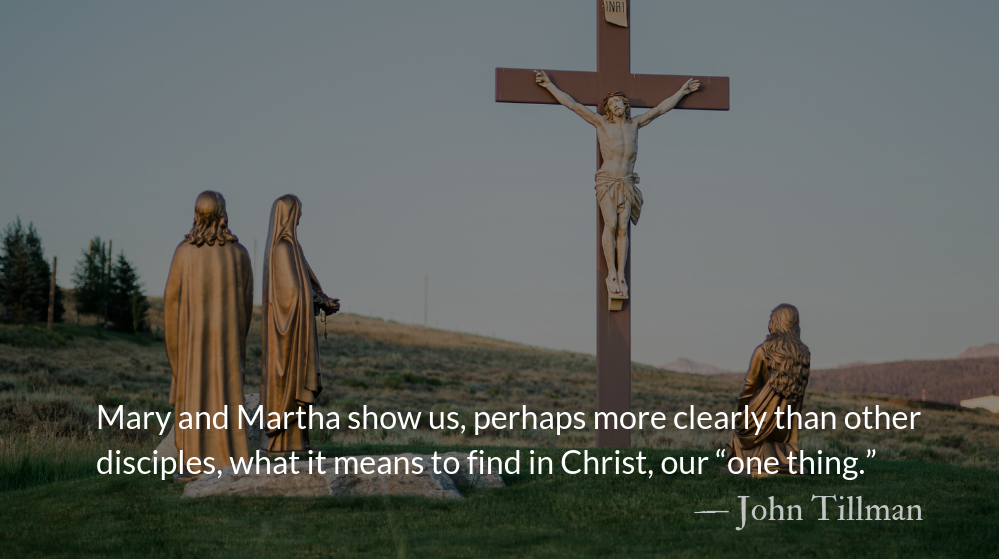
These female disciples each are immature in their own way when we first meet them. But in their final appearances in scripture, they abandon all for Christ, risking financial security, risking reputation, risking their lives to honor him. They show us, perhaps more clearly than other disciples, what it means to find in Christ, our “one thing.”

Prayer: Request for Presence
Protect me, O God for I take refuge in you. I have said to the Lord, “You are my Lord, my good above all other,”  — Psalm 16:1

– Prayer from The Divine Hours: Prayers for Autumn and Wintertime by Phyllis Tickle.

Prayers from The Divine Hours available online and in print.

Today’s Readings
Micah 1 (Listen – 2:46)
Luke 10 (Listen – 8:05)

Additional Reading
Read More about Confessing Christ, Full Grown
It is more difficult to stand before a man who, by inaction, allowed your brother to die and call that man the Messiah, as Martha did.

Read More about The Fragrance of Faith :: Readers’ Choice
Mary of Bethany’s anointing of Christ on his last trip to Jerusalem is intimately connected to the gospel—Christ said that it would be.

Support our Work
Each month over 22,000 Park Forum email devotionals are read around the world. Support our readers with a monthly or a one time donation.

Show Buttons
Hide Buttons
Spur a spiritual rhythm of refreshment right in your inbox
By joining this email list you are giving us permission to send you devotional emails each weekday and to communicate occasionally regarding other aspects of the ministry.
100% Privacy. We don't spam.