Older Than the Old Way

Links for today’s readings:

Read: Leviticus 18 Listen: (3:46) Read: Acts 14 Listen: (3:54)

Scripture Focus: Leviticus 18.24-28

24 “ ‘Do not defile yourselves in any of these ways, because this is how the nations that I am going to drive out before you became defiled. 25 Even the land was defiled; so I punished it for its sin, and the land vomited out its inhabitants. 26 But you must keep my decrees and my laws. The native-born and the foreigners residing among you must not do any of these detestable things, 27 for all these things were done by the people who lived in the land before you, and the land became defiled. 28 And if you defile the land, it will vomit you out as it vomited out the nations that were before you.

Reflection: Older Than the Old Way

By John Tillman

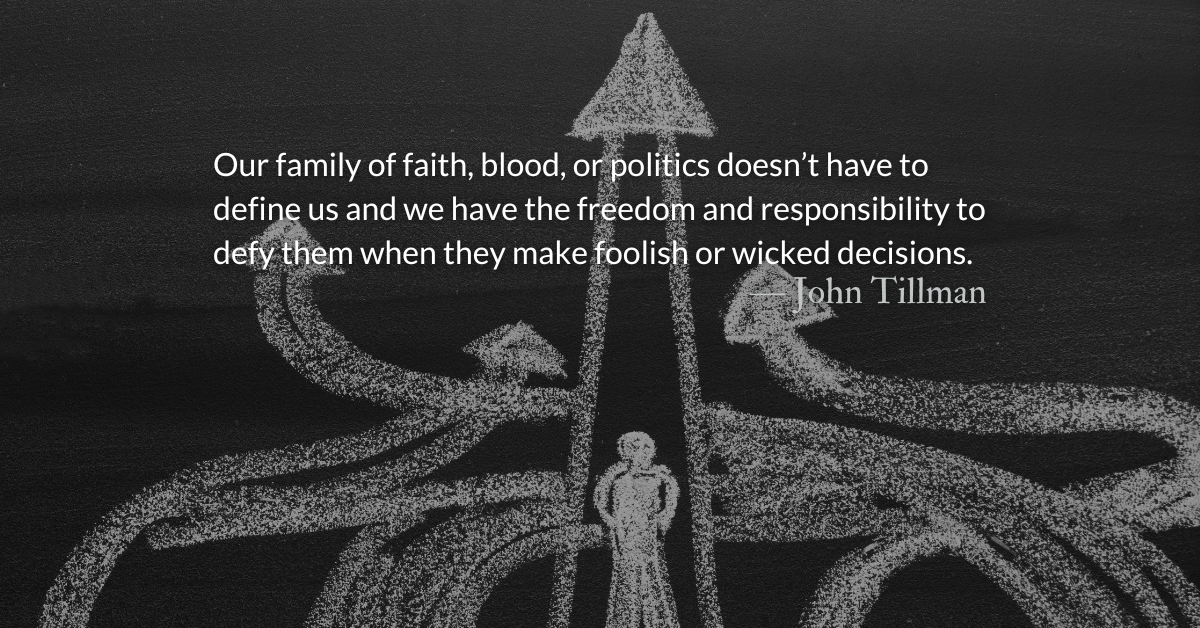
There’s an argument that the biblical sexual ethic is old and outdated. “That was the old way. Now we must think about sex in a new way.” The truth is more complicated.

Biblical sexuality is the “original” idea from page one of the Bible, but we rejected it on page two and never looked back. There is nothing “new” about the modern sexual climate. Sex has always been abused by the powerful, made a tool of addiction and manipulation, peddled for money, intertwined with slavery, and unlimited in its scope. This free-for-all leaves casualties and abuse in its wake.

Sexual ethics go beyond personal choices. God says the land, the dirt we came from, is affected by our defilement of one another. When we mistreat each other, the land itself gets sick. Creation is not inanimate, unaffected matter. “Cursed is the ground,” God says. And why? “Because of you.” (Genesis 3.17; 4.10-12)

When the only sexual limit is consent, human bodies, souls, and emotions are just hills to be mined or streams to be tapped. Secure the mineral and water rights; take what you want. Strip mine, clear cut, dam them up, dry them up, poison them…who cares? They signed on the dotted line. This is the old way. But older than the old way, is God’s way.

Current cultural sexual ethics are old, but in every age, God carved out for himself people to be different—to return to Eden, little by little. (Matthew 19.4; Mark 10.5-6)

In Leviticus, God instructs his people to be distinct in how they practice everything from handling money to how to treat one another’s bodies. God’s language centers on care for others, respect, and self-control. No one group is singled out. God’s people must be distinct from the pattern of normality all around them. “What is normal for them, must not be normal for you. What seems natural to them, must not be natural to you.”

This didn’t start in Leviticus. Throughout the Bible, there is a consistent pattern of God subverting the cultural norms of sex among those who follow him. God worked gradually and people followed imperfectly. They consistently followed culture rather than him, but God worked with and among them even amidst failure.

We are a part of this people. We may fail at times, but if we continually turn to him, he will continue to undo our curses and make us blessings to our land.

Divine Hours Prayer: The Greeting

Have mercy on me, O Lord, for I am in trouble, my eye is consumed with sorrow, and also my throat and my belly. — Psalm 31.9

– Divine Hours prayers from The Divine Hours: Prayers for Springtime by Phyllis Tickle.

Read more: It’s in the Bible

If we look carefully, we can see God actively disrupting cultural assumptions and human traditions that people in scripture accepted as normal.

Read more: Beyond Consent

May each of us submit every part of our identities, including our sexuality, to God’s calling in our lives.

Reaching Untouchables

Links for today’s readings:

Read: Leviticus 15 Listen: (4:59) Read: Acts 11 Listen: (3:52)

Links for this weekend’s readings:

Read: Leviticus 16 Listen: (5:36) Read: Acts 12 Listen: (3:49)
Read: Leviticus 17 Listen: (2:39) Read: Acts 13 Listen: (7:36)

Scripture Focus: Leviticus 15.26

31 “You must keep the Israelites separate from things that make them unclean, so they will not die in their uncleanness for defiling my dwelling place, which is among them.”

Mark 5.25-34

27 When she heard about Jesus, she came up behind him in the crowd and touched his cloak, 28 because she thought, “If I just touch his clothes, I will be healed.” 29 Immediately her bleeding stopped and she felt in her body that she was freed from her suffering.

Reflection: Reaching Untouchables

By John Tillman

The “discharges” in Leviticus 15 include those experienced regularly by healthy males and females, and chronic ones caused by illnesses or disorders. Normal conditions only required washing with water. Chronic ones required a small, inexpensive sacrifice.

We struggle to understand these laws of separation between clean and unclean. They can seem to us like punishment for life’s problems. Is God kicking people when they are down?

While not fully understanding, we should remember that the separation was not intended to be punitive, permanent, or shameful. It protected public health and provided rest for sufferers with chronic conditions. Even today we’d prefer parents not bring sick children to church nurseries and appreciate sick co-workers using sick days to stay home. Runny noses spread.

Also, the sacrifices were intended to celebrate a chronic condition’s end, not punish a sufferer for having it. These would have been joyful moments, like cancer patients ringing bells at the end of treatment.

However, these intentions do not mean that stigmas did not develop, that all separations were restful, that healing was easily available, or that every patient rang a bell. The prophets knew this. Jesus knew this. The woman who touched his robe in Mark 5 knew this.

There is a great distance between the high ideals of justice or righteousness and the writing of a law. Likewise, there is a great difference between a written law’s intent and the law’s implementation, interpretation, or enforcement. Gaps open at each stage, into which corruption, errors, or abuse may insert themselves.

Jesus condemned the religious leaders’ implementation, interpretation, and enforcement of the law. Even on the way to heal a righteous man’s dying child, Jesus paused at the “unclean” woman’s touch. He didn’t stop to shame her but to celebrate her faith and healing.

She is often called the “woman with an issue of blood,” yet might be more accurately named the “woman with an issue of faith.” Her faith made her whole. Why should we name her by her malady rather than her miracle? Why should we allow the same to be done to others or to ourselves?

If Jesus walked your city streets or mine, he would love and heal the “untouchables.” Be a priest of Jesus in your city. Whoever you think of as untouchable, help them in the name of Jesus. And if that untouchable person is you, reach out. Jesus is there.

Divine Hours Prayer: The Request for Presence

I have said to the Lord, “You are my God; listen, O Lord, to my supplication. — Psalm 140.6

– Divine Hours prayers from The Divine Hours: Prayers for Springtime by Phyllis Tickle.

Read more: Two Goats and Jesus

Jesus’ death on the cross…purifies our approach to God so we can enter his presence without fear…and be free from the bondage of evil.

Consider Supporting Our Work

We need readers to become donors and help support our work. Please consider becoming a donor today.

Testify to Ultimate Healing

Links for today’s readings:

Read: Leviticus 14 Listen: (8:11) Read: Acts 10 Listen: (5:49)

Scripture Focus: Leviticus 14.2-7

2 “These are the regulations for any diseased person at the time of their ceremonial cleansing, when they are brought to the priest: 3 The priest is to go outside the camp and examine them. If they have been healed of their defiling skin disease,  4 the priest shall order that two live clean birds and some cedar wood, scarlet yarn and hyssop be brought for the person to be cleansed. 5 Then the priest shall order that one of the birds be killed over fresh water in a clay pot. 6 He is then to take the live bird and dip it, together with the cedar wood, the scarlet yarn and the hyssop, into the blood of the bird that was killed over the fresh water. 7 Seven times he shall sprinkle the one to be cleansed of the defiling disease, and then pronounce them clean. After that, he is to release the live bird in the open fields.

Matthew 8.4

4 Then Jesus said to him, “See that you don’t tell anyone. But go, show yourself to the priest and offer the gift Moses commanded, as a testimony to them.”

Reflection: Testify to Ultimate Healing

By John Tillman

Ritual uncleanness was ceremonial, not medical. It had little to no effect on individual or communal health. However, some Levitical regulations protected physical health. “Defiling” infections and contagious conditions required quarantines that separated affected people or property from others.

These conditions were not caused by individual sin but were part of living in a sin-defiled world, suffering the death and decay sin set in motion. However, from Job’s day until now, people often assume a spiritual or moral deficiency when sickness or trouble touches people’s lives.

When such conditions were cured, priests first acted as “health inspectors,” confirming the absence of the sickness or condition. Then priests shifted into spiritual mode, enacting a ceremony that celebrated a victory over death, defilement, and disease and honored God for the cleansing.

When Jesus healed the leper, he commanded him to make the sacrifice described in Leviticus 14. (Matthew 8.1-4; Mark 1.40-45; Luke 5.12-15) Jesus was directing attention away from himself as the source of the miracle, but the elements of the sacrifice point right back to Jesus. They represent Christ’s removal of all defilement and disease by defeating their source in sin and death.

The priest brings the sacrifice to the person outside the camp, just as Jesus came to us and was killed outside the city. Christ is the hyssop for cleansing the unclean. Christ is the red cord,  marking those saved, like Rahab, from destruction. Christ is the bird that dies in our place. We are the living bird, baptized into water and Christ’s blood and then set free. Even if the leper had simply carried out the ceremony, he would still have testified about Jesus.

Christ bears our sicknesses, and every sickness (mental, physical, and spiritual) will be healed—if not now, then in the future. Sin and death are dying. Their power is already broken. We live in the days before the final victory when these defeated enemies lash out in vain, but the heel is coming that will crush their head and bring ultimate healing.

Unlike the priest, Jesus touches the unclean before they are healed, because his purity is more contagious than the world’s impurity. Christ touches us before we are healed, while we are sinners, while we are his enemies. He does not inspect us for righteousness, but imputes it to us.

Celebrate whatever healing you experience as a testimony to the world and testify to the ultimate healing to come.

Divine Hours Prayer: The Call to Prayer

Come, let us bow down, and bend the knee, and kneel before the Lord our Maker.
For he is our God, and we are the people of his pasture and the sheep of his hand. — Psalm 95.6-7

– Divine Hours prayers from The Divine Hours: Prayers for Springtime by Phyllis Tickle.

Read more: He Is Willing

Jesus is willing to touch, heal, and restore. It is part of his identity and mission to touch the untouchable

Read more: Knocking on Heaven’s Door

Cornelius and Peter found the truth and freedom from sin by seeking God through prayer. Their prayers were invaded by the Holy Spirit.

The Stigma of Disease

Links for today’s readings:

Read: Leviticus 13 Listen: (9:34) Read: Acts 9 Listen: (6:05)

Scripture Focus: Leviticus 13:2

2 “When anyone has a swelling or a rash or a shiny spot on their skin that may be a defiling skin disease, they must be brought to Aaron the priest or to one of his sons who is a priest.

Reflection: The Stigma of Disease

By Erin Newton

When my son came home from the hospital, he had a glaring, visible physical disability. There would be no hiding this. We were prepared to have a child with disabilities, but after months of medical treatment, we realized his disease would be a billboard.

Stigma comes with diseases and disabilities. People form conclusions and assumptions without information. My love for our son was no less the day he received his tracheostomy, but I knew the stares and whispers would come the moment we stepped out of the building. I imagined them saying, Who sinned, this boy or his parents? (John 9.1-3)

Leviticus 13, unfortunately, has been misunderstood as support for associating disease with moral failure. A series of scale diseases are listed: things that cause discoloration, shiny marks, boils, burns, even baldness. Long ago, these descriptions were misidentified with leprosy, or Hansen’s disease. Combined with stories of scale diseases inflicted on a person for sin, such as Miriam in response to her criticism against Moses (Numbers 12), modern readers began to assume that God judged all those suffering from Hansen’s disease.

Diseases affecting the skin are not the only ones to carry such stigma. Amy Kenny (My Body Is Not a Prayer Request) details how people in the church have approached her with remedies or assessments of her faith just because of her disability.

How do we read Leviticus 13?

The visual aspect of scale diseases resembled skin peeling away. It was a reflection of death; it reminded them of decay. Death has no place in the presence of God. It was not a moral judgment on the person with boils but a recognition that death deteriorates the body. God bestows life and order; death brings decay and disorder.

More than anything, we must read these chapters with eyes heavenward. We are not being given a rulebook on how to judge others based on disease or disability. This chapter points up to God by pointing down toward death.

Diseases should ignite our sympathy, not our stigma.

And what of those that have no “scales” to the naked eye? What reaction will I get when I tell you of my anxiety or my OCD?

Learning to see the world through the eyes of God means being quick with sympathy and slow with accusations. It means knowing the real enemy is the disorder brought on by death and not pinpointing supposed faults.

Divine Hours Prayer: The Call to Prayer

The Lord is near to those who call upon him, to all who call upon him faithfully.
He fulfills the desire of those who fear him; he hears their cry and helps them.
The Lord preserves all those who love him, but he destroys all the wicked. — Psalm 145.19-21

– Divine Hours prayers from The Divine Hours: Prayers for Springtime by Phyllis Tickle.

Read more: Spiritual Twins

Each twin is a perfect donor match to the other. They can heal one another if needed. A better “eye for an eye.”

Consider Supporting Our Work

Our work can only continue with donor support. Small monthly donations, the size of your streaming subscriptions, make a huge difference.

Our Purifying Sacrifice

Links for today’s readings:

Read: Leviticus 11-12 Listen: (7:20) Read: Acts 8 Listen: (5:10)

Scripture Focus: Leviticus 12.6-7

6 “ ‘When the days of her purification for a son or daughter are over, she is to bring to the priest at the entrance to the tent of meeting a year-old lamb for a burnt offering and a young pigeon or a dove for a sin offering.  7 He shall offer them before the Lord to make atonement for her, and then she will be ceremonially clean from her flow of blood.

Reflection: Our Purifying Sacrifice

By John Tillman

Ritual impurity or “uncleanness” is not about a “gross” factor. God created women’s bodies, sex, childbirth, blood, and normal bodily functions and is not grossed out by them.

As Lindsey Ponder writes in the notes for the Bible Project podcast episode on the topic, “Ritual impurity is any sign of death, decay, and life outside of Eden (it’s not about a person’s sin). Israel’s laws regarding purity and impurity kept life and death—their own mortality—ever present before them. Because Yahweh is the creator and sustainer of all life, anything dying or exhibiting signs of decay can’t be in his presence.”

When Cain spilled Abel’s blood, the ground cried out, not because it was gross but because death claimed its first human victim. (Genesis 4.10) Blood from the experience of childbirth is also a cry to God. It is the cry of Eve, ever suffering and risking death to bring forth life, anticipating the day that her seed crushes the serpent’s head. (Genesis 3.15-16)

The women “purified” according to Leviticus 12 were purified from a battle with death, not from sin or grossness. Thus Mary, who carried Eve’s seed to term and delivered Jesus, made this sacrifice to celebrate her battle won. (Luke 2.22-24)

Like the Israelites, we live in an unclean world, marked by death and decay. Childbirth is not the only way that we “bleed” in our struggle against sin and death. Our bodies cry out from our first breaths to our last. We “touch” death, or are touched by it, in daily life.

Eve and Mary were called to carry Jesus to the world and so are we. A sword pierced Mary’s soul. (Luke 2.35) We will be no different. When contending for the gospel, standing for the truth, and serving and loving sinners, sin, death, and decay oppose us. They touch us. They can harm us.

Harm may come from enemies or friends who resist righteousness or refuse to see the truth. Suffering insults, frustrations, losses, or deaths, both literal or emotional, we may be embittered, angered, or injured.

We may be tainted by the world’s touch, but Jesus never is. He touches the unclean and cleanses them, speaks to the dead and awakens them.

Whatever harms you encounter, whenever sin, death, or decay touch you, take time to be purified. Be purified in the arms of Jesus, our purifying sacrifice.

Divine Hours Prayer: The Small Verse

Keep me, Lord, as the apple of your eye and carry me under the shadow of your wings.

– Divine Hours prayers from The Divine Hours: Prayers for Springtime by Phyllis Tickle.

Read more: Separateness Not Superiority

The Spirit of Christ is within us and we are his body. We have Christ’s power to touch the unclean and make them clean.

Consider Supporting Our Work

Our work needs your support. For the cost of one of your streaming service subscriptions, you can be a vital monthly donor.

Show Buttons
Hide Buttons
Spur a spiritual rhythm of refreshment right in your inbox
By joining this email list you are giving us permission to send you devotional emails each weekday and to communicate occasionally regarding other aspects of the ministry.
100% Privacy. We don't spam.