Prayer for the Poor at War

Scripture Focus: Proverbs 22.1-2, 4, 7-9, 16
1 A good name is more desirable than great riches; 
to be esteemed is better than silver or gold. 
2 Rich and poor have this in common: 
The LORD is the Maker of them all. 

4 Humility is the fear of the LORD; 
its wages are riches and honor and life. 

7 The rich rule over the poor, 
and the borrower is slave to the lender.
8 Whoever sows injustice reaps calamity, 
and the rod they wield in fury will be broken.
9 The generous will themselves be blessed, 
for they share their food with the poor.

16 One who oppresses the poor to increase his wealth 
and one who gives gifts to the rich—both come to poverty. 

Rich man’s war, poor man’s fight. — unknown (Civil War era, 1861-1865)

Reflection: Prayer for the Poor at War
By John Tillman

Today’s section of proverbs has many reflections on the relationship of the rich to the poor.

During the American Civil War, men could avoid conscription into the military for a fee of $300. That would be approximately $9,500 in today’s currency. The adage “rich man’s war, poor man’s fight” originated at this time. This “proverb” has remained a popular way of expressing the fact that most nations are led to war by the rich and most who die are poor. 

United States military forces have been volunteer-only since 1973 but conscription (called the draft) could be reactivated if national security demanded it. Despite being a volunteer force, the US Armed Forces are still mostly filled by those from lower economic backgrounds, so the adage is still true.

In other nations, practices vary, but it has become clear in the early days of the Russian invasion of Ukraine that many captured Russian soldiers are conscripts and some of them were unaware of where they were being sent and who they were being told to attack. 

Poor men dying on behalf of the powerful is the way of the world. The way of Christ is the opposite. Christ was the wealthiest but became the poorest. He was the most powerful but became the weakest. Rather than allow us to be casualties of sin and death, God, in Christ, leapt in front of the bullets and died in our place. Yet, through God’s power he won the war with sin and death, conquering them through the cross and shaming them through his bodily resurrection. Thank God that in the war against sin and death, it is God who fights for us.

Prayer for the Poor at War
Lord, you give humans power to do good, yet we turn to evil.
We have power to plant, yet we uproot.
We have power to bless, yet we curse.
We have power to raise, yet we raze.
We have power to birth, yet we murder instead.

Lord, we pray for the poor at war and for the powerful who send them to it.
Whether the military conscript or the mother huddled in a bomb shelter, we pray for you to touch the poor and weak to save them.

Lord, fight for the weak and the powerless.
Frustrate the plans of the powerful.
Use the weak to overcome the strong.
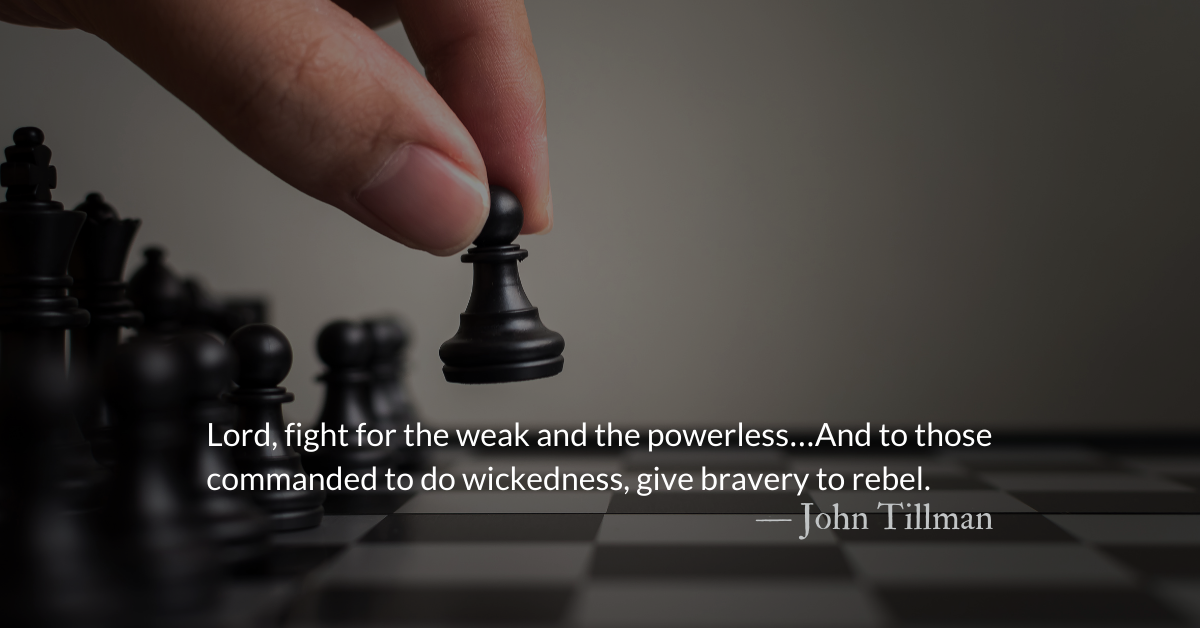
And to those commanded to do wickedness, give bravery to rebel.


Divine Hours Prayer: The Request for Presence

O God of hosts, show the light of your countenance, and we shall be saved. — Psalm 80.7

– From The Divine Hours: Prayers for Springtime by Phyllis Tickle.

Today’s Readings
Proverbs 22 (Listen – 2:59)
Psalm 88 (Listen – 1:58)

Read more about Prayer Amidst Evil :: Guided Prayer
Christ promised we would have trouble in this world, and many people are willing to aid that promise coming true.

Read more about Facts and Harsh Realities
God will not remain silent or stand aloof. He is with the suffering and the dying and those responsible will face justice.
The Cultivating Life

Scripture Focus: Psalm 85.8-13
8 I will listen to what God the Lord says; 
he promises peace to his people, his faithful servants— 
but let them not turn to folly. 
9 Surely his salvation is near those who fear him, 
that his glory may dwell in our land. 
10 Love and faithfulness meet together; 
righteousness and peace kiss each other. 
11 Faithfulness springs forth from the earth, 
and righteousness looks down from heaven. 
12 The Lord will indeed give what is good, 
and our land will yield its harvest. 
13 Righteousness goes before him 
and prepares the way for his steps.

From John:  In times of crisis, we need to rely on the harvest of faith. This re-edited post from 2019 gives us simple steps to cultivating a faith that we can rely on. A well-cultivated faith will yield encouragement for our own survival and also an overflow that we may share with others.

Reflection: The Cultivating Life
By John Tillman

The Lord seeks harvests of faithfulness from the earth. When we partner with him and cultivate the soil of our hearts, we ensure that Christ’s power will take root in us and bring forth a harvest of the fruit of the spirit.

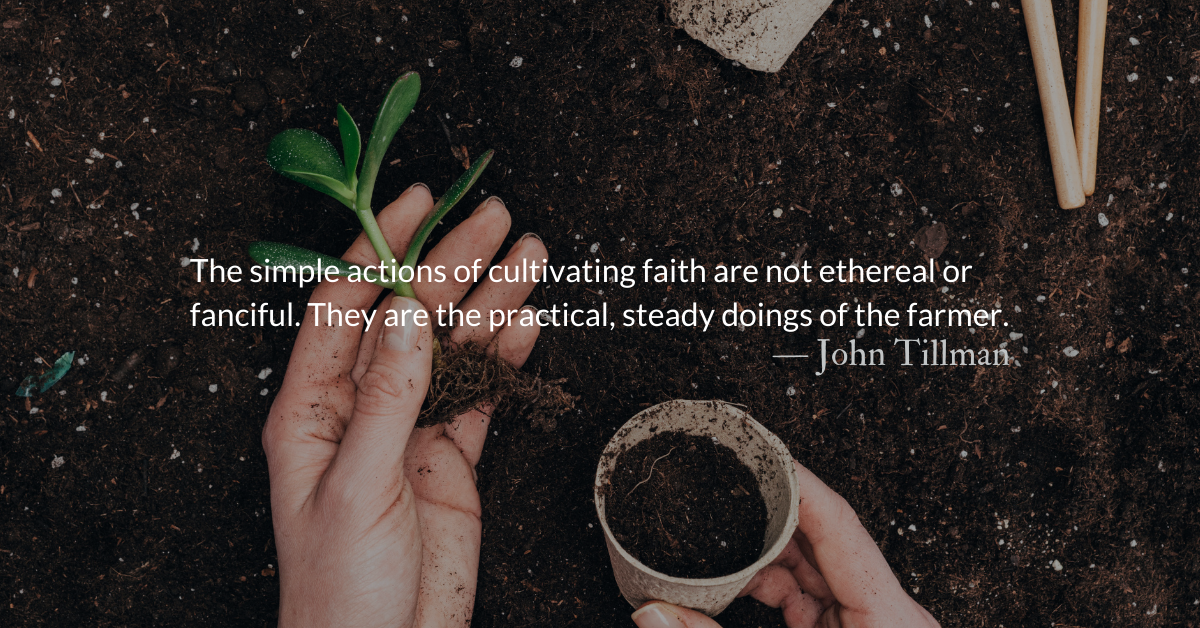
We have written before, “cultivation is supernatural,” but the simple actions of cultivating faith are not ethereal or fanciful. They are the practical, steady doings of the farmer.

Water the Ground with Prayer
Praying is like watering the soil of your heart so that it doesn’t become hard and dusty and so that the things God plants there can grow.

Jesus taught his followers to pray to God as our father. It is easy to forget to converse with God like a trusted friend or a parent. Praying is also listening, so when we pray, listen—the Holy Spirit is trying to tell us something.

Spread the Good Seed of the Bible
The Bible, the Word of God, is the good seed that God plants in us, his fields.
It is a false dichotomy to attempt to set The Holy Spirit (or Jesus) against the Bible as if we could cancel the one with the other. If Satan’s kingdom would fall when divided against itself, how much more Christ’s?

The Bible is the writing of—the very breath of—the Holy Spirit, given to the men and women who wrote the Bible. So, to hear from the Holy Spirit, the most direct method is to pick up a Bible and read.

Nourish the Soil and Pollinate through Corporate Worship
Many plants growing near one another will share water and nutrients with one another. Other plants, when they detect a closely related plant will put out less extensive roots, so as not to soak up all the resources for themselves.

When we gather to worship we are helping others to experience the fruit of the Spirit and to share our physical and spiritual resources.

Cultivation is not an out-of-the-box, pre-prepared spiritual solution. It’s customized to our culture and our climate. When we keep worshiping God with others and planting the right seeds of what we learn about the Bible, and we keep watering the soil of our hearts with prayer, “faithfulness will spring up from the earth,” and “our land will yield its harvest.”

Divine Hours Prayer: The Refrain for the Morning Lessons
Those who are planted in the house of the Lord shall flourish in the courts of our God — Psalm 92.12

– From The Divine Hours: Prayers for Springtime by Phyllis Tickle.

Today’s Readings
Proverbs 20 (Listen – 3:19)
Psalm 85 (Listen – 1:25)

Read more about Kiss of Righteousness and Peace—Guided Prayer
When love and faithfulness meet, righteousness and peace kiss each other. But before that…there is confession and justice, mercy and redemption.

Read more about The Ever-Patient Agriculturalist
Throughout the Bible, God is often pictured as an ever-patient agriculturalist. God begins by planting a garden in which to place humanity…

Facts and Harsh Realities

Scripture Focus: Proverbs 19.6-8
6 Many curry favor with a ruler, 
and everyone is the friend of one who gives gifts. 
7 The poor are shunned by all their relatives— 
how much more do their friends avoid them! 
Though the poor pursue them with pleading, 
they are nowhere to be found. h 
8 The one who gets wisdom loves life; 
the one who cherishes understanding will soon prosper.

Psalm 83.1-4
1 O God, do not remain silent; 
do not turn a deaf ear, 
do not stand aloof, O God. 
2 See how your enemies growl, 
how your foes rear their heads. 
3 With cunning they conspire against your people; 
they plot against those you cherish. 
4 “Come,” they say, “let us destroy them as a nation, 
so that Israel’s name is remembered no more.”

Reflection: Facts and Harsh Realities
By John Tillman

When we say “scripture is true,” oftentimes we mean that it is the true word of God—that it is God’s chosen means of self-revelation—the message of the gospel. However, that is not all we mean when we say that scripture is true. Sometimes the scripture being “true” just means it is spitting straight, cold, hard facts. 

Harsh facts of life are inked in black and white in Proverbs. No punches are pulled. “The poor have no friends.” “Bribes work.” “Fools die.”

These kinds of statements aren’t endorsements of these conditions or events. They are merely factual observations that are meant to encourage students toward wisdom. When Proverbs tells us that the poor have few friends, the writers are not advising us to avoid their friendship. Rather than endorsing transactional relationships and practical concerns, the wisdom of the Bible encourages impractical friendships and helping those who cannot help us in return.

The wisdom of the Bible does not come from isolated religious hermits. The writers of Proverbs and the rest of scripture lived in the real world. They knew corruption. They were acquainted with grief. They bore the burden of oppression. They tasted the lash of abusive leaders. They knew more brutal horrors of war than we do. 

Among the harshest of realities are the realities of war. Writing this post on Friday, who knows how much further the war in Ukraine may spread by Monday. Uncertainty abounds.

I’m personally connected to some Baptist mission work in Ukraine through a seminary classmate. With non-Ukrainian workers now evacuated, the group’s posts are tense with concern and vibrant with faith. The pastors and churches they support in Eastern Ukraine are in real, tangible danger. As they share pictures of their children huddled in shelters…harsh realities surround them.

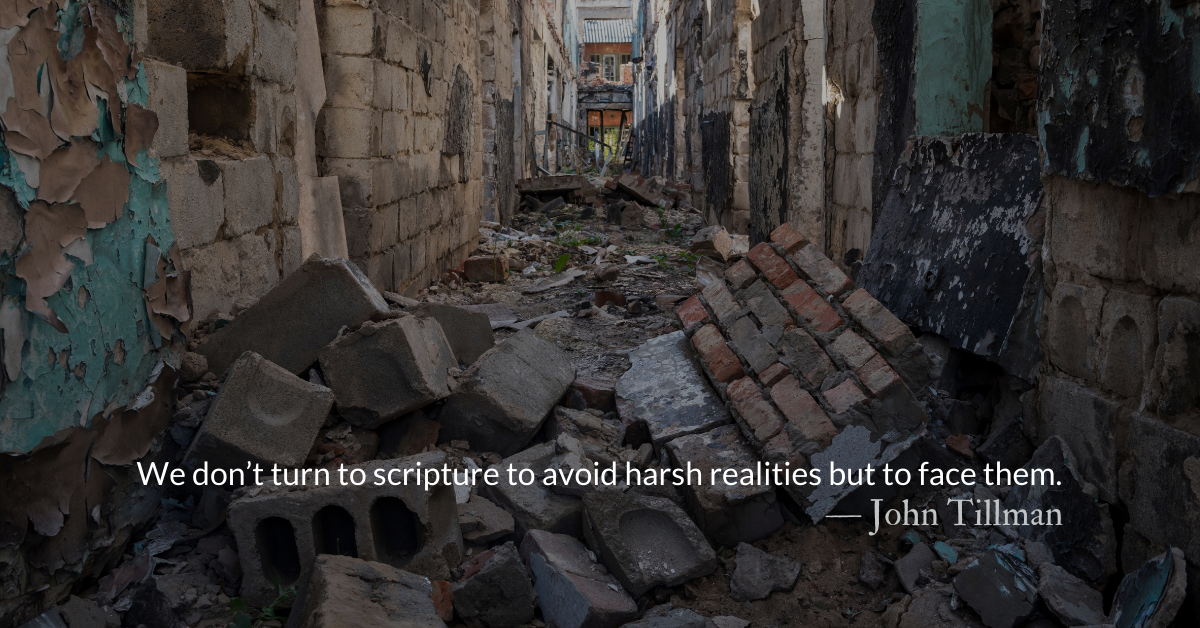
We don’t turn to scripture to avoid harsh realities but to face them. Pray continually this week over the harsh realities of war. Ukraine’s war has caught more headlines than most, but hardly a month goes by without some conflict that costs lives somewhere in the world.

The Bible acknowledges these harsh realities side-by-side with aspirational faith that justice will be done. Liars, lunatics, and war criminals will come to their end and be rewarded in kind for the evil that they do. God will not remain silent or stand aloof. He is with the suffering and the dying and those responsible will face justice.
Divine Hours Prayer: The Refrain for the Morning Lessons
Deliverance belongs to the Lord. Your blessing be upon your people! — Psalm 3.8

– From The Divine Hours: Prayers for Springtime by Phyllis Tickle.

Today’s Readings
Proverbs 19 (Listen – 3:09)
Psalm 83-84 (Listen – 3:20)

Read more about Worship and Politics
I have never heard anyone say that a politically tinged sermon which agreed with their politics was “too political.”

Read more about Are We Proud of the Prideful?
May we be and see better leaders in the mold of Christ rather than the world.

Are We Proud of the Prideful?

Scripture Focus: Proverbs 16.18-19
18 Pride goes before destruction, 
a haughty spirit before a fall. 
19 Better to be lowly in spirit along with the oppressed 
than to share plunder with the proud. 

Reflection: Are We Proud of the Prideful?
By John Tillman

Some saw the podcast, The Rise and Fall of Mars Hill, as unnecessarily dragging out dirty laundry. Most praised it for doing the laundry, dragging past sins out of darkness and into the light. An important question it poses is “What is it about us that prefers narcissists in leadership?”

A section of Proverbs 16 describes ideal qualities and actions of righteous kings. Surrounding the “kingly” proverbs are warnings against pride, including one of Proverbs’ most famous verses (Proverbs 16.18) People who know nothing about the Bible know, “Pride goes before a fall.”

Biblically, the primary thing a king or a leader needs to be is humble. This qualification is stated or implied strongly throughout the Bible. However, when we look around we rarely see this. Leaders tend to overflow with ego, bravado, spite, vitriol, and violent language (or even actual violence). Speaking callously about potential violence against one’s opponents has been normalized. (In this, Mark Driscoll was a thought leader.) Other leaders in American churches have also perpetuated this anti-biblical leadership model. We say, “May the best man win” rather than, “May the first among you become your slave.” (Matthew 20.25-28)

In most situations (whether through democracy, the economy, or church membership) people have at least some influence in choosing leaders. Why do we so often choose poorly?

This question is for our entire culture. Business and politics are deeply affected by this. The idea that hard-nosed, abusive, prideful, narcissist leaders are the best chance for success came into the church from culture. Not the other way around.

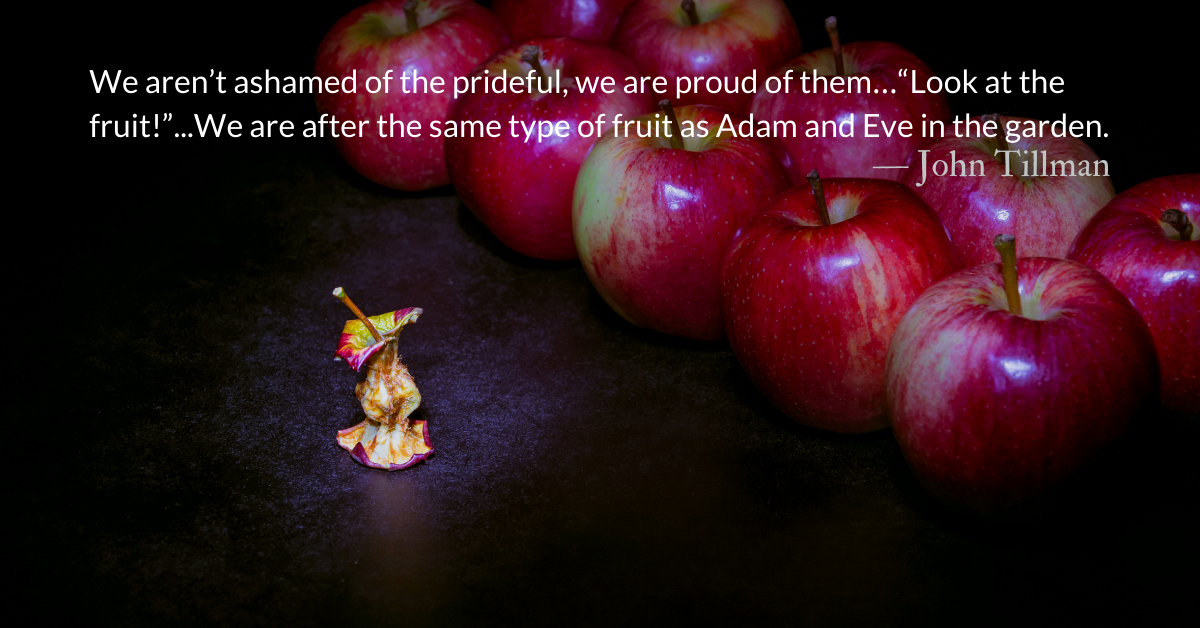
Too often, we aren’t ashamed of the prideful, we are proud of them. “Look at all they’ve done!” “Look at the growth!” “Look at the fruit!” However, the “fruit” we are typically pointing to is worldly results: attendance, book sales, etc. We are after the same type of fruit as Adam and Eve in the garden. “Look at it! It’s good for knowledge and gaining power! Take and eat.”

To select and become better leaders, we have to learn to love righteousness over results. We must learn to prefer sitting with the oppressed over divvying plunder with the proud. We need to recognize tenderness as strength and empathy as Christlike. We need to surrender our determination to win at all costs and instead count “all things loss.” (Philippians 3.8)

May we be and see better leaders in the mold of Christ rather than the world.

Divine Hours Prayer: A Reading
Then Jesus said to his disciples, “If anyone wants to be a follower of mine, let him renounce himself and take up his cross and follow me. Anyone who wants to save his life will lose it; but anyone who loses his life for my sake will find it.” — Matthew 16.24-25

– From The Divine Hours: Prayers for Springtime by Phyllis Tickle.


Today’s Readings

Proverbs 16 (Listen – 3:15)
Psalm 79 (Listen – 1:50)

This Weekend’s Readings
Proverbs 17 (Listen – 2:58), Psalm 80 (Listen – 1:58)
Proverbs 18 (Listen – 2:23), Psalm 81-82 (Listen – 2:36)’

Read more about Pride and Cowardice
The proud person, ironically, begins looking around for people of like mind who want to be sufficient unto themselves in their pride.

Read more about After the Whirlwind
Many fear that careless, vitriolic words from leaders may inspire physical violence that could erupt from either side of our fractured political spectrum.

Inner Light of the Heart

Scripture Focus: Proverbs 15.13-17 
13 A happy heart makes the face cheerful, 
but heartache crushes the spirit. 
14 The discerning heart seeks knowledge, 
but the mouth of a fool feeds on folly. 
15 All the days of the oppressed are wretched, 
but the cheerful heart has a continual feast. 
16 Better a little with the fear of the Lord 
than great wealth with turmoil. 
17 Better a small serving of vegetables with love 
than a fattened calf with hatred. 

Reflection: Inner Light of the Heart
By John Tillman

The theme of this section is the heart (or inner being) and its effects on the rest of our lives. Proverbs’ pithy, punchy format can seem like it simply states the obvious: “A happy heart makes the face cheerful.” However, obvious truths sometimes have deeper implications.

Doctors know that stress, anxiety, and depression, often thought of as intangible feelings, cause tangible harm to our bodies. Proverbs often agrees and speaks about how the spiritual affects the physical.

Emotional suffering can affect us physically and physical suffering can affect emotional well-being. Trauma responses in which victims of physical abuse relive the sensations and emotions of traumatic events are common.

“Feelings” physically affect us. Physical suffering emotionally affects us. We sometimes can’t just “get over” or “pray away” our feelings because of this mental-physical feedback loop.

Our bodies matter. Our spirit also matters. We are integrated beings—not solely spirit and not solely flesh. The resurrection body of Jesus, the firstborn from among the dead (1 Corinthians 15.20), shows us that we will not be disembodied spirits. We will not slough off flesh for a spiritual plane but be transfigured (1 Corinthians 15.50-55) into a more glorious state as heaven comes down to earth. 

Until that day, there is a bright side to physical/spiritual connection. Christians have something greater within us to rely on than our own spirit (1 John 4.4). Christ promised “rivers of living water” within us and that he would “pour out his Holy Spirit” on all flesh. The Holy Spirit is the down payment and guarantee that Christ’s promises of resurrection and eternality are true (2 Corinthians 1.21-22).

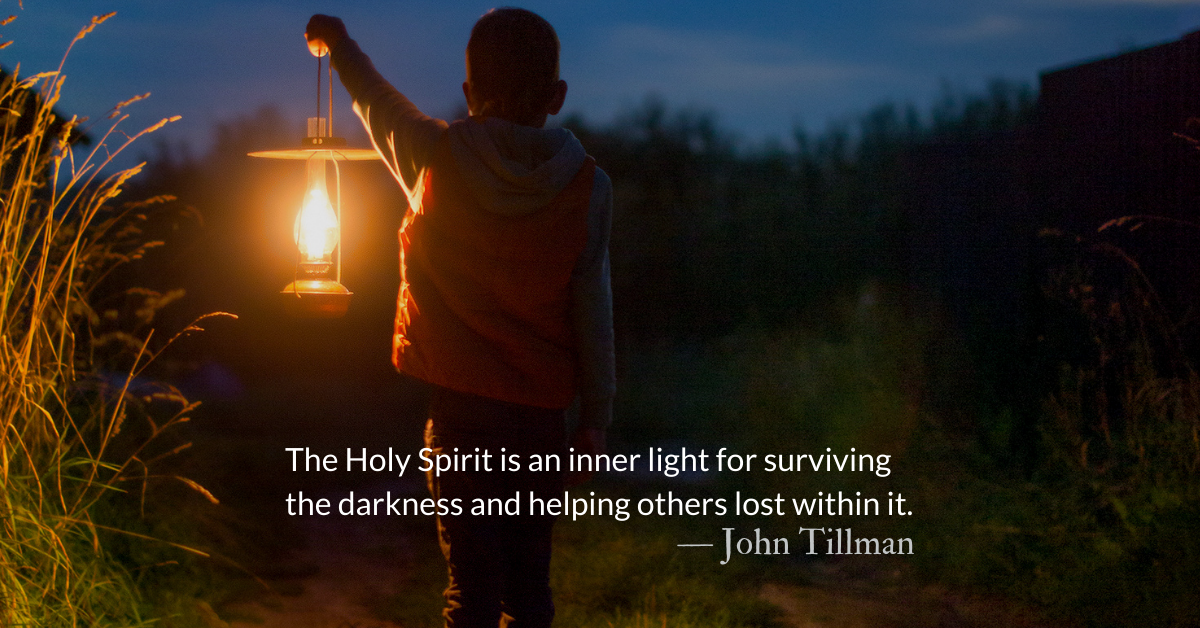
Centering our hearts on Christ can change our visages, our vision, and our vitality. The Holy Spirit is an inner light for surviving the darkness and helping others lost within it.

The world’s current reality is not the end. Many biblical authors expressed dark emotions and experienced physical suffering as the culture around them degraded them and the structures of justice and righteousness were toppled by greed and grotesque pursuits. However, they also testify that there is refreshment for our souls and hearts in scripture.

The state of our hearts affects the rest of our lives. The one who feeds on the Lord, feasts even if his body starves. The one who fears the Lord can stand against fearful things.

Through the Holy Spirit, our brightened souls can put a gleam of glory on our faces no matter what darkness surrounds us. 

Divine Hours Prayer: The Greeting
My heart is firmly fixed, O God, my heart is fixed; I will sing and make melody. — Psalm 57.7

– From The Divine Hours: Prayers for Springtime by Phyllis Tickle.


Today’s Readings
Proverbs 15 (Listen – 3:36)
Psalm 78:38-72 (Listen – 7:12)

Read more about Unprecedented Peace
War is so entrenched in our culture. Violence so widely lauded as a solution. Christians can shine in darkness by clinging to our identity as people of peace.

Read more about Hope Amidst Destruction
May we be lanterns of light, shining in a darkened land.
May God purify us and spread his glory over us.

Show Buttons
Hide Buttons
Spur a spiritual rhythm of refreshment right in your inbox
By joining this email list you are giving us permission to send you devotional emails each weekday and to communicate occasionally regarding other aspects of the ministry.
100% Privacy. We don't spam.