If Not Him, Who?

Links for today’s readings:

Jan 9  Read: Job 9 Listen: (3:22) Read: John 9  Listen: (4:56)

Links for this weekend’s readings:

Jan 10  Read: Job 10 Listen: (2:12) Read: John 10 Listen: (4:44)
Jan 11  Read: Job 11 Listen: (2:01) Read: John 11 Listen: (6:37)

Scripture Focus: Job 9.24

​​24 When a land falls into the hands of the wicked,

    he blindfolds its judges.

    If it is not he, then who is it?

Reflection: If Not Him, Who?

By John Tillman

One thorny issue Job and his friends wrestle with is God’s sovereignty.

The friends express a simplistic theology where God says, “You do A, and I’ll do B,” and never breaks this formula. Their version of “sovereignty” makes God transactional and predictable—a machine-god who outputs blessings when you input righteousness.

Job rightly calls the machine-god a lie but struggles to reconcile God’s sovereignty with the reality of evil. God seems to destroy the blameless and the wicked without distinction. Job lays human corruption at God’s feet, saying that God blinds judges, causing nations to fall into wicked hands.

“If it is not he, then who is it?”

Good question. Does God cause evil? If not, who does? If God is sovereign, how can it be anyone else?

The book of Job reveals that God’s sovereignty restrains evil, it doesn’t motivate it. From the beginning, Satan complained that God protected Job from Satan’s evil influence. God allowed Satan greater freedom to harm Job to test Job’s faith, but never completely removed his protection. Evil is limited by God’s sovereignty, not caused by it.

God did not choose or carry out Job’s sufferings. He did not command them nor did they enter his mind. (Jeremiah 19.5) Satan chose Job’s sufferings and carried them out within God’s limits. Satan’s purpose went beyond destroying Job. Satan wanted to prove that God buys faith with blessings and bribes worshipers with wealth. “Does Job fear God for nothing?” (Job 1.9) Satan wanted to prove God to be exactly the transactional, machine-god Job’s friends described.

God’s sovereignty is not a simple topic with easy, comforting answers. When (not if) we suffer illnesses, losses, or living in a corrupt country with wicked leaders and blind judges, our faith will struggle. Like Job, we may never be satisfied with why God prevents some evils and allows others. We may never understand how present evils will be twisted by God to bring about a future good. (Romans 8.18-28)

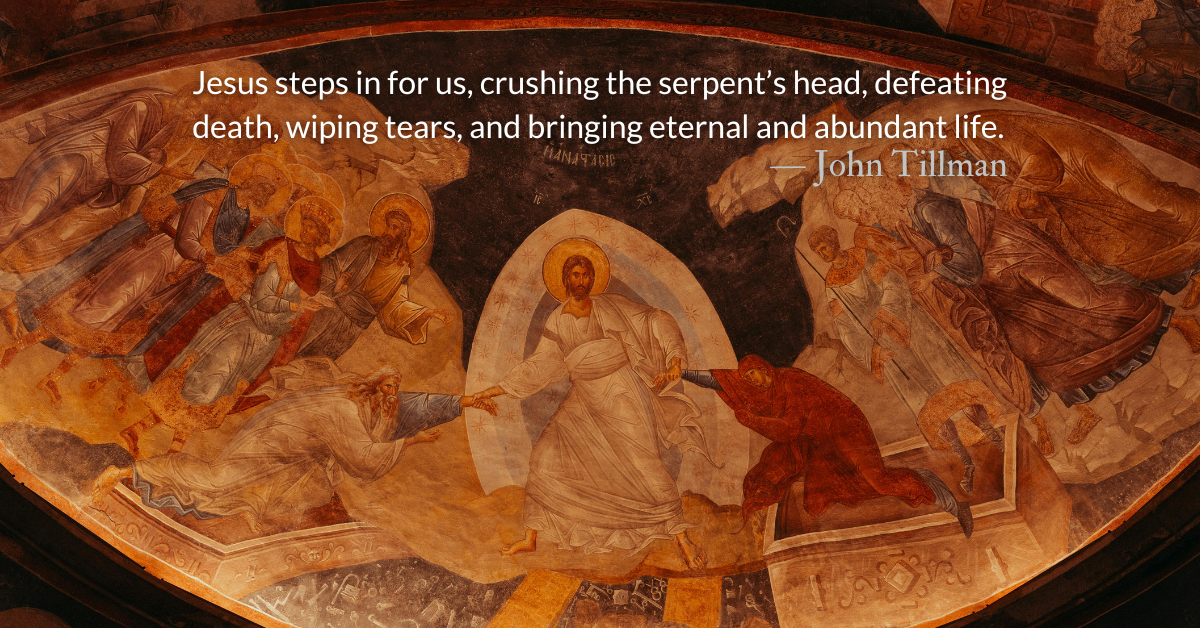
To begin to understand, look to the mediator Job called for. Jesus is God’s sovereign answer to evil. God steps in for Job, overturning evils with new life, relationships, joys, and growth. Jesus steps in for us, crushing the serpent’s head, defeating death, wiping tears, and bringing eternal and abundant life.

Not only does God’s sovereignty limit evil, it ends evil through Jesus. Come Lord Jesus. All our answers are in him. If not him, who?

Divine Hours Prayer: The Request for Presence

O Lamb of God, that takes away the sins of the world, have mercy on me.
O Lamb of God, that takes away the sins of the world, grant me your peace.

– From The Divine Hours: Prayers for Autumn and Wintertime by Phyllis Tickle.

Read more: Christ, Our “If Only…”

Thank God that he is the God who does the unthinkable on behalf of the unworthy.

Read The Bible With Us

Reading the Bible is great. But reading with others is better. Invite friends to join our sustainable, two-year paced Bible reading plan.

https://mailchi.mp/theparkforum/m-f-daily-email-devotional

Principles, Promises, and Presence

Links for today’s readings:

Jan 8  Read: Job 8 Listen: (2:09) Read: John 8 Listen: (7:33)

Scripture Focus: Job 8.11-19

11 Can papyrus grow tall where there is no marsh? 

Can reeds thrive without water? 

12 While still growing and uncut, 

they wither more quickly than grass. 

13 Such is the destiny of all who forget God; 

so perishes the hope of the godless. 

14 What they trust in is fragile; 

what they rely on is a spider’s web. 

15 They lean on the web, but it gives way; 

they cling to it, but it does not hold. 

16 They are like a well-watered plant in the sunshine, 

spreading its shoots over the garden; 

17 it entwines its roots around a pile of rocks 

and looks for a place among the stones. 

18 But when it is torn from its spot, 

that place disowns it and says, ‘I never saw you.’ 

19 Surely its life withers away, 

and from the soil other plants grow.

Reflection: Principles, Promises, and Presence

By John Tillman

The problem with Job’s friends is not the content but the application. Much of what they say is wise and true.

Bildad’s chapter eight speech is an example. It’s true that plants can’t thrive without water, and we can’t thrive without God. It’s true that trusting in the things our culture prizes is like expecting a spider’s web to save you from a fall. It’s true that plants with shallow roots in rocky ground don’t survive hardship, and when our faith is shallow, it is easily uprooted. We can find similar statements in Proverbs, Psalms, the prophets, and in Jesus’ teachings. The concepts are sound, but the wisdom is misapplied to try to “fix” Job through shame and blame.

Job’s friends interpret words of wisdom as universally true conditional promises. Then, they accuse Job of breaking the conditions. “The reason these aren’t true for you, Job, is you fail to satisfy the conditions of the promise.” They act as if fixing Job’s faith will fix everything.

Words of wisdom are not promises or prophecies. They are principles. When we misinterpret principles as promises, disappointment and disillusionment are inevitable. When we quote principles as promises to those in suffering, intending to cheer them up or “fix” their faith, we damage what we want to strengthen. Fixing their faith, even if we can, rarely fixes everything.

Those harmed in this way can develop an adverse reaction to the Bible itself. We can understand why. They see it as a hurtful bludgeon instead of a healing balm. You may know someone like this or have experienced this yourself. Quoting more verses can’t easily fix this, even if properly applied. It is unhelpful to sing “songs to a heavy heart.” (Proverbs 25.18-20)

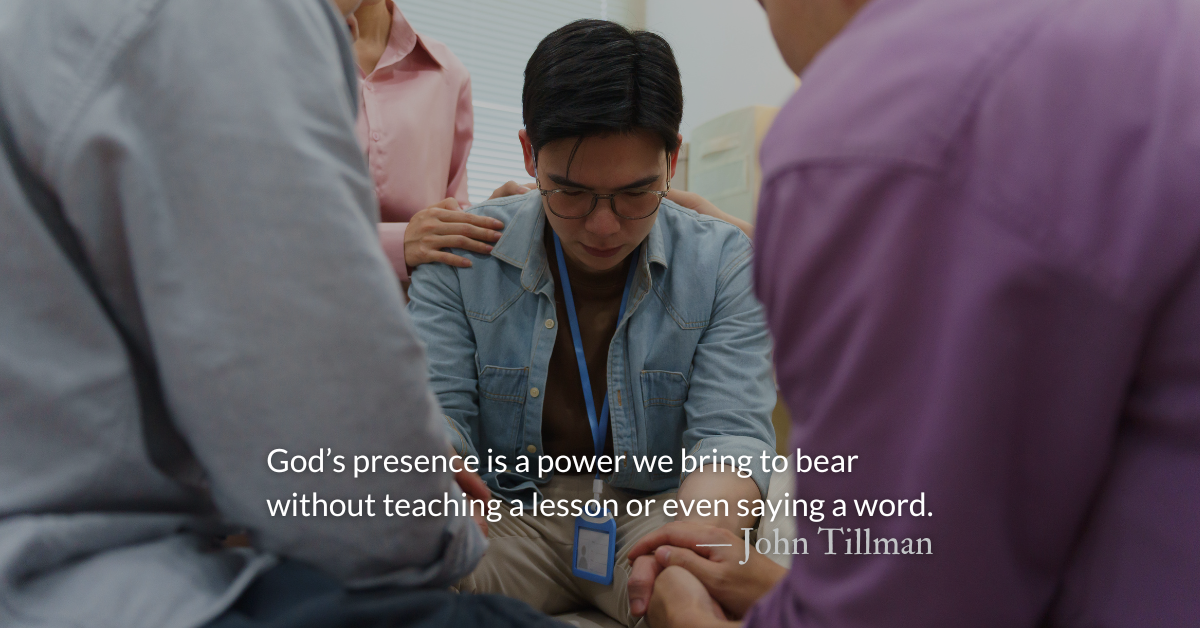
Helping friends in suffering like Job’s is harder than quoting the perfect proverbs or Bible verses to teach them a lesson. Before leaning on rhetoric, rest in God’s presence. Awareness of God’s presence with us is more comforting than promises for the future and more corrective than lectures about our past. God’s presence is a power we bring to bear without teaching a lesson or even saying a word.

To the hurting, your presence (and the presence of God you bring) is better than a promise, even if the promise is true. Love must come before lessons and preparing the soil before sowing a seed.

Divine Hours Prayer: The Refrain for the Morning  Lessons

And they will say, “Surely, there is a reward for the righteous; surely, there is a God who rules in the earth.” — Psalm 58.11

– From The Divine Hours: Prayers for Autumn and Wintertime by Phyllis Tickle.

Read more about Unhurried Wisdom

If we are not presently in Job’s position, we are one of the friends. The world around us is constantly suffering…

Read The Bible With Us

Share this subscription link with friends, family, or your community of faith. Find joy reflecting on God’s Word!

https://mailchi.mp/theparkforum/m-f-daily-email-devotional

When Life Feels Meaningless

Links for today’s readings:

Jan 7  Read: Job 7 Listen: (2:23) Read: John 7 Listen: (5:53)

Scripture Focus: Job 7:13-16

13 When I think my bed will comfort me
    and my couch will ease my complaint,
14 even then you frighten me with dreams
    and terrify me with visions,
15 so that I prefer strangling and death,
    rather than this body of mine.
16 I despise my life; I would not live forever.
    Let me alone; my days have no meaning.

Reflection: When Life Feels Meaningless

By Erin Newton

It’s 8am; my alarm goes off with the alert: “Good brain meds.” When my doctor prescribed medication for my worsening anxiety, I was a little disappointed. Four decades had I coped and managed and now—I couldn’t even function.

Job and I are good friends. A miserable soul he is, and I like that. He’s a man of suffering and familiar with pain (Isa 53.3), but unlike our Lord, he does open his mouth. He complains.

The story of Job opens with a heavenly scene where we, the readers, get an inside view of what lies behind Job’s suffering. But Job is on the receiving end of pain and misery. He is in deep grief over the loss of his children. He is in deep financial ruin. He’s now covered in sores. And his wife and friends aren’t the best comforters.

Job’s words feel personal. We are familiar with the exhaustion at the end of the day, looking at going to sleep as our only comfort. We then toss and turn in our beds, sometimes (in my case it was daily) tormented by nightmares. We despise the chronic pain in our body or the instability of our minds. Leave me alone, we beg.

The beauty of the book of Job is the rawness of emotions. Finally! Someone gets it! We commiserate with Job and his pain. We have been there too. Maybe we are there now.

“I have come that they may have life, and have it to the full” (John 10.10). “Now is your time of grief, but I will see you again and you will rejoice, and no one will take away your joy” (John 16.22).

Life and joy are promises. They are given by God even if our minds cannot grasp it. It’s not really our duty to feel the joy he’s giving us all the time. We can try and we can pray for it. But the life and joy he promises are more deeply rooted than our own feelings.

As this new year begins, I encourage you to seek help if Job’s words sound like your own. I have. I have found help from friends and family, spiritual guides, pastors, biblical and regular counseling. I have a psychiatrist and doctor at my side now too.

We are so thankful that you are here today. Stay. May the joy that cannot be taken away be tangible even today.

Divine Hours Prayer: The Request for Presence

Gladden the soul of your servant, for to you, O Lord, I lift up my soul. — Psalm 86.4

– From The Divine Hours: Prayers for Autumn and Wintertime by Phyllis Tickle.

Read more about Counting Waves

The disciples urged Jesus to awake, their voices strained with fear. “Teacher, do you not care if we drown?”

Read The Bible With Us

There is meaning to be found in the scriptures. Join our Bible reading plan and seek meaning with us at a sustainable, two-year pace.

https://mailchi.mp/theparkforum/m-f-daily-email-devotional

Constant Streams

Links for today’s readings:

Jan 6  Read: Job 6 Listen: (2:56) Read: John 6 Listen: (8:27)

Scripture Focus: Job 6.14-21

14 “Anyone who withholds kindness from a friend

    forsakes the fear of the Almighty.

15 But my brothers are as undependable as intermittent streams,

    as the streams that overflow

16 when darkened by thawing ice

    and swollen with melting snow,

17 but that stop flowing in the dry season,

    and in the heat vanish from their channels.

18 Caravans turn aside from their routes;

    they go off into the wasteland and perish.

19 The caravans of Tema look for water,

    the traveling merchants of Sheba look in hope.

20 They are distressed, because they had been confident;

    they arrive there, only to be disappointed.

21 Now you too have proved to be of no help;

    you see something dreadful and are afraid.

Reflection: Constant Streams

By John Tillman

Job needed comfort. He needed the refreshment of kindness. Instead, Job’s wife told him to “curse God and die.” (Job 2.9) Job’s friends subtly (and not so subtly) blamed him for some secret sin, some fatal flaw bringing God’s judgment. Job compared them to inconstant streams.

In the ancient Near East and the American Southwest, wadis carve their way across the desert. Wadis vary in size. Some are like a ditch. Many are like small canyons. In the rainy season, water and snowmelt rush down from the heights and surrounding mountains, filling the wadis and bringing life to the desert. But in the dry season, when water is most needed, the wadis are dry.

A wadi isn’t a person. And a wadi being dry in the dry season is not a surprise. It’s not a choice. When Job needed it most, in his driest season, all his resources ran out. But they should have been reliable. Can you relate?

You might feel that you are waiting by a dry stream now. But something else is true about wadis. Rain far, far away in the hills can cause them to suddenly fill up with water. We are at the very beginning of Job and there are many long chapters of debate, arguing, and angst ahead of us. But at the end, Job is refreshed by others. Rain is on the way.

God uses Job’s friends to restore him. (Job 42.10-11) Scripture describes a scene not unlike the end of It’s a Wonderful Life. Every relative and person Job knew came to him with a financial gift. Job was “the richest man in town” once again.

There are two lessons for us here. First, like Job, we may need to wait for God’s answer, but we should not doubt that it is coming. However dry our streams are, even when friends dry up, remember that God makes streams in the desert. (Isaiah 43.19-21; 44.3-4; Psalm 65.9; 74.15; 78.16)

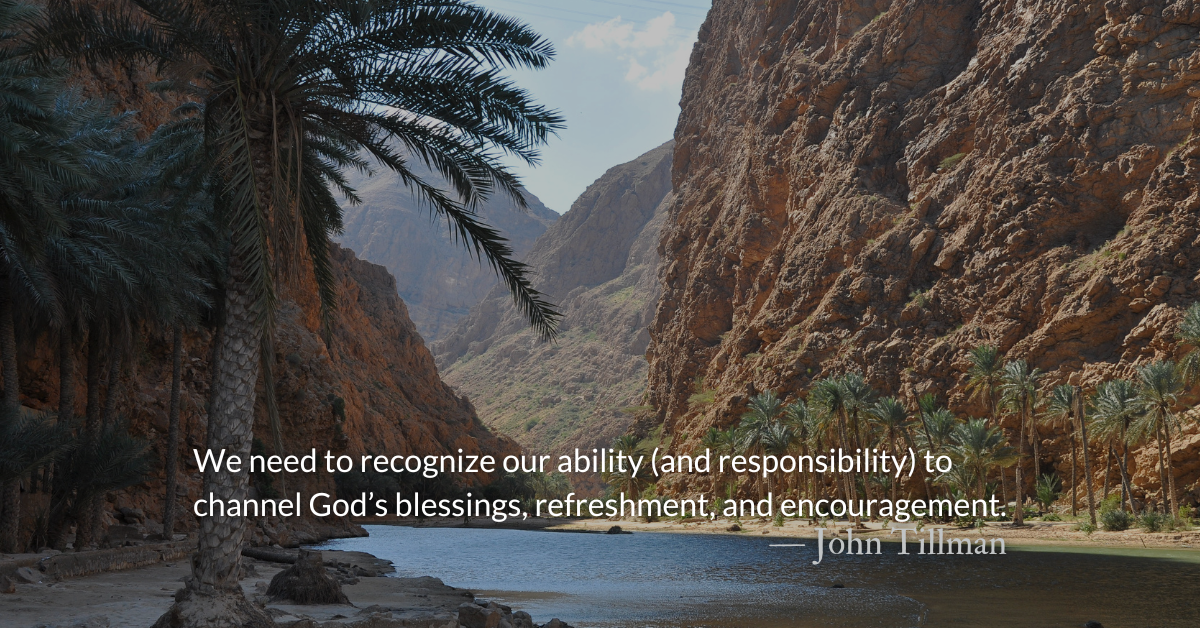
Second, as friends, we need to recognize our ability (and responsibility) to channel God’s blessings, refreshment, and encouragement. Eliphaz dreaded Job’s fate. (Job 6.21) His fear dried up his encouragement. He blamed Job to shield himself. When our friends struggle, instead of fearing their fate or protecting ourselves by subtly blaming them, lean into how much God loves them.

Don’t be an inconstant stream. Open up and let God’s love be made tangible in us. Let constant streams of God’s love flow to and through us.

Divine Hours Prayer: The Refrain for the Morning Lessons

When the Lord restores the fortunes of his people, Jacob will rejoice and Israel be glad. — Psalm 14.7

– From The Divine Hours: Prayers for Autumn and Wintertime by Phyllis Tickle.

Read more: Manna or the Man?

What are our motives for pursuing Jesus? Do we want the man or just the manna?

Read The Bible With Us

Reading the Bible has never been easier, yet Biblical illiteracy is growing. Join our Bible reading plan. Find meaning in the Bible at a sustainable, two-year pace.

https://mailchi.mp/theparkforum/m-f-daily-email-devotional

Hope’s Messengers and Means

Links for today’s readings:

Jan 5  Read: Job 5 Listen: (2:29) Read: John 5 Listen: (5:42)

Scripture Focus: Job 5.8-16

8 “But if I were you, I would appeal to God;

    I would lay my cause before him.

9 He performs wonders that cannot be fathomed,

    miracles that cannot be counted.

10 He provides rain for the earth;

    he sends water on the countryside.

11 The lowly he sets on high,

    and those who mourn are lifted to safety.

12 He thwarts the plans of the crafty,

    so that their hands achieve no success.

13 He catches the wise in their craftiness,

    and the schemes of the wily are swept away.

14 Darkness comes upon them in the daytime;

    at noon they grope as in the night.

15 He saves the needy from the sword in their mouth;

    he saves them from the clutches of the powerful.

16 So the poor have hope,

    and injustice shuts its mouth.

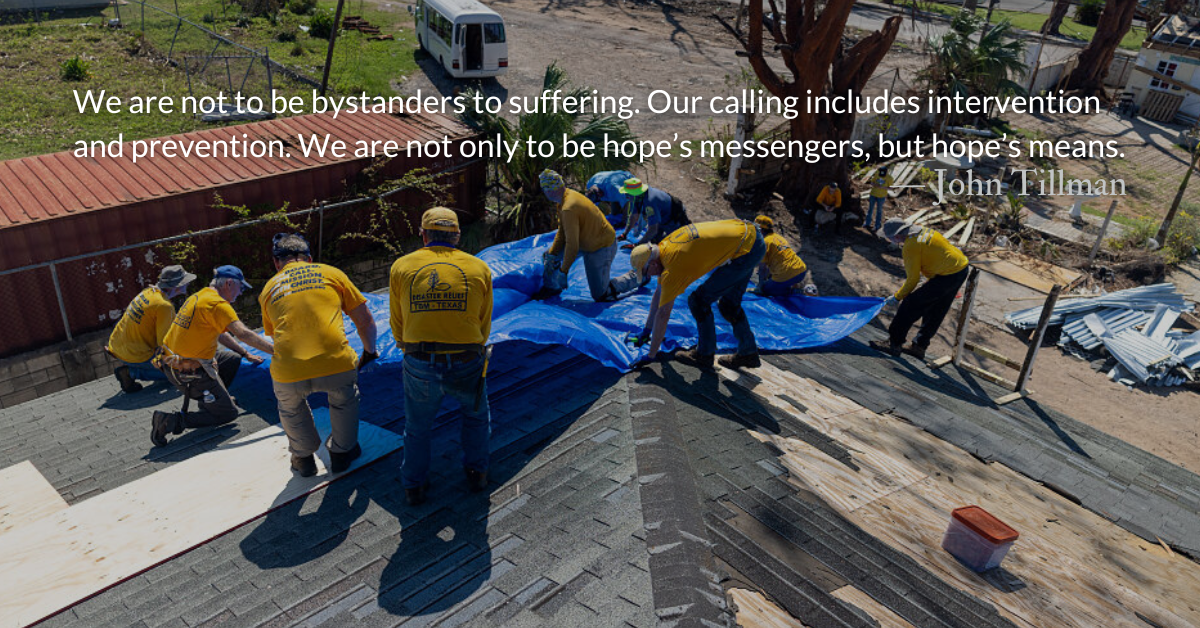
Photo Info: Today’s photo is of Texans on Mission doing disaster relief in Jamaica, following Hurricane Melissa. Donate to disaster relief of your choice, or donate here, to Texans on Mission.

Reflection: Hope’s Messengers and Means

By John Tillman

An important part of interpreting scripture is knowing who is speaking to whom.

A famous internet meme shows an inspirational “verse of the day” calendar with the following text: “If thou therefore wilt worship me, all shall be thine.” (Luke 4.7) The text is less inspirational when you realize it is Satan speaking. When reading Job, we must be careful. Not all speakers are reliable sources of wisdom.

Job’s friends start well. They are deeply empathetic and caring. They share Job’s grief, sitting silently with him in his suffering. But once the conversation starts, they lose patience, and empathy evaporates. Even so, not everything they say is foolishness.

Shakespeare loved to hide truths in the lines uttered by his clowns, buffoons, and fools. Thus, Polonius gives us, “To thine own self be true.” Similarly, golden proverbs are sometimes found in the mouths of Job’s foolish friends.

After Job, Eliphaz is the first to speak. Of all the friends’ speeches, this first one is the least problematic. However, as we read Job’s friends, we must keep in mind their errors. God condemns them for not having “spoken the truth about me, as my servant Job has.” (Job 42.7

In what ways do the friends not tell the truth about God? 1) They assume suffering, including Job’s, is caused by sin. 2) They assume moral superiority over Job. 3) They assume God’s motives regarding Job.

Correcting for these errors, we can find truth and encouragement in what Eliphaz says. So what does Eliphaz get right?

When we are in trouble or suffering, we should appeal to God based on God’s nature. God is a wonder worker, a healer, a provider, and a restorer of lost things. God lifts the lowly, mourning, and needy. Call on him by these qualities.

When we witness those in trouble or suffering, rather than pass judgment as Eliphaz did, we should act based on God’s nature manifested in us. Being God’s image-bearers includes living out his nature as rescuers, healers, and helpers. To God’s self we must be true. Let us bring God’s hope and help by shining light to those in darkness, pulling the weak from the clutches of the powerful, and shutting the mouth of injustice, breaking its teeth.

We are not to be bystanders to suffering. Our calling includes intervention and prevention. We are not only to be hope’s messengers, but hope’s means.

Divine Hours Prayer: The Call to Prayer

Bless the Lord, O my soul, and all that is within me, bless his holy Name.
Bless the Lord, O my soul, and forget not all his benefits. — Psalm 103.1-2

– From The Divine Hours: Prayers for Autumn and Wintertime by Phyllis Tickle.

Read more: The Waiting Man

What pools have you been waiting around? Are you growing complacent or bitter? Are you ready to give up? Is your heart paralyzed instead of your legs?

Read The Bible With Us

There’s no wrong plan to read the Bible. But we are confident that our sustainable, two-year pace builds in time for reflection and growth. Join us.

https://mailchi.mp/theparkforum/m-f-daily-email-devotional