The Coventry Carol — Carols of Advent Peace

Scripture Focus: John 11.32-35
32 When Mary reached the place where Jesus was and saw him, she fell at his feet and said, “Lord, if you had been here, my brother would not have died.”
33 When Jesus saw her weeping, and the Jews who had come along with her also weeping, he was deeply moved in spirit and troubled. 34 “Where have you laid him?” he asked.
“Come and see, Lord,” they replied.
35 Jesus wept.

Matthew 2.16-18
16 When Herod realized that he had been outwitted by the Magi, he was furious, and he gave orders to kill all the boys in Bethlehem and its vicinity who were two years old and under, in accordance with the time he had learned from the Magi. 17 Then what was said through the prophet Jeremiah was fulfilled:

18 “A voice is heard in Ramah,
    weeping and great mourning,
Rachel weeping for her children
    and refusing to be comforted,
    because they are no more.”

Reflection: The Coventry Carol — Carols of Advent Peace
By Jon Polk

The peaceful sounding hymn, “The Coventry Carol,” with its calming chorus of “lully, lullay” (an onomatopoeia also found in the word lullaby), could be a perfect song for singing a sweet baby to sleep.

O sisters too, how may we do
For to preserve this day
This poor youngling for whom we sing,
“Bye bye, lully, lullay”?

The carol takes a decidedly dark turn in the second verse.

Herod the king, in his raging,
Charged he hath this day
His men of might in his own sight
All young children to slay.

Not what we might expect from a lullaby, these are the words of Bethlehem mothers grieving over their doomed sons. Yes, this carol depicts the often-overlooked postscript to the nativity story, the grim ‘Massacre of the Innocents.’ 

The mothers’ despair results from Herod’s order to kill all the male infants in Bethlehem under the age of two, his reaction to the inquiry of the Magi about the baby born to be king.

Certainly not a scene one typically finds in a modern Christmas pageant.

“The Coventry Carol” originates from 16th century Coventry, England, where it was performed, in fact, in a play called, The Pageant of the Shearmen and Tailors, a medieval performance depicting the complete nativity story from chapter two of Matthew, including the death of the young boys.

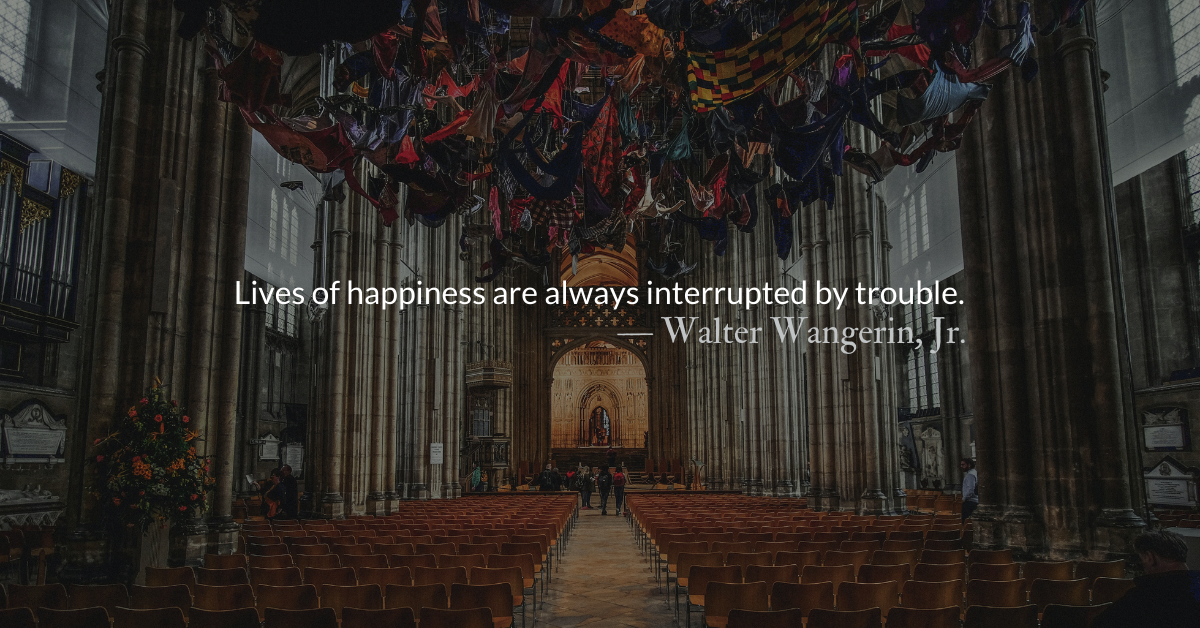
Of this horrific incident, Walter Wangerin writes, “It’s a hard thing to think about that event—especially now when it interrupts our Christmas joy. Yet it must be remembered, because lives of happiness are always interrupted by trouble.”

This haunting song reminds us that even the birth of our Savior is accompanied by grief and tragedy. For many, Christmas may not be ‘the most wonderful time of the year,’ but instead, a time when painful memories of missing loved ones or difficult days past overshadow our experience of the season.

Something lovely happens in the final verse, however. 

That woe is me, poor child, for thee
And ever mourn and may
For thy parting neither say nor sing,
“Bye bye, lully, lullay.”

The lamenting mothers recognize “thy parting,” that Mary and Joseph are able to flee to Egypt with the baby. Solace can be taken in the knowledge that Jesus has escaped the wrath of Herod. Christ’s final ‘parting’ will come with his own brutal death, which will serve to bring ultimate peace to humanity.

If you are grieving over loss this Christmas time, know that is okay.

If you are lamenting the past this Christmas, know that is okay.

If you are struggling to feel “Christmas-y” this year, know that is okay.

Take heart. Christ is coming. Peace will prevail. The empty manger ultimately leads to an empty tomb.

Listen: The Coventry Carol by Alison Moyet
Read: Lyrics from Hymnary.org

Image Note: The picture used in our image is from an artistic display at the Canterbury Cathedral by the British artist Arabella Dorman. It is made up of hundreds of items of refugee clothing, found largely on the beaches of the Greek island of Lesbos. It is a reminder to us of the violence and darkness refugees flee from, as did the holy family, and the light of Christ that promises to overturn that darkness. The unedited image can be viewed here

Divine Hours Prayer: The Refrain for the Morning Lessons
Be strong and let your heart take courage, all you who wait for the Lord. — Psalm 31.24

– Divine Hours prayers from The Divine Hours: Prayers for Autumn and Wintertime by Phyllis Tickle

Today’s Readings
Zechariah 8 (Listen – 3:33)
John 11 (Listen – 4:44)

Read more about End of Year Giving and Supporting our work
If you have not donated this year (or ever), please prayerfully consider joining our donors, with either a one-time or monthly donation.

Read more about Joy Despite Everything :: Joy of Advent
Martha greets us at the darkest point of her life. When faith has failed. When her wick smolders. Martha shows us how to wait.
Of Pride and The Sword

Scripture Focus: Ezekiel 32.9-10, 19-21
9 I will trouble the hearts of many peoples 
when I bring about your destruction among the nations, 
among lands you have not known. 
10 I will cause many peoples to be appalled at you, 
and their kings will shudder with horror because of you 
when I brandish my sword before them. 
On the day of your downfall 
each of them will tremble 
every moment for his life. 

19 Say to them, ‘Are you more favored than others? Go down and be laid among the uncircumcised.’ 20 They will fall among those killed by the sword. The sword is drawn; let her be dragged off with all her hordes. 21 From within the realm of the dead the mighty leaders will say of Egypt and her allies, ‘They have come down and they lie with the uncircumcised, with those killed by the sword.’ 

Matthew 26.52
“…all who draw the sword will die by the sword.”  

Reflection: Of Pride and The Sword
By John Tillman

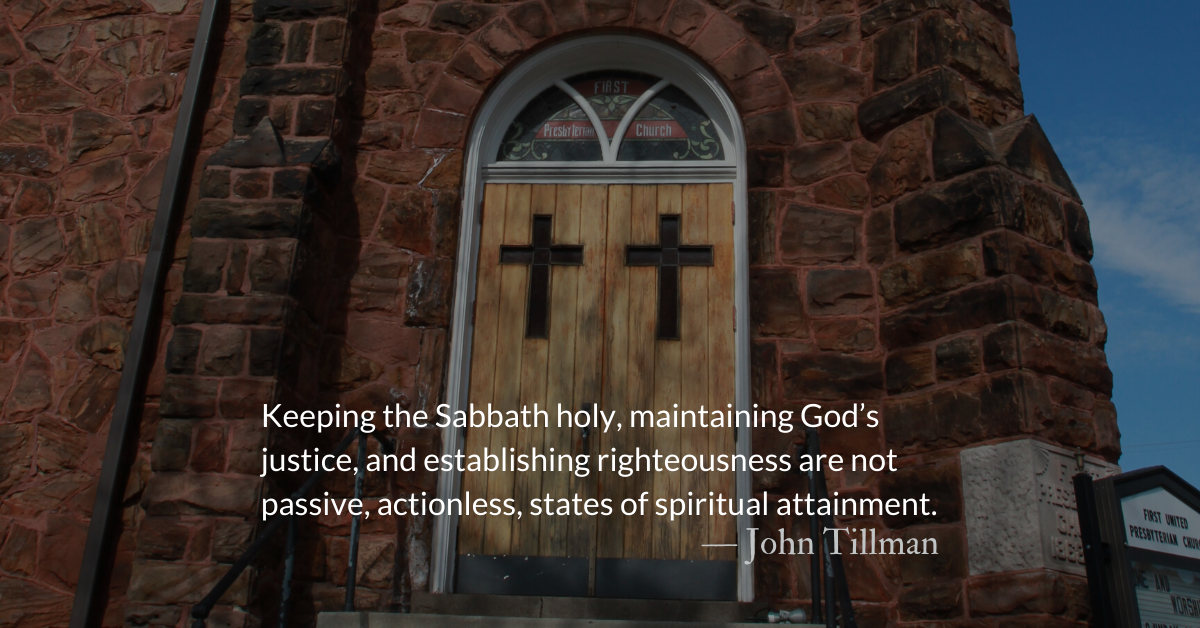
Jesus does not simply make up this proverb (Matthew 26.52) about the sword out of thin air. 

Jesus was pointedly referencing the recurrent theme of the sword in scripture. He did so both as a warning to Peter and the disciples and a condemnation of the religious leaders and the empire with which they were partnering in his unjust murder.

The English phrase “the sword” is mentioned over 1,400 times in the New International Version of the Bible. Its usage is sometimes literal, but the word is often used as a metaphor for violence. It is sometimes the violence of war between nations, sometimes the violence of nations against their own poor, orphans, widows, and foreigners, and sometimes the violence between people.

In scripture the sword is not inanimate. The sword is hungry, with an appetite to devour individuals, races, nations, kings, and empires. (2 Samuel 11.25; Jeremiah 46.14) The sword is wielded by kings and empires and then cuts them down. Even David, the human archetype of the messiah to come, wielded the sword selfishly and was told “the sword will never depart from your house,” as a result. (2 Samuel 12.10)

God’s question to Egypt, (Ezekiel 32.19) “Are you more favored than others?,” could be phrased, “Are you the exception?” This question implies a belief in Egyptian exceptionalism. Many nations think so. “Other nations have fallen, but we can not. Other nations were foolish, but we are wise. Other nations are evil, but we are worthy of praise.”

God had emphasized to Egypt that greater nations than she had fallen due to pride and abuse of authority. Despite how Egypt, or any nation, postures itself, those who live by the sword will fall by it. Those who profit by violence will face justice.

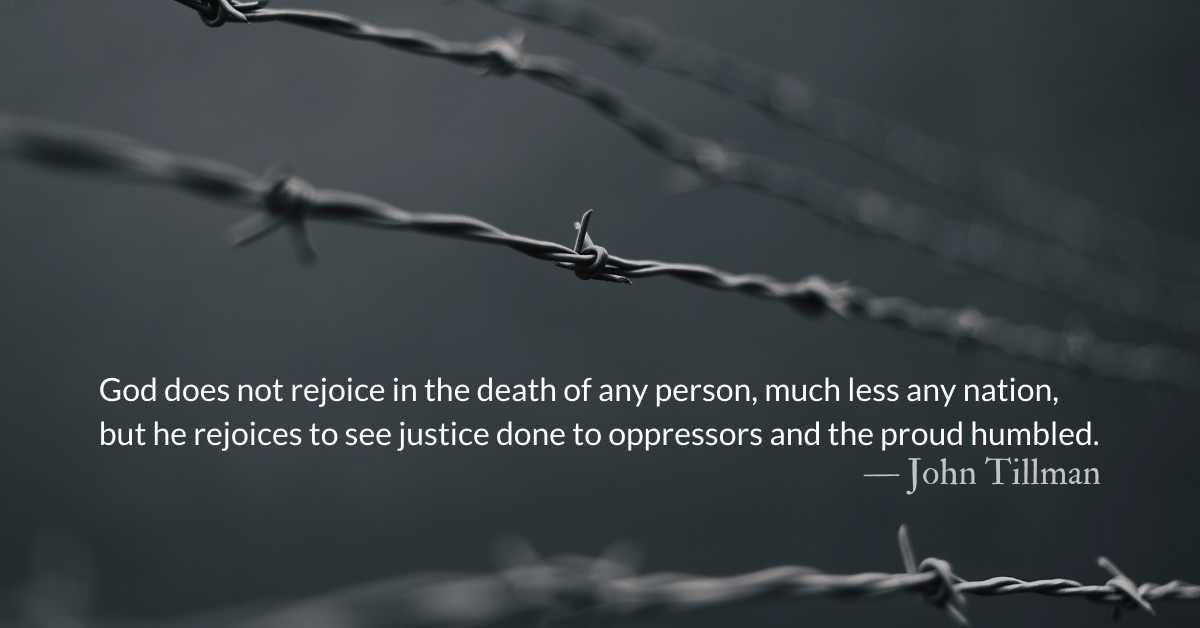
God does not rejoice in the death of any person, much less any nation (Ezekiel 33.11; 2 Peter 3.9), but he rejoices to see justice done to oppressors and the proud humbled. 

As individuals and nations, may we learn this in humility. May we not puff ourselves up with pride. May we not deny our sins but confess and repent. Then, rather than shake with fear, (Ezekiel 32.10) we may rejoice on the day oppressors fall, unjust governments are unseated, and Jesus, with the sword of his mouth (Revelation 19.11-16) cuts down wielders of the sword who oppose justice.

Divine Hours Prayer: The Refrain for the Morning Lessons
The fool has said in his heart, “There is no God.” — Psalm 14.1

– Divine Hours prayers from The Divine Hours: Prayers for Summertime by Phyllis Tickle

Today’s Readings
Ezekiel 32  (Listen – 5:30) 
Psalm 80 (Listen – 1:58)

Read more about Hearing the Groans of the Prisoner
He hears the cries of all those oppressed by their rulers. He judges all rulers and leaders who conduct themselves with pride and irresponsibility.

https://theparkforum.org/843-acres/hearing-the-groans-of-the-prisoners/

Read more about Prepare for the End
Christians are sometimes guilty of looking forward to the apocalypse like a private revenge fantasy.

The Tomb of the Unknown Savior—Readers’ Choice

Selected by reader, Lucy
It pointed out that Jesus’ enemies knew him better than his disciples. I thought about how well I know/love Him.

Originally published, July 17, 2020, based on readings from Jeremiah 13 & Matthew 27.

Scripture Focus: Matthew 27.63-66

“Sir,” they said, “we remember that while he was still alive that deceiver said, ‘After three days I will rise again.’ So give the order for the tomb to be made secure until the third day. Otherwise, his disciples may come and steal the body and tell the people that he has been raised from the dead. This last deception will be worse than the first.”

“Take a guard,” Pilate answered. “Go, make the tomb as secure as you know how.” So they went and made the tomb secure by putting a seal on the stone and posting the guard.

Reflection: The Tomb of the Unknown Savior—Readers’ Choice
By John Tillman

Christ’s mission and calling were a secret hidden in plain sight.

Jesus spoke about everything else in parables and spoke about his death in plain language, so perhaps we can forgive the disciples for not realizing that he meant what he said about his death literally.

Mary of Bethany may have been the only disciple who realized Jesus was about to die a sacrificial death, but it seems only his enemies remembered that Christ also promised to come back to life.

No one else seems prepared for Jesus’ resurrection as extensively as the chief priests and the Pharisees. Their concern is so urgent that they risk being made unclean for the remainder of the Passover week’s celebrations by going to Pilate on the Sabbath, the day after Preparation Day.

They outline the details of what they believe will be a conspiracy to fake a resurrection. (This is a conspiracy they will bribe the soldiers to maintain later.) Pilate grants their request, giving them a selection of the highest paid, best trained, best equipped soldiers in the world to guard a tomb.

Guarding the tomb of a penniless, itinerant prophet, with the equivalent of US Navy Seals might seem like overkill when the sneak attack you are expecting is from untrained tradesmen like the disciples, but the enemies of Christ knew how explosive his message was.

Fear of the political fallout of Christ’s message was one of the main reasons the religious elite had sought his death. For them, a violent, idolatrous, pagan government that allowed them to continue in power was preferable to following Jesus and losing their wealth and influence. In our heart of hearts we can certainly identify with their concerns.

When it came to Christ’s teaching about death and resurrection these corrupt men, who were Christ’s harshest critics, knew him better than his followers.

Jesus was a man even his closest friends didn’t fully know. He lay as a guest in a tomb belonging to a secret disciple. His followers, once considered so dangerous they were an existential threat to the state, scattered, abandoned him, and hid.

Jesus in the grave is the unknown savior. What happens next will change the world forever.

Divine Hours Prayer: The Refrain for the Morning Lessons

Blessed be the Lord day by day, the God of our salvation, who bears our burdens.
He is our God, the God of our salvation; God is the Lord, by whom we escape death. — Psalm 68.19-20

– Divine Hours prayers from The Divine Hours: Prayers for Summertime by Phyllis Tickle


Today’s Readings
Jeremiah 49 (Listen – 7:15)
Psalm 26-27 (Listen – 3:13)

Read more about The Importance of Resurrection :: Throwback Thursday
If there is no resurrection, neither is there any God nor Providence, but all things are driven and borne along for themselves.

The Importance of Resurrection :: Throwback Thursday

Read more about Supporting our Work

The Park Forum strives to provide short, smart, engaging, biblical content to people across the world for free with no ads. Gifts to The Park Forum support this mission.

Living Is Harder—Readers’ Choice

Selected by reader, Azikiwe, New York
This devotional is one of the most impactful this year because of its simplicity. Self-reflection on our daily interactions and tasks causes you to be intentional, with how your time is spent; is it on yourself or through living out the gospel. This means even when I don’t want to, instead allowing the Holy Spirit to lead and guide me. Surrendering to God’s will over my life, moment by moment.

Originally published, July 16, 2020, based on readings from Jeremiah 12 & Matthew 26.

Scripture Focus: Matthew 26.35
“Even if I have to die with you, I will never disown you.” And all the other disciples said the same.

Reflection: Living Is Harder—Readers’ Choice
By John Tillman

“Dying to self” and “carrying our cross” are biblical metaphors for self-sacrificial living, but sometimes they become a literal, lived reality.

Many sermons (mostly to youth groups) challenge believers with the stories of modern Christians who were killed while doing ministry or who refused to denounce Christ to save their own lives. These sermons ask, “Would you be willing to do the same?” 

These well-meaning sermons are intended to be inspirational. (And they are.) They don’t truly intend for us to follow these human martyrs, but to follow Jesus in the same, self-sacrificial manner they did. However, an unintentional lesson in these sermons is that the hardest or greatest thing we could do for Christ is to die in some violent way. We can unintentionally denigrate living for Christ by glorifying dying for him. 

The truth is that living for Christ in the mundane and ordinary is far more difficult than dying for him. Dying is momentary. Living stretches on. Paul recognized this, stating that he would rather die and be with the Lord, but it was better for all if he continued struggling and living for Christ. (Philippians 1.20-24) Living for Christ in the world often makes a larger difference in the world than dramatic sacrifices. 

Peter gets a lot of flack for being the first, loudest, and proudest to declare that he would die for Jesus without following through later that night. But all the disciples did the same. May we have the passion of Peter and the disciples, yet retain the humility and wisdom of knowing that despite our best intentions we may fail.

Just like Peter, don’t many of us feel that we would give our lives for Jesus? Why then do we resist giving of our time for him in service, in study, or in prayer? 

It matters less what we might say about Christ when someone puts a gun in our face than what we do say about him to a friend who is hurting. It matters less how willing we are to give up our lives while sharing the gospel in a dangerous place than how willing we are to give up our rights, or give up our money, or give up our time when we are living in comfort.

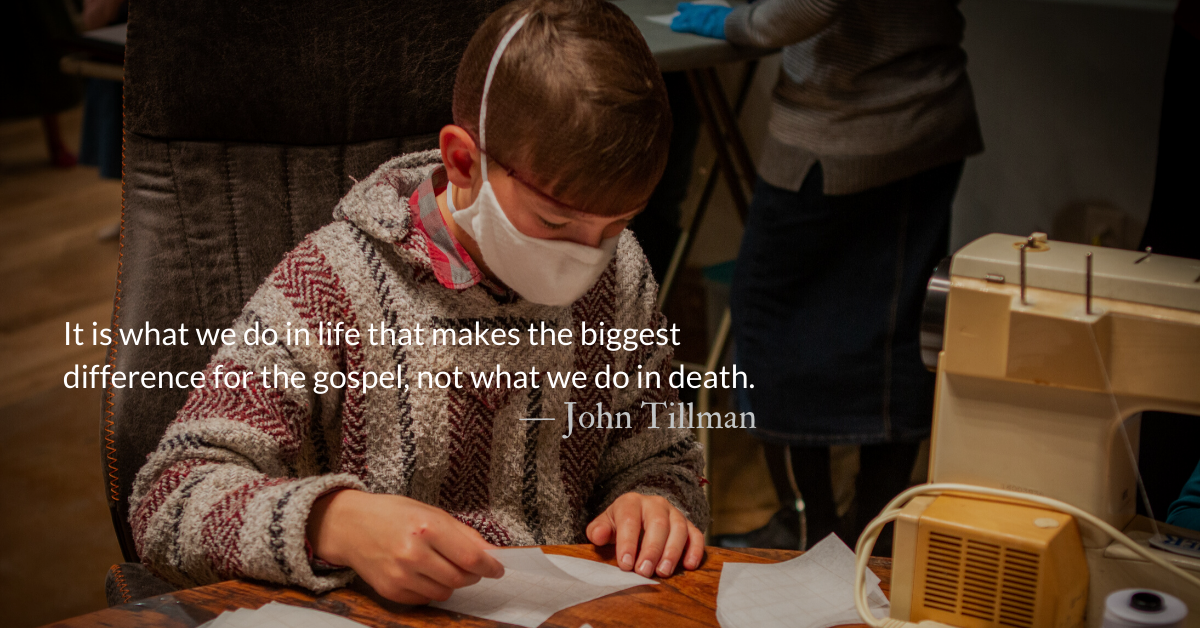
In the end, it is what we do in life that makes the biggest difference for the gospel, not what we do in death.

Divine Hours Prayer: The Refrain for the Morning Lessons
Righteousness and justice are the foundations of your throne; love and truth go before your face. — Psalm 89.14

– Divine Hours prayers from The Divine Hours: Prayers for Summertime by Phyllis Tickle

Today’s Readings
Jeremiah 48 (Listen – 7:31)
Psalm 25 (Listen – 2:18)

Read more about Where Martyrdom Begins Part 1
It is in the so-called small, everyday sacrifices that we give our lives for each other.

Where Martyrdom Begins Part 1

Read more about Supporting our Work
The Park Forum strives to provide short, smart, engaging, biblical content to people across the world for free with no ads. Gifts to The Park Forum support this mission.

Wake-up Call—Readers’ Choice

Selected by reader, Mr. Dennis Makhandia, Kakamega, Kenya
The post came at a time when I was complacent with my faith and it was a stark reminder of what is expected of us as people who have been given the gospel

Originally published, July 15, 2020, based on readings from Jeremiah 11 & Matthew 25.

Scripture Focus: Matthew 25.44-46
44 “They also will answer, ‘Lord, when did we see you hungry or thirsty or a stranger or needing clothes or sick or in prison, and did not help you?’
45 “He will reply, ‘Truly I tell you, whatever you did not do for one of the least of these, you did not do for me.’
46 “Then they will go away to eternal punishment, but the righteous to eternal life.”

Jeremiah 11.11-14
11 Therefore this is what the Lord says: ‘I will bring on them a disaster they cannot escape. Although they cry out to me, I will not listen to them. 12 The towns of Judah and the people of Jerusalem will go and cry out to the gods to whom they burn incense, but they will not help them at all when disaster strikes. 13 You, Judah, have as many gods as you have towns; and the altars you have set up to burn incense to that shameful god Baal are as many as the streets of Jerusalem.’
14 “Do not pray for this people or offer any plea or petition for them, because I will not listen when they call to me in the time of their distress.

Reflection: Wake-up Call—Readers’ Choice
By John Tillman

The three stories of Matthew 25 are connected, presented in series with an intentional theme. Last January we wrote:

Matthew 25 is famous for the sheep and the goats parable. But really, the entire chapter is about people who shirked their responsibilities to themselves, to their master, and to others. The foolish virgins, the wicked servant, and the goats are a trinity of spiritual neglect.

The sin of neglect seems to be one that surprises each of the condemned groups and individuals in these stories. Pray that you may not be surprised.

During seminary days, while traveling on a ministry team on a long drive, someone suggested putting on a Keith Green album. The driver, a good friend, responded, “Oh good. I haven’t doubted my salvation in a while. Put it in.”

We all laughed but I will never forget it. Because, the truth was, and is, that we don’t often listen to music that challenges us. We tune in for encouragement.  We don’t often listen to sermons that challenge us. We tune out words of conviction.

This is bad news for us because when we tune out the voices correcting us for long enough, God lets us tune out. He allows us to develop spiritual cataracts and tunnel vision. He allows us to blow out our eardrums so that we can’t hear him anymore.

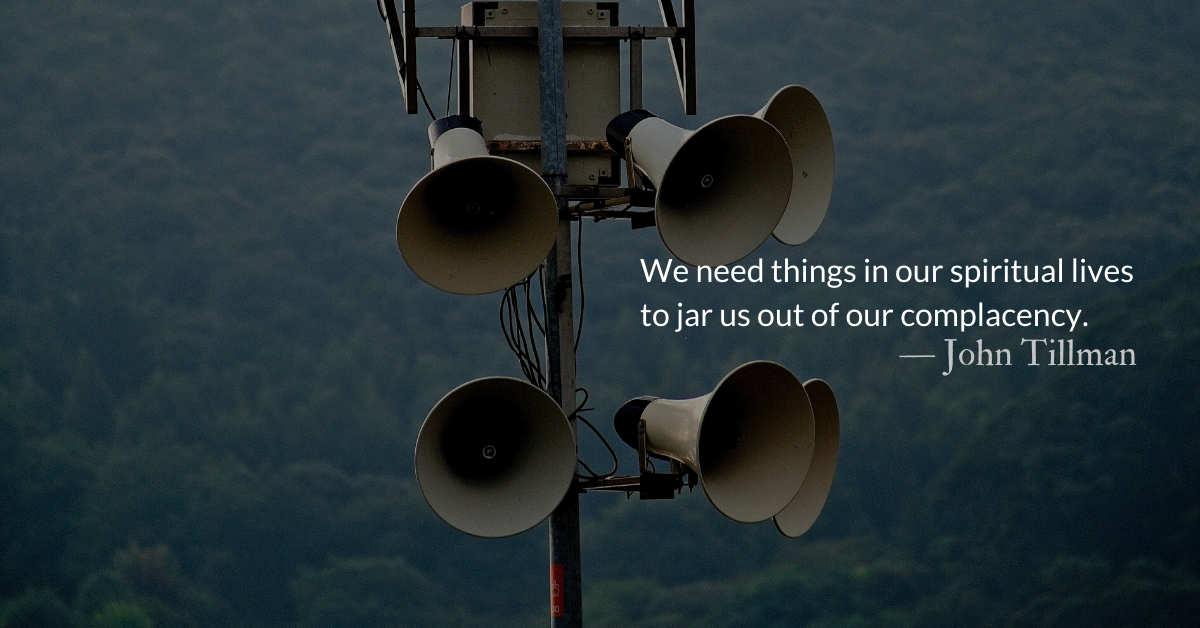
We need things in our spiritual lives to jar us out of our complacency and cause us to reevaluate our dedication to Christ. We need a wake-up call.

From the careless virgins buzzes an alarm: Take initiative! Don’t be passive about personal spiritual disciplines!
From the slothful servant rings a reveille trumpet: Be invested! Give your all to what providence invests in you!
From the goats, a clamorous claxon resounds: Serve Others! Serve the poor! Serve the hungry! Serve the outcast!
And from Jeremiah, we see the outcome of ignoring God’s calls—God will block our calls. “…I will not listen when they call to me in the time of their distress.”

Don’t push “snooze” on the alarms sounding in these passages. Their intention is not to terrify us, but to guide us to action. His desire is for no one to perish, so open your eyes, open your ears. Attend to your spiritual responsibilities to yourself, to Christ, our master, and to those around you.

Music: The Sheep and the Goats (Live Performance) — Keith Green

Divine Hours Prayer: The Call to Prayer
Love the Lord, all you who worship him; the Lord protects the faithful, but repays to the full those who act haughtily. — Psalm 31.23

– Divine Hours prayers from The Divine Hours: Prayers for Summertime by Phyllis Tickle

Today’s Readings
Jeremiah 42 (Listen – 3:44)
Psalms 18 (Listen – 5:47)

Today’s Readings
Jeremiah 43 (Listen – 2:34) Psalms 19 (Listen – 1:52)
Jeremiah 44 (Listen – 6:10) Psalms 20-21 (Listen – 1:37)

Read more about A Trinity of Neglect
Ask the Holy Spirit to show you warning signs if you are following the path of one of these neglectful souls.

Read more about Supporting our Work
The Park Forum strives to provide short, smart, engaging, biblical content to people across the world for free with no ads. Gifts to The Park Forum support this mission.

Show Buttons
Hide Buttons
Spur a spiritual rhythm of refreshment right in your inbox
By joining this email list you are giving us permission to send you devotional emails each weekday and to communicate occasionally regarding other aspects of the ministry.
100% Privacy. We don't spam.