Hope for Marred Pots

Scripture Focus: Jeremiah 18.6
6 He said, “Can I not do with you, Israel, as this potter does?” declares the LORD. “Like clay in the hand of the potter, so are you in my hand, Israel. 7 If at any time I announce that a nation or kingdom is to be uprooted, torn down and destroyed, 8 and if that nation I warned repents of its evil, then I will relent and not inflict on it the disaster I had planned.

Reflection: Hope for Marred Pots
By John Tillman

Watching something you love self-destruct is wearying in a unique way. This is true whether what is self-destructing is a person, a nation, or a political group. It is for this reason that reading through the prophets can be an exercise in endurance. 

If we begin to grow tired of accounts of the sins of Israel and Judah and the judgments coming their way,  we are not alone. The other prophets and priests of Judah grew so sick of Jeremiah’s messages that they conspired against him.

Their opposition would grow from verbal attacks and ignoring Jeremiah to more insidious and violent forms. Their opposition would culminate in a plot to take his life.

They are not alone. Jeremiah grew weary of his own message. Jeremiah’s writings are filled with moments of grief and longing for his people to listen, to change, to repent. 

Jeremiah is known as the weeping prophet but he is not the only one weeping. Many of Jeremiah’s most mournful passages could be read with God as the one weeping rather than Jeremiah. The most likely interpretation is that it is often both, not one or the other. Jeremiah is a weeping prophet because he serves a weeping God.

God, understanding Jeremiah’s grief, sends him to a place he can see that there is hope for marred and broken things—the potter’s house.. 

God tells Jeremiah that it is Israel on the potter’s wheel. Marred, rebellious, stubborn, yet still the artisan keeps the clay in his hands, crushing, spinning, shaping, and reforming the pot.

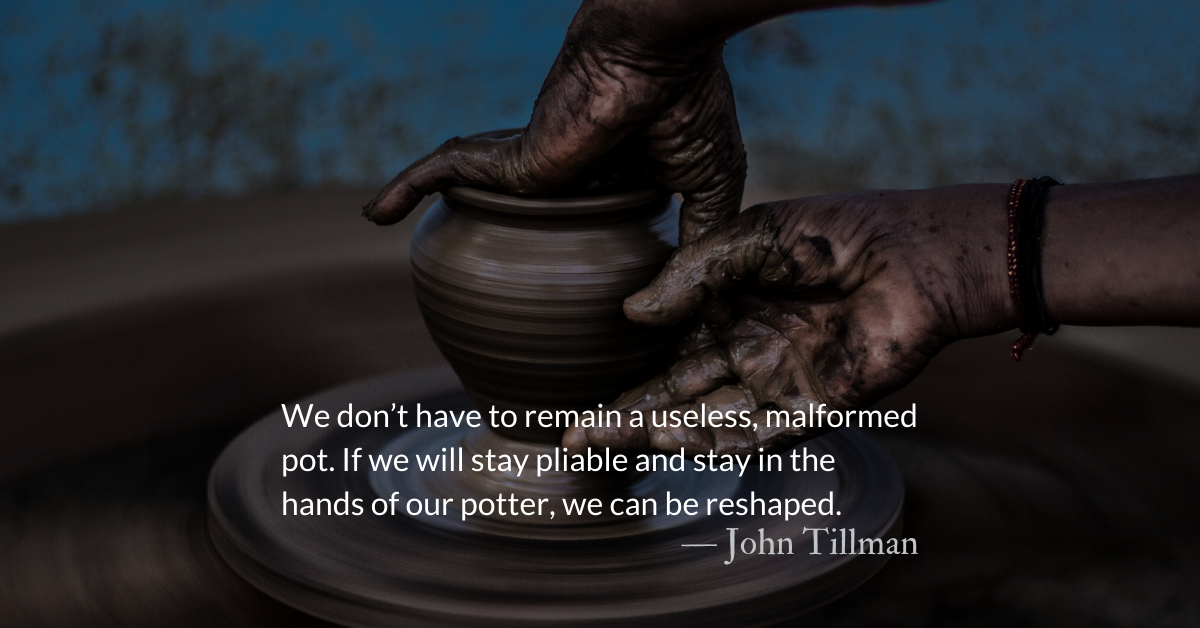
There is hope for marred and broken things like us. Whether nations, peoples, groups, or individuals, we can be reshaped. We don’t have to remain a useless, malformed pot. If we will stay pliable and stay in the hands of our potter, we can be reshaped. We can become a fitting vessel for the good plans that God has for us.

May we stay humble.
May we stay pliable.
May we stay in the potter’s hands.

Divine Hours Prayer: The Refrain for the Morning Lessons
Happy are the people whose strength is in you; whose hearts are set on the pilgrim’s way. — Psalm 84.4

– Divine Hours prayers from The Divine Hours: Prayers for Summertime by Phyllis Tickle

Today’s Readings
Jeremiah 18 (Listen – 3:40) 
Mark 4 (Listen – 5:01)

Read more about The Two Ariels
“Judicial hardening” refers to the way God acts in response to our rejection of him and his messages.

#ReadersChoice is time for you to share favorite Park Forum posts from the year.
What post reminded you of Christ’s love?https://forms.gle/DsYWbj45y9fCDLzi7

Keeping the Sabbath by Action

Scripture Focus: Jeremiah 17.21-23
21 This is what the LORD says: Be careful not to carry a load on the Sabbath day or bring it through the gates of Jerusalem. 22 Do not bring a load out of your houses or do any work on the Sabbath, but keep the Sabbath day holy, as I commanded your ancestors. 23 Yet they did not listen or pay attention; they were stiff-necked and would not listen or respond to discipline.

Mark 3.4-6
4 Then Jesus asked them, “Which is lawful on the Sabbath: to do good or to do evil, to save life or to kill?” But they remained silent. 
5 He looked around at them in anger and, deeply distressed at their stubborn hearts, said to the man, “Stretch out your hand.” He stretched it out, and his hand was completely restored. 6 Then the Pharisees went out and began to plot with the Herodians how they might kill Jesus.

Reflection: Keeping the Sabbath by Action
By John Tillman

There is more than one way to desecrate the Sabbath.

The way of “keeping the Sabbath holy” that we commonly think of is by limiting what we do. We refrain from doing work. We focus on spiritual matters. We prioritize worship. This is the kind of warning that Jeremiah was sent to cry. “Stop the clamour of commerce.” “Stop the wheels of wealth accumulation,” the prophet says. But Jesus defines a second requirement to keep the Sabbath holy. 

To Jesus, keeping the Sabbath holy meant staying in step with God’s Spirit and leaving nothing undone that the Spirit commanded. His stinging question about what is lawful on the Sabbath goes unanswered by the teachers of the law, not because they don’t know the answer, but because they don’t like the answer they would be forced to give.

Jeremiah banned commerce on the Sabbath because the day was intended to be about the worship of God and enriching the community rather than one’s self. Instead, over the centuries, the restrictions of the Sabbath had become excuses for selfish inaction. The experts of the law used their expertise to dodge responsibility rather than shoulder it and to accumulate wealth and power rather than honor God with it.

There’s more than one way to make Jesus angry. 

Inaction in the face of someone who needs help is one way that is very reliable. Jesus burns with anger for their heartlessness, but it’s more than activism—Jesus takes action. When we get angry, we tend to cause harm. When Jesus gets angry, he heals.

Jesus was angry because these teachers were doing what the wealthy of Jerusalem were doing in Jeremiah’s day. They were tying up heavy loads for others to carry, (and on the Sabbath, no less) but would not lift a finger to help them.

Keeping the Sabbath holy, maintaining God’s justice, and establishing righteousness are not passive, actionless, states of spiritual attainment. God’s holiness moves. God’s righteousness rolls like a river. God’s justice falls on the wicked.

May our holiness surpass that of the religious leaders, as Jesus prayed it would. 
May we not live in prayerlessness during the week and expect God to show up on the weekend.
May we fulfill the Sabbath by worshiping in spirit and truth.
May we not desecrate the Sabbath with inaction in the face of need.

Divine Hours Prayer: The Refrain for the Morning Lessons
He looks at the earth and it trembles; he touches the mountains and they smoke. — Psalm 104.33

– Divine Hours prayers from The Divine Hours: Prayers for Summertime by Phyllis Tickle

Today’s Readings
Jeremiah 17 (Listen – 4:50) 
Mark 3 (Listen – 5:05)

Read more about The Focus of Christ’s Anger
It isn’t too often we see Jesus angry, so it makes sense to pay close attention to when and why it happens.

#ReadersChoice is time for you to share favorite Park Forum posts from the year.
What post helped you pray more passionately?

https://forms.gle/DsYWbj45y9fCDLzi7

Captivity, Exile, and Exodus

Scripture Focus: Jeremiah 16.14-15
14 “However, the days are coming,” declares the LORD, “when it will no longer be said, ‘As surely as the LORD lives, who brought the Israelites up out of Egypt,’ 15 but it will be said, ‘As surely as the LORD lives, who brought the Israelites up out of the land of the north and out of all the countries where he had banished them.’ For I will restore them to the land I gave their ancestors.

Reflection: Captivity, Exile, and Exodus
By John Tillman

Jeremiah and other prophets spoke often of how eventually God’s people would return from exile. The return from exile narrative is a mirror-version of the Exodus from Egypt narrative. 

In this mirror version, the corrupt state of Egypt is the corrupt states of Israel and Judah. The false gods of Egypt are the false gods of Israel and Judah. The harsh, desert wilderness experience is the harsh experience of the people in captivity in exile. The entrance to the promised land is the return home of the exiled people of God from all corners of the world.

In the original Exodus narrative, God’s people were enslaved by state power. The people did not abandon God, the state turned against them. In freeing the people from Egypt, God used plagues that were specific attacks on the false gods of the state in order to free his people to worship him, the one true God.

But Jeremiah describes a different kind of enslavement. While living in political freedom, the people of Israel and Judah became spiritually enslaved. They rejected God and set up their own gods and a government filled with oppression and mistreatment of the poor and outcasts. In the desert, they grumbled to go back to Egypt. When they made it to the promised land, they made another Egypt out of it.

The governments God established for his people were intended to be a light to the pagan world, carrying out God’s justice and demonstrating his righteousness. Instead, they became just like the pagan nations. The formerly oppressed, became oppressors. The formerly abused, became abusers. Israel became Egypt. 

How often do we repeat this cycle?
How often do we become our own spiritual oppressors, enslaving ourselves to sins and idolatry? 
What unholy “state” do we build up, abusing the power we have for our benefit?
What gods do we allow to set up shop in the temple of our hearts?
What suffering people have we shut out to make more room for ourselves?

God brought plagues to destroy the false gods. May he destroy ours. 
God moved his people through a place of suffering and purification. May we follow him.
God restored his people and renewed his covenant with them. May we seek his face in repentance and be restored.

Divine Hours Prayer: The Refrain for the Morning Lessons
It is not the healthy who need the doctor, but the sick…And indeed I did not come to call the virtuous, but sinners. — Matthew 9.12-13

– Divine Hours prayers from The Divine Hours: Prayers for Summertime by Phyllis Tickle

Today’s Readings
Jeremiah 16 (Listen – 3:52) 
Mark 2 (Listen – 5:05)

Read more about Keeping The Greatest Commandments
Even Christians are easily misled into thinking love is primarily a feeling. Yet, it is so much more.

#ReadersChoice is time for you to share favorite Park Forum posts from the year. What post helped you forgive?

https://forms.gle/DsYWbj45y9fCDLzi7
The Tomb of the Unknown Savior

Scripture Focus: Matthew 27.63-66
“Sir,” they said, “we remember that while he was still alive that deceiver said, ‘After three days I will rise again.’ So give the order for the tomb to be made secure until the third day. Otherwise, his disciples may come and steal the body and tell the people that he has been raised from the dead. This last deception will be worse than the first.”
“Take a guard,” Pilate answered. “Go, make the tomb as secure as you know how.” So they went and made the tomb secure by putting a seal on the stone and posting the guard.

Reflection: The Tomb of the Unknown Savior
By John Tillman

Christ’s mission and calling were a secret hidden in plain sight.

Jesus spoke about everything else in parables and spoke about his death in plain language, so perhaps we can forgive the disciples for not realizing that he meant what he said about his death literally.

Mary of Bethany may have been the only disciple who realized Jesus was about to die a sacrificial death, but it seems only his enemies remembered that Christ also promised to come back to life.

No one else seems prepared for Jesus’ resurrection as extensively as the chief priests and the Pharisees. Their concern is so urgent that they risk being made unclean for the remainder of the Passover week’s celebrations by going to Pilate on the Sabbath, the day after Preparation Day.

They outline the details of what they believe will be a conspiracy to fake a resurrection. (This is a conspiracy they will bribe the soldiers to maintain later.) Pilate grants their request, giving them a selection of the highest paid, best trained, best equipped soldiers in the world to guard a tomb.

Guarding the tomb of a penniless, itinerant prophet, with the equivalent of US Navy Seals might seem like overkill when the sneak attack you are expecting is from untrained tradesmen like the disciples, but the enemies of Christ knew how explosive his message was.

Fear of the political fallout of Christ’s message was one of the main reasons the religious elite had sought his death. For them, a violent, idolatrous, pagan government that allowed them to continue in power was preferable to following Jesus and losing their wealth and influence. In our heart of hearts we can certainly identify with their concerns.

When it came to Christ’s teaching about death and resurrection these corrupt men, who were Christ’s harshest critics, knew him better than his followers.

Jesus was a man even his closest friends didn’t fully know. He lay as a guest in a tomb belonging to a secret disciple. His followers, once considered so dangerous they were an existential threat to the state, scattered, abandoned him, and hid.

Jesus in the grave is the unknown savior. What happens next will change the world forever.

Divine Hours Prayer: The Request for Presence

Turn to me and have pity on me, for I am left alone and in misery.
The sorrows of my heart have increased; bring me out of my troubles.
Look upon my adversity and misery and forgive me all my sin. — Psalm 25.15-17

– Divine Hours prayers from The Divine Hours: Prayers for Summertime by Phyllis Tickle


Today’s Readings
Jeremiah 13 (Listen – 4:11) 
Matthew 27 (Listen – 8:45)

This Weekend’s Readings
Jeremiah 14 (Listen – 3:51). Matthew 28 (Listen – 2:39)
Jeremiah 15 (Listen – 3:49). Mark 1 (Listen – 5:05)

Read more about The Importance of Resurrection :: Throwback Thursday
If there is no resurrection, neither is there any God nor Providence, but all things are driven and borne along of themselves.

#ReadersChoice is time for you to share favorite Park Forum posts from the year.
What post lifted your spirit?

https://forms.gle/DsYWbj45y9fCDLzi7

Living is Harder

Scripture Focus: Matthew 26.35
“Even if I have to die with you, I will never disown you.” And all the other disciples said the same.

Reflection: Living is Harder
By John Tillman

“Dying to self” and “carrying our cross” are biblical metaphors for self-sacrificial living, but sometimes they become a literal, lived reality.

Many sermons (mostly to youth groups) challenge believers with the stories of modern Christians who were killed while doing ministry or who refused to denounce Christ to save their own lives. These sermons ask, “Would you be willing to do the same?” 

These well-meaning sermons are intended to be inspirational. (And they are.) They don’t truly intend for us to follow these human martyrs, but to follow Jesus in the same, self-sacrificial manner they did. However, an unintentional lesson in these sermons is that the hardest or greatest thing we could do for Christ is to die in some violent way. We can unintentionally denigrate living for Christ by glorifying dying for him. 

The truth is that living for Christ in the mundane and ordinary is far more difficult than dying for him. Dying is momentary. Living stretches on. Paul recognized this, stating that he would rather die and be with the Lord, but it was better for all if he continued struggling and living for Christ. (Philippians 1.20-24) Living for Christ in the world often makes a larger difference in the world than dramatic sacrifices. 

Peter gets a lot of flack for being the first, loudest, and proudest to declare that he would die for Jesus without following through later that night. But all the disciples did the same. May we have the passion of Peter and the disciples, yet retain the humility and wisdom of knowing that despite our best intentions we may fail.

Just like Peter, don’t many of us feel that we would give our lives for Jesus? Why then do we resist giving of our time for him in service, in study, or in prayer? 

It matters less what we might say about Christ when someone puts a gun in our face than what we do say about him to a friend who is hurting. It matters less how willing we are to give up our lives while sharing the gospel in a dangerous place than how willing we are to give up our rights, or give up our money, or give up our time when we are living in comfort.

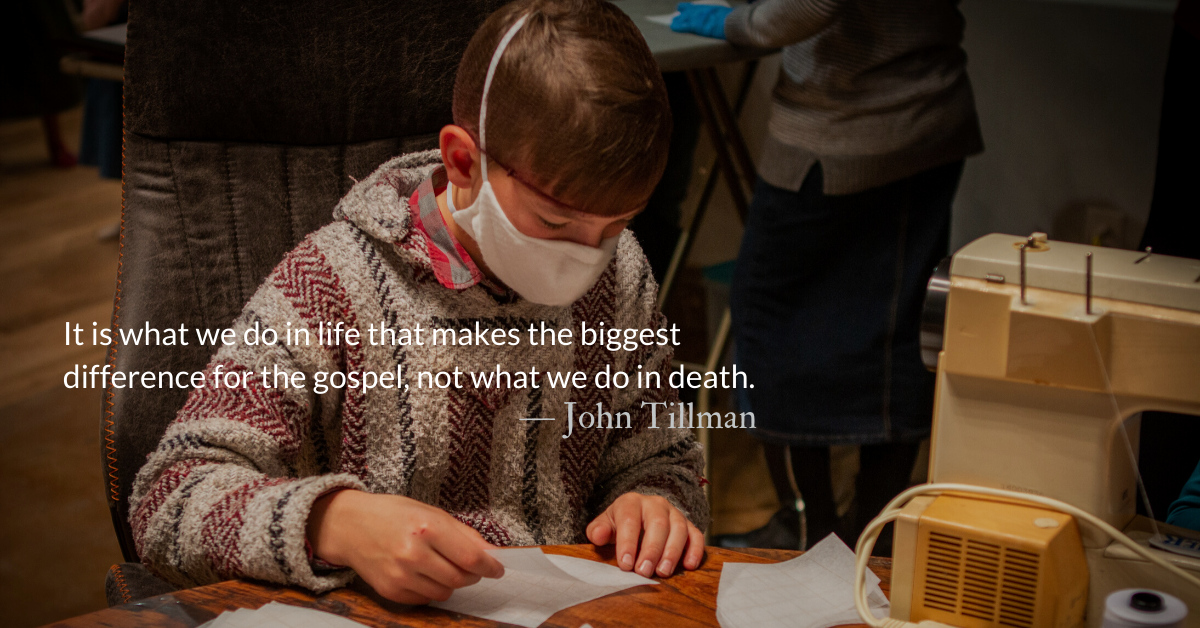
In the end, it is what we do in life that makes the biggest difference for the gospel, not what we do in death.

Divine Hours Prayer: The Greeting
I will thank you, O Lord my God, with all my heart, and glorify your name forevermore. — Psalm 86.12

– Divine Hours prayers from The Divine Hours: Prayers for Summertime by Phyllis Tickle

Today’s Readings
Jeremiah 12 (Listen – 3:06) 
Matthew 26 (Listen – 10:01)

Read more about Where Martyrdom Begins Part 1
It is in the so-called small, everyday sacrifices that we give our lives for each other.

Readers Choice is your time to share favorite Park Forum posts from the year. What post challenged you?

https://forms.gle/DsYWbj45y9fCDLzi7
Show Buttons
Hide Buttons
Spur a spiritual rhythm of refreshment right in your inbox
By joining this email list you are giving us permission to send you devotional emails each weekday and to communicate occasionally regarding other aspects of the ministry.
100% Privacy. We don't spam.