Prophecies and Purposes

Scripture Focus: Acts 21.10-14
10 After we had been there a number of days, a prophet named Agabus came down from Judea. 11 Coming over to us, he took Paul’s belt, tied his own hands and feet with it and said, “The Holy Spirit says, ‘In this way the Jewish leaders in Jerusalem will bind the owner of this belt and will hand him over to the Gentiles.’” 12 When we heard this, we and the people there pleaded with Paul not to go up to Jerusalem. 13 Then Paul answered, “Why are you weeping and breaking my heart? I am ready not only to be bound, but also to die in Jerusalem for the name of the Lord Jesus.” 14 When he would not be dissuaded, we gave up and said, “The Lord’s will be done.”

Reflection: Prophecies and Purposes
By John Tillman

Some prophecies are conditional warnings or invitations. “Repent or this disaster will come on you” or “Be faithful in this and I will bless you.” For these prophecies, we have agency. Within God’s sovereignty, we choose between the curses or blessings set before us.

Some prophecies announce what God will do or what will happen. We have no agency in these outcomes. God sovereignly acts, either directly or through others, to bring them to pass. We cannot block the blessings or dodge the judgments of these pronouncements and promises.

Many prophecies told Paul trouble loomed in Jerusalem. “Through the Spirit,” Luke writes, friends encouraged Paul not to go. (Acts 21.4) Agabus came from Judea and dramatically prophesied how Paul would be taken prisoner. Paul’s friends assumed this prophecy was a warning to avoid Jerusalem.

Agabus was from Judea, so the Jerusalem elders may have known about the prophecy. But they didn’t need a spiritual word to see trouble in Paul’s future. Rumors and lies were spreading about Paul and violence was a likely result. They planned a public display of righteousness and orthodoxy that they hoped would disprove the rumor-mongers and liars.

Spiritual and non-spiritual prophecies surround us. Dangerous lies are spreading. Violence is predicted. We are told we shouldn’t “go there.” We are told to placate the violent and demonstrate orthodoxy to avoid conflict. We may think like Paul’s friends at times. “If bad things will happen when we do X, then we should do Y.” But if something is the right thing to do, there we must stand, regardless of the outcome.

Not every bad thing is to be avoided or conquered. Some teach us something. Some accomplish something good. Some are simply to be endured. We don’t always know which is true in each scenario and faithful Christians may disagree about interpretations. 

The friends’ plan to avoid imprisonment failed. The elders’ plan to avoid violence failed. But Paul’s commitment to the gospel never failed, and God’s purpose for Paul’s life never failed. To Paul, the prophecies’ purpose was preparation, not avoidance. (Acts 20.22-24)

What “prophecies” are you, your friends, or your leaders worried about? Are they preparing you for hardship or promising persecution? Are they warning you to turn away or inviting you to be faithful?

Have grace for one another and remember the promises and purposes of the gospel that will never fail. Commit yourself to these things.

Divine Hours Prayer: The Request for Presence
Our God will come and will not keep silence; before him there is a consuming flame, and round about him a raging storm. — Psalm 50.3

– From The Divine Hours: Prayers for Summertime by Phyllis Tickle.

​Today’s Readings
Isaiah 34 (Listen 2:59)
Acts 21 (Listen 5:55)

Read more about Facing Wolves
It can be exciting to think you are fighting demons and hunting wolves. However, in hunting for “wolves” we can injure a lot of sheep.

Listen to Pause To Read
Listen to and share our latest podcast episode, No Asterisk. Deborah’s judgeship is not a fluke and neither is yours.

Comeuppance or Compassion

Scripture Focus: Isaiah 33.1, 17-19a
1 Woe to you, destroyer,
you who have not been destroyed!
Woe to you, betrayer,
you who have not been betrayed!
When you stop destroying,
you will be destroyed;
when you stop betraying,
you will be betrayed. 

17 Your eyes will see the king in his beauty 
and view a land that stretches afar. 
18 In your thoughts you will ponder the former terror: 
“Where is that chief officer? 
Where is the one who took the revenue? 
Where is the officer in charge of the towers?” 
19 You will see those arrogant people no more

Reflection: Comeuppance or Compassion
By John Tillman

When we warn about something repeatedly and are ignored, rejected, laughed at, shouted down, or told off, there is a mixture of satisfaction and anger when our predictions play out. 

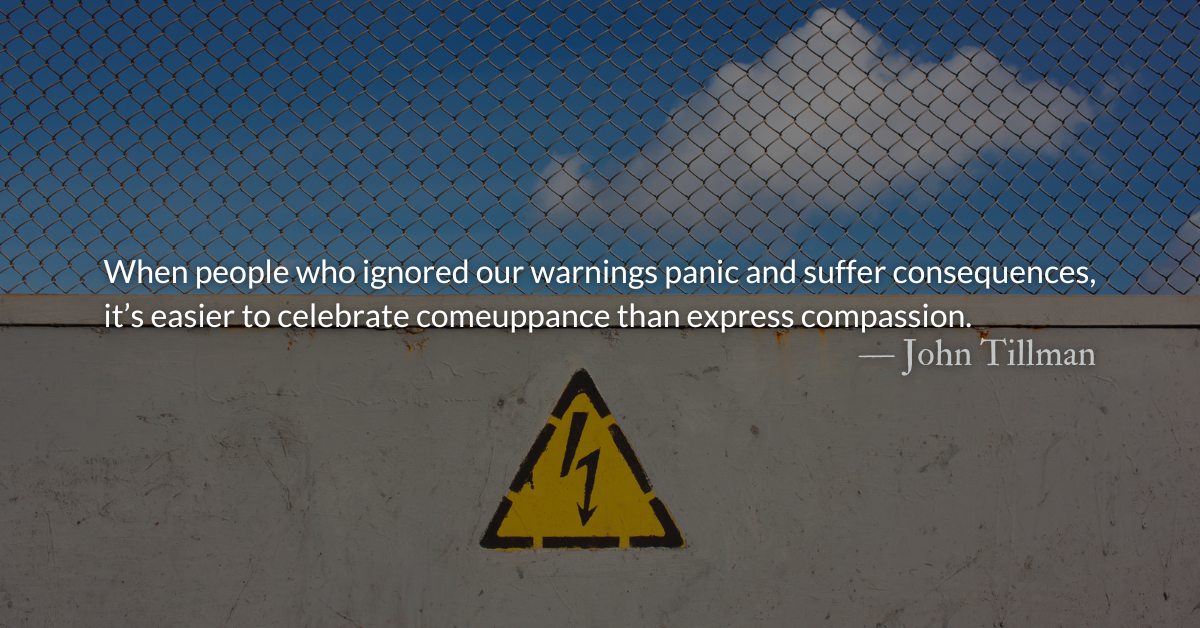
Whether we warned about a leader’s behavioral red flags, an ill-advised policy, the dangers of ignoring abuse, or the slippery slope of moral relativism, when bad fruit falls it brings vindication and grief. When people who ignored our warnings panic and suffer consequences, it’s easier to celebrate comeuppance than express compassion.

We want to shake our heads and laugh or shake our fists and yell, “I told you so!” Anger kicks in. “Why didn’t they listen!?”

God, through his prophets, repeatedly warned that pagan political partners would lead to sin and suffering. God’s people chose practicality that promised peace. Assyria, predictably, broke their treaties with Judah.

We expect God to say, “I told you so,” and walk away. But, despite anger with Judah for not trusting him, the Lord promised justice. The betrayers would be betrayed. The destroyers would be destroyed.

God did not remove all consequences for Judah and he won’t do so for us. However, instead of rubbing Judah’s nose in their mess, he saved them in the moment and lifted their heads to see greater salvation in the future. In the distance there is a more beautiful king and a more gracious land.

We live in the world of destroyers and betrayers. Despite God’s warnings, at some point, we will be conned by kings, misled by leaders, and fooled by friends. At some point, we’ll face destructive outcomes and consequences. When, not if, you are fooled, deceived, or tricked, confess and call out to God.

God isn’t waiting to rub your nose in your failure, he wants you to lift your head and look. The beautiful land awaits. Christ’s kingdom is both distant and present at the same time—it is already among us and not yet fully manifest. The betrayers and destroyers will fade from memory in his presence.

As we experience betrayals and watch people being deceived, ask God to give you as much compassion for them as possible when they confess. Yes, we told them so, but don’t rub their noses in their repentance. Yes, we warned them, but don’t shame those freed from deception or admitting their errors. Lift their head and bid them look to the beautiful land and Jesus, its king.

Divine Hours Prayer: The Greeting
My heart is firmly fixed, O God, my heart is fixed; I will sing and make melody. — Psalm 57.7

– From The Divine Hours: Prayers for Summertime by Phyllis Tickle.


​Today’s Readings
Isaiah 33 (Listen 3:45)
Acts 20 (Listen 5:22)

Read more about Prophets in Our Path
They sought convenient confirmations of what they already believed. But prophecy often holds inconvenient truths.

Read more about Supporting Our Work
Please consider becoming a donor. Support ad-free content that brings biblical devotionals to inboxes across the world.

Dethrone the Fool

Scripture Focus: Isaiah 32:5–7
5 No longer will the fool be called noble
     nor the scoundrel be highly respected.
 6 For fools speak folly,
     their hearts are bent on evil:
 They practice ungodliness
     and spread error concerning the Lord;
 the hungry they leave empty
     and from the thirsty they withhold water.
 7 Scoundrels use wicked methods,
     they make up evil schemes
 to destroy the poor with lies,
     even when the plea of the needy is just.

Reflection: Dethrone the Fool
By Erin Newton

One of the loneliest places in Christianity is when you see people for who they truly are—behind the façade of popularity, past the echoes of flattering lies—but no one else does. I remember the moment the image of a particular religious leader changed in my mind from a respected mentor to the lying deceiver he is. Since that realization I have been aghast at those who cannot see what I see. He is a scoundrel still highly respected, a fool called noble.

This chapter in Isaiah is a glimmer of hope. Wicked leaders who oppress the poor, the needy, and the vulnerable will be unmasked. The community will label fools and scoundrels as they truly are, not as they wish to see them.

Spotting a fool seems like an easy task. I think we assume fools are blatantly foolish—maybe the daredevil who skydives without a parachute or the person who jumps into shark-infested waters. We sometimes equate foolishness with people who engage in risky behaviors. In some ways, their foolishness harms mostly themselves with only occasional outward consequences. Isaiah sees foolishness as a poison that infects the community.

Fools speak folly. But not just words that sound ridiculous, fools speak words that spread error. Their words are convincing enough that people latch on to the disguised foolishness and then repeat the words themselves. What do we call ourselves when we continue to spread the rhetoric a fool is peddling? We risk being fools ourselves.

These foolish words that spread error promote the neglect of the hungry and the thirsty. Foolish words harm the vulnerable. Fools care nothing for anyone but themselves. Scoundrels are just another version of a fool who actively plans to oppress others. These types of people are not just ridiculous, silly, ignorant, or stupid. They know exactly what they are doing; it is planned, and it is intentional.  

Who among you is a fool? Who is telling you lies to keep food out of hungry mouths? Who is utilizing methods that oppress the poor? Maybe it’s time to stop participating in their spread of error. Discard complacency—take away the respect from the scoundrel and stop calling fools “noble.”

The fruit of that righteousness will be peace; its effect will be quietness and confidence forever. My people will live in peaceful dwelling places, in secure homes, in undisturbed places of rest. (Isaiah 32.17–18).


Divine Hours Prayer: The Morning Psalm
Seven times a day do I praise you, because of your righteous judgments.
Great peace have they who love your law: for them there is not stumbling block. — Psalm 119.165

– From The Divine Hours: Prayers for Summertime by Phyllis Tickle.


​Today’s Readings
Isaiah 32 (Listen 2:46)
Acts 19 (Listen 5:47)

Read more about Answering Fools
Answer a fool. Don’t answer a fool. This famous mirrored pair of proverbs is almost a metaphor for the entire collection.

Listen to Pause to Read episode, RSVP to Wisdom or Folly
Two hostesses beckon. Which banquet will you enter? Who gets your RSVP?

https://spotifyanchor-web.app.link/e/0Th1DEiRQKb

Horses of Flesh or Spirit

Scripture Focus: Isaiah 31.1-3
1 Woe to those who go down to Egypt for help, 
who rely on horses, 
who trust in the multitude of their chariots 
and in the great strength of their horsemen, 
but do not look to the Holy One of Israel, 
or seek help from the Lord. 
2 Yet he too is wise and can bring disaster; 
he does not take back his words. 
He will rise up against that wicked nation, 
against those who help evildoers. 
3 But the Egyptians are mere mortals and not God; 
their horses are flesh and not spirit. 
When the Lord stretches out his hand, 
those who help will stumble, 
those who are helped will fall; 
all will perish together. 

Reflection: Horses of Flesh or Spirit
By John Tillman

Egypt is the longest-lasting national superpower in the Bible.

Other nations rose and fell, but Egypt was always there, even if they waxed and waned in power. Egypt was the “arms dealer” of the ancient Near East, producing the finest war horses and chariots. Wealthy nations bought from them and no wise nation wanted to face them in battle. In addition to military aid, many nations found Egypt a reliable source of shelter, food, wisdom, and political support.

When David wrote, “Some trust in chariots and some in horses, but we trust in the name of the Lord our God,” he almost certainly referred to chariots and horses from Egypt. He had faced chariot-outfitted armies and seen that “The Lord gives victory.” (Psalm 20.6-7)

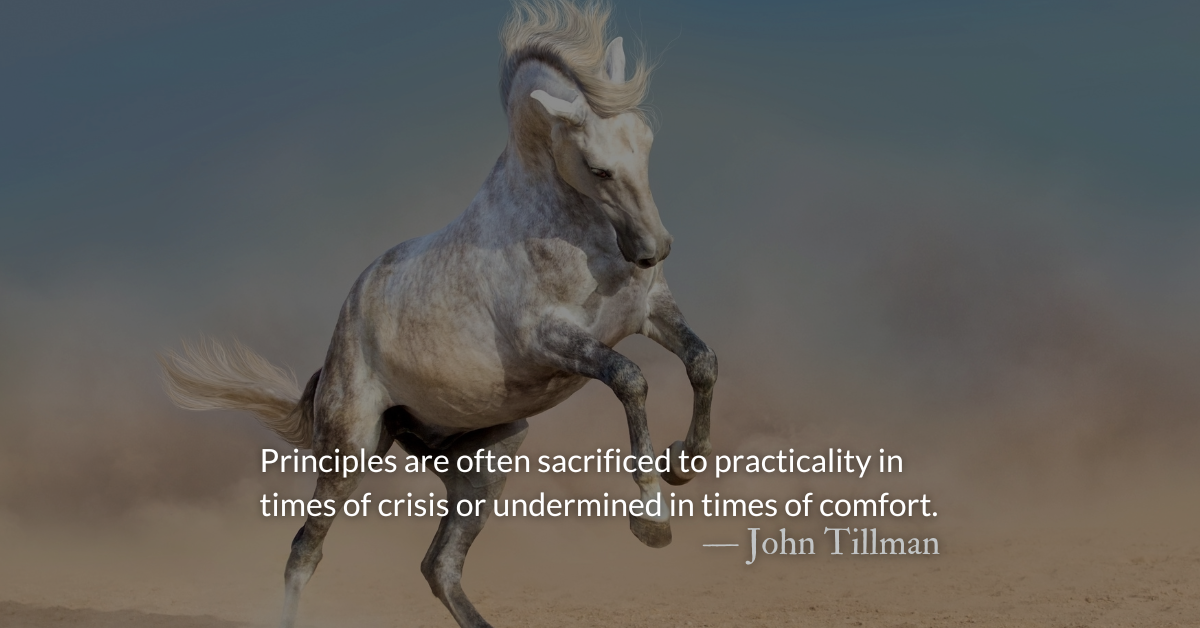
But Israel failed to live up to the lofty, poetic principle David penned. Principles are often sacrificed to practicality in times of crisis or undermined in times of comfort.

For Israel, a recurring temptation popped up in crisis after crisis. They wanted to go back to Egypt. Egypt was often an enemy, but Israel had a long history of trusting them for help. Abraham, Isaac, and Jacob sought help and shelter there. The instant Moses led the Israelites out, they wanted to go back. When Solomon secured his throne, he furnished his army with Egyptian horses and chariots. Practicality won out over his father’s poetic wisdom. And multiple times, throughout the history of kings and prophets, the nation wanted to ask Egypt for help while the prophets cried out for God’s people to trust him.

Crises expose what we truly rely on. They turn up the volume on temptations and drown out trusted voices. Comfort dulls our hold on principles and the strength of our convictions. In times of plenty, it’s not that we actively choose not to trust God, we just don’t sense our need for him. Comfort weighs us down, weakens our muscles and joints, and slows our reflexes and capacities. When it comes time to stand or fight, we are slow to respond and hesitant to do so.

What biblical wisdom have you explained away in service of a current crisis?
What comforts dull or delay your reliance or response to God?
What crises send you looking for an Egypt to save you?
What principles have you sacrificed to practicality?
Are you trusting horses of flesh, not spirit?

Divine Hours Prayer: The Greeting
I put my trust in your mercy; my heart is joyful because of your saving help. — Psalm 13.5

– From The Divine Hours: Prayers for Summertime by Phyllis Tickle.


​Today’s Readings
Isaiah 31 (Listen 1:49)
Acts 18 (Listen 4:06)

Read more about Pause To Read
After a short hiatus, our podcast is back with an episode on why we have bodies. Don’t miss it.

https://spotifyanchor-web.app.link/e/uJMxq7gTZHb

Read more about Fruitful in Suffering
Joseph…sought peace and prosperity for the place he had been sent.

Gods in Our Image

Scripture Focus: Acts 14.11-17
11 When the crowd saw what Paul had done, they shouted in the Lycaonian language, “The gods have come down to us in human form!” 12 Barnabas they called Zeus, and Paul they called Hermes because he was the chief speaker. 13 The priest of Zeus, whose temple was just outside the city, brought bulls and wreaths to the city gates because he and the crowd wanted to offer sacrifices to them. 14 But when the apostles Barnabas and Paul heard of this, they tore their clothes and rushed out into the crowd, shouting: 15 “Friends, why are you doing this? We too are only human, like you. We are bringing you good news, telling you to turn from these worthless things to the living God, who made the heavens and the earth and the sea and everything in them. 16 In the past, he let all nations go their own way. 17 Yet he has not left himself without testimony: He has shown kindness by giving you rain from heaven and crops in their seasons; he provides you with plenty of food and fills your hearts with joy.”

Reflection: Gods in Our Image
By John Tillman

When people say that humans create gods in our own image, I agree with them.

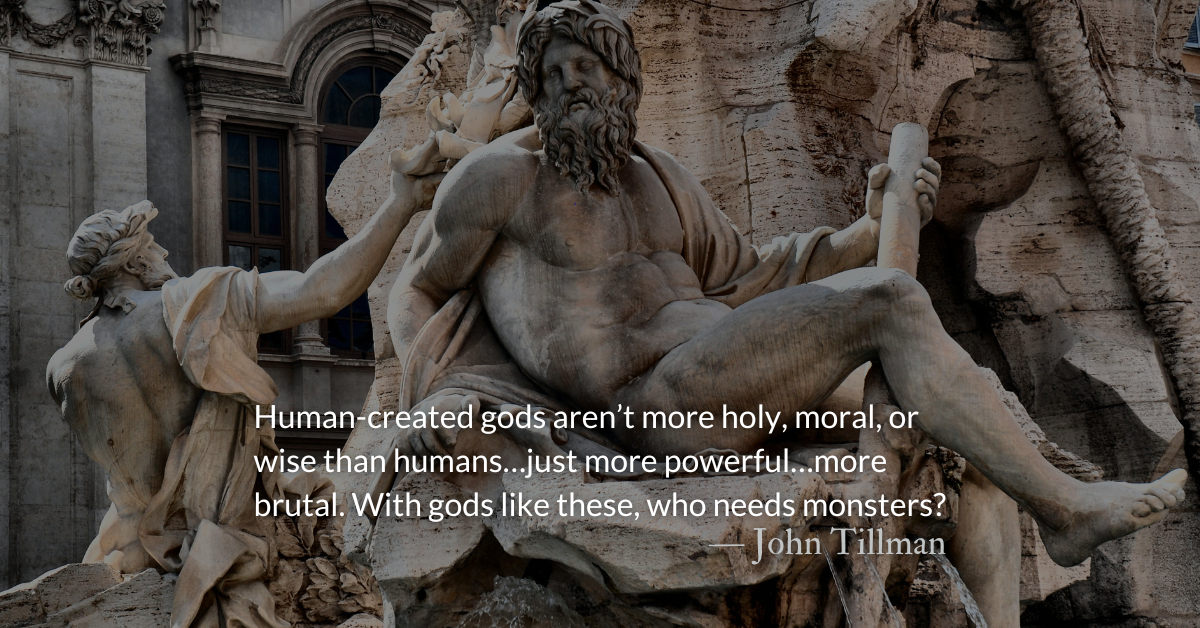
Human-created gods are easy to spot. They are like humans we know. There are strongman gods like Zeus, trickster gods like Hermes, and a host of other “types.” They mostly look like, think like, and act like us. They aren’t more holy, moral, or wise than humans. They are just more powerful. And with flaws and weaknesses like ours, they are more brutal. One slight brings destruction and curses. One slip-up brings unrelenting pain and suffering.

In Lystra, Paul and Barnabus are mistaken for Zeus and Hermes. Commentor, Conrad Gempf mentions a possible motivation for the crowd’s reaction. According to legend, a nearby town had failed to welcome Zeus and Hermes when they visited. Angered by this, the gods destroyed the offenders. With this story in the background, the cry, “The gods have come down to us in human form,” (Acts 14.11) seems less like a joyful announcement and more like a fearful warning. With gods like these, who needs monsters?

The best we can hope for from pagan gods is a balance of blessing and suffering—some light in the dark. “Perhaps good will hold evil at bay for a season. Perhaps, if we are vigilant, we can avoid offense or quickly make amends.”

Paul and Barnabus deny that they are gods and announce the true God, who is different than any the people know, yet has cared for them all this time. Jesus is a God-man unlike any in mythology. When sharing the gospel, beware of copying mythological ideas.

Jesus did not pretend to be human. He was. He was not a pseudo-human trickster god, conning the Father into loving humans. God does love humans. We are made in his image, not the other way around. The gospel reveals and resurrects this nature in us.

We need to share the gospel by emphasizing the “otherness” of Jesus. Our God is not like humans or easy to understand. He is merciful and gracious, yet punishes the guilty. Our best sacrifices do not appease. Our greatest arguments cannot overcome his wisdom. His gospel promises something completely different.

Jesus does not “restore balance,” or “hold evil at bay.” He completely destroys evil and, in the end, his light will banish all darkness. He will do this ultimately in the universe, but he will start in our hearts.

Divine Hours Prayer: The Call to Prayer
Sing to the Lord a new song, for he has done marvelous things.
With his right hand and his holy arm has he won for himself the victory. — Psalm 98.1-2


– From The Divine Hours: Prayers for Summertime by Phyllis Tickle.


​Today’s Readings
Isaiah 27 (Listen 2:16)
Acts 14 (Listen 3:54)

​This Weekend’s Readings
Isaiah 28 (Listen 4:49), Acts 15 (Listen 5:43)
Isaiah 29 (Listen 3:55), Acts 16 (Listen 5:53)

Read more about Praising Christ’s Righteousness
Imagine hanging our hopes on a great leader, only to watch him or her fall…Most of us don’t have to imagine it. It has happened.

Read more about Gods of Ruin and Ridicule
Our greatest temptation today is to worship the false gods of power, wealth, pleasure, and narcissism.