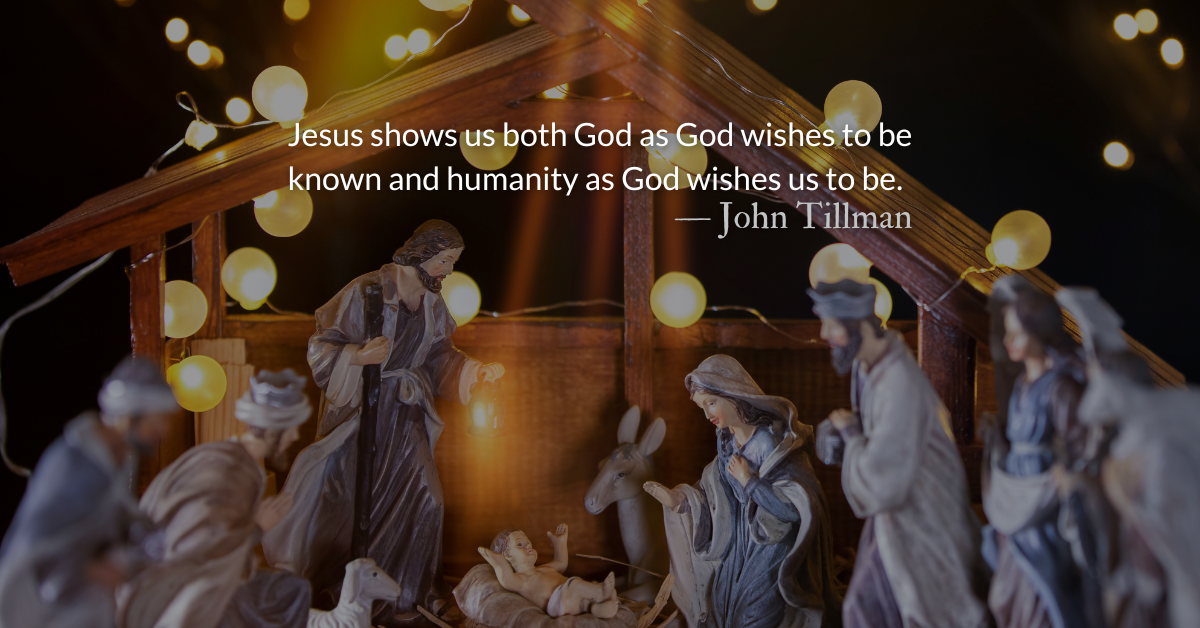
Long For the Day of the True King

Links for today’s readings:

Read: 2  Samuel 6 Listen: (3:34) Read: Revelation 15 Listen: (1:29)

Scripture Focus: Revelation 15.1-8

15 I saw in heaven another great and marvelous sign: seven angels with the seven last plagues—last, because with them God’s wrath is completed. 2 And I saw what looked like a sea of glass glowing with fire and, standing beside the sea, those who had been victorious over the beast and its image and over the number of its name. They held harps given them by God 3 and sang the song of God’s servant Moses and of the Lamb:

  “Great and marvelous are your deeds,

    Lord God Almighty.

  Just and true are your ways,

    King of the nations.

  4 Who will not fear you, Lord,

    and bring glory to your name?

  For you alone are holy.

  All nations will come

    and worship before you,

  for your righteous acts have been revealed.”

5 After this I looked, and I saw in heaven the temple—that is, the tabernacle of the covenant law—and it was opened. 6 Out of the temple came the seven angels with the seven plagues. They were dressed in clean, shining linen and wore golden sashes around their chests. 7 Then one of the four living creatures gave to the seven angels seven golden bowls filled with the wrath of God, who lives for ever and ever. 8 And the temple was filled with smoke from the glory of God and from his power, and no one could enter the temple until the seven plagues of the seven angels were completed.

Reflection: Long For the Day of the True King

By John Tillman

What a contrast from the stumbles, errors, and sins of Israel’s kings from Samuel, Kings, and Chronicles to Revelation’s images of God as king.

God is a king with no mixed motives. This King takes no half-measures with evil. This King is not stingy with the wealth and blessings of the kingdom. This King pours out his wrath on wickedness. This King mercifully welcomes the repentant respondents to his voice.

God, the King of Heaven, is not like the kings of the earth. Even the best of them cannot approach God’s majesty. Even the most righteous of them wears robes filthy with wickedness. Even the most generous of them is a miserly grinch compared to God’s magnanimous beneficence. Even the wisest of them covers his mouth, lest foolish blather spill forth in the presence of God’s wisdom. Even the strongest of them cannot rise from the floor. Even the boldest of them dare not raise their eyes.

Stand in awe of God, the King of Heaven, today. Compare God, King of the Cosmos, to earthly kings who command fealty to their confederations of dust. Compare God’s wisdom to human kings’ foolishness. Compare God’s strength and honor to their fragility and desperation. And do not forget to compare God to the monarch nearest to us, the emperor of self, sitting on the throne of our hearts.

We, like the kings of our past and present, are undone in the presence of God. Like Isaiah, we know we are unclean of lips, heart, and actions. Yet we are called, purified, and made part of the throng of God’s people. We are armed with harps rather than weapons and readied for worship rather than warfare.

Revelation shows us the scene. The Temple of God’s covenant is opened, ready for his people. The wrath of God is carried from the Temple and poured out, never to return. The Temple is filled with the smoke of the Lord’s presence. One day, we will enter it.

Every year, my longing for that day is greater. Every time an earthly king disappoints (including the despot of my own heart), I long for that day. Every time an atrocity shakes the ground, the sky, and the news cycle, I long for that day.

Let your longing for that day grow. “…we will be with the Lord forever. Therefore, encourage one another with these words.” (1 Thessalonians 4.17b-18)

Divine Hours Prayer: The Refrain for the Morning Lessons

Truly, his salvation is very near to those who fear him, that his glory may dwell in our land. — Psalm 85.9

– Divine Hours prayers from The Divine Hours: Prayers for Summer
by Phyllis Tickle

Read more: Kingly Qualifications

You are the king. These principles are for you. The reason our leaders don’t match them is decades of us not matching them.

Read more: Dethroning Kings and Powers

The regime change we need is to dethrone the sinful powers in our hearts…drag them out…the seed of Eve will crush their heads under his feet.

The Bad Timeline

Links for today’s readings:

Read: 2  Samuel 4-5 Listen: (7:10) Read: Revelation 14 Listen: (3:51)

Scripture Focus: 2 Samuel 4:10; 5:3

10 “When someone told me, ‘Saul is dead,’ and thought he was bringing good news, I seized him and put him to death in Ziklag. That was the reward I gave him for his news!”

3 When all the elders of Israel had come to King David at Hebron, the king made a covenant with them at Hebron before the Lord, and they anointed David king over Israel.

Reflection: The Bad Timeline

By Erin Newton

This is the bad timeline. This phrase has been used recently regarding the never-ending “breaking news” cycle—filled with stories of war, corruption, suffering, genocide, health crises, financial turmoil, and various other events.

I get the same feeling reading through these first chapters of 2 Samuel. The book opens with the deaths of Saul and Jonathan. War breaks out between the two houses. Joab murders Abner. The sons of Rimmon murder Ish-bosheth.

Once David becomes king, another battle swiftly follows. Jerusalem is captured. David takes more women into his house as concubines and wives, granting him more children over the years. Another war breaks out with his former allies, the Philistines.

In the middle of these chapters, we have the anointing of David—a glimmer of positive news showing that God’s promise was being fulfilled.

God promised David that his rule would never end. For that to be true, David would need a royal title, land to govern, and heirs to inherit the throne. Chapters 4–5 reveal the fulfillment of such a promise. David is crowned. David secures Jerusalem as the center of Judah. David has many children who will be heirs.

But the timeline still looks bad, especially from our contemporary point of view. It is surrounded by, nearly drowned in, death and deceit and warfare. It is not really a pleasant chronology to follow. And for many of us, it’s uncomfortable.

We see God working in the life of David through events that are shrouded in evil motives. We see God working through people who have less-than-ideal resumes.

It is perplexing and frustrating. We might prefer God to work through perfect people in ways that are not covered in the corruption of sin. Let us not forget: He has.

The picture of Jesus should be set against this narrative of David. It is not a crown gained through the mafia-style killing of one’s opponent’s household. It is not a story of succumbing to the temptation, “All this I will give you … if you bow down and worship” (the devil). It is not a story of using one’s power and authority to gather women to him.

Jesus is the suffering servant, crowned with everlasting authority because he is divine. He rules over the creation he made through word alone. He gathers unto him a bride who has chosen to follow him.

Divine Hours Prayer: The Request for Presence

Send out your light and your truth, that they may lead me, and bring me to your holy hill and to your dwelling;

That I may go to the altar of God, to the God of my joy and gladness; and on the harp I will give thanks to you, O God my God. — Psalm 43.3-4

– Divine Hours prayers from The Divine Hours: Prayers for Summer
by Phyllis Tickle

Read more: David—He’s Obnoxious

We should name sin for what it is. Call it out. David was wrong. This is inexcusable. Somehow, in God’s strange working, sinners are still used in God’s plan

Read more: Abishai or Abigail?

Examine your relationship to violence and the ethics of power. Whose mindset do we have? Abigail’s or Abishai’s?

Beware Opportunistic Power Brokers

Links for today’s readings:

Read: 2  Samuel 3 Listen: (6:35) Read: Revelation 13 Listen: (3:20)

Scripture Focus: 2 Samuel 3.9-10, 17-21

9 May God deal with Abner, be it ever so severely, if I do not do for David what the Lord promised him on oath 10 and transfer the kingdom from the house of Saul and establish David’s throne over Israel and Judah from Dan to Beersheba.

17 Abner conferred with the elders of Israel and said, “For some time you have wanted to make David your king. 18 Now do it! For the Lord promised David, ‘By my servant David I will rescue my people Israel from the hand of the Philistines and from the hand of all their enemies.’ ” 19 Abner also spoke to the Benjamites in person. Then he went to Hebron to tell David everything that Israel and the whole tribe of Benjamin wanted to do. 20 When Abner, who had twenty men with him, came to David at Hebron, David prepared a feast for him and his men. 21 Then Abner said to David, “Let me go at once and assemble all Israel for my lord the king, so that they may make a covenant with you, and that you may rule over all that your heart desires.” So David sent Abner away, and he went in peace.

Reflection: Beware Opportunistic Power Brokers

By John Tillman

When Abner slept with Rizpah, one of Saul’s former concubines, it justifiably raised eyebrows.

Sleeping with a king’s concubines, as demonstrated during Absalom’s coup against David, was ethically and politically offensive. It insulted the king’s memory and implied taking the king’s place. Abner’s relationship with Rizpah may or may not have been consensual and may or may not have been a political move. Abner could have been attempting to have an heir, through Rizpah, to replace Ish-Bosheth.

Given this, Ish-Bosheth was not overreacting to question Abner’s intentions. When challenged, Abner reacted angrily. He claimed loyalty to “Saul’s house” but then immediately pledged to betray that loyalty.

Threatening Ish-Bosheth to his face, Abner revealed that he knew about Samuel’s prophecy that God would give the kingdom to David. (1 Samuel 15.28) Abner may have been standing there when Samuel said it, or Saul may have told him. Nevertheless, he knew Samuel’s words. This means that Abner knew David was God’s rightful king, yet threw his political acumen and influence behind Ish-Bosheth and spilled blood to challenge David’s position.

Abner left Ish-Bosheth and went from resisting God’s will to working to bring it about. However, this wasn’t a “Damascus road” experience similar to Paul’s conversion in the New Testament. Abner didn’t see God as Paul saw Jesus. He just got caught in an embarrassing scandal and sought political cover with his enemies. Abner wasn’t converted to faithfulness to God. Abner was an opportunist and a power broker. He was just being faithful to himself and nursing a grievance.

Many, like Abner, attempt to align themselves with God’s kingdom for the sake of their own grievances, whether personal or political. We live in a cultural civil war that we pray will not become an actual civil war. Recent political tides pushed culture war issues to the top of everyone’s social media timelines, news broadcasts, and article headlines.

Grievances abound. Some culture warriors (both conservative and liberal) have sought out the church to defend their politics. Let us be cautious not to mistake those seeking Jesus’ support for their politics for those submitting their lives to his rule and reign. However, even opportunistic power brokers can be converted. Just ask Paul. (Philippians 3.4-7)

Let us check our own motives and confess our own grievances and grudges. Let us welcome all who come, regardless of motivations, and seek to convert all seekers of truth to join Christ’s kingdom.

Divine Hours Prayer: A Reading

Jesus taught us, saying: If I were to seek my own glory, my glory would be worth nothing; in fact, my glory is conferred by the Father by the one of whom you say, “He is our God,” although you do not know him. But I know him, and if I were to say, “I do not know him,” I should be a liar…But I do know him and keep his word. — John 8.54.56

– Divine Hours prayers from The Divine Hours: Prayers for Summer
by Phyllis Tickle

Read more: Our Opportunistic Opponent

Resist Satan and he will flee. But just as when Satan left Jesus in the wilderness, he is only waiting for an opportune time to return.

Listen to: Dealing with Joab

As I look more clearly at Joab that I see that he didn’t reverence God. He reverenced David.

Who’s The King?

Links for today’s readings:

Read: 2  Samuel 2 Listen: (5:07) Read: Revelation 12 Listen: (2:58)

Scripture Focus: 2 Samuel 2.4-8

4 Then the men of Judah came to Hebron, and there they anointed David king over the tribe of Judah. When David was told that it was the men from Jabesh Gilead who had buried Saul, 5 he sent messengers to them to say to them, “The Lord bless you for showing this kindness to Saul your master by burying him. 6 May the Lord now show you kindness and faithfulness, and I too will show you the same favor because you have done this. 7 Now then, be strong and brave, for Saul your master is dead, and the people of Judah have anointed me king over them.”

8 Meanwhile, Abner son of Ner, the commander of Saul’s army, had taken Ish-Bosheth son of Saul and brought him over to Mahanaim. 9 He made him king over Gilead, Ashuri and Jezreel, and also over Ephraim, Benjamin and all Israel.

Reflection: Who’s The King?

By John Tillman

Who’s the king now?

Following the crushing military defeat that led to Saul and Jonathan’s deaths, many tribes must have been in disarray and at least partly under Philistine control. There was a leadership crisis.

One tribe, Benjamin, led by Abner, anointed Saul’s son, Ish-Bosheth, king. One tribe, Judah, led by Joab and other “sons of Zeruiah” anointed David king. Which was the rightful ruler?

Who anoints kings or brings them down? Scripture says God does, but it’s not that simple. Sometimes God acts directly for or against rulers, but usually God sovereignly allows humans (or uses them) to raise up and throw down kings.

Who are the “kings” we have anointed over us or our tribe? This could include governmental leaders, but think beyond political “kings.” Friends, co-workers, bosses, advisors, or family members can be our “kings.” We can set up ideologies, cultural norms, or desires as “kings” over us. Who have we raised up? Who should we throw down?

Humans often choose kings for sinful reasons of fear, pride, and vengeance. Fear demands protection, pride demands power, and vengeance demands the punishment of enemies. Even if we choose the “right” king, we can go wrong. For example, Joab served the rightful king with a sinful heart that brought betrayal, destruction, and death.

David was a better king than Saul and many other biblical kings. However, David ultimately was not the king God truly wanted. God’s anointing of David was not about David anymore than his promise to Eve was about Eve. God promised Eve a snake-crushing seed. God anointed Jesus as that snake-crusher through David. Jesus is the anointed one. David is just his flawed human forerunner.

God seems comfortable working through long lines of broken and tragic humans. We aren’t. We want pretty myths with quick answers and uncomplicated heroes or villains. This drives a tendency towards extremes. We either clean David up, pretending he was worthier than scripture testifies or call him a villain and ignore moments in which God’s heart shone through him. We do the same thing with human or other kings.

Every king is a mixed bag. We must tell the whole truth, good and bad, about them. We must root out any sinful motivations for our earthly allegiances. Whoever God raises up or casts down, we owe no king but Jesus unswerving loyalty.

Serve the rightful king in a righteous way.

Divine Hours Prayer: The Call to Prayer

Bless God in the congregation; bless the Lord, you that are of the fountain of Israel. — Psalm 68.26

– Divine Hours prayers from The Divine Hours: Prayers for Summer
by Phyllis Tickle

Read more: Conflict’s Aftermath

Polarized. This word is the constant summary of our life lately. Every area seems to be weighted down in conflict.

Read more: Blocking the Way of Wickedness

We don’t always have a choice about working with or living among wicked people, but we can choose how we respond.

Redemption as Rescue

Links for today’s readings:

Read: 1 Samuel  29-30 Listen: (6:33) Read: Revelation 9 Listen: (3:30)

Links for this weekend’s readings:

Read: 1 Samuel  31 Listen: (2:03) Read: Revelation 10 Listen: (1:59)
Read: 2 Samuel 1 Listen: (3:54) Read: Revelation 11 Listen: (3:24)

Scripture Focus: 1 Samuel 30.7-8, 18

7 Then David said to Abiathar the priest, the son of Ahimelek, “Bring me the ephod.” Abiathar brought it to him, 8 and David inquired of the Lord, “Shall I pursue this raiding party? Will I overtake them?” “Pursue them,” he answered. “You will certainly overtake them and succeed in the rescue.”

18 David recovered everything the Amalekites had taken, including his two wives. 19 Nothing was missing: young or old, boy or girl, plunder or anything else they had taken. David brought everything back.

Reflection: Redemption as Rescue

By John Tillman

Think about redemption for a moment… How would you explain it? Do you always explain it that way?

In recent podcasts and a video, The Bible Project explored redemption as a complex biblical theme. We use the word redemption so often that we can forget how multi-layered it is.

It’s okay to have a “go-to” redemption explanation, but sometimes we gravitate towards one explanation so exclusively that we forget the others exist. When we do this, we miss part of the wonder of God’s work of redemption just as surely as we miss part of God’s work of creation if we only describe beaches and never mountains, jungles, forests, rivers, deserts, or canyons. Therefore, it is good to remind ourselves that our “go-to” metaphors are not the only ones. Below are a few popular examples.

Redemption can be compared to a financial transaction, in which Christ takes on our debt of sin and grants us his wealth of righteousness. Redemption can be compared to a legal case in which we are judged guilty, yet Christ enters (and defeats) death’s dungeon in our place. Redemption can be compared to liberation, in which we are enslaved under an unjust government or ruler, and, like Moses, Christ sets us free. Another important metaphor for redemption is “rescue.”

1 Samuel 30 gives an excellent example of redemption as rescue. In all forms of redemption, something is transferred from the (often wrongful) possession of one party to the (rightful or preferred) possession of another. One party represents sin and death, and the other life and the family or kingdom of God. David’s family and possessions were wrongfully taken by the Amalekites and destined for slavery and death. God told David he would “succeed in the rescue.”

Redemption as rescue does not focus on the people being saved, but on God’s ability and right to take us back and on those who partner with God in this work. There is no bargaining. There is no payment. There is no sacrifice. God just snatches us out of the snare, out of death, out of sin. And no force can stop him.

The rescue metaphor is particularly useful to spur us to prayer and action. Ask God to rescue the lost. Then, put your faith into action and go get them. God alone rescues, but we respond and participate. We pray that you “succeed in the rescue!” (1 Samuel 30.18)

Divine Hours Prayer: The Cry of the Church

O God, come to my assistance! O Lord, make haste to help me!

– Divine Hours prayers from The Divine Hours: Prayers for Summer
by Phyllis Tickle

Read more: Stories of the Redeemed

We are redeemed by a God who turns situations around. God turns rivers into deserts and deserts into flowing streams.

Read more: Unobligated God

Thank God that he pays debts that he does not owe. He is a God who gives when he has no obligation.

Show Buttons
Hide Buttons
Spur a spiritual rhythm of refreshment right in your inbox
By joining this email list you are giving us permission to send you devotional emails each weekday and to communicate occasionally regarding other aspects of the ministry.
100% Privacy. We don't spam.