O Little Town of Bethlehem — Carols of Advent Joy

Scripture Focus: Psalm 126:1-3
1 When the Lord restored the fortunes of Zion,
    we were like those who dreamed.
2 Our mouths were filled with laughter,
    our tongues with songs of joy.
Then it was said among the nations,
    “The Lord has done great things for them.”
3 The Lord has done great things for us,
    and we are filled with joy.

Micah 5:2
2 “But you, Bethlehem Ephrathah,
    though you are small among the clans of Judah,
out of you will come for me
    one who will be ruler over Israel,
whose origins are from of old,
    from ancient times.”

Reflection: O Little Town of Bethlehem — Carols of Advent Joy
By Jon Polk

The endearing carol, O Little Town of Bethlehem, was written in 1868 for the Sunday School children of Philadelphia’s Church of the Holy Trinity. Phillips Brooks, rector of Holy Trinity wrote the lyrics and Lewis H. Redner, church organist, contributed the music.

Phillips Brooks was born in Boston, attended Harvard University, and was ordained an Episcopal priest in 1859. Brooks relocated to Philadelphia where he served as rector for Church of the Advent for three years before moving to Holy Trinity shortly after the start of the American Civil War.

Brooks preached against slavery, ministered to African American troops, and advocated for granting equal rights to freedmen. When the funeral train carrying Abraham Lincoln’s casket stopped in Philadelphia, Brooks was selected to deliver the local eulogy.

Following those tumultuous years, in August 1865, the church sent Brooks abroad for a year where he traveled through Europe and arrived in the Holy Land in December.

After two weeks in Jerusalem, he traveled on horseback out to Bethlehem on Christmas Eve. There Brooks took part in the Christmas Eve service at the ancient basilica built over the traditional location of the Nativity. He was so moved by the experience that he wrote about it to the congregation back in Philadelphia.

I remember especially on Christmas Eve, when I was standing in the old church at Bethlehem, close to the spot where Jesus was born, when the whole church was ringing hour after hour with the splendid hymns of praise to God…

The memory of visiting Bethlehem stayed with him, and three years later, he wrote the lyrics to O Little Town of Bethlehem for the church Christmas service in 1868. You can hear the peaceful tranquility of his experience expressed in the opening stanza.

O little town of Bethlehem,
How still we see thee lie!
Above thy deep and dreamless sleep
The silent stars go by

Brooks gave his lyrics to organist Lewis Redner, asking him to compose a tune. Redner was occupied with preparations for the Christmas service and had not written the tune by Saturday night. Stressed about the performance the next day, he fell asleep, only to be awakened by what he said was an angel whispering the tune in his ear. Redner commented, “Neither Mr. Brooks nor I ever thought the carol or the music to it would live beyond that Christmas of 1868.”

The carol has endured long since then for its sanguine simplicity and because it reminds us of the profound meaning of the birth of a child in the little town of Bethlehem.

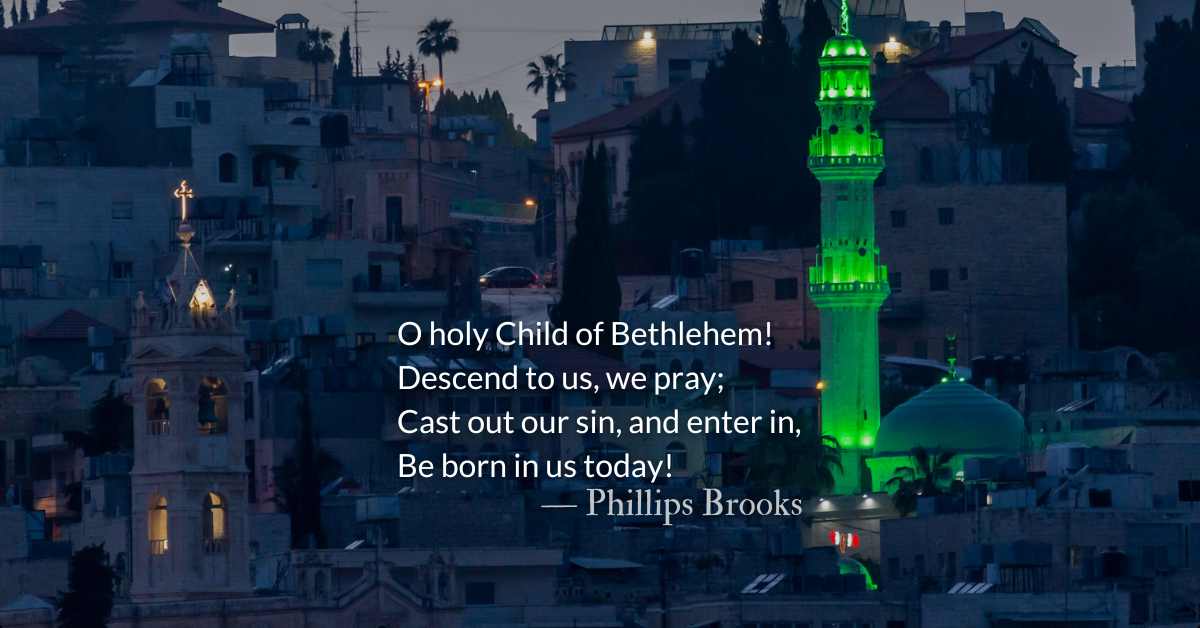
O holy Child of Bethlehem!
Descend to us, we pray;
Cast out our sin, and enter in,
Be born in us today!

Listen: Little Town by Amy Grant
Read: Lyrics from Hymnary.org

Divine Hours Prayer: The Request for Presence
Bow your heavens, O Lord, and come down; touch the mountains, and they shall smoke. — Psalm 144.5

– From The Divine Hours: Prayers for Summertime by Phyllis Tickle.


Today’s Readings
2 Chronicles 22-23  (Listen 6:51)
Psalms 126-128 (Listen 1:58)

Read more about Pause To Read
The trailer for our podcast, Pause to Read, is available now and the 1st full episode (approximately 5 minutes) is out Friday. Please subscribe and share the episodes.

Read more about Supporting Our Work
Our ad-free biblical devotional content isn’t free to produce or share with inboxes across the world. Please consider joining our donors.
What Child is This? — Carols of Advent Joy

Scripture Focus: Psalm 123:1
1 I lift up my eyes to you,
    to you who sit enthroned in heaven.

Luke 2:15-18
15 When the angels had left them and gone into heaven, the shepherds said to one another, “Let’s go to Bethlehem and see this thing that has happened, which the Lord has told us about.”

16 So they hurried off and found Mary and Joseph, and the baby, who was lying in the manger. 17 When they had seen him, they spread the word concerning what had been told them about this child, 18 and all who heard it were amazed at what the shepherds said to them.

Reflection: What Child is This? — Carols of Advent Joy
By Jon Polk

The melody of Greensleeves is instantly recognizable, but few know the lyrics of the original song by that title. Most associate the tune with the beloved Christmas carol, What Child is This?

The son of a surgeon from Bristol, England, William Chatterton Dix spent most of his life as a manager of the Maritime Insurance Company in Glasgow, Scotland. 

In 1865, at the age of 29, Dix suffered from an unexpected, severe illness that nearly took his life. The sickness left him confined to bed for months suffering from serious depression. During his recovery, he experienced a profound spiritual revival. Reading the Bible constantly, he channeled his renewed faith into writing poetry and hymns for the church.

Dix’s most well-known hymn is the carol, What Child is This?, written during that period of illness and depression. The song wrestles with the mystery of the Incarnation and paints a classic portrait of the Nativity.

What Child is this who, laid to rest,
On Mary’s lap is sleeping?
Whom angels greet with anthems sweet,
While shepherds watch are keeping?

The questions presume to be those of the shepherds as they consider the true nature of the baby the angels celebrate. They wonder about the humble circumstances surrounding his birth.

Why lies He in such mean estate,
Where ox and ass are feeding?

Dix based the song on a poem he had written earlier, titled The Manger Throne, in which he describes the excitement over the birth of this King born in a lowly estate.

Never fell melodies half so sweet
          As those which are filling the skies,
And never a palace shone half so fair
          As the manger bed where our Saviour lies

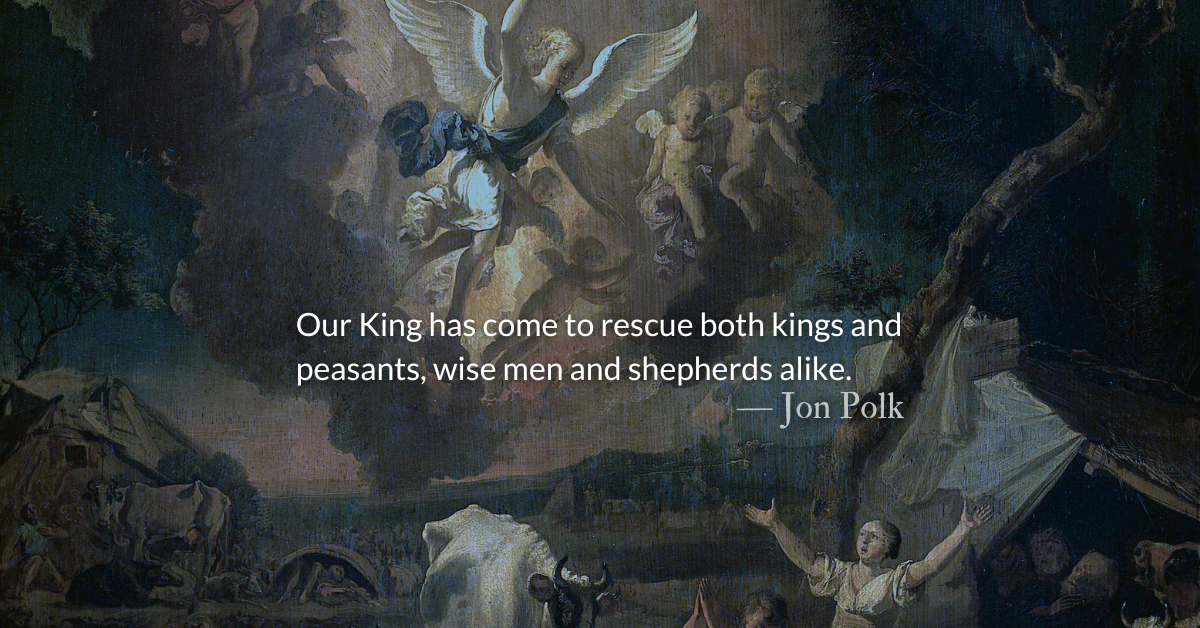
With a symbolic nod to the story of the Magi, the questions of the shepherds are answered, and we are reminded that our King has come to rescue both kings and peasants, wise men and shepherds alike.

So bring Him incense, gold, and myrrh,
Come peasant, king to own Him;
The King of kings salvation brings,
Let loving hearts enthrone Him.

This King, born in a Manger Throne, has come to bring us life, the humble station of his birth reflecting the humiliation of his own death on our behalf.

Nails, spear shall pierce Him through,
The cross be borne for me, for you;

The King of the Universe, born in a filthy cattle trough, worshiped by dirty shepherds. A stark contrast which portends our own transformations when we follow him, much like the spiritual awakening of a humble Anglican businessman inspired him to dedicate his creative talents to hymns which remind the church to continually reflect upon the question, what child is this?

Listen: What Child is This? by Russ Taff
Read:
Lyrics from Hymnary.org

– From The Divine Hours: Prayers for Summertime by Phyllis Tickle.

Today’s Readings
2 Chronicles 21  (Listen 3:25
Psalms 123-125 (Listen 1:52)

Read more about Pause To Read
On Pause to Read, a podcast by The Park Forum, we read a devotional from the past year and encourage listeners to pause to read the scripture before continuing to listen to the devotional.

Read more about Supporting Our Work
Continuing and expanding our work requires support from our donors. Consider becoming a donor with an end-of-year one-time gift or as a monthly donor.

Mary’s Story — Love of Advent

Scripture Focus: Matthew 1.1, 16
1 This is the genealogy of Jesus the Messiah the son of David, the son of Abraham:
16 and Jacob the father of Joseph, the husband of Mary, and Mary was the mother of Jesus who is called the Messiah.

Luke 1.28
28 The angel went to her and said, “Greetings, you who are highly favored! The Lord is with you.”

Reflection: Mary’s Story — Love of Advent
By Erin Newton

These are the matriarchs of Jesus: Tamar, Rahab, Ruth, Bathsheba, and Mary. This is Mary’s story.

Unlike the other matriarchs of Jesus’s lineage, Mary is the focus of a multitude of hymns and prayers. She is the feature of paintings with token blue robes and a golden halo. As the mother of Jesus, she adorns nearly every nativity scene and features prominently in Advent messages.

The angel calls her “highly favored” and Elizabeth heralds her as “blessed among women.” Mary is well-known, famous to be precise. She is the foremost saint in the Catholic church. We know her story well.

Mary is the easiest character to place in the genealogy. Her story doesn’t center around abuse or widowhood. Yet we know she suffered for the task placed upon her. Her husband was not evil like Er, or sickly like Mahlon or Kilion, or murdered like Uriah. But Joseph was tempted to leave her child fatherless.

Her status as an unwed, pregnant young woman was met with skepticism and doubts. She was outcast in some ways—like Ruth, Rahab, Tamar, and Bathsheba. But Joseph stayed by her side, more like a Boaz than a David. No hand was laid upon her body, more loving than Judah or the men of Jericho.

Mary was a Jew. She did not have to struggle with a foreign culture. She could stay among family and provide safe haven for the Messiah inside.

Mary’s greatest asset to the world was her faithfulness. As men had chosen women before for their bodies; Mary was divinely chosen for her faith. Advent paints a rare and shockingly different picture of love.

Her story is unique, being the only divine conception that ever existed. But in some ways, she’s rather typical and expected. Her past is not powerfully redeemed. Her heritage was not amazingly rewritten.

She is well-known and respected. Her presence demands honor and dignity. Her burdens, disadvantages, and crises are seen as a badge of honor for the one who carries God in her womb.

She is the mother of Jesus. Mary, a woman of faith is chosen and honored as one of five women named in Jesus’s family.

In the love of Jesus belong the ordinarily faithful.

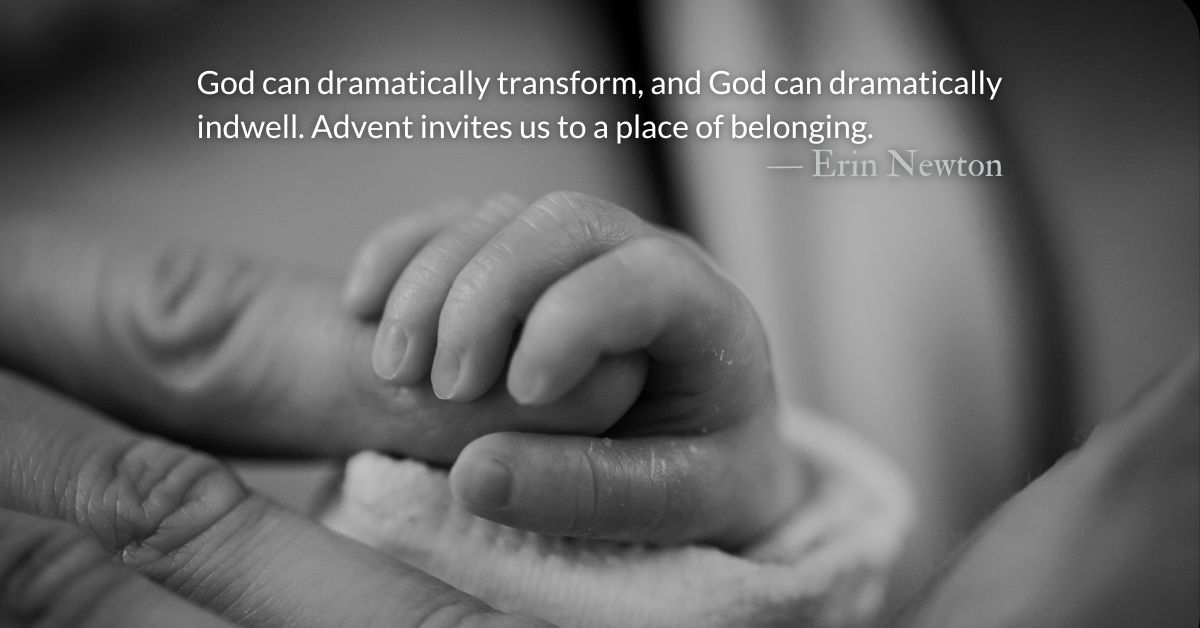
God can dramatically transform, and God can dramatically indwell. No matter our story, we belong within the love of Jesus. Advent invites us to a place of belonging.

Divine Hours Prayer: The Request for Presence
Lead me, O Lord, in your righteousness,… make your way straight before me. — Psalm 5.8

– From The Divine Hours: Prayers for Summertime by Phyllis Tickle.

Today’s Readings
2 Chronicles 17  (Listen 2:48)
Psalms 119.121-144 (Listen 15:14)

This Weekend’s Readings
2 Chronicles 18  (Listen 5:51Psalms 119.145-176 (Listen 15:14)
2 Chronicles 19-20  (Listen 8:09Psalms 120-122 (Listen 2:12)

Read more about Pause To Read
On Pause to Read, a podcast by The Park Forum, we read a devotional from the past year and encourage listeners to pause to read the scripture before continuing to listen to the devotional.

Read more about Supporting Our Work
We could not continue, much less expand our work, without our donors. Please consider joining them to support ad-free biblical devotional content to readers and listeners across the world.

Bathsheba’s Story — Love of Advent

Scripture Focus: Matthew 1.1, 6
1 This is the genealogy of Jesus the Messiah the son of David, the son of Abraham:

6 and Jesse the father of King David.
David was the father of Solomon, whose mother had been Uriah’s wife…

Psalm 51.1
1 Have mercy on me, O God,
    according to your unfailing love;
according to your great compassion
    blot out my transgressions.

Reflection: Bathsheba’s Story — Love of Advent
By Erin Newton

These are the matriarchs of Jesus: Tamar, Rahab, Ruth, Bathsheba, and Mary. This is Bathsheba’s story.

Every year on social media, a new debate arises surrounding the culpability of Bathsheba. Some wish to see her as a willing participant in adultery but Matthew’s gospel refers to Bathsheba as Uriah’s wife highlighting the tragedy of what happened to her. When Nathan confronts David about his sin, he compares Bathsheba to an innocent lamb stolen from another man’s flock.

Eyes gazed upon Bathsheba as eyes had fallen upon Tamar and Rahab. She was taken, forcibly widowed, and consecutively mourned the death of her child. Bathsheba’s story begins with sorrow.

Sorrow is a common thread among the stories of these women. For a group of matriarchs of the long-awaited Messiah, you’d expect stories filled with joy and praise. But for many of these women, the stories are full of hardship, grief, and pain. Bathsheba lived with the grief of Uriah’s death. She also mourned the death of her baby.

Bathsheba is not alone in her sorrow. When David recognizes his guilt, he calls upon the love of God for forgiveness. Only divine compassion could heal a heart that took a woman and arranged for her husband’s death.

It has been over three thousand years since Bathsheba lived and her story continues to create havoc and debate. She becomes the scapegoat for anyone looking to blame a victim for her own abuse. She is labeled as a co-conspirator or a seductress—as if readers forget that she was the little ewe lamb of Nathan’s story.

Whether one sees her as a manipulative adulterer or an innocent sexual abuse victim, Bathsheba’s place as an ancestor of Jesus is often diminished or ignored. However, her placement in the genealogy is a coincidence.

God does not sit by aloof to the events of our lives. God redeems our pain.

Bathsheba was a woman of sorrow and of pain. She endured the abuse of power and buried her husband and child. She is misunderstood and misrepresented. But she is a matriarch of Jesus. 

Bathsheba is chosen and honored as one of five women named in Jesus’s family. She is not defined by her sorrow or her once naked body. She does not have to be defined by misrepresentations or skeptical debates.

In the love of Jesus belong the slandered, the misunderstood, and the innocent.

Divine Hours Prayer: The Refrain for the Morning Lessons
Let integrity and uprightness preserve me, for my hope has been in you. — Psalm 25.20

– From The Divine Hours: Prayers for Summertime by Phyllis Tickle.

Today’s Readings
2 Chronicles 16  (Listen 2:51)
Psalms 119.97-120 (Listen 15:14)

Read more about Ancient #MeToo Story
The bold voice of Nathan was needed to bring the king to a place of repentance. Bathsheba deserved an advocate.

Read more about Supporting Our Work
Approximately half our funding comes as end-of-year gifts. Whether once a year or monthly, please consider becoming a donor to support our ad-free biblical devotionals.

Ruth’s Story — Love of Advent

Scripture Focus: Matthew 1.1, 5b
1 This is the genealogy of Jesus the Messiah the son of David, the son of Abraham:

5 …Boaz the father of Obed, whose mother was Ruth

Ruth 4.15
15 He will renew your life and sustain you in your old age. For your daughter-in-law, who loves you and who is better to you than seven sons, has given him birth.”

Reflection: Ruth’s Story — Love of Advent
By Erin Newton

These are the matriarchs of Jesus: Tamar, Rahab, Ruth, Bathsheba, and Mary. This is Ruth’s story.

Ruth rarely needs an introduction. Her story is told in nearly every women’s bible study.

She was not part of a scandalous story like Tamar or Rahab. But like Tamar and Rahab, she was also not part of Abraham’s family. She was not an Israelite but a Moabite. And her story opens with sorrow.

Three deaths cover the first five verses of the book. The book begins with emptiness. Famine and empty bellies. Death and empty households. Immigration and the parting of sisters.

Without a husband or heirs, Ruth joined her mother-in-law to return to Israel and said goodbye to her Moabite sister-in-law. The rumor was that God had been gracious to Israel. The barren land was filling with food.

Despite being a foreigner and a woman—a double disadvantage—she worked to provide for herself and Naomi. You get the sense that Ruth was humble yet intelligent. She understood her place in the Israelite culture but also how to make the most of each situation.

Israelite stories of marriage follow a pattern. Robert Alter points out the typical nature of such scenes: a man journeys from a foreign land, comes upon a well, meets a woman, she draws water for him, a marriage proposal occurs, and she rushes home to tell her family. We see this scene in stories about Isaac and Rebekah, Jacob and Rachel, and Moses and Zipporah.

The expected story of betrothal is met with unexpected turns. It is Ruth who stands in the spotlight of the story. In this story it is the woman who travels to a distant land. It is Boaz who ensures Ruth has something to drink. In a story that ought to focus on the patriarch, it is Ruth who exemplifies such qualities.

Boaz redeemed her, but Ruth’s character is the focus of the story. She, like Rahab, heard the stories of God in her foreign land. Like Rahab, she decided by faith for “your God” to become “my God.”

Ruth has both the disadvantage of too much estrogen and a foreign ethnicity, but she is a matriarch of Jesus. Her story reveals how God works in unexpected ways.

Ruth, someone from the outside, is chosen and honored as one of five women named in Jesus’s family.

In the love of Jesus belong the outsiders and the disadvantaged.


Divine Hours Prayer: The Refrain for the Morning Lessons
Blessed are they which do hunger and thirst after righteousness: for they shall be filled. — Matthew 5.6

– From The Divine Hours: Prayers for Summertime by Phyllis Tickle.


Today’s Readings
2 Chronicles 14-15  (Listen 5:49)
Psalms 119-73-96 (Listen 15:14)

Read more about Ruth, the Immigrant
Ruth shows us how God’s grace helps us immigrate from our own selfish kingdoms to the kingdom of God.

Read more about Supporting Our Work
Our work is funded by donors like you. Please consider joining them to support ad-free content that brings biblical devotionals to inboxes across the world.