Hurting through the Holidays :: Advent’s Hope

Physical and emotional pain can make the holiday season feel like a torrent of expectations to appear happy. The unspoken demand of “Christmas joy” weighs on those mourning the loss of a loved one, suffering a long-term illness, or carrying the pressures of daily anxiety or depression. At some point this converges with the seasonal stress of wrapping up the final quarter of the year, scheduling events, and traveling through busy airports.

The musical messages that flood every store and streaming site are less than helpful. While festive, the top 10 Christmas songs in the U.S. are unapologetically devoid of spiritual joy. From Lennon’s Christmas-as-political statement, “Happy XMas (War Is Over),” to Mariah Carey’s, “All I Want For Christmas Is You,” which desperately pleads with a lover to fill a need far too large for any person, these songs speak of happy feelings but miss transcendent peace.

Settling for happiness as proxy for true joy isn’t a recent change in America’s Christmas tradition. In 1944 Judy Garland sang, “Have Yourself a Merry Little Christmas,” the song mandates merriness—challenging, “from now on your troubles will be out of sight,” while predicting, “through the years we’ll all be together”—yet offers no sufficient solution as to how any of this will come to be.

The season of Advent, contrary to demanding a facade of holiday spirit, is an invitation to rest in the promise of Christ’s redemptive joy. When Christ talked about anxiety and trust he wasn’t minimizing the stresses of life, he was revealing the sufficiency of his love.

It’s only by placing our faith in the gospel that we are given the opportunity to displace it in ourselves and our circumstances. We stop looking to calm daily anxieties with our own success, appearance, or accolade—which change far too often to offer the security and hope we need.

“In the world you will have tribulation,” Jesus said to his followers. “But take heart; I have overcome the world.” Lord, renew in us, this Advent, the hope of your victory, the promise of your relief, and the joy of your redemption.

Today’s Reading
2 Chronicles 1 (Listen – 2:47)
1 John 1 (Listen – 1:28)

Editor’s note: When Christ talked about anxiety, or discouragement, his words were focused on the daily pressures common to all people. He was not, nor are we above, trying to speak to mental health conditions that persist despite great effort and desire. In all things we look to Christ, but in many we find ourselves holding on for future relief, future glory, future joy—Christ will return, he will make all things new.
O Come, O Come, Emmanuel :: Advent’s Hope

“Caesar is Lord,” the people would shout as his chariot traversed the streets. Rome’s elite culture—philosophy to viaducts, engineering to economics—was unsurpassed, and almost universally recognized as the hope of the world. It was stunning when the empire fell into decline.

In the end, Caesar proved not only unable to save his kingdom, but even himself. The fall of Rome plunged civilization into what historians have long-called the Dark Ages. For hundreds of years battles raged endlessly, pestilence and plague spread freely, and chaos seemed to gain the upper hand all too regularly.

The period isn’t significantly brighter in church history. Scripture was largely inaccessible, starving the Church of sound doctrine and increasing the growth of folk religion, superstition, and far worse. (The devastating interpretations of Scripture that lead to the crusades were brewing during this time.)

“O come, Thou Wisdom, from on high, and order all things far and nigh,” wrote an anonymous monk sometime before 800 C.E. The words to “O Come, O Come, Emmanuel” cry out from the depths of the Dark Ages—longing for God’s presence, Emmanuel, to rescue humankind.

In some ways the unknown author behind this song is an outlier to his or her world; the lyrics demonstrate intimate knowledge of Scripture in a time of illiteracy. In other ways the lyricist was shaped firmly by the Dark Ages—depravity writ large—and its revelations of humanity’s limits. Even had there been a vision for restoration present, no one on earth would have been sufficient to breathe it to life.

O come, Desire of the nations, bind
in one the hearts of all mankind;
bid every strife and quarrel cease
and fill the world with heaven’s peace.

“Jesus is Lord,” is a revolutionary claim. It upends not only global empires, but whatever we would enthrone on our own hearts to save us from the insufficiency of our world.

In Advent we await the coming of the all-sufficient King; he is the wisdom we yearn for and the power we need. He is God, and his presence brings healing to our world and restoration to our hearts.

Listen: O Come, O Come, Emmanuel by Francesca Battistelli (4:20)

Today’s Reading
1 Chronicles 29 (Listen – 5:50)
2 Peter 3 (Listen – 3:21)

Why We Celebrate Advent :: Advent’s Hope

As a commercial event, Christmas seems to come too soon each year. In the church calendar—observed by Christians around the world for centuries—Christmas morning marks the beginning of the season, and our hearts now rest in the season of Advent. To put that in the language of modern music, celebrating “Joy to the World” before we cry “O Come O Come Emmanuel” misses the hope of Advent.

“The ancient theologians of the Church, such as Origen and Clement of Alexandria, look upon the Christian life as one continual festival,” observes Ida von Hahn-Hahn. “Because the night of sin has been overcome by redemption, because reconciliation with God has brought peace and true joy to the soul, and because from this joy no one is excluded who does not voluntarily separate himself from God.”

Hahn-Hahn, a German countess who wrote a series of books on church history in the late 19th century, highlights the importance of Advent throughout history in preparing the souls of the faithful for Christmas:
Particular times were set apart as festivals, which, like faithful messengers of religion, returned every year, unceasingly announcing the work of redemption, and by their attractive festivity enkindling man, and preparing his soul for the everlasting feast of heaven.

The fast of the four weeks of Advent, to prepare the sinful world for the merciful coming of the Lord… is not to be fulfilled by a trifling and superficial joy, but by the supernatural rejoicing of a heart entirely resting in God, and a life wholly consecrated to Him. Zeal for sanctification should extend over all the aims and objects of life.
Our goal in this season isn’t to usurp materialism only to restore an idyllic image of Christmas-past. Advent is a season where we seek the renewal of our souls in Christ as we prepare for Christmas-present—longing for Christmas-future: the great second Advent where the broken are restored, the dead are revived, and the hope of the gospel brings forth the restoration of all things. So in this season we joyfully, and longingly, sing together, “Come, Thou Long Expected Jesus.”

Today’s Reading
1 Chronicles 28 (Listen – 4:45)
2 Peter 2 (Listen – 3:52)

Cultivating Vibrant Faith :: The Weekend Reading List


Our mission at The Park Forum is to cultivate vibrant faith and sharpen cultural insight through curated devotionals and scripture readings. Each day over 4,000 of us read, pray, and expand our faith through this community.

Over the last year we’ve sought to grow not only our knowledge of Scripture, but our understanding of the culture we live in. We believe that fostering an informed faith is one of the first steps in making the grace and peace of Christ known in our communities.

To that end, we created The Weekend Reading List (and broke our standard 400 word post format on Fridays) this past July. These more in-depth pieces explore the practice of faith in the modern world and have been ordered around five key themes.

Today, for the final Weekend Reading List of the year, we want to take a look back at some of our favorites.


Faith

Oct9Our hearts, like fine instruments, need to be tuned. Getting to the Heart sought to transcend legalism and find true transformation in the gospel. (Includes audio from Timothy Keller.)


Humor

Sept 4Humor’s Moral Purpose looks at the intersection of Stephen Colbert, John Oliver, Amy Schemer, and theology. (We’ve also explored the comedy of Louis C.K.)


Culture

Nov6In a topic appropriate for today, we’ve looked at David Brooks on Simplicity and Morality—although, depending on your day, you may want to read Rest for the Weary or Faith and the NFL.


Technology

Oct16“God will, generally speaking, not compete for our attention,” says Dallas Willard. In There’s (Not) An App For That we look at the way technology can evaporate solitude and silence.


World

Nov20

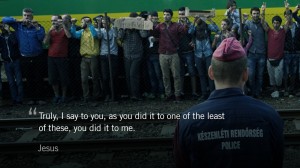
Stories of the Oppressed was our most shared piece of the year. The love of God embracing refugees through our arms is critical for evangelism today. (More on Syria herehere & here.)


Today’s Reading
1 Chronicles 23 (Listen – 4:20)
1 Peter 4 (Listen – 2:50)

This Weekend’s Readings
1 Chronicles 24-25 (Listen – 7:01) 1 Peter 5 (Listen – 2:11)
1 Chronicles 26-27 (Listen – 11:09) 2 Peter 1 (Listen – 3:06)

A Hymn and Prayer for Thanksgiving

“Feeling new strength,” Beethoven scribed across one of the last string quartets he would write. It’s a remarkable statement; the master was completely deaf at this point and had just recovered from a near-fatal illness. Far from despondent, he titled the third movement of his string quartet opus 132, “Holy Song of Thanksgiving by a Convalescent to the Divinity, in the Lydian Mode.”

We offer Beethoven’s Hymn of Thanksgiving today along with the words of David. This prayer of thanksgiving, found in Psalm 103, holds the words of another man who knew both glory and suffering yet chose to rest in thankfulness and worship:
Bless the Lord, O my soul, and all that is within me, bless his holy name!

Bless the Lord, O my soul, and forget not all his benefits, who forgives all your iniquity, who heals all your diseases, who redeems your life from the pit, who crowns you with steadfast love and mercy, who satisfies you with good so that your youth is renewed like the eagle’s.

The Lord works righteousness and justice for all who are oppressed. He made known his ways to Moses, his acts to the people of Israel.

The Lord is merciful and gracious, slow to anger and abounding in steadfast love. He will not always chide, nor will he keep his anger forever. He does not deal with us according to our sins, nor repay us according to our iniquities.

For as high as the heavens are above the earth, so great is his steadfast love toward those who fear him; as far as the east is from the west, so far does he remove our transgressions from us.

As a father shows compassion to his children, so the Lord shows compassion to those who fear him. For he knows our frame; he remembers that we are dust.

As for man, his days are like grass; he flourishes like a flower of the field; or the wind passes over it, and it is gone, and its place knows it no more. But the steadfast love of the Lord is from everlasting to everlasting on those who fear him, and his righteousness to children’s children, to those who keep his covenant and remember to do his commandments. The Lord has established his throne in the heavens, and his kingdom rules over all.

Bless the Lord, O you his angels, you mighty ones who do his word, obeying the voice of his word! Bless the Lord, all his hosts, his ministers, who do his will!

Bless the Lord, all his works, in all places of his dominion. Bless the Lord, O my soul!
Listen: Beethoven’s Hymn of Thanksgiving: String Quartet No. 15, Op. 132: III. Molto adagio. Tokyo String Quartet (16:03).

Read more and listen to the entire String Quartet No. 15 on NPR Music.

Today’s Reading
1 Chronicles 22 (Listen – 3:25)
1 Peter 3 (Listen – 3:30)

Show Buttons
Hide Buttons
Spur a spiritual rhythm of refreshment right in your inbox
By joining this email list you are giving us permission to send you devotional emails each weekday and to communicate occasionally regarding other aspects of the ministry.
100% Privacy. We don't spam.