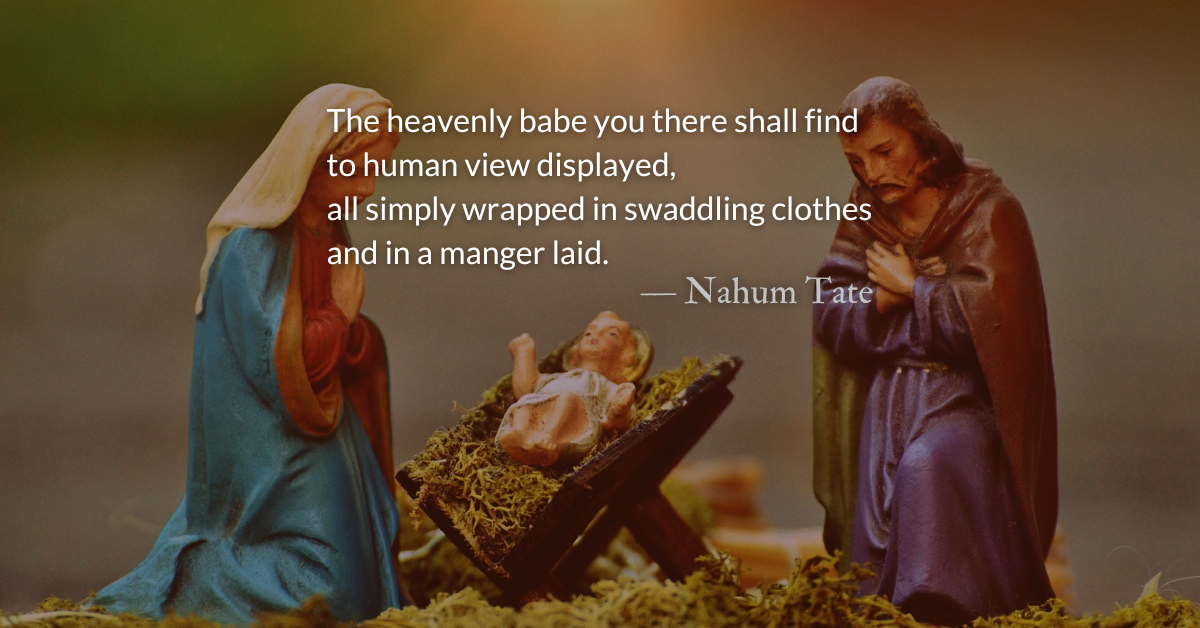
What Child is This? — Carols of Advent Joy

Scripture Focus: Psalm 123:1
1 I lift up my eyes to you,
    to you who sit enthroned in heaven.

Luke 2:15-18
15 When the angels had left them and gone into heaven, the shepherds said to one another, “Let’s go to Bethlehem and see this thing that has happened, which the Lord has told us about.”

16 So they hurried off and found Mary and Joseph, and the baby, who was lying in the manger. 17 When they had seen him, they spread the word concerning what had been told them about this child, 18 and all who heard it were amazed at what the shepherds said to them.

Reflection: What Child is This? — Carols of Advent Joy
By Jon Polk

The melody of Greensleeves is instantly recognizable, but few know the lyrics of the original song by that title. Most associate the tune with the beloved Christmas carol, What Child is This?

The son of a surgeon from Bristol, England, William Chatterton Dix spent most of his life as a manager of the Maritime Insurance Company in Glasgow, Scotland. 

In 1865, at the age of 29, Dix suffered from an unexpected, severe illness that nearly took his life. The sickness left him confined to bed for months suffering from serious depression. During his recovery, he experienced a profound spiritual revival. Reading the Bible constantly, he channeled his renewed faith into writing poetry and hymns for the church.

Dix’s most well-known hymn is the carol, What Child is This?, written during that period of illness and depression. The song wrestles with the mystery of the Incarnation and paints a classic portrait of the Nativity.

What Child is this who, laid to rest,
On Mary’s lap is sleeping?
Whom angels greet with anthems sweet,
While shepherds watch are keeping?

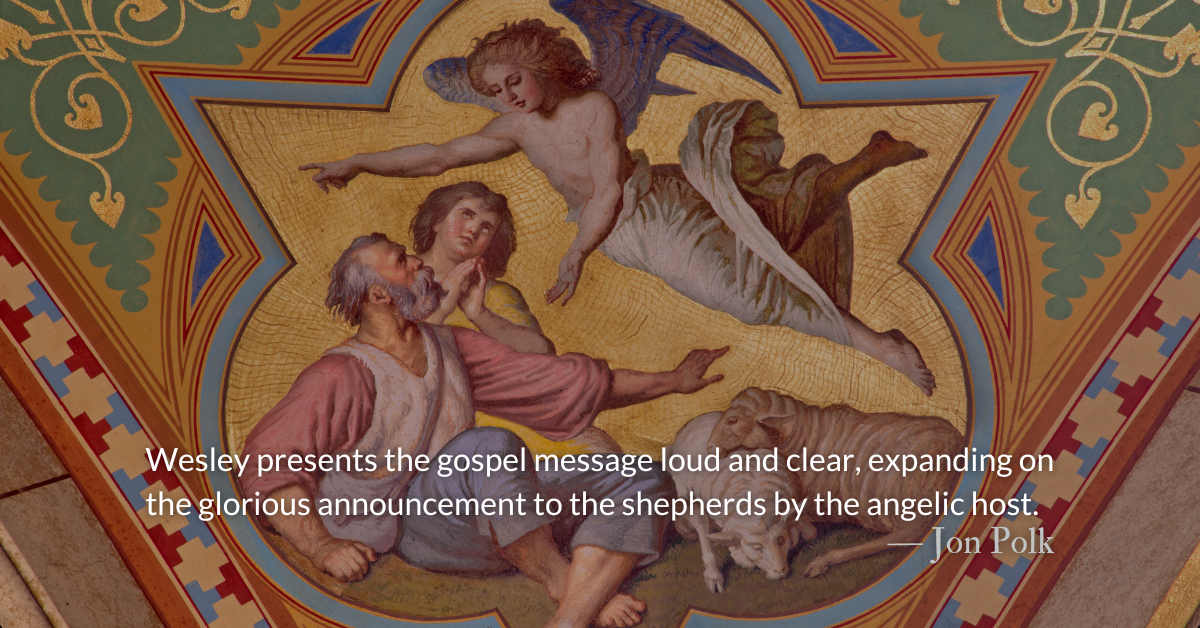
The questions presume to be those of the shepherds as they consider the true nature of the baby the angels celebrate. They wonder about the humble circumstances surrounding his birth.

Why lies He in such mean estate,
Where ox and ass are feeding?

Dix based the song on a poem he had written earlier, titled The Manger Throne, in which he describes the excitement over the birth of this King born in a lowly estate.

Never fell melodies half so sweet
          As those which are filling the skies,
And never a palace shone half so fair
          As the manger bed where our Saviour lies

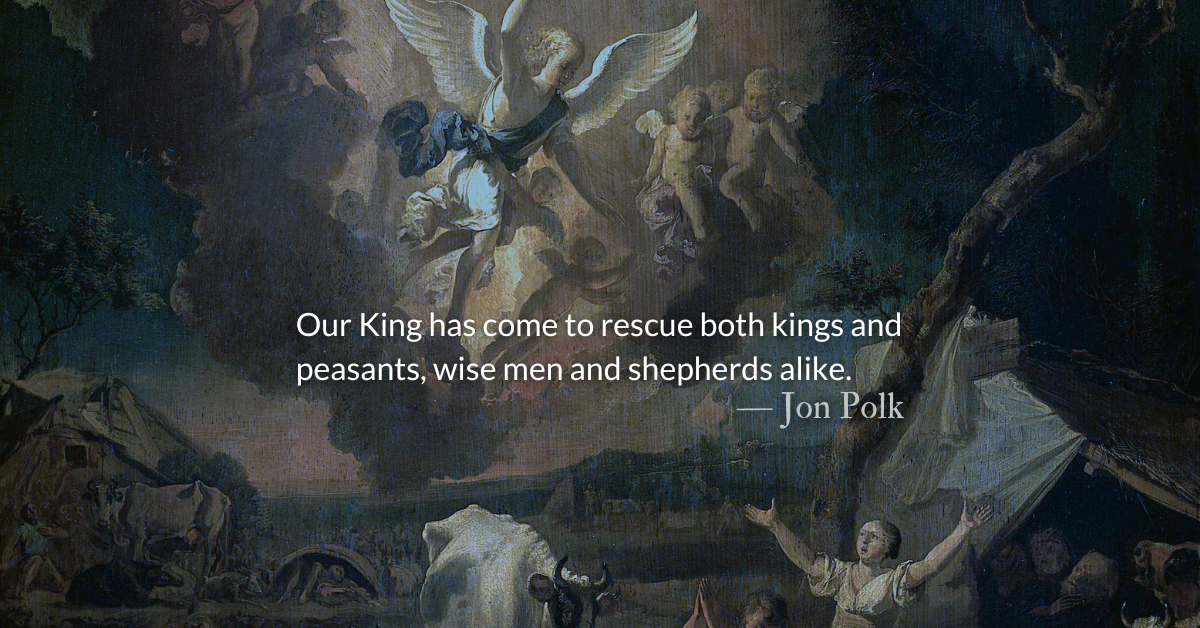
With a symbolic nod to the story of the Magi, the questions of the shepherds are answered, and we are reminded that our King has come to rescue both kings and peasants, wise men and shepherds alike.

So bring Him incense, gold, and myrrh,
Come peasant, king to own Him;
The King of kings salvation brings,
Let loving hearts enthrone Him.

This King, born in a Manger Throne, has come to bring us life, the humble station of his birth reflecting the humiliation of his own death on our behalf.

Nails, spear shall pierce Him through,
The cross be borne for me, for you;

The King of the Universe, born in a filthy cattle trough, worshiped by dirty shepherds. A stark contrast which portends our own transformations when we follow him, much like the spiritual awakening of a humble Anglican businessman inspired him to dedicate his creative talents to hymns which remind the church to continually reflect upon the question, what child is this?

Listen: What Child is This? by Russ Taff
Read:
Lyrics from Hymnary.org

– From The Divine Hours: Prayers for Summertime by Phyllis Tickle.

Today’s Readings
2 Chronicles 21  (Listen 3:25
Psalms 123-125 (Listen 1:52)

Read more about Pause To Read
On Pause to Read, a podcast by The Park Forum, we read a devotional from the past year and encourage listeners to pause to read the scripture before continuing to listen to the devotional.

Read more about Supporting Our Work
Continuing and expanding our work requires support from our donors. Consider becoming a donor with an end-of-year one-time gift or as a monthly donor.

We Gather Together – Hymns for Giving Thanks

Scripture Focus: Psalm 91:1-4
1 Whoever dwells in the shelter of the Most High
    will rest in the shadow of the Almighty.
2 I will say of the Lord, “He is my refuge and my fortress,
    my God, in whom I trust.”
3 Surely he will save you
    from the fowler’s snare
    and from the deadly pestilence.
4 He will cover you with his feathers,
    and under his wings you will find refuge;
    his faithfulness will be your shield and rampart.

Reflection: We Gather Together – Hymns for Giving Thanks
By Jon Polk

How did a Dutch patriotic song from the late sixteenth century, celebrating the Netherlands’ freedom from Spanish rule, become one of the hymns most often associated with American Thanksgiving?

The opening line of We Gather Together surely influenced its usage as a Thanksgiving hymn.

We gather together to ask the Lord’s blessing

Written by Dutch poet and composer Adrianus Valerius in 1597, the hymn was not translated into English in the United States until it was adapted by Theodore Baker in 1894.

Originally, the hymn celebrated the end of the Dutch War of Independence from Spain. The opening line highlighted the fact that under Spanish rule, Dutch Protestants were forbidden to gather for worship. The hymn specifically gives thanks to God for the end of the conflict, but also speaks generally of God’s providence in all the trials and challenges of life.

He chastens and hastens His will to make known.
The wicked oppressing now cease from distressing.
Sing praises to His Name; He forgets not His own.

Theodore Baker, an organist and musicologist from New York, studied for his doctorate in Germany and translated the hymn from German for a new anthem called Prayer for Thanksgiving, thus encouraging its usage at Thanksgiving and for local town celebrations. 

By the first World War, the hymn’s militant language, such as “the wicked oppressing now cease from distressing” and “from the beginning the fight we were winning,” increased its popularity in America during those uncertain times.

The third and final verse, however, speaks more broadly of the cosmic conflict which one day God will bring to a close.

We all do extol Thee, Thou Leader triumphant,
And pray that Thou still our Defender will be.
Let Thy congregation escape tribulation;
Thy Name be ever praised! O Lord, make us free!

The hymn, which at its beginning speaks of the simple blessing of gathering together as Christians to worship God, takes us through a realization that we will experience difficulties in life, and ends with a hopeful resolution that God will ultimately rescue us and make us free. 

Beside us to guide us, our God with us joining,
Ordaining, maintaining His kingdom divine

This God who rescues us is indeed worthy of praise. This God who frees us is worthy of our gratitude. This God who leads us through the challenges of life is worthy of our humble adoration. 

Thy Name be ever praised! O Lord, make us free!

Divine Hours Prayer: The Request for Presence
Gladden the soul of your servant, for to you, O Lord, I lift up my soul. — Psalm 86.4

– From The Divine Hours: Prayers for Summertime by Phyllis Tickle.

Today’s Readings
1 Chronicles 17  (Listen 4:14)
Psalms 91 (Listen 1:39)

Tomorrow’s Readings
1 Chronicles 18  (Listen 2:36)
Psalms 92-93 (Listen 2:09)

Read more about A Thanksgiving
Deny me wealth, fear, far remove
The love of power or name;
Hope thrives in straits, in weakness love,
And faith in the world’s shame.

Read more about Supporting Our Work
Support ad-free content that brings biblical devotionals to inboxes across the world. Give an end-of-year donation or join our monthly donors.

Bringing in the Sheaves – Hymns for Giving Thanks

Scripture Focus: Psalm 90:14-17
14 Satisfy us in the morning with your unfailing love,
    that we may sing for joy and be glad all our days.
15 Make us glad for as many days as you have afflicted us,
    for as many years as we have seen trouble.
16 May your deeds be shown to your servants,
    your splendor to their children.
17 May the favor of the Lord our God rest on us;
    establish the work of our hands for us—
    yes, establish the work of our hands.

Reflection: Bringing in the Sheaves – Hymns for Giving Thanks
By Jon Polk

What are sheaves and why do we need to bring them in?

For those unfamiliar with an agrarian way of life, a sheaf is a bundle of wheat stalks that has been tied together after being harvested.

Following the harvesting and bundling of the wheat, the sheaves are brought into a room for threshing, the process of removing the grain from the wheat and separating out the edible portions from the chaff, the useless stalks.

A good harvest and bountiful crop would be cause for rejoicing.

Bringing in the sheaves, bringing in the sheaves,
We shall come rejoicing, bringing in the sheaves. 

Knowles Shaw, born in Ohio in 1834, but raised in Indiana, was a minister in the Christian Church and because of his beautiful voice he was known as the “singing evangelist.” He wrote and composed music and published five song books of his own hymns.

Knowles was a prolific preacher and evangelist, and it is estimated that he baptized over ten thousand people in his lifetime.

Shaw’s most famous composition, Bringing in the Sheaves, was also one of his last and was inspired by Psalm 126:6, “Those who go out weeping, carrying seed to sow, will return with songs of joy, carrying sheaves with them.”

Sowing in the morning, sowing seeds of kindness,
Sowing in the noontide and the dewy eve;
Waiting for the harvest, and the time of reaping,
We shall come rejoicing, bringing in the sheaves.

The hymn gives voice to our gratitude for God’s provision, sustenance, and watch care over our lives. In both times of joy and times of sadness, we have a God who blesses our labor and brings the harvest.

Sowing in the sunshine, sowing in the shadows,
Fearing neither clouds nor winter’s chilling breeze;
By and by the harvest, and the labor ended,
We shall come rejoicing, bringing in the sheaves.

The singing evangelist Knowles Shaw would have us remember, however, that sowing and reaping in the scriptures is often used as a metaphor for sharing the gospel message.

When we come together as family and friends to celebrate and give thanks, we can easily get lost in the bounty of the provision and forget about the God who provided. Instead, may our thanksgiving be a testament to those around us of the faith we have in God’s providential care. May the sheaves we gather represent the impact our own generosity has on those around us.

Divine Hours Prayer: The Request for Presence
Let all who seek you rejoice and be glad in you; let those who love your salvation say forever, “Great is the Lord!” — Psalm 70.4

– From The Divine Hours: Prayers for Summertime by Phyllis Tickle.


Today’s Readings
1 Chronicles 16  (Listen 5:21)
Psalms 90 (Listen 2:03)

Read more about A Prayer of Harvesters
“The harvest is plentiful, but the workers are few…”
There is much work to be done, Lord.
Send us to the field—into our cities.

Read more about Supporting Our Work
Support from donors like you is vital to continuing our work. Join our donors to support ad-free biblical devotionals shared around the world.

Count Your Blessings – Hymns for Giving Thanks

Scripture Focus: Psalm 89:14-16
14 Righteousness and justice are the foundation of your throne;
    love and faithfulness go before you.
15 Blessed are those who have learned to acclaim you,
    who walk in the light of your presence, Lord.
16 They rejoice in your name all day long;
    they celebrate your righteousness.

From John: We are thankful to have more music-themed devotionals from Jon Polk this week. Leading up to Thanksgiving, Jon will take us through some hymns for giving thanks.

Reflection: Count Your Blessings – Hymns for Giving Thanks
By Jon Polk

Johnson Oatman, Jr. was born near Medford, New Jersey in 1856. His father, Johnson Oatman, Sr. was widely regarded as an excellent singer with a rich and powerful voice. As a young boy, Johnson Jr. loved to hear his father singing the great hymns of faith.

Johnson longed to sing like his father, but alas he was not gifted with similar vocal abilities. However, he still aspired to serve God with his life.

At the age of nineteen, Oatman joined the Methodist Church and began serving. Soon he was granted a license to preach the gospel and was ordained.

Although Johnson began to preach locally, he never received a permanent church assignment. He continued working for his father’s mercantile business, Johnson Oatman & Son, and took over after his father passed away.

Unable to sing like his father and lacking a permanent pulpit as a preacher, Johnson finally discovered at the age of 36 that he did have a musical talent: songwriting. He wrote prolifically, up to 200 songs a year. Over his lifetime, Oatman penned 5,000 hymns for the church.

Of those scores of hymns, undoubtedly his most famous composition, written in 1897, is the familiar Count Your Blessings. The song encapsulates Oatman’s own life experience.

When upon life’s billows you are tempest tossed
When you are discouraged, thinking all is lost
Count your many blessings, name them one by one
And it will surprise you what the Lord hath done

Count your blessings, name them one by one
Count your blessings, see what God hath done
Count your blessings, name them one by one
Count your many blessings, see what God hath done

This rollicking hymn soon became so famous that British evangelist Gipsy Smith once said, “Down in South London the men sing it, the boys whistle it, and the women rock their babies to sleep to the tune.”

How often do we think “I wish I could sing like her” or “If only I could share my faith like him” or “I’d love to serve the way they do”?

Oatman’s famous hymn is a reminder to us all that God has blessed us immeasurably and it is up to us to be attentive to the gifts God has given us.

Count your blessings, not your regrets. Number your joys, not your worries. Take stock of your value to God, not your personal disappointments.

Count your blessings, name them one by one, and see what God has done for you.

Divine Hours Prayer: The Call to Prayer
Bless the Lord, O my soul, and all that is within me, bless his holy Name.
Bless the Lord, O my soul, and forget not all his benefits. — Psalm 103.1-2


– From The Divine Hours: Prayers for Summertime by Phyllis Tickle.

Today’s Readings
1 Chronicles 15  (Listen 4:38)
Psalms 89 (Listen 5:29)

Read more about Praying Priestly Blessings
As followers of God today, a part of our identity is as carriers of the blessings of God that are intended for the world.

Read more about Supporting Our Work
End-of-year giving is often over half of our support for the year. Please consider becoming a regular donor either once a year or every month.

A Model of Faithfulness

Scripture Focus: 2 Kings 8:1-6
1 Now Elisha had said to the woman whose son he had restored to life, “Go away with your family and stay for a while wherever you can, because the Lord has decreed a famine in the land that will last seven years.” 2 The woman proceeded to do as the man of God said. She and her family went away and stayed in the land of the Philistines seven years.

3 At the end of the seven years she came back from the land of the Philistines and went to appeal to the king for her house and land. 4 The king was talking to Gehazi, the servant of the man of God, and had said, “Tell me about all the great things Elisha has done.” 5 Just as Gehazi was telling the king how Elisha had restored the dead to life, the woman whose son Elisha had brought back to life came to appeal to the king for her house and land.

Gehazi said, “This is the woman, my lord the king, and this is her son whom Elisha restored to life.” 6 The king asked the woman about it, and she told him.

Then he assigned an official to her case and said to him, “Give back everything that belonged to her, including all the income from her land from the day she left the country until now.”

Reflection: A Model of Faithfulness
By Jon Polk

Who do you run to? When met with times of hardship or uncertainty, where does your faith rest?

The Shunammite woman, one of many unnamed faithful women in scripture, found herself in a rough spot. Out of the country for seven years, upon her return she discovered that her house and land had been claimed by others. Now apparently widowed, this was a devastating blow to her livelihood.

Note that she is no ordinary unnamed woman. This is the woman whose son had been raised from the dead. Let’s go back to 2 Kings 4.

A wealthy woman in the village of Shunem heard that the prophet Elisha was coming through town. She prepared a meal for him, and he began to stop there for dinner regularly as he passed through their city. This faithful woman convinced her husband to add an extra, furnished room to their home so that Elisha would have a place to stay during his visits.

Elisha was so moved by her generosity that he asked what he might do for her. His servant Gehazi mentioned that she didn’t have a son and that settled it, Elisha prophesied that within a year’s time, the woman would give birth to a son.

A boy was born as promised, but during childhood, he tragically died unexpectedly. She brought Elisha back to her home, he prayed, and the boy was healed.

In both cases, the death of her son and the loss of her property, the Shunammite woman’s faith did not waiver. There is no indication in either instance that she panicked or was hysterical. Her faith was not dependent on God’s provision but on God’s presence. 

Back to chapter 8, she approached the king straightaway with an appeal for her house and land. At the exact same moment, Gehazi was explaining to the king how Elisha had raised a woman’s son back to life. Coincidence? 

When she recounted her story to the king, he was moved to intervene on her behalf and restored her property, including all the income from the land since the day she left.

This unnamed woman is a model of faithfulness. She recognized Elisha as God’s prophet and provided food and lodging for him. When the promised son died, she confidently called Elisha. When all her belongings were taken away, she approached the king with the same confidence.

During challenging times in life, maintaining faith can be difficult, but we can run to God. In times of uncertainty and instability, we can trust God’s providence.

Divine Hours Prayer: The Request for Presence
Our God will come and will not keep silence; before him, there is a consuming flame, and round about him a raging storm. — Psalm 50.3

– From The Divine Hours: Prayers for Summertime by Phyllis Tickle.

Today’s Readings
2 Kings 8 (Listen 5:18)
Psalms 55 (Listen 2:43)

This Weekend’s Readings
2 Kings 9 (Listen 6:32Psalms 56-57 (Listen 3:11)
2 Kings 10 (Listen 6:30Psalms 58-59 (Listen 2:32)

Read more about Ordinary Measure of Faithfulness
The Shunammite woman is a tale of the slow, quiet, and ordinary walk of faithfulness.

Read more about God, Can You Hear Me?
It can feel like God is slow to respond. We confuse the patience of God as the endorsement of evil.