
Idolatry as Parody

Scripture Focus: Jeremiah 10.11-14
11 “Tell them this: ‘These gods, who did not make the heavens and the earth, will perish from the earth and from under the heavens.’ ” 
12 But God made the earth by his power; 
he founded the world by his wisdom 
and stretched out the heavens by his understanding. 
13 When he thunders, the waters in the heavens roar; 
he makes clouds rise from the ends of the earth. 
He sends lightning with the rain 
and brings out the wind from his storehouses. 
14 Everyone is senseless and without knowledge; 
every goldsmith is shamed by his idols. 
The images he makes are a fraud; 
they have no breath in them. 

Reflection: Idolatry as Parody
By John Tillman

Jeremiah encouraged idolaters to look again at God compared to their idols.

God made the world:
God’s spirit hovered over chaotic nothingness and, by his words, the earth came to be. By his power the mountains were lifted. By his wisdom heavenly bodies took their places. By his understanding the hidden realities of DNA strands, quantum particles, and things science has yet to discover were created. God calls us to serve him, but it is actually he who serves us.

Humans make idols:
Our spirits, disconnected from God, sink in chaos and we are desperate to ground ourselves in something tangible. In our weakness we cast about for symbols of strength (that will yield to our whims). In foolishness we mold realities that center on our needs. In ignorance we claim perfect knowledge and understanding, cutting out of our lives anything that contradicts us. We make our idols to serve us, but we end up serving them. 

We become like our idols: fraudulent, shameful, unable to think, and unable to respond. Our hearts harden and our ears tune out and our eyes glaze over.

We think of idol-making as primitive and foolish. The Bible dumps scorn on the practice. It describes how foolish it is to make idols from worldly things when the world and everything in it was made by God. Idolaters worship the derivative rather than the original—the parody rather than the artist.

But are we that different from Jeremiah’s idolatrous audience?

Don’t we make idols of the things culture tells us are important? Careers? Sexual expression? Perfect spouses? Perfect bodies? Perfect families? Power? Influence? Politics? Don’t we pay and sacrifice, expecting these things to protect us, guide us, lead us, teach us?

Our idols make us senseless. God will give sight and hearing to the blind and the deaf.
Our idols make us ignorant. God will give wisdom to those who seek it.
Our idols shame us. God will lift up the humble.
Our idols defraud us. God will have mercy on us.

We need to, with regularity, search through the temples of our hearts for idols that slip in with our culture. No one is immune. No one has arrived. Bring out your idols and compare them to God. Then let him replace them with himself.

Divine Hours Prayer: The Greeting
Let the words of my mouth and the meditation of my heart be acceptable in your sight, O Lord, my strength and my redeemer. — Psalm 89.3-4

Today’s Readings
Jeremiah 10(Listen -3:51)
Galatians 1(Listen – 3:05)

Read more about Cherishing Chaff
What chaff do we cherish or poison do we prize? A building? A politician? A charismatic leader? An institution?

Readers’ Choice is Coming!
What post from the past 12 months helped you and how? Even if all you have to say is, “It blessed me,” share it with us and we’ll share it with others.
Praying for Rain

Scripture Focus: James 5.17-20
17 Elijah was a human being, even as we are. He prayed earnestly that it would not rain, and it did not rain on the land for three and a half years. 18 Again he prayed, and the heavens gave rain, and the earth produced its crops.
19 My brothers and sisters, if one of you should wander from the truth and someone should bring that person back, 20 remember this: Whoever turns a sinner from the error of their way will save them from death and cover over a multitude of sins.

1 Kings 18.42b-45a
42 …Elijah climbed to the top of Carmel, bent down to the ground and put his face between his knees. 
43 “Go and look toward the sea,” he told his servant. And he went up and looked. 
“There is nothing there,” he said. 
Seven times Elijah said, “Go back.” 
44 The seventh time the servant reported, “A cloud as small as a man’s hand is rising from the sea.” 
So Elijah said, “Go and tell Ahab, ‘Hitch up your chariot and go down before the rain stops you.’” 
45 Meanwhile, the sky grew black with clouds, the wind rose, a heavy rain started falling…

Reflection: Praying for Rain
By John Tillman

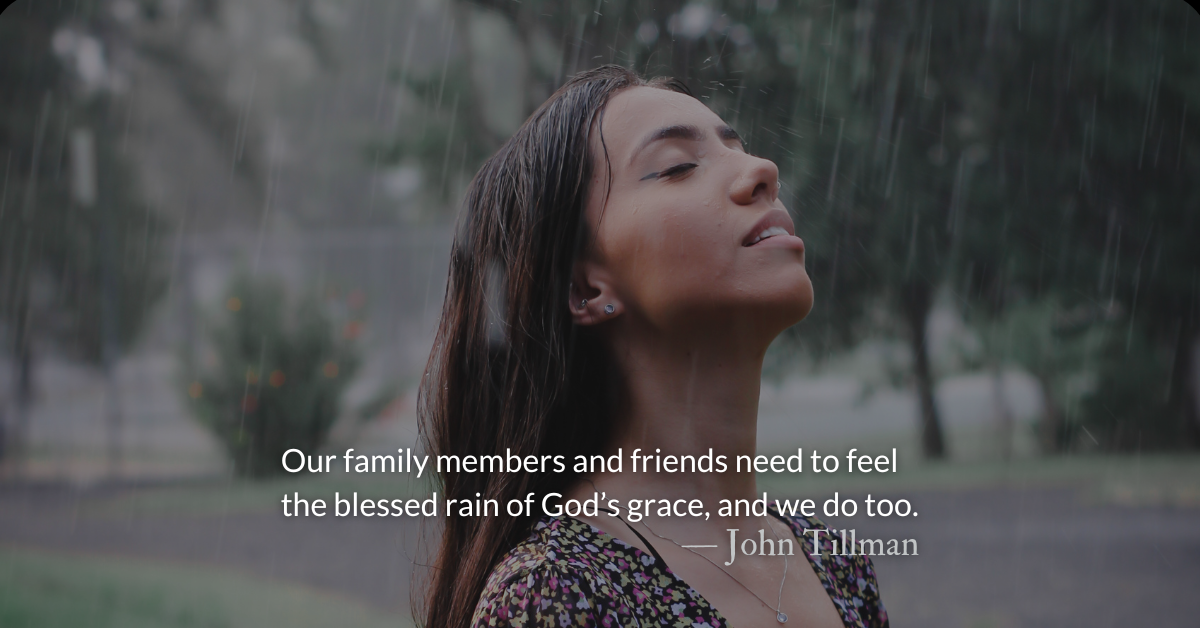
Early last week, our area got rain after 67 long, hot days. Social media feeds overflowed with pictures and videos of people outside, standing in the rain, playing in their driveways, yards, and streets. The joy was tangible.

Relief from a hotter than normal summer was only one part of it. Practical concerns about water levels were not front of mind. The joy came from a recognition that rain is a blessing.

James connected the story of Elijah praying for rain to bringing back to the faith those who wandered from the truth.

Prior to praying for rain to fall, Elijah had prayed for fire. He was confronting Israel for wandering and wavering between two opinions—worshiping Baal or Yahweh. He challenged them to return to God and when they did, rain returned to the land after a long drought.

James also connected rain to blessings of growth—of crops coming up from the earth. Crops and harvest are gospel language. Metaphors of seed and planting and growth sprang up frequently in Jesus’ teaching. After speaking to the Samaritan woman and describing himself as bringing living water, Jesus told the disciples the fields were ripe for harvest. (John 4.35-39) Not just one woman, but an entire town turned to God.

Before the resurrection, James was among those brothers of Jesus who rejected him, (John 7.5) were offended by him (Mark 6.3), and thought him to be insane. (Mark 3.21) Jesus, after his resurrection, poured out the rain of living water which grew faith even in the hardened heart of his brother, James.

Many of us know of and pray for those who have rejected Jesus or wandered from the truth. We know offended and doubtful people like James. We know questioning people like the woman at the well. Our family members and friends need to feel the blessed rain of God’s grace, and we do too. For in the rain, Elijah was also rejuvenated. (1 Kings 18.46) And as James would testify, even the obstinate can be won over through the winsome winds of the Holy Spirit.

Elijah and James encourage us to keep planting seeds of truth in a drought and pray for rain.  Watch for clouds, even small ones, that show that God’s Spirit is moving and working. (1 Kings 18.43-44) When the rains come, they will be a refreshment for your spirit, even as they bring life to the seeds of the gospel you plant in faith now.

Divine Hours Prayer: The Refrain for the Morning Lessons
For we are your people and the sheep of your pasture; we will give you thanks forever and show forth your praise from age to age. — Psalm 79.13

Today’s Readings
Jeremiah 9(Listen -4:38)
James 5(Listen – 3:01)

Read more about The Blandness of Hell
In Heaven, we are drawn closer to God…Hell is a place of self-exile…When Sartre said “Hell is other people,” he was too broad. Hell is our self alone.

Readers’ Choice is Coming!
We need to know your favorite posts from the past 12 months. Even if all you have to say is, “It blessed me,” share it with us and we’ll share it with others.
Law of Freedom

Scripture Focus: James 2.8, 12
8 If you really keep the royal law found in Scripture, “Love your neighbor as yourself,” you are doing right.

12 Speak and act as those who are going to be judged by the law that gives freedom, 13 because judgment without mercy will be shown to anyone who has not been merciful. Mercy triumphs over judgment.

James 1.25
25 But whoever looks intently into the perfect law that gives freedom, and continues in it—not forgetting what they have heard, but doing it—they will be blessed in what they do.

Reflection: Law of Freedom
By John Tillman

We have positive and negative associations with the concept of “law.” Law brings judgment. But law provides justice. Law brings guilt. But law provides accountability. Law brings punishment. But law provides peace. Law brings retribution. But law provides restitution.

When first-century Jews spoke of “the Law,” they were not referring to the law of the land. Jews believed the laws of Rome and other city or regional governments they lived under were corrupt—even sinful. They lived their lives within and under these governments, however, they followed and appealed to a higher moral code from the scriptures. 

What we call the “Old Testament” is composed of “The Law,” “The Prophets,” and “The Writings,” which correspond to the Pentateuch, the prophets, and the wisdom books such as Job, Psalms, Proverbs, and Ecclesiastes. However, “The Law,” often referred to the entire collection. The Law was more than a civil code. “The Law” implied the wisdom of God expressed through scripture.

James, the brother of Jesus, mentions “The Law” many times. It is unlikely that he meant only the sections of the Torah that contained rules and regulations. When he referred to the “Royal Law” he quoted not just Leviticus 19.18, but Jesus from Matthew 5.43. 

James seems to make an analogy between The Law he grew up reading and following and the “law that gives freedom.” Through this law that gives freedom, mercy will triumph over judgment. James describes ways this law frees us and the effects of that freedom.

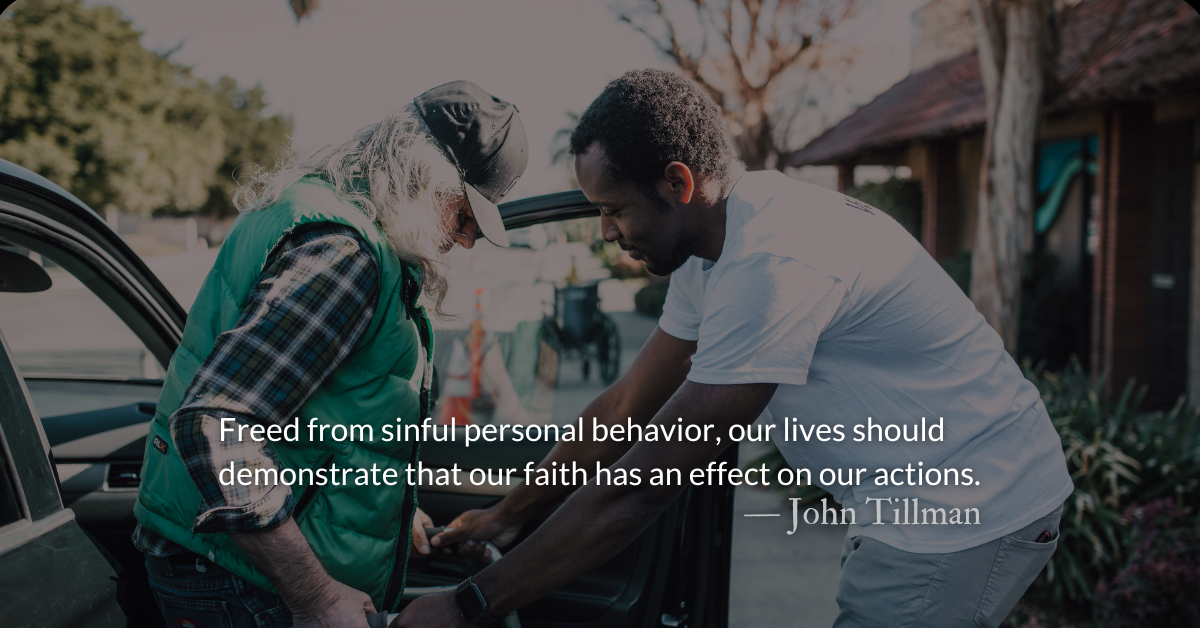
Freed from sinful personal behavior, our lives should demonstrate that our faith has an effect on our actions. (James 2.14) Freed from greed and selfishness we should act on social concern for our neighbors, caring for the poor and standing against favoritism in all its forms. (James 2.3-4, 15-17) Freed from cultural relativism, we can live according to renewed inner values, loving all without fear, regardless of how the culture or governments respond. (James 2.22, 25-26)

Christian distinctiveness from the world is not merely in exterior behaviors but in our inner being. We may live under governments that are corrupt—even sinful. Our higher moral code is the law of freedom. This law Christians live by sets us free from something but it also sets us free to something. The freedom we have in Christ is that sins can no longer hold us back from what God calls us to do.


Divine Hours Prayer: The Request for Presence

Hear, O Lord, and have mercy upon me; Lord, be my helper. — Psalm 30.11

Today’s Readings
Jeremiah 6(Listen -5:10)
James 2(Listen – 3:32)

This Weekend’s Readings
Jeremiah 7(Listen -5:18)James 3(Listen – 2:38)
Jeremiah 8(Listen -3:52)James 4(Listen – 2:25)

Readers’ Choice is Coming!
Tell us your favorite post from the past 12 months. We’ll repost it in September.

Read more about Captivity, Exile, and Exodus
While living in political freedom, the people of Israel and Judah became spiritually enslaved.

One Righteous

Scripture Focus: Jeremiah 5.1,
1 “Go up and down the streets of Jerusalem,
look around and consider,
search through her squares.
If you can find but one person
who deals honestly and seeks the truth,
I will forgive this city.

9 Should I not punish them for this?”
declares the Lord.
“Should I not avenge myself
on such a nation as this? 

Reflection: One Righteous
By John Tillman

Popular stories often have moments where the plot forces a horrible choice.

A secret agent struggles to stop a missile launch with time running out. Will his best friend bomb the compound, stopping the launch but killing his friend? Will he risk evil continuing in order to spare a loved one?

The tension of these stories holds us rapt. What will the heroes do? Will they still be heroes if they do it? 

Jerusalem is facing a disastrous reckoning for its evil. God points out Jerusalem’s evil to Jeremiah, saying, “Shouldn’t I punish them for this?” (Jeremiah 5.9) Should God allow evil to continue?

In Genesis (Genesis 18.25), Abraham asked God to spare Sodom on behalf of the righteous. Eventually, God agreed that for ten righteous people he would spare the city. This story is reversed. God challenged Jeremiah to find even one righteous person. Jeremiah looked among the poor and uneducated and among the wealthy and wise. He found only rebellion, greed, and abuse. 

Suppose Jeremiah found a righteous person and God relented…the city would remain evil. The wicked would continue to abuse the vulnerable. Would that be righteous?

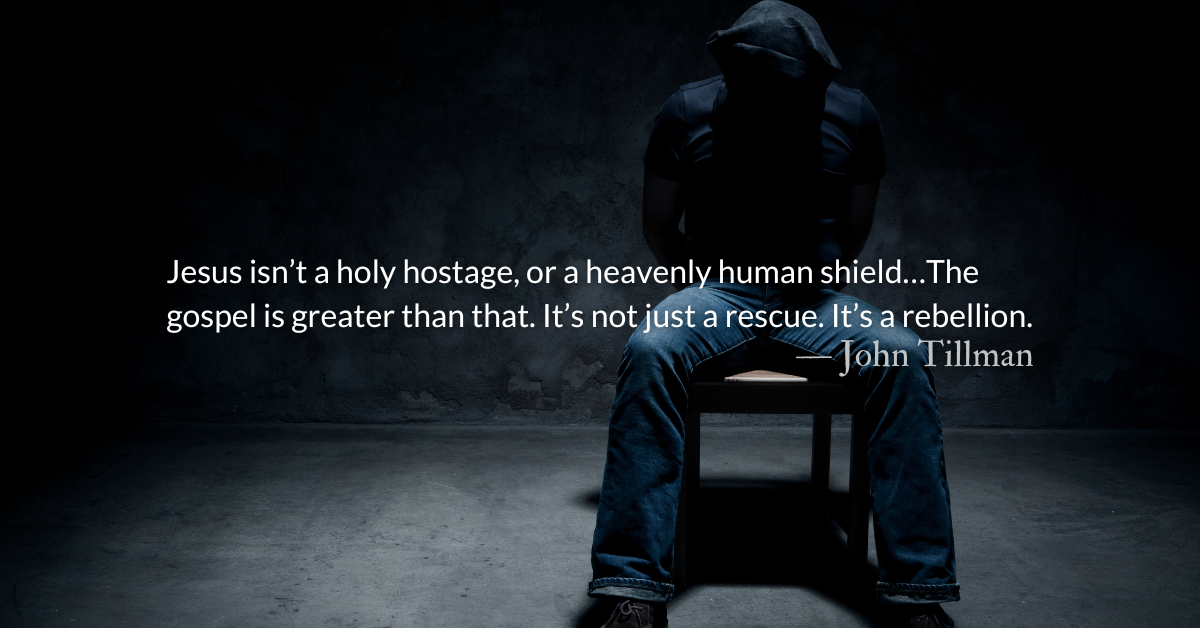
There were, and are, none righteous. (Romans 3.10) So God sent the righteous one. Jesus is the one righteous person for whom many will be spared. But this is not that simple. Jesus isn’t a holy hostage, or a heavenly human shield preventing God from punishing evil. God goes beyond that. We are not simply “spared” on account of the one righteous one. The gospel is greater than that. It’s not just a rescue. It’s a rebellion. 

In Jeremiah we see the evil city of Jerusalem punished by a greater evil city of Babylon. However, through Jesus, we can redeem and transform the evil cities we live in by the light of the heavenly city we carry within us. Rather than allow the city to be overcome by evil, God, through Jesus, through us, desires to overcome evil with good.

The question is not whether you or I should give an evil city a pass because there is some “good” in it. The question is whether you and I will become the righteousness of God that transforms cities.

May we become righteous ones through Jesus. Let his righteousness fill us from within and clothe us without. By his Spirit pray with your mouth, love with your heart, and work with your hands to establish righteousness.

Divine Hours Prayer: The Refrain for the Morning Lessons
I am like a green olive tree in the house of God; I trust in the mercy of God forever and ever. — Psalm 52.8

Today’s Readings
Jeremiah 5 (Listen -5:04)
James 1 (Listen – 3:26)

Readers’ Choice is Coming!
Tell us your favorite post from the past 12 months. We’ll repost it in September.

Read more about Jesus, Our Blessed One
We are…partaking of his righteousness.
It is he who makes us prosper, and spreads the seed of his gospel over the earth.

Demands of Faith

Scripture Focus: Luke 23.8-12; 42-43
8 When Herod saw Jesus, he was greatly pleased, because for a long time he had been wanting to see him. From what he had heard about him, he hoped to see him perform a sign of some sort. 9 He plied him with many questions, but Jesus gave him no answer. 10 The chief priests and the teachers of the law were standing there, vehemently accusing him. 11 Then Herod and his soldiers ridiculed and mocked him. Dressing him in an elegant robe, they sent him back to Pilate. 12 That day Herod and Pilate became friends—before this they had been enemies.

42 Then he said, “Jesus, remember me when you come into your kingdom.” 
43 Jesus answered him, “Truly I tell you, today you will be with me in paradise.”

From John: As we prepare for Student Writers to take us through the book of Acts, we continue through the last three chapters of Luke’s gospel. Don’t forget that, beginning on July 15 and continuing through August 10th, approximately 90% of donations to The Park Forum will be directed to scholarships/stipends for these talented students. Give during this time to support our ministry and theirs.

Reflection: Demands of Faith
By John Tillman

Pharaohs, Herods, and Pilates demand a show in exchange for their faith. 

“Who is Yahweh, that I should obey him…?” (Exodus 5.2) “Are you the king of the Jews?” (Luke 23.3) “When Herod saw Jesus…he hoped to see him perform a sign…” (Luke 23.8)

Pilate and Herod, former enemies, bonded over their experience with this stubborn prophet who wouldn’t perform for them. Their cynical conclusions about Jesus drew them together.

Some people who claim to be looking for signs are really just looking for excuses for doubt. Some people demand that you “prove something” just so they can manipulate you.

The privileged and powerful often say to Jesus or God’s people: “I’m important.” “Don’t you see what I could do for you?” “What’s in this for me?” “You need me on your side.” “Show me something.”

It isn’t just the powerful who make demands in exchange for faith. On the cross, one of the rebels says, “Aren’t you the Messiah? Save yourself and us!”

Jesus won’t trade miracles for faith. He did miracles out of compassion, that fulfilled prophecy and God’s will, and because of the faith of those who asked. But he never “proved himself” to a doubter, performing for them like a magician. Many people saw public miracles and believed but then fell away. Jesus knows that faith in signs is worthless and fades into nothing. 

After showing the cynicism of the powerful and the desperation of the powerless, Luke spotlights the simplest example of faith: “Jesus, remember me…” 

There are many personal statements of faith in the gospel accounts. John the Baptizer’s “Look! The Lamb of God,” (John 1.29) Peter’s “You are the Messiah,” (Mark 8.29) Thomas’s “My Lord, and my God” (John 20.28) are some that stand out.

The rebel’s “salvation prayer” is special because it shows us how deep the grace of Jesus reaches. It feels incomplete and imperfect. When I imagine standing there, I’m tempted to correct him, “Pray like this…” It’s exactly the kind of prayer Jesus leans in to listen to.

Sincere faith comes from sincere seeking, knocking, and asking, and listening to Jesus’ answers. People will always have doubts and questions and we should treat them gently and with respect. However, we should recognize that demands and ultimatums are typically used to deny or avoid faith.

Make space for people to explore and explain their doubts. Let them ask questions. Then leave room for the Holy Spirit to work.

Divine Hours Prayer: A Reading
Jesus taught us, saying: “The kingdom of heaven is like treasure hidden in a field which someone has found; he hides it again, goes off in his joy, sells everything he owns, and buys the field. Again, the kingdom of heaven is like a merchant looking for fine pearls; when he finds one of great value he goes and sells everything he owns and buys it.” — Matthew 13.44-45

Today’s Readings

Isaiah 41 (Listen -5:00)
Luke 23 (Listen -6:39)

Read more about The Crux of Repentance
If only our repentance looked more like the thief on the cross. Hands open, holding nothing. Naked, hiding nothing. Humble, asking nothing. He simply believes.

Read more about Resisting Herods
The Herods epitomize the kind of people that the Jesus community is so often drawn to in hopes of gaining their approval…

Show Buttons
Hide Buttons
Spur a spiritual rhythm of refreshment right in your inbox
By joining this email list you are giving us permission to send you devotional emails each weekday and to communicate occasionally regarding other aspects of the ministry.
100% Privacy. We don't spam.