Greed Versus Integrity

Links for today’s readings:

Feb 20  Read: Proverbs 11 Listen: (3:41) Read: Mark 1 Listen: (5:05)

Links for this weekend’s readings:

Feb 21  Read: Proverbs 12 Listen: (3:07) Read: Mark 2 Listen: (3:55)
Feb 22  Read: Proverbs 13 Listen: (2:45) Read: Mark 3 Listen: (3:41)

Scripture Focus: Proverbs 11.1-4

1 The Lord detests dishonest scales, 

but accurate weights find favor with him. 

2 When pride comes, then comes disgrace, 

but with humility comes wisdom. 

3 The integrity of the upright guides them, 

but the unfaithful are destroyed by their duplicity. 

4 Wealth is worthless in the day of wrath, 

but righteousness delivers from death.

Reflection: Greed Versus Integrity

John Tillman

Proverbs may feel like lists of unrelated aphorisms. However, most sections have common themes. Proverbs 11 repeatedly returns to greed and integrity.

The first verse proclaims that the Lord loves honest scales. The last declares the wicked and the righteous will receive “their due.” Before paying out what is due, God will weigh it out on honest and accurate scales. We anxiously await the rewards of integrity and long to see the greedy face justice.

To read, “The righteous person is rescued from trouble, and it falls on the wicked instead,” makes us expect a dramatic rescue or for trouble to fall on the wicked like pianos on cartoon villains. We long for verse 10: “When the righteous prosper, the city rejoices; when the wicked perish, there are shouts of joy.” But often, the wicked rack up win after win while committing sin after sin. When is God going to pay out what is due? “How long, O Lord?”

Proverbs are primarily wise principles. The upright bless their city. The deceitful destroy it. (Proverbs 11.11) Pride brings disgrace. Humility brings wisdom. (Proverbs 11.2) These proverbs assume that there will be prideful, deceitful people who are acclaimed as wise and accumulate wealth. If these people did not exist, we would not need the proverb to remind us of their fate.

The implied promises of proverbs not only will come true, but are true now. God’s wisdom forms rules in our moral universe that are as inescapable as the rules of the physical universe.

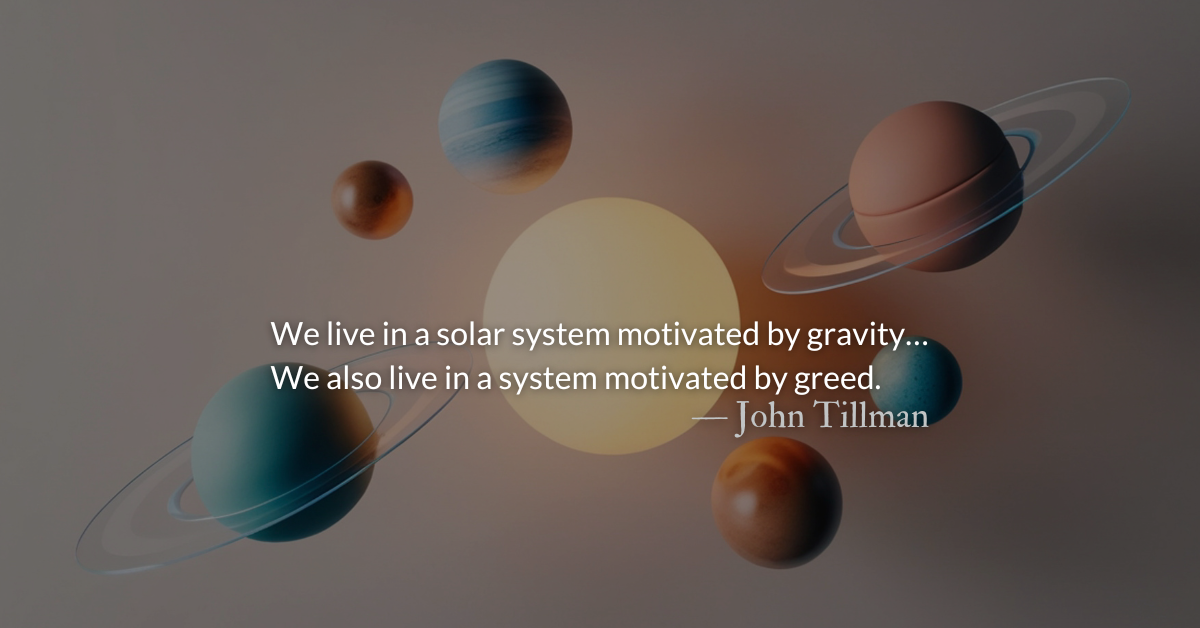
As I type this and you read it, we are falling through space, pulled by gravity, orbiting the Sun. Gravity is pulling us down. (“Gravity,” Lecrae) We live in a solar system motivated by gravity. We cannot stop falling. We only manage how we experience it.

We also live in a system motivated by greed. The great powers of our world, the corporations, governments, and the mega-wealthy, orbit greed like planets orbit the Sun. Greed is pulling them down.

What can we do? How do we navigate a greed-motivated solar system? One way is with integrity. 

Greed and integrity are enemies. Integrity short circuits greed. Greed corrupts integrity. The principles of Proverbs teach us to resist the wicked gravity of greed and many other temptations. However, we cannot do it on our own. We need the intervention of divine wisdom and help.

God gives the wisdom we need. We only need to ask. (James 1.5)

Divine Hours Prayer: The Refrain for the Morning Lessons

Keep watch over my life, for I am faithful; save your servant whose trust is in you. — Psalm 86.2

– From The Divine Hours: Prayers for Springtime by Phyllis Tickle.

Listen to: In Medias Res

We all meet Jesus in medias res, in the middle of our lives, our troubles, our tragedies, our deserts.

Consider Supporting Our Work

We need donors like you to continue our work. Please consider joining our donors to support our ad-free biblical devotionals.

The Opposite of Hoarding

Scripture Focus: Proverbs 11.24-25
One person gives freely, yet gains even more;
    another withholds unduly, but comes to poverty.
A generous person will prosper;
    whoever refreshes others will be refreshed.
People curse the one who hoards grain,
    but they pray God’s blessing on the one who is willing to sell.

Ephesians 4.28
Anyone who has been stealing must steal no longer, but must work, doing something useful with their own hands, that they may have something to share with those in need.

Reflection: The Opposite of Hoarding
By John Tillman

Hoarding in a financial investment sense (buying up enough of a commodity to influence its market price) can net speculative investors a profit, but can be considered a criminal act. Prosecuting speculative hoarders is rare because the line between prudent preparation for a crisis and attempts to corner the market are blurry, but high-level investors have gone to jail for hoarding commodities in the past. (One well-known example is Yasuo Hamanaka, the “Copper King” of the 1990s)

The more “street-level” hoarding we are seeing in reaction to COVID-19 is not motivated in an attempt to make illegal profits, but in a surrender to fear and panic. This type of hoarding begins with a fear of scarcity and creates the scarcity that was feared. Hoarders today can look at empty shelves of toilet paper or hand sanitizer and say, “See? I was right to hoard!” It’s a self-fulfilling, self- justifying mania and it has consequences.

Medical supplies such as masks, disinfectant wipes, and hand sanitizer being out of stock across the United States and manufacturers being unable to get more goods to market is causing a very real crisis for medical workers and their patients. In response, some governments are seeking to criminalize hoarding of medical supplies and other goods necessary to slow the advance of the virus.

Hoarding, whether criminal or not, is morally wrong because it withholds necessary goods from those who need them and causes panic and suffering for others. Just because hoarders take items from a store shelf, doesn’t mean that they aren’t also taking them from the hands of the elderly, those with health concerns, and those without the financial margin to “stock up.”  In this way, hoarding is similar to stealing, which Paul addresses in Ephesians 4.28. 

Hoarding is a natural response to fear. Being united to Christ through the power of the Holy Spirit, we are not to give in to our natural responses, but instead to respond supernaturally. We can respond to fear, not in fear.

What is the opposite of hoarding? What is the opposite of panic and fear? What should the church be known for instead? 

Paul advised doing “something useful” and sharing “with those in need.” 

May we, with the help of the Holy Spirit, be known in this time of crisis as people of peace rather than panic, as people of hope rather than fear, as people who give to others rather than take from them, and as people willing to suffer that others may be comforted.

May the message of the gospel not be compromised by our acting as if God is not trustworthy, is not loving, and is not concerned with us.
Instead, may the manifold goodness of God be made known to the world through the deeds of our hands and the words of our mouths.
May we willingly limit and give up our freedoms for the good of others, as Christ gave up and limited himself for our good.
May our hearts always be open to others, even if the doors of our homes and sanctuaries must remain closed.
May we store up treasures in Heaven rather than goods on a shelf.

Divine Hours Prayer: A Reading
Jesus taught us saying, “Who, then, is the wise and trustworthy servant whom the master placed over his household to give them their food at the proper time? Blessed is that servant if the master’s arrival finds him doing exactly that. In truth I tell you, he will put him in charge of everything he owns. But if the servant is dishonest and says to himself, ‘My master is taking his time,’ and sets about beating his fellow servants and eating and drinking with drunkards, his master will come on a day he does not expect and at an hour he does not know. The master will cut him off and send him to the same fate as the hypocrites, where there will be weeping and grinding of teeth.” — Matthew 24.45-51

– Divine Hours prayers from The Divine Hours: Prayers for Springtime by Phyllis Tickle.

Today’s Readings
Proverbs 11 (Listen 3:41) 
Ephesians 4 (Listen -3:58)

Read more about Mind Your Manners
We want our world to work on our terms and provide for our needs. We’re selfish creatures.

Read more about Peace in Crisis
Acting with prudent caution, we can fearlessly engage to aid our cities and communities, loving and serving with abandon.