What We Loose On Earth

Scripture Focus: Matthew 18.3-7, 10, 18-20
3 And he said: “Truly I tell you, unless you change and become like little children, you will never enter the kingdom of heaven. 4 Therefore, whoever takes the lowly position of this child is the greatest in the kingdom of heaven. 5 And whoever welcomes one such child in my name welcomes me. 

6 “If anyone causes one of these little ones—those who believe in me—to stumble, it would be better for them to have a large millstone hung around their neck and to be drowned in the depths of the sea. 7 Woe to the world because of the things that cause people to stumble! Such things must come, but woe to the person through whom they come!

10 “See that you do not despise one of these little ones. For I tell you that their angels in heaven always see the face of my Father in heaven.

18 “Truly I tell you, whatever you bind on earth will be bound in heaven, and whatever you loose on earth will be loosed in heaven. 

19 “Again, truly I tell you that if two of you on earth agree about anything they ask for, it will be done for them by my Father in heaven. 20 For where two or three gather in my name, there am I with them.”

Reflection: What We Loose On Earth
By John Tillman

I grew up in churches that didn’t just pray for revival but planned them. A joke I often heard from preachers at revivals was that “Like taking a bath every day, we have a revival every year, whether we need it or not.” 

This joke acknowledges the awkwardness that an event on the calendar can be called a revival, but that doesn’t make it so. Calling these meetings “revivals” was aspirational. Revival was what we hoped for.

The term “revival” has often been tainted by unscrupulous, charlatan preachers of the past. Today politicians co-opt the term for political fundraisers which have little to do with the Spirit of God.

Though we can’t put revival on a calendar and we can’t remove the stain of past abuses of the term, it doesn’t mean the genuine article doesn’t exist. A revival movement with all the marks of being genuine sparked at Asbury University in Kentucky on February 8th. 

After that day’s chapel service, a spontaneous, round-the-clock time of prayer, singing, and testimony began. This was led and continued not by plans or schedules but by the hearts of students who were moved to do so. As I write this on Tuesday evening, the continuous service on campus is scheduled to end on Friday, the day this devotional will post. Services are currently being planned to continue in other locations and “The Outpouring,” as it was called, has inspired similar events at churches and other college campuses across the United States.

Many people hearing of this responded with hope but many responded with cynicism. Cynicism is just as lazy as naïveté. Neither requires thoughtful evaluation. 

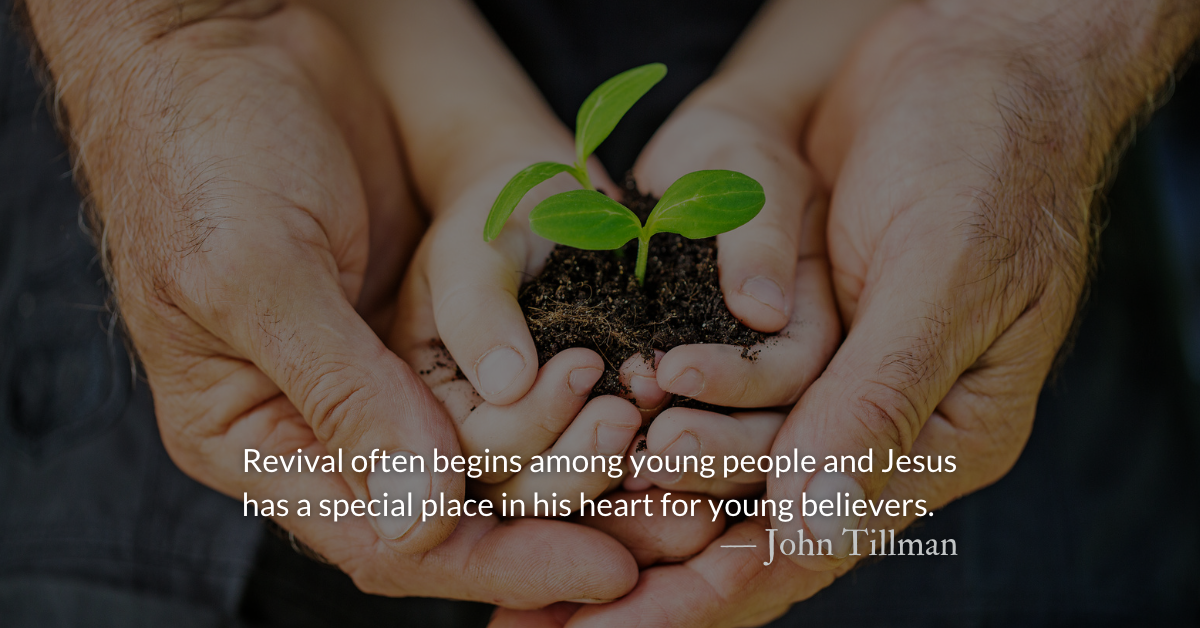
We would be wise not to do anything to make these young followers of Christ stumble. Revival often begins among young people and Jesus has a special place in his heart for young believers. (Matthew 18.6, 10) Instead of doubting these young people and quenching their spirits, (1 Thessalonians 5.19-22) perhaps we should become like them. Instead of sniping from the sidelines, “Nothing will come of this.” We should pray fervently, “God, use this for your glory!”

Many great movements of God can be traced back to experiences such as the one at Asbury. We should not seek to copy-paste the Asbury experience into our communities. But we should seek God’s face, asking him to loose his Spirit on earth in our community in his own unique fashion. (Matthew 18.18)

Divine Hours Prayer: The Call to Prayer
Bless our God, you peoples; make the voice of his praise to be heard;
Who holds our souls in life, and will not allow our feet to slip. — Psalm 66.7-8

Today’s Readings
Exodus 7 (Listen 3:29
Matthew 18 (Listen 3:46)

This Weekend’s Readings
Exodus 8 (Listen 5:07Matthew 19 (Listen 4:04)
Exodus 9 (Listen 5:31Matthew 20 (Listen 4:22)

Read more about Josiahs Need Zephaniahs
Josiah implemented…the most complete and remarkable revival in Judah’s history.

Read more about A Responsive Heart
Josiah’s revival was unlike anything seen before. No king ever repented and turned back to God like Josiah.


Woe, Whoa, Wow

Scripture Focus: Matthew 11:20–24
Then Jesus began to denounce the towns in which most of his miracles had been performed, because they did not repent. 21 “Woe to you, Chorazin! Woe to you, Bethsaida! For if the miracles that were performed in you had been performed in Tyre and Sidon, they would have repented long ago in sackcloth and ashes. 22 But I tell you, it will be more bearable for Tyre and Sidon on the day of judgment than for you. 23 And you, Capernaum, will you be lifted to the heavens? No, you will go down to Hades.  For if the miracles that were performed in you had been performed in Sodom, it would have remained to this day. 24 But I tell you that it will be more bearable for Sodom on the day of judgment than for you.”

Reflection: Woe, Whoa, Wow
By John Tillman

Keanu Reeves made “whoa” famous. Owen Wilson did the same for “wow.” These words express a sense of amazement and wonder. (Or sometimes a sarcastic lack of wonder.)

Jesus repeatedly says something that sounds similar: woe. These woes are statements of judgment, not amazement. However, as Jesus reluctantly pronounced judgment on these cities he was amazed. Despite all he showed them, including miracles and healings, people didn’t believe. Jesus said to them, as God said to ancient Israel and Judah through the prophets, “What more could I have done? Why will you stubbornly refuse to believe?” (Ezekiel 33.11)

Often, our culture thinks faith is something one must cling to without a shred of surety. We want “evidence,” “proof,” or “a sign” to believe God. Even believers want signs. We want “proof” that good things will happen when we step out in faith to witness, change jobs, or give sacrificially.

Faith can be clung to, like a life raft, in a sea of doubt. (And aren’t we glad it can?) But unbelief can also be clung to in a sea of evidence. We should ask ourselves if we are clinging to doubt. Are we using a demand for certainty to fend off faith? 

The condemned towns had a special opportunity and they wasted it. They still rejected Jesus. To whom much is given, much is expected. (Luke 12.47-48) We might wish that we had the same opportunity they had: to see Jesus in the flesh, to see healings, etc. But Jesus also said, “To those who are faithful with a little, more will be given.”

If we are faithful with what we are given, we will see more. There are many things given to us so that we may believe. But the best two to focus on are the Bible, a miracle you can hold in your hands, and prayer, our miraculous heart-to-heart connection with God. How we steward these gifts may affect what other signs we see. Maybe the reason we don’t see evidence of the next step of faith, is because we haven’t taken the step that we have been shown?

Also, perhaps your stepping out in faith to act is the evidence someone else needs. Just prior to this chapter, Jesus sent his disciples out to the towns with miracles, messages, and peace. To whom might Jesus be sending you?

Perhaps your faithful obedience can take them from “woe” to “wow.”

Divine Hours Prayer: The Morning Psalm
He sent forth his word and healed them and saved them from the grave.
Let them give thanks to the Lord for his mercy and the wonders he does for his children.
Let them offer a sacrifice of thanksgiving and tell of his acts with shouts of joy. — Psalm 107.20-22

Today’s Readings
Genesis 50 (Listen 4:54
Matthew 11 (Listen 4:06)

This Weekend’s Readings
Exodus 1 (Listen 2:32Matthew 12 (Listen 6:41)
Exodus 2 (Listen 3:18Matthew 13 (Listen 6:41)

Read more about Jesus with Axe and Fire
John the Baptist describes a Christ who stands ready with both axe and fire.

Read more about Supporting Our Work
January is a great time to become a monthly donor. Please consider becoming a monthly donor for 2023. Support ad-free content that brings biblical devotionals to inboxes across the world.

Amazing Jesus

Scripture Focus: Matthew 8.16-17
16 When evening came, many who were demon-possessed were brought to him, and he drove out the spirits with a word and healed all the sick. 17 This was to fulfill what was spoken through the prophet Isaiah: 

“He took up our infirmities and bore our diseases.”

Reflection: Amazing Jesus
By John Tillman

Matthew closes this section saying that the healings prove something about Jesus.

The central feature of this section of healings is the exemplary faith of the centurion. The centurion who previously would send the servant out on his behalf went out on behalf of his servant. Jesus is amazed. He says the centurion has greater faith than anyone in Israel. Pause for a moment and think about the people to whom Jesus compares the centurion…

No one Jesus has found in Israel has shown greater faith than the centurion? Not Mary, Jesus’ mother? Not the twelve disciples? Not John the Baptist? Not the devout leper in the previous scene who said, “Lord, if you are willing, you can make me clean”? None of them had greater faith than the centurion? Apparently. So, does it take “amazing” faith to be healed?

The other time in scripture where Jesus is “amazed” is visiting his hometown, where he would receive no honor and find no faith—yet he still healed. (Matthew 13.58; Mark 6.5-6) Faith is not a currency we purchase miracles with. If it was, how could those bankrupt of faith be healed? Jesus’ healings are connected to his identity and his mission, not our faith. 

Jesus’ healings validate his authority to teach and to forgive sins. (Matthew 9.6) But Jesus’ healings are more than a flex against the religious establishment. They tell us who Jesus is. Matthew records them to prove that Jesus is the one Isaiah prophesied. Jesus took weaknesses and sickness on himself to prove that he was the one who could take upon himself the sickness of death.

Healing is an emotional topic because it touches people we know. I have known people healed through medical science and people whose healing was inexplicable to medical science. I’ve also known people who prayed fervently for healing, yet died.

When someone dies, it sounds like an insensitive cop-out to say ultimate healing will come at the resurrection. I wouldn’t recommend it as a counseling strategy. However, we must remember that resurrection is the only form of healing that is not temporary. Every person you read about being healed in the Bible, died eventually. Every one of them will be ultimately healed at the resurrection.

Even today, healings tell the amazing story that Jesus’ resurrection is real and those who aren’t healed now await the full resurrection-healing that he promises.

Divine Hours Prayer: The Request for Presence
Satisfy us by your loving-kindness in the morning; so shall we rejoice and be glad all the days of our life. — Psalm 90.14

Today’s Readings
Genesis 47 (Listen 5:03
Matthew 8 (Listen 4:09)

Read more about Pain and Healing
Hosea shows how far God is willing to go to heal and restore. God is committed to our healing and restoration. Call on him.

Read more about The Miracle of Faith
Jesus’ greatest miracles were not stopping diseases…but…helping the faithless to believe, the cynical to trust, the hardened to love

Be Amazed

Scripture Focus: Matthew 7.28-29
28 When Jesus had finished saying these things, the crowds were amazed at his teaching, 29 because he taught as one who had authority, and not as their teachers of the law. 

Reflection: Be Amazed
By John Tillman

Matthew and Luke (Luke 6.12-49), draw on imagery from Moses at Sinai when recording the Sermon on the Mount. Out in the wilderness, a leader goes up a mountain. A small group goes with him. Crowds follow below. From the mountain come moral teachings that define a new way to live for a new community.

The crowds following Jesus were a mix of society. Among them would be religious authorities and experts, average Jewish citizens, Roman officials, pagans, Greeks, and of course outcasts from all walks of life. Those who find beauty in Jesus’ words today are similarly diverse. Passages and principles from Matthew 5-7 are well-known and admired. Even those who reject religion, recognize that these teachings describe a beautiful way to live. Even today, the crowds are amazed at Jesus’ teaching.

Jesus’ teaching is a guide, an invitation, to live life in a way that is life-giving. These teachings are tied to Jesus’ authority and to the Law. Jesus often said, “You have heard it said…but I say to you…” Jesus wasn’t canceling or replacing the Law. He was correcting bad interpretations. (Matthew 5.21-22, 27-28, 31-32, 33-34, 38-39, 43-44)

The Law, as it had been taught for centuries, had cracks and corruptions. The poor, outsiders, and widows slipped through these cracks. Many provisions in the law meant to support them were given legal loopholes allowing religious exemptions to true righteousness. (Mark 7.10-13) This is just one example of the blindness and corruption of the religious leaders of the time.

We can’t disconnect Jesus from his divinity when considering his challenging words. If his divine claims are false, all his teachings are only the ideas of a madman. If Jesus is God, as we believe, then he is the ultimate fulfillment of the Law and the ultimate authority in our lives. What corruption do we need Jesus to confront today? What cracks need to be filled in? What sins do we need to escape? 

The Sermon on the Mount isn’t just fluffy ideas about being nice to one another. It describes a kind of exodus. The power structures and selfish principles of the world are overturned one by one and, for those willing, an escape from brutality and greed opens up. His teaching excited the outcasts and frustrated or shocked those in power. It still does today.

Climb the mountain. Join the crowd. Be amazed at Jesus’ teachings. Let them shock, offend, and correct you.

Divine Hours Prayer: A Reading
He went back again to the far side of the Jordan to the district where John had been baptizing at first and he stayed there. Many people who came to him said, “John gave no signs, but all he said about this man was true”; and many of them believed in him. — John 10.40-42

Today’s Readings
Genesis 46 (Listen 4:47
Matthew 7 (Listen 3:31)

Read more about Killing With our Hearts
Some of the most popular sayings of Jesus are here in Matthew’s fifth chapter. So are many of the most ignored sayings of Jesus.

Read The Bible With Us
It’s never too late to join our Bible reading plan. Immerse in the Bible with us at a sustainable, two-year pace.

https://mailchi.mp/theparkforum/m-f-daily-email-devotional

Following and Fishing

Scripture Focus: Matthew 4.18-21
18 As Jesus was walking beside the Sea of Galilee, he saw two brothers, Simon called Peter and his brother Andrew. They were casting a net into the lake, for they were fishermen. 19 “Come, follow me,” Jesus said, “and I will send you out to fish for people.” 20 At once they left their nets and followed him. 

21 Going on from there, he saw two other brothers, James son of Zebedee and his brother John. They were in a boat with their father Zebedee, preparing their nets. Jesus called them, 22 and immediately they left the boat and their father and followed him. 

Acts 4.13
13 When they saw the courage of Peter and John and realized that they were unschooled, ordinary men, they were astonished and they took note that these men had been with Jesus.

Reflection: Following and Fishing
By John Tillman

It’s interesting that Matthew emphasizes that at least one-third of the 12 were fishermen. Jesus’ closest disciples, the three, were all fishermen.

We aren’t told the occupations of most of the disciples, but we know they were politically and economically diverse. Among them were those very close to the High Priest (John 18.15-16), those close to Herod (Luke 8.3), those advocating rebellion against Rome (Matthew 10.4), and those working for Rome (Matthew 9.9-11). Matthew had been a Roman tax collector. He was hated because of his collaboration with the occupiers and for having a lavish lifestyle and sinful friends.

Perhaps Matthew highlighted the fishermen because he recognized that they would be more sympathetic to his Jewish audience. Eventually, these simple tradesmen would stand before the most learned council of religious experts and stump them with their understanding of scripture and of God. The council would note that although they were “ordinary” they “had been with Jesus.” (Acts 4.13) By simply being with Jesus, they had “seen the Father” (John 14.9) more clearly than many on the council. How did that happen?

When they started, the disciples may only have understood how to fish or how to collect taxes for an empire. But they learned how to fish for people and how to distribute the blessings of the Kingdom of Heaven.

In the Evangelical Commentary on the Bible, Knox Chamblin points out a two-stage process of being a disciple. The Greek word translated disciple is mathētēs, which means one who learns. However, Chamblin says, “A disciple is not first a learner, but a follower. Jesus calls first for a commitment to his person, which in turn entails obedience to his teaching.”

You don’t have to know everything before following Jesus. You just have to be willing to follow him. The disciples were often confused, often wrong, often frightened, and often in danger. But the longer they were with Jesus, the more fearless, the more reliable, and the more knowledgable they became.

You may be, like the disciples, confused or fearful and you may not have a perfectly formed theology. Follow him. In doing so, you will be formed by him. He will show you what God is like. (Colossians 1.15) He’ll teach you to fish.

The disciples left their tax collecting booths and fishing nets to follow Jesus. What will you leave in order to spend time with Jesus in scripture and prayer?

Whatever it is, it will be worth it.

Divine Hours Prayer: The Call to Prayer
Proclaim the greatness of the Lord our God and worship him upon his holy hill; for the Lord our God is the Holy One. — Psalm 99.9

Today’s Readings
Genesis 43 (Listen 5:02
Matthew 4 (Listen 3:09)

This Weekend’s Readings
Genesis 44 (Listen 4:38Matthew 5 (Listen 6:03)
Genesis 45 (Listen 4:10Matthew 6 (Listen 4:35)

Read more about Who Needs Anger?
“Why are you angry?” is a great question I need to remind myself of often, especially in this particular season where there is so much anger being spewed…

Read more about A Restoring Sabbath
Think and pray about ways in which you can abstain from technology’s addictive elements, while still using its powerful tools to spur your spiritual growth.