Don’t Wait for Self-Reflection

Links for today’s readings:

Mar 16  Read: Ecclesiastes 4 Listen: (2:18) Read: Psalms 52-54 Listen: (3:18)

Scripture Focus: Ecclesiastes 4.13-16

13 Better a poor but wise youth than an old but foolish king who no longer knows how to heed a warning. 14 The youth may have come from prison to the kingship, or he may have been born in poverty within his kingdom. 15 I saw that all who lived and walked under the sun followed the youth, the king’s successor. 16 There was no end to all the people who were before them. But those who came later were not pleased with the successor. This too is meaningless, a chasing after the wind.

1 Kings 11.34-35

34 “ ‘But I will not take the whole kingdom out of Solomon’s hand; I have made him ruler all the days of his life for the sake of David my servant, whom I chose and who obeyed my commands and decrees. 35 I will take the kingdom from his son’s hands and give you ten tribes.

Reflection: Don’t Wait for Self-Reflection

By John Tillman

Ecclesiastes can be read as Solomon’s long, self-reflective confession of and repentance from his lavish life of experimentation in search of meaning.

Many characters in the final paragraph of today’s chapter fit Solomon’s later years. This points to him writing it near the time of his death. It doesn’t seem to be a prophetic statement or a statement inserted afterward because it doesn’t get enough details exactly correct. Instead it seems like the human musings of a king finding the wisdom to diagnose his foolishness. He seems to realize that, because of him, things will turn out badly when he is gone.

The “poor but wise youth” fits Jeroboam. Jeroboam’s mother was a widow, so he grew up poor. The quality of his work in repairing the wall caught Solomon’s eye. Solomon elevated him, putting him over the labor force from Joseph’s tribes. (1 Kings 11.26-28)

The “old but foolish king” who cannot “heed a warning” fits Solomon himself. (1 Kings 11.9-13) The prophets told him God would take tribes away from his son’s kingdom. Yet, when a prophet chose Jeroboam to be that king, Solomon tried to kill him, forcing Jeroboam to flee to Egypt.

God sent other “young men” to be Solomon’s enemies. Hadad the Edomite and Rezon of Zobah were sons of kings conquered by David. They escaped as children and grew up to attack and harass Israel during Solomon’s rule. (1 Kings 11.14-25)

The “successor” that the people were “not pleased with” fits Solomon’s son, Rehoboam. After Solomon’s death, the people brought Jeroboam back from exile as their spokesman. The former forced labor supervisor requested a lighter load of labor and taxes for the people. Rehoboam’s spiteful and angry answer tore the kingdom apart. Ten tribes followed Jeroboam, “the youth” instead.

“This too is meaningless,” Solomon said. With all his wealth, wisdom, and advantages, Solomon squandered his opportunities. Instead of faithfulness, he chose idolatry. His lavish lifestyle poisoned his son’s heart against prudence and humility. Solomon, Rehoboam, Jeroboam, and the whole nation were harmed by Solomon’s foolishness.

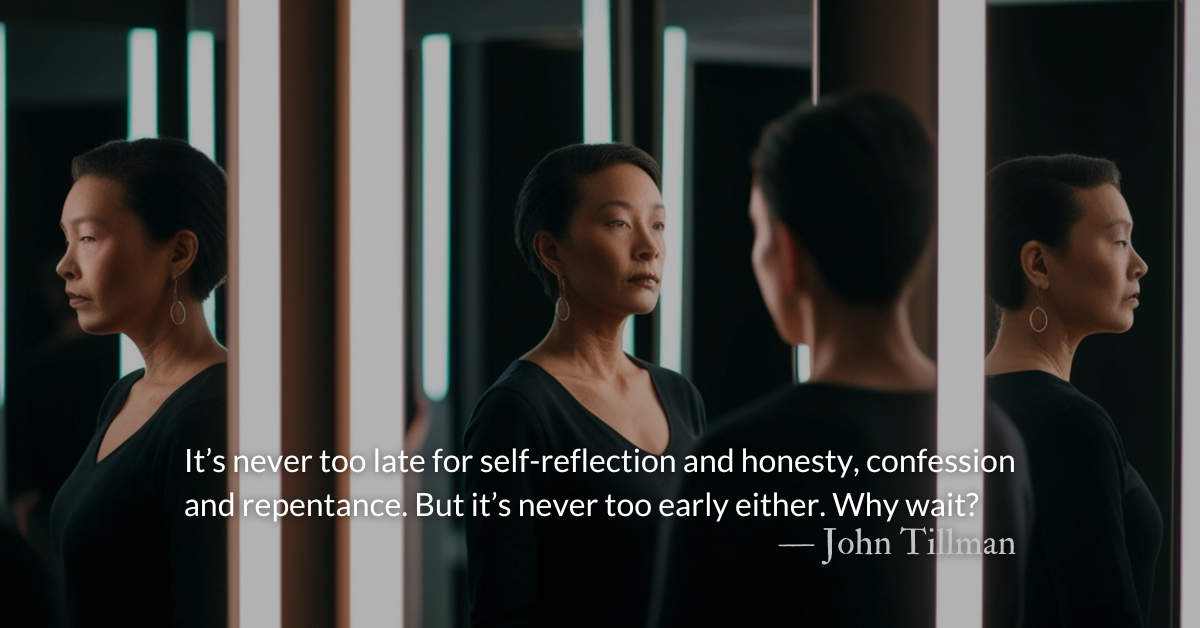
Whether from Solomon or the thief on the cross, deathbed confessions are honored. It’s never too late for self-reflection and honesty, confession and repentance. But it’s never too early either. Why wait?

It is better to repent and serve God while you are young. (Ecc 12.1) Imagine the difference in Israel’s history if Solomon had done so. Imagine the difference in your life if you start now.

Divine Hours Prayer: The Call to Prayer

Love the Lord, all you who worship him; the Lord protects the faithful, but repays to the full those who act haughtily. — Psalm 31.23

Read more: Existential Dread

Our faith in God does not remove these moments of existential dread…pain needs to be voiced.

Read more: Betrayal and Failure — Guided Prayer

We’ve been betrayed by leaders, by institutions, by our faith communities, by former heroes, and even by our friends or family.

– From The Divine Hours: Prayers for Springtime by Phyllis Tickle.
Existential Dread

Scripture Focus: Ecclesiastes 4.2-3
2 And I declared that the dead,
    who had already died,
are happier than the living,
    who are still alive.
3 But better than both
    is the one who has never been born,
who has not seen the evil
    that is done under the sun.

Reflection: Existential Dread
By Erin Newton

Something I have learned in counseling was the advice to let people express themselves without correction. Suffering leads us to heavy emotions with thoughts that are far from optimistic. The Teacher in Ecclesiastes sees suffering and declares that it is better for those who are not alive. This response feels out of place in a faith which declares the preciousness of life.
Ecclesiastes reveals the temporal nature of pleasure, possessions, wisdom, and life itself. Everything is futile. The mature Teacher is attempting to help others navigate the transitory nature of human existence. In the face of oppression without comfort, the truth is that only the dead avoid such pain.

Is it wrong to look at life this way? Is the Teacher promoting hopeless, meaningless existence? In the following chapters, the Teacher will point back toward enjoying life centered on God.

Our faith in God does not remove these moments of existential dread. Sometimes we feel the need to put on an air of optimism in bad circumstances. It can be tempting to hide our emotions even in our prayers. However, pain needs to be voiced. Understanding that pain exists in the world of the living is not an unfaithful observation.

The Bible gives us examples of people who have faced this type of despair. Elijah felt the pain of suffering without comfort. He sat under a tree and hoped he could die (1 Kings 19). But God was not finished with the prophet. Similar to what the prophet learned, the book of Ecclesiastes does not end with a defeatist attitude. Wisdom leads us to God.

Through Paul’s words, we see the release from suffering through death but also the value of fulfilling God’s purpose through living.

For to me, to live is Christ and to die is gain. If I am to go on living in the body, this will mean fruitful labor for me. Yet what shall I choose? I do not know! I am torn between the two: I desire to depart and be with Christ, which is better by far; but it is more necessary for you that I remain in the body. Convinced of this, I know that I will remain, and I will continue with all of you for your progress and joy in the faith… (Philippians 1.21-25)

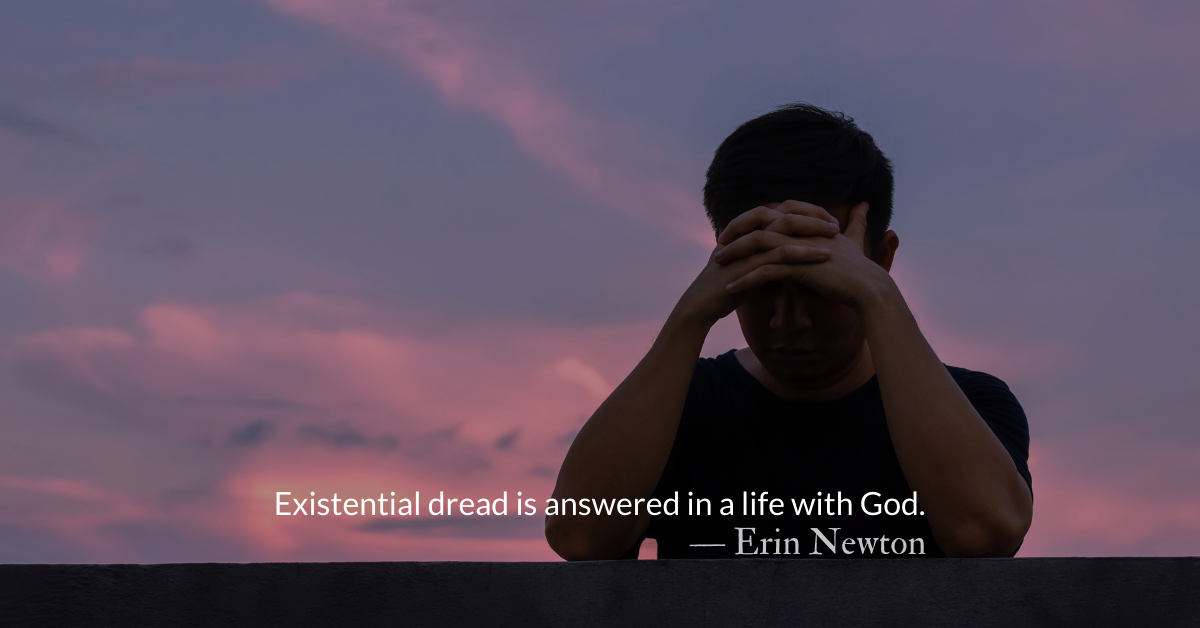
Existential dread is answered in a life with God. 

Divine Hours Prayer: The Call to Prayer
Let us make a vow to the Lord our God and keep it; let all around him bring gifts to him who is worthy to be feared. — Psalm 76.11 

– From The Divine Hours: Prayers for Springtime by Phyllis Tickle.
Today’s Readings
Ecclesiastes 4 (Listen – 2:18) 
Psalm 106 (Listen – 4:52)

Read more about What to Expect When Suffering
When in suffering, we can at times be surprised by the emotions that are stirred. We can encounter deep sadness, anguish, and even rage.

Read more about Helping Fathers and the Fatherless
May we…introduce…a definition and example of fatherhood that is based on the love that God has shown us.

God, the Wall Breaker :: Worldwide Prayer

Scripture: Ecclesiastes 4.1
Again I looked and saw all the oppression that was taking place under the sun:

I saw the tears of the oppressed—and they have no comforter;
power was on the side of their oppressors—and they have no comforter.

As we discussed yesterday, racism is an idol of our culture that the church has difficulty putting down. May the global church unite in this confession and call for community from Japan. —  John

Reflection: God, the Wall Breaker :: Worldwide Prayer
A Prayer for Global Community from Japan

Father, we adore you and praise your name.
We thank you for the fellowship we share with our brothers and sisters all over the world.

So many of us have committed the dreadful sin of failing to worship you as the only true God,
By failing to say no to acts of idolatry,
Serving the created instead of the Creator,
Causing immeasurable pains and sufferings upon
Brothers and sisters in our neighboring communities and countries.

We confess our sin and ask your forgiveness.
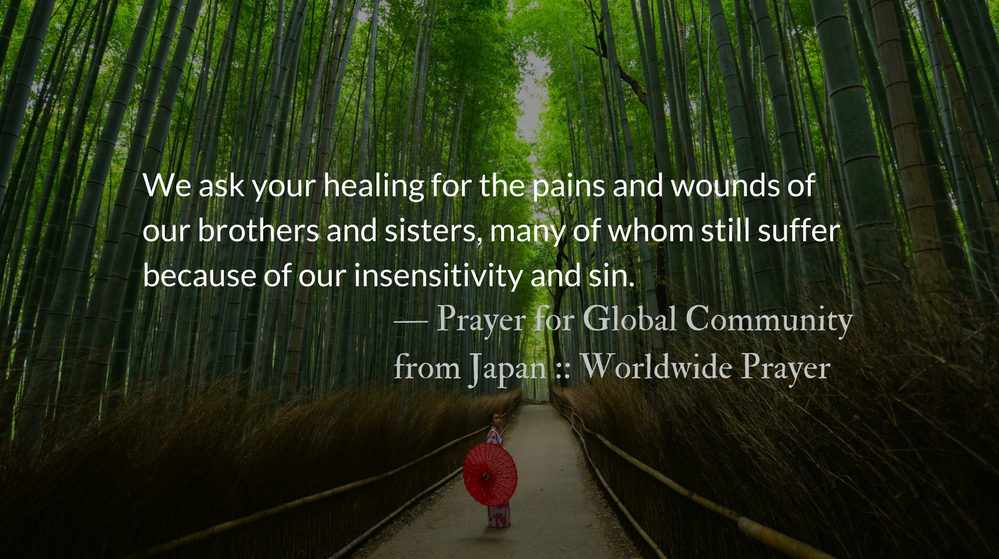
We ask your healing for the pains and wounds of our brothers and sisters, many of whom still suffer because of our insensitivity and sin.

We believe that you alone are the healer
And the Lord of true reconciliation.

Gracious God, help us to break down dividing walls
The walls of ignorance, indifference, prejudice, and discrimination
Which still separate people all over the world.

May we be agents of global peace and reconciliation
In the name of Jesus Christ
Our only true Lord and Savior.

Lord hear our prayer!

*Prayer from Hallowed be Your Name: A collection of prayers from around the world, Dr. Tony Cupit, Editor.

Prayer: The Refrain for the Morning Lessons
I will bear witness that the Lord is righteous; I will praise the Name of the Lord Most High. — Psalm 7.18

– Prayer from The Divine Hours: Prayers for Springtime by Phyllis Tickle.

Full prayer available online and in print.

Today’s Readings
Ecclesiastes 4 (Listen – 2:18)
1 Timothy 6 (Listen – 3:16)