Timbrels to Tears

Scripture Focus: Judges 11.34-40
34 When Jephthah returned to his home in Mizpah, who should come out to meet him but his daughter, dancing to the sound of timbrels! She was an only child. Except for her he had neither son nor daughter. 35 When he saw her, he tore his clothes and cried, “Oh no, my daughter! You have brought me down and I am devastated. I have made a vow to the LORD  that I cannot break.”

Reflection: Timbrels to Tears
By Liz Daye

In a moment, everything changed. What was supposed to be a celebration, transformed into anguish. “Why?!” Jephthah lamented, tearing his clothes in grief. “My daughter, you have brought me disaster. You are the cause of my ruin!” Why did his daughter have to run out the front door and, in his words, ruin everything? He had crafted a plan, after all. If God granted him victory in battle, Jephthah vowed to offer the next thing that came out of his home as a sacrifice.

But who exited first? His only daughter.

Jephthah idolized the outcome of his victory. And I wonder what if instead of keeping his awful vow, Jephthah repented making it in the first place? Repentance framed by grace is an invitation that is always available. Jephthah missed it because of his own pride and fear. As I ponder Jephthah’s story, I can’t help but recall the times I have also attempted to negotiate with God for what I thought was a really good reason, whilst leaving God out of the conversation entirely.

Yet throughout Jephthah’s idolatrous plotting and failure to consider the possibility of her presence, God was noticeably silent. God never signed off on any of this mess. May this remind us that our faith is not a formula, nor is faithfulness a series of divine negotiations that we can manipulate to somehow land in our favor. What if faith is always an invitation towards humility and grace? 

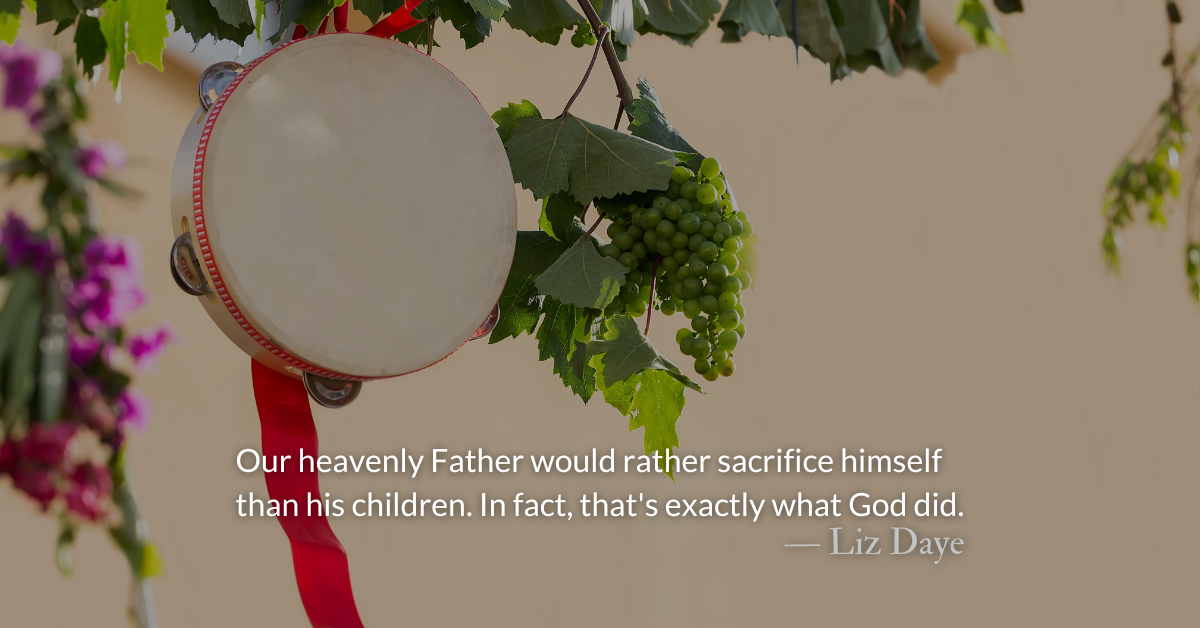
And had Jephthah consulted God before making that vow, he would have remembered that God is in control, but not controlling. God is “gracious and merciful, slow to anger and abounding in steadfast love;” love for Israel, for Jephthah, and for his daughter. And even after, repentance is always an option. Repentance is always available. Had repentance been present in this story, it bears wondering, how could it have altered the trajectory? But even here, we don’t have to wonder what God is like. Our heavenly Father would rather sacrifice himself than his children. In fact, that’s exactly what God did.

Like Miriam in the desert, Jephthah’s unnamed daughter was a timbrel towing prophetess. The daughters of Israel honored her legacy, rather than Jephthah’s. This annual remembrance points to a God who does not sign off on the sins we commit against one another, regardless of the skillfulness of our theological gymnastics. For God loves to lift the lowly.


Divine Hours Prayer: The Greeting

O Lord, I am your servant; I am your servant and the child of your handmaid; you have freed me from my bonds. — Psalm 116.14

– From The Divine Hours: Prayers for Summertime by Phyllis Tickle.

Today’s Readings
Judges 11.12-40  (Listen 5:53)
1 Peter 3 (Listen 3:30)

Today’s Readings
Judges 12  (Listen 2:21), 1 Peter 4 (Listen 2:50)
Judges 13  (Listen 3:44), 1 Peter 5 (Listen 2:11)

Share a Readers’ Choice post!
#ReadersChoice is a time for you to share your favorite Park Forum posts from the year.
What post helped you better understand scripture?

https://forms.gle/dfa88nayaEEqiy9X7

Read more about Supporting Our Work
For less than a streaming subscription, you can support ad-free content that brings biblical devotionals to inboxes across the world. Please join our donors



Leadership Material?

Scripture Focus: Judges 10.1, 10.3, 11.11a
10.1 After the time of Abimelek, a man of Issachar named Tola son of Puah, the son of Dodo, rose to save Israel.

10.3 He was followed by Jair of Gilead, who led Israel twenty-two years.

11:11a So Jephthah went with the elders of Gilead, and the people made him head and commander over them.

Reflection: Leadership Material?
By Judith S. Kimsey

The book of Judges describes twelve “judges,” or leaders (plus Abimelek, the anti-judge about whom we read yesterday). Twelve backstories, each different from the others. Twelve unique skill sets aligned with twelve significant moments in Israel’s history. 

Based on your experience, what are a few characteristics you would include on a checklist of good leaders? Take examples from the business world, church, or elsewhere. 

Now consider the five leaders’ stories we have already read in Judges: Othniel, Ehud, Shamgar, Deborah, and Gideon. Today we add three more: Tola, Jair, and Jephthah. How do these people align with your leadership checklist? Would any of them have been chosen by a placement agency? As we usually define it today, none were obvious “leadership material.” Do they want to lead? Gideon did not. In fact, we see reluctance among all of those who speak. And yet God used all twelve of these leaders according to their gifts in their specific situations. God doesn’t have a preset checklist of competencies for effective leaders.

We may remember Sunday School images of Gideon with his fleece or Samson pushing the pillars apart, but the point of Judges is not the people who led Israel. The point is the power of the One who calls those leaders. The Apostle Paul says it best: 

Brothers and sisters, think of what you were when you were called. Not many of you were wise by human standards; not many were influential; not many were of noble birth. But God chose the foolish things of the world to shame the wise; God chose the weak things of the world to shame the strong. God chose the lowly things of this world and the despised things—and the things that are not—to nullify the things that are, so that no one may boast before him. (1 Corinthians 1.26-29)

By appointing the insignificant, the hesitant, and the rejected, God leaves room for his own power and sovereignty as he pursues his people. 

Today–just as he did in the period of the judges–God is calling up new leaders for our churches and communities. Is he calling some of us to lead at this significant moment in history?  Have we allowed our culturally-informed checklist of leadership criteria to hold us back? Let’s look up from that leadership checklist and check on the unexpected ways God is at work in unexpected people, including ourselves.

Divine Hours Prayer: The Greeting
O Lord, what are we that you should care for us? Mere mortals that you should think of us?
We are like a puff of wind; our days are like a passing shadow. — Psalm 144.3-4

– From The Divine Hours: Prayers for Summertime by Phyllis Tickle.

Today’s Readings
Judges 10-11.11  (Listen 8:11)
1 Peter 2 (Listen 3:48)

Read more about Different Kind of Exile
Most people who don’t accept Christianity aren’t concerned with our theology. They are concerned by our actions.

Share a Readers’ Choice post!
#ReadersChoice is a time for you to share your favorite Park Forum posts from the year.
What post helped calm your fears?
https://forms.gle/dfa88nayaEEqiy9X7

The Crowned Thorn

Scripture Focus: Judges 9:15, 19
15 “The thornbush said to the trees, ‘If you really want to anoint me king over you, come and take refuge in my shade; but if not, then let fire come out of the thornbush and consume the cedars of Lebanon!’
19 So have you acted honorably and in good faith toward Jerub-Baal and his family today? If you have, may Abimelek be your joy, and may you be his, too! 

Reflection: The Crowned Thorn
By Erin Newton

Abimelek sought power through his own self-promotion, persuasion, and craftiness. He won the hearts of the people who later raised his authority above the typical judge and crowned him king. He established his slogans, “I am one of you!” “I am better than all of them!”

His immediate use of power was bloodshed. Abimelek slaughtered his opponents and set up a posse of “reckless scoundrels.” He ruled through terror and force. The ordained mark of leadership of previous judges was the presence, voice, and appointment by God. Abimelek was a rogue. He nominated himself and listened only to himself.

By the grace of God, Jotham survived Abimelek’s murderous episode. In a parable, he called the people to consider the leader they had chosen. Abimelek was not an olive tree providing oil for divine worship. He was not a fig tree bringing life-giving food to the community. He was not a vine that bears the grapes that make wine for celebrations. He was a thornbush. There is nothing beneficial to the plant that hurts you when you seek it as refuge.

The succession of authority is often a tenuous event whether the passing of power is on a local or national scale or within municipal or religious communities. People begin to promote themselves seeking to diminish the worthiness of an opponent and create doubt about anyone other than themselves. The story of Abimelek stands as an opportunity to mark the features of a bad leader.

  •  A bad leader creates a self-centered world. There is no room for sympathy, grace, mercy, or compassion unless it is self-serving.
  •  A bad leader welcomes more power. Like Abimelek, the power granted initially is quickly laid aside for more power and prestige.
  •  A bad leader divides the community. Quick to establish an “us vs. them” mentality, bad leaders avoid negotiations.
  •  A bad leader invites violence. If an opponent cannot be silenced through the passing of power, bad leaders will silence all supposed opponents through bloodshed.
  • A bad leader is not a safe harbor for the community. The security offered by the bad leader wounds the community instead.

Jotham’s parable ends with a plea for introspection. Has their appointed leader done good things? Or is their leader guilty and dishonorable? Leaders should be a joy to the community, not a thorn.

Are we appointing leaders of our churches, organizations, or governments that are more like a nettle than a balm?


Divine Hours Prayer: The Refrain for the Morning Lessons
For as the heavens are high above the earth, so is his mercy great upon those who fear him. — Psalm 103.11

– From The Divine Hours: Prayers for Summertime by Phyllis Tickle.

Today’s Readings
Judges 9  (Listen 8:22)
1 Peter 1 (Listen 3:53)

Suggest a Readers’ Choice post!
#ReadersChoice is a time for you to share your favorite Park Forum posts from the year.
What post helped you forgive?

https://forms.gle/dfa88nayaEEqiy9X7

Support Our Work
Our donors bring ad-free biblical devotionals to inboxes across the world, helping thousands to cultivate vibrant faith. Join us, won’t you?

Paul’s Stance on Gentleness

Scripture Focus: Titus 3.3-7
3 At one time we too were foolish, disobedient, deceived and enslaved by all kinds of passions and pleasures. We lived in malice and envy, being hated and hating one another. 4 But when the kindness and love of God our Savior appeared, 5 he saved us, not because of righteous things we had done, but because of his mercy. He saved us through the washing of rebirth and renewal by the Holy Spirit, 6 whom he poured out on us generously through Jesus Christ our Savior, 7 so that, having been justified by his grace, we might become heirs having the hope of eternal life.

Reflection: Paul’s Stance on Gentleness
By John Tillman

Paul, rather than boast about his religious heritage and his austere religious lifestyle, included himself in this description of past sinfulness. He includes himself among those who were once foolish, disobedient, and deceived.

Paul’s discussion and confession of past sins and sufferings is intended as a contrast between how believers had been and how they were now. But it was not intended to inspire judgmentalism or separation from sinners. Rather, this passage is intended to inspire in its readers, mercy, kindness, peaceableness, consideration, and gentleness. The verses just prior to this, make this purpose clear:

“Remind the people to be subject to rulers and authorities, to be obedient, to be ready to do whatever is good, to slander no one, to be peaceable and considerate, and always to be gentle toward everyone.” — Titus 3.1-2 (Emphasis mine)

The implication Paul is making is that even when confronted with evil and sinfulness, we should respond with goodness and grace. When we face people who are violent rather than gentle, calloused rather than considerate, combative rather than peaceable, and slanderous rather than truthful, we should recognize these people are not our enemies. They are captives. They are enslaved and deceived victims of hatred and sin. It is our mission to save them from captivity, not destroy them. It is our mission to address their deception, not dismiss them as foolish or ignorant. It is our mission to demonstrate to them true love and forgiveness, not to enact retributive punishments upon them.

In hostage rescue training, military operators train relentlessly on breaching rooms to attack hostage-takers, without harming hostages. This type of training is high-stakes and high-stress. Failure is literally life and death.

Too many times when Christians address ideological opposition online or in person, we shoot the hostages and call it a win. When we address arguments against faith, we must remember that the person making them is loved by God and should be treated as such. Don’t shoot the hostages. Ad hominem attacks, meanness, violent language, and unkindness are not rhetorical tools that should be in the arsenal of Christians in the public square.

May we confess our past and current shortcomings as Paul did.
May we constantly keep in mind the commands of Paul to his young spiritual leaders, Titus and Timothy, to teach gently and faithfully.
May we tear down arguments and strongholds, (2 Corinthians 10.3-5) but never people for whom Christ died.

Divine Hours Prayer: A Reading
Jesus taught us, saying: “I give you a new commandment: love one another; you must love one another just as I have loved you. It is by your love for one another, that everyone will recognize you as my disciples.” — John 13.34-35

– From The Divine Hours: Prayers for Summertime by Phyllis Tickle.

Today’s Readings
Judges 8  (Listen 5:08)
Titus 3 (Listen 2:05)

Share a Readers’ Choice post!
#ReadersChoice is a time for you to share your favorite Park Forum posts from the year.
What post challenged or convicted you?

https://forms.gle/dfa88nayaEEqiy9X7

Read more about Supporting Our Work
Please consider becoming a donor. Support ad-free content that brings biblical devotionals to inboxes across the world.

What Distracts Us?

Scripture Focus: Judges 7.2-4
2 The Lord said to Gideon, “The people who are with you are too many for Me to give Midian into their hands, for Israel would become boastful, saying, ‘My own power has delivered me.’ 3 Now therefore come, proclaim in the hearing of the people, saying, ‘Whoever is afraid and trembling, let him return and depart from Mount Gilead.’” So 22,000 people returned, but 10,000 remained. 4 Then the Lord said to Gideon, “The people are still too many; bring them down to the water and I will test them for you there. Therefore it shall be that he of whom I say to you, ‘This one shall go with you,’ he shall go with you; but everyone of whom I say to you, ‘This one shall not go with you,’ he shall not go.” 

Reflection: What Distracts Us?
By Annette Kendall

It was a daunting task. Defeat the Midianites? A mighty coalition. Well equipped. Numerous. Naturally, Gideon did what any shrewd warrior would. He mustered all the best fighters to face the challenge squarely. But God was unimpressed with Gideon’s massive army; “too much,” he said.

There was something important God needed to teach Gideon—that with God alone Gideon had the mightiest coalition, was best equipped, and outnumbered the enemy by far. The very troops Gideon thought he needed in order to succeed were actually a distraction. Their presence would eclipse God and the miracle he proposed to do.

What distracts you from seeing God working in your life? What prevents you from looking to Jesus to meet your every need?

We must adequately equip ourselves for whatever task we are called to tackle. We need the right education to excel in our careers. We need adequate funding to acquire our basic needs. And we should have the right relationships to navigate the paths we wish to travel. But are we depending on these tools instead of looking to God? Are we forgetting that he alone is our provider and sustainer, without whom none of these tools would make a bit of difference? (Psalm 127; John 15.5) Have we come to value the gift to the neglect of the giver?

Sometimes God will take away our props so that we will have no recourse other than to depend on him. But not only that, so that when we have overcome, others will see the power of God working in and for us. (2 Corinthians 4.7)

God recognizes our frailty. Because of God’s compassion toward us, as he revealed to Gideon the enemy’s fear and subsequent defeat, (Judges 7.9-14) he sometimes encourages us in our trials with glimpses of what he is about to do. God is the one who goes before us and, when we are weak, he shows us how he has prepared the way for us or reminds us how he did it sometime before. When he does, our rightful response is to give him what he is due—our worship. (Judges 7.15)

Each day as you tackle the burdens of life, may you see past the clouds that threaten, and hear through the noise of discouragement, that which truly matters—Jesus.

Divine Hours Prayer: The Greeting
Whom have I in heaven but you? And having you I desire nothing upon earth. — Psalm 73.25

– From The Divine Hours: Prayers for Summertime by Phyllis Tickle.

Today’s Readings
Judges 7  (Listen 4:39)
Titus 2 (Listen 2:01)

Share a Readers’ Choice post!
#ReadersChoice is a time for you to share your favorite Park Forum posts from the year.What post gladdened your heart?

https://forms.gle/dfa88nayaEEqiy9X7

Read more about This Present Age
We often wish we were some “when” and perhaps some “where” else, but God calls us instead, to live for him today, “In this present age.”