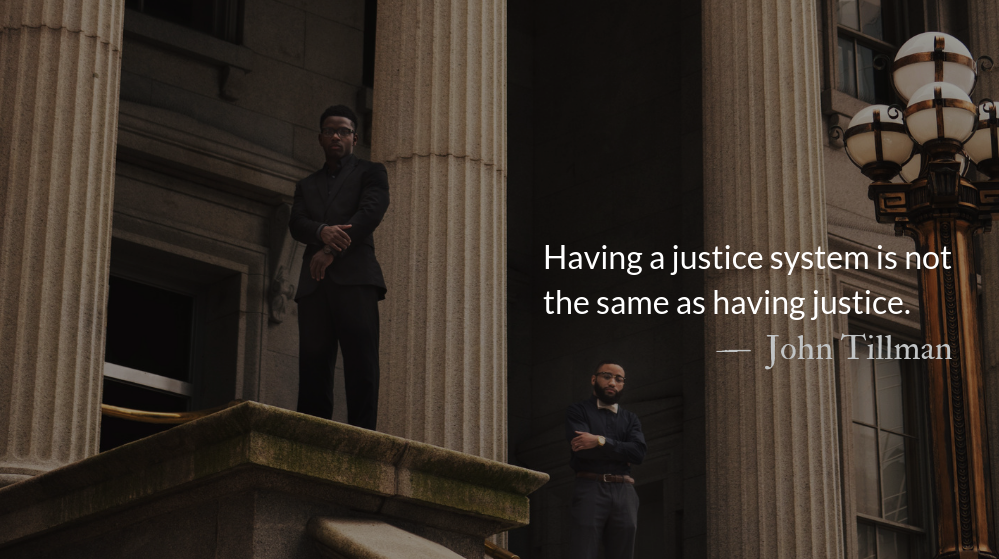
Grief Unable to be Counted

Scripture: Isaiah 1.15, 17
Your hands are full of blood!…
Learn to do right; seek justice.
Defend the oppressed.
Take up the cause of the fatherless;
plead the case of the widow.

Reflection: Grief Unable to be Counted
By John Tillman

In Judges Gideon defeats an army of such size, scripture says its camels could not be counted.

I have previously attributed this statement to a euphemism meaning “a lot” or jokingly expressed that the author probably just gave up counting them.

But I may simply have fallen victim to temporal provincialism, smugly thinking that the ancients couldn’t keep track of data during conflict when in fact, we—in a modern world of technological marvels—are unable to count the dead in Syria.

Megan Specia, writing for the New York Times says, “Without a clear tally of the deaths, advocates worry that the conflict will simply grind on indefinitely, without a concerted international effort to end it.”

It’s not just that we aren’t paying attention to the numbers of those killed in the Syrian conflict, it’s that increasingly, we just don’t know how many are being killed. The UN officially stopped counting in 2014, leaving the accounting to desperate volunteer organizations.

According to the Syrian Center for Policy Research, an independent Syrian research organization, the death toll from the conflict as of February 2016 was 470,000. The spread and intensification of fighting has led to a dire humanitarian crisis, with 6.1 million internally displaced people and 4.8 million seeking refuge abroad, according to the UN Office for the Coordination of Humanitarian Affairs. By mid-2016, an estimated 1 million people were living in besieged areas and denied life-saving assistance and humanitarian aid.

The rest of today’s reflection is a repost of a portion of Steven’s writing on April 24th of 2015 entitled, Crying at the United Nations.

The President of the Syrian American Medical Society, Zaher Sahloul, added, “Clearly they were affected by what they have seen in the videos and what they have heard, many of them spoke outside the diplomatic language and many of them have said that this is outrageous and the perpetrators should be brought to justice.”

If modernism were capable of bringing peace to the earth we would have seen it by now.

If secularism were capable of bringing peace we would look to Europe, who would be well on the way.

If man’s religious longings were capable of bringing peace we wouldn’t be in this predicament in modern culture anyway.

In a world reeling from — and trapped in — the pain and brokenness of sin, God must fight for us. David, the psalmist, sees this and cries out in Psalm 31. Injustice has gained the upper hand and only the transcendent justice of the world’s creator is sufficient to restore peace.

For the rest of the 2015 post, follow the link in the list of articles after the Bible readings.

Our hearts, our news cycles, and our accounting methods may have grown calloused toward Syria. Yet God’s heart is still tender toward them. May we find ways to act in love and pray—with words or with tears.

Prayer: The Refrain for the Morning Lessons
Righteousness shall go before him, and peace shall be a pathway for his feet. — Psalm 85.13

– Prayer from The Divine Hours: Prayers for Springtime by Phyllis Tickle.

Full prayer available online and in print.

Today’s Readings
Isaiah 1 (Listen – 4:36)
Hebrews 9 (Listen – 4:40)

This Weekend’s Readings
Isaiah 2 (Listen – 3:00) Hebrews 10 (Listen – 5:33)
Isaiah 3-4 (Listen – 4:34) Hebrews 11 (Listen – 6:22)

Prior Park Forum Writing on Syria

Articles

Love Guided Thoughts :: Throwback Thursday

Scripture: Song of Songs 8.7
Many waters cannot quench love;
rivers cannot sweep it away.

Reflection: Love Guided Thoughts :: Throwback Thursday
By Richard Baxter (1615 – 1691)

Get but the love of God well kindled in your heart, and it will find employment, even the most high and sweet employment, for your thoughts.

What abundance of matter can a lover find for his thoughts to work on night and day! And will not the love of God then much more fill and feast your thoughts?

How easily can the love of money find matter for the thoughts of the worldling from one year to another?

It is easy to think of any thing which you love.

Oh what a happy spring of meditation, is a rooted, predominant love of God! Love him strongly, and you cannot forget him.

You will then see him in every thing that meets you; and hear him in every one that speaketh to you: if you miss him, or have offended him, you will think on him with grief; if you taste of his love, you will think of him with delight; if you have but hope, you will think of him with desire, and your minds will be taken up in seeking him, and in understanding and using the means by which you may come to enjoy him.

Love is ingenious, and full, and quick, and active, and resolute; it is valiant, and patient, and exceeding industrious, and delighteth to encounter difficulties, and to appear in labours, and to show itself in advantageous sufferings; and therefore it maketh the mind in which it reigneth exceeding busy, and findeth the thoughts a world of work.

If God has no room in the thoughts of the ungodly (Psalm 10.4) it is because he is not in his heart. He may be “on their lips,” but he is “far from their hearts.” (Jeremiah 12.2)

Do those men believe themselves, or would they be believed by any one that is wise, who say they love God above all, and yet neither think of him, nor love to think of him; but are unwearied in thinking of their wealth, and honours, and the pleasures of their flesh?

*Abridged and language updated from Christian Ethics: The Work of Love.

Prayer: The Request for Presence
For God alone my soul in silence waits; truly, my hope is in him. — Psalm 62.6

– Prayer from The Divine Hours: Prayers for Springtime by Phyllis Tickle.

Full prayer available online and in print.

Today’s Readings
Song of Songs 8 (Listen – 2:23)
Hebrews 8 (Listen – 2:22)

Milk of the Word, A Precedent to Growth

Scripture: Hebrews 5.2
He is able to deal gently with those who are ignorant and are going astray, since he himself is subject to weakness.

Reflection: Milk of the Word, A Precedent to Growth
By John Tillman

Hebrews chapter 5 begins with an exhortation to deal gently with the ignorant and those who are straying. Yet a few short paragraphs later, the writer rebukes the readers, telling them that it is difficult to teach them when they don’t even try to understand.

The author wishes to discuss complicated topics of Christ’s transcendental priesthood, the Trinity, and the incarnation. But how can the writer go on when the readers are not ready for such theological complexity?

Just like the chastised readers, the maturity of western Christianity is in question.

Our world needs a gospel-driven worldview, yet half of those raised in church can’t identify the Great Commision. What is it? Who said it? What does it mean? Where is it in the Bible? One out of two don’t know.

This is not just an indictment of our lack of biblical knowledge. More knowledge isn’t the answer. Jesus didn’t call Peter to build a biblical trivia team. Peter, and by extension every Christian, is called to feed a flock, starting with the young. Starting with milk. Milk changes a lamb to a ram.

However, even the simplest of disciplines, church attendance, has been in decline since 1959. We can’t, therefore, blame millennials for it. It’s not that we are still drinking milk when we should have been weaned, but that we’ve never drunk it consistently.

The reason for that may be that our culture disdains milk and small beginnings too much. We desire something for nothing. We want spiritual marathon ribbons without putting in the hard miles.

Perhaps we should redefine milk—not as a marker of immaturity and shame but of growth. The purpose of milk is to progress toward consuming and digesting the more complex proteins of scripture.

Babies physically grow faster in their early years than at any time in their life. But the growth of the visible is nowhere close to as impressive as the cognitive growth that is happening in their brains. The growth we can experience by the simple application of spiritual practices to our lives can be similarly exponential.

Prioritizing the basics of faith—Bible reading, reflection, prayer, and corporate worship—is a spiritual intake process that matures with us, leading deeper into scripture as we repetitively read and absorb God’s Word.

If we expect to effect change in our complex and demanding world, we don’t need to beat up ourselves or others. We just need to consistently drink our milk.

Prayer: A Reading
Jesus said to us: “Everything now covered up will be uncovered, and everything now hidden will be made clear. What I say in the dark, tell in the daylight; what you hear in whispers, proclaim from the housetops.” — Matthew 10.26-27

– Prayer from The Divine Hours: Prayers for Springtime by Phyllis Tickle.

Full prayer available online and in print.

Today’s Readings
Song of Songs 5 (Listen – 2:43)
Hebrews 5 (Listen – 1:57)

The Internet as Babel

Scripture: Hebrews 2.11
Both the one who makes people holy and those who are made holy are of the same family. So Jesus is not ashamed to call them brothers and sisters.

Reflection: The Internet as Babel
By John Tillman

In many ways the ideals of the Internet’s creators are similar to those of Babel’s builders. We will succeed by our own strength and ingenuity. We will be united across the entire earth. We will not be forgotten. We will advance knowledge.

But today, most agree that the Internet has allowed ingenuity to weaken us rather than strengthen us, to divide us rather than unite us. It has made us forgetful rather than observant of the past, and has advanced falsehoods rather than knowledge.

Writing for New York Magazine, Max Read and David Wallace-Wells discuss the recent confessions and apologies for technology from tech insiders.

If the tech industry likes to assume the trappings of a religion, complete with a quasi-messianic story of progress, the Church of Tech is now giving rise to a new sect of apostates, feverishly confessing their own sins. And the internet’s original sin, as these programmers and investors and CEOs make clear, was its business model.

There is no one more fanatically, evangelistically creative than a content marketing company looking for a higher click-thru rate. Read and Wallace-Wells continue:

The technological elite needed something to attract billions of users to the ads they were selling. And that something, it turns out, was outrage.

Whatever you might say about broadcast advertising, it drew you into a kind of community, even if it was a community of consumers. The culture of the social-media era, by contrast, doesn’t draw you anywhere.

It meets you exactly where you are, with your preferences and prejudices — at least as best as an algorithm can intuit them. “Microtargeting” is nothing more than a fancy term for social atomization—a business logic that promises community while promoting its opposite.

Silicon Valley, it turns out, won’t save the world.

The false community we cling to in our divisive battles is not actually community but tribalism similar to that recently defined by Ed Stetzer.

Tribalism says, “This is us. We’ve got to take this back” or, as it often sounds, “We’ve got to take our country back.”

The last people who should be surprised by the failure of an idol to save, are the people of God. But we often are. Usually because we don’t yet realize that what we are clinging to is an idol.

When you are worshiping them, idols don’t seem religious. They seem immensely practical. Technology hasn’t tricked us any more than wooden and gold idols tricked the ancients. We deceive ourselves.

Babel’s redemption began at Pentecost and Jesus pointed his disciples toward this gift during the time between his resurrection and his ascension.

The power we need to connect rather than reject others comes from the Holy Spirit. It is in regular spiritual rhythms of Bible reading, reflection, prayer, and community that we will find the only source of love that breaks down tribal barriers and forces us to unselfishly engage the world.

What idols of tribalism do we fear putting down?
What idols of technology do we fear disconnecting from?
How can we humbly approach technology with redemption, not manipulation, in mind?

Prayer: The Greeting
O God, you know my foolishness, and my faults are not hidden from you. — Psalm 69.6

– Prayer from The Divine Hours: Prayers for Springtime by Phyllis Tickle.

Full prayer available online and in print.

Today’s Readings
Song of Songs 2 (Listen – 2:15)
Hebrews 2
 (Listen – 2:47)

This Weekend’s Readings
Song of Songs 3 (Listen – 1:48) Hebrews 3 (Listen – 2:25)
Song of Songs 4 (Listen – 2:46) Hebrews 4 (Listen – 2:43)

Rise Heart :: Throwback Thursday

Scripture: Hebrews 1.3
The Son is the radiance of God’s glory and the exact representation of his being, sustaining all things by his powerful word. After he had provided purification for sins, he sat down at the right hand of the Majesty in heaven.

Reflection: Rise Heart :: Throwback Thursday
By George Herbert — 1633

Easter
Rise heart; thy Lord is risen.
Sing his praise without delays,
Who takes thee by the hand,
that thou likewise with him may’st rise;
That, as his death calcined thee to dust,
His life may make thee gold, and much more, just.

Awake, my lute, and struggle for thy part with all thy art.
The crosse taught all wood to resound his name, who bore the same.
His stretched sinews taught all strings, what key
Is the best to celebrate this most high day.

Consort both heart and lute, and twist a song pleasant and long;
Or since all musick is but three parts vied and multiplied.
O let thy blessed Spirit bear a part,
And make up our defects with his sweet art.

I got me flowers to straw thy way:
I got me boughs off many a tree:
But thou wast up by break of day,
And brought’st thy sweets along with thee.

The Sun arising in the East,
Though he give light, and th’East perfume;
If they should offer to contest
With thy arising, they presume.

Can there be any day but this,
Though many suns to shine endeavour?
We count three hundred, but we miss:
There is but one, and that one ever.

May we, each day, stretch ourselves out on the cross like strings on a violin for the continuation of Christ’s loving song to the world.
May we celebrate each daybreak as a symbol of the day of Christ’s resurrection and the day that he will finally take each of us by the hand, raising us anew. — John

Music: George Herbert’s poems set to music by Ralph Vaughan Williams: “Easter,” and “I Got Me Flowers.”

Prayer: The Request for Presence
For God alone my soul in silence waits; truly, my hope is in him. — Psalm 62.6

– Prayer from The Divine Hours: Prayers for Springtime by Phyllis Tickle.

Full prayer available online and in print.

Today’s Readings
Song of Songs 1 (Listen – 2:15)
Hebrews 1
 (Listen – 2:15)

Show Buttons
Hide Buttons
Spur a spiritual rhythm of refreshment right in your inbox
By joining this email list you are giving us permission to send you devotional emails each weekday and to communicate occasionally regarding other aspects of the ministry.
100% Privacy. We don't spam.