Conflict’s Aftermath

Scripture Focus:  2 Samuel 2:26
Abner called out to Joab, “Must the sword devour forever? Don’t you realize that this will end in bitterness? How long before you order your men to stop pursuing their fellow Israelites?”

Reflection: Conflict’s Aftermath
By Erin Newton

Polarized. This word is the constant summary of our life lately. Every area seems to be weighted down in conflict.  When we reflect on the darker parts of our history, we like to think they are moments in time, isolated and spontaneous. There is a failure to see the slow progression of change from good to bad. And the even slower progress back to peace.

If Israel’s monarchy was portrayed on a TV episode, the death of Saul would be followed by a short commercial break and the reign of David would begin triumphantly. David was anointed in Hebron but his reign as the king of Israel was slow and filled with more turmoil. The conflict between Saul and David personally had ended but the ramifications continued. More hate, more blood. The house of David and the house of Saul were eager to carry out vengeance and retribution in the name of the lords they served. David was the rightful king and Saul was no longer a threat. The conflict should have ended.

Often there are rippling effects and continual consequences to mindsets that are hardened through a prolonged conflict. Racial discrimination, political rivalry, gender inequality, denominational intolerances, and the suspicion of public healthcare measures are areas that can fester conflict and hatred deep into a soul. Even when bridges are mended briefly, there are those who will continue to seek the destruction of perceived opponents. This can happen through what we say or what we encourage. It can be through our actions to cause pain or the turning of our eyes from someone in pain.

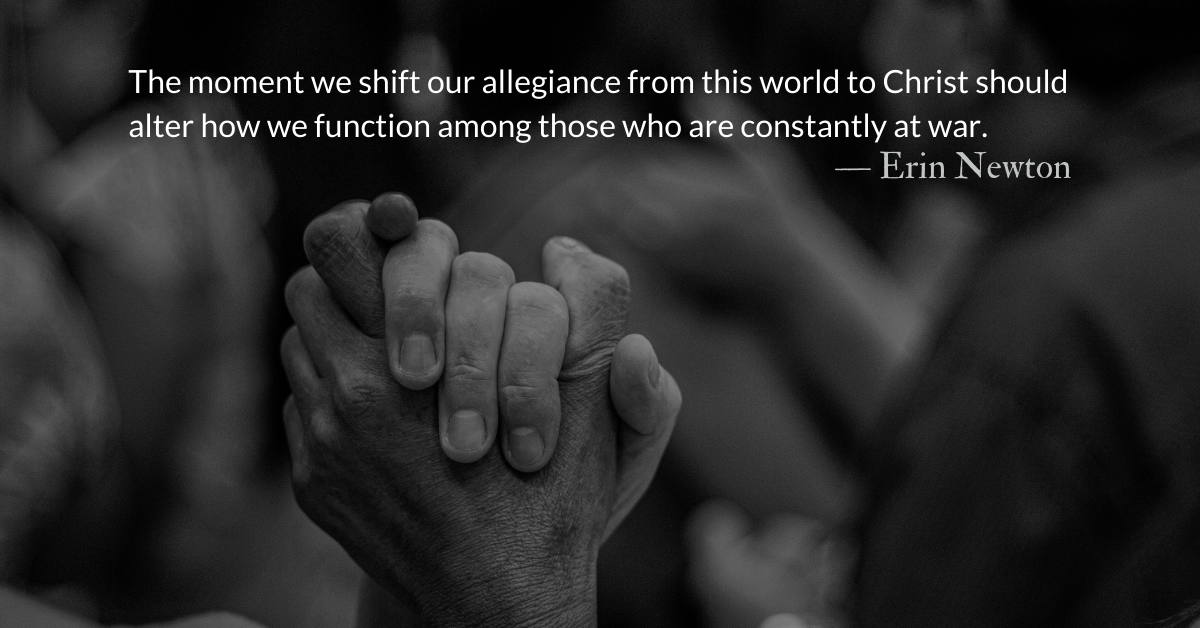
Still, some conflicts have found no lasting resolution. In these times, believers can look to the moment we shifted our allegiance from this world to Christ. This should alter how we function among those who are constantly at war. When did we forget he is the Prince of Peace? Let us ask God to replace the festering anger in our hearts with love. 

Love is patient, love is kind. It does not envy, it does not boast, it is not proud.  It does not dishonor others, it is not self-seeking, it is not easily angered, it keeps no record of wrongs. Love does not delight in evil but rejoices with the truth.  It always protects, always trusts, always hopes, always perseveres. (1 Corinthians 13:4-7)

Divine Hours Prayer: The Refrain for the Morning Lessons
For one day in your courts is better than a thousand in my own room, and to stand at the threshold of the house of my God than to dwell in the tents of the wicked. — Psalm 84.9

– From The Divine Hours: Prayers for Summertime by Phyllis Tickle.

Today’s Readings
2 Samuel 2 (Listen – 5:07) 
1 Corinthians 13 (Listen – 2:23)

Read more about Blocking the Way of Wickedness
We don’t always have a choice about working with or living among wicked people, but we can choose how we respond.

Read more about The Best We Can Do
The best we can do—in our strength and wisdom—may not be God’s best for us.

Trust in God Rather than Revenge

Scripture Focus: 1 Samuel 26:23-24
23 The Lord rewards everyone for their righteousness and faithfulness. The Lord delivered you into my hands today, but I would not lay a hand on the Lord’s anointed. 24 As surely as I valued your life today, so may the Lord value my life and deliver me from all trouble.” 

Reflection: Trust in God Rather than Revenge
By Erin Newton

Christians on social media have been increasingly vocal about leaders and the inconsistency between words and actions. Offenses are brought to light, perhaps going viral, and arguments ensue. Some leaders take to the internet to utter quick, empty apologies or lengthy rebuttals defending their cause. In the wake of the ebb and flow of quips and retorts, trust is forfeited.

David was acutely aware of the damage and ever-lingering effects from broken trust. From friend to foe, David’s relationship with Saul was damaged. Although the king said he was sorrowful and feigned a sense of remorse, his temperamental character revealed his true self. Saul would stop at nothing to bring David down.

Thankfully, David’s trust in God overpowered his desire for revenge and he resolved to let God determine the conclusion to Saul’s life. It is imperative to see that while mercy is shown, the offense is not concealed. He reiterated to Saul that he was being pursued unjustly. David did not avoid exposing the sins of Saul. Avoiding accountability is not love.

We often read stories with ourselves in the place of the virtuous character. We want to be like David, always heralded for our mercy to those who seek our harm. And we should. There are times when abusive leaders must hear the truth of the pain and suffering caused by their own agendas. We seek truth but not vengeance. There is a time and place for our hand to cease and the will of God to be done.

Moreover, let us ensure that we’re not, in fact, Saul. Do we betray the trust of others? Are we posting empty words while waiting for the next chance to strike back? Do we say what is desirable now and mean nothing in the long run? Do our actions support our words? In places of authority, we cannot become tyrannical and narcissistic. What we say and what we do must work in tandem, not in tension.

Trust is broken when words and actions conflict. The great news is that God has been faithful to fulfill the promises of his words. This is why David can trust God with Saul’s life and his own. God promised deliverance from Egypt and it was done. (Psalm 78). God promised salvation and he came to us. (John 1). We can trust God because his words and actions are always aligned.

Divine Hours Prayer: The Refrain for the Morning Lessons
I have sworn and am determined to keep your righteous judgments. — Psalm 119.106

– From The Divine Hours: Prayers for Summertime by Phyllis Tickle.

Today’s Readings
1 Samuel 26 (Listen – 4:30) 
1 Corinthians 7 (Listen – 6:09)

Read more about Revenge to Redemption
When there is no justice, revenge is what we settle for. If we don’t trust in God, revenge may be all we think there is to justice.

Read more about Abandon Human Vengeance
Those who continue to stoop to hatred, fear, and exaggeration are worshipers of results, not the Redeemer.