How Did He Do It?

Links for today’s readings:

Jul 21  Read: Isaiah 50 Listen: (2:09) Read: Psalm 119.25-48 Listen: (15:14)

Scripture Focus: Isaiah 50.4-10

4 The Sovereign Lord has given me a well-instructed tongue, 

to know the word that sustains the weary. 

He wakens me morning by morning, 

wakens my ear to listen like one being instructed. 

5 The Sovereign Lord has opened my ears; 

I have not been rebellious, 

I have not turned away. 

6 I offered my back to those who beat me, 

my cheeks to those who pulled out my beard; 

I did not hide my face 

from mocking and spitting. 

7 Because the Sovereign Lord helps me, 

I will not be disgraced. 

Therefore have I set my face like flint, 

and I know I will not be put to shame. 

8 He who vindicates me is near. 

Who then will bring charges against me? 

Let us face each other! 

Who is my accuser? 

Let him confront me! 

9 It is the Sovereign Lord who helps me. 

Who will condemn me? 

They will all wear out like a garment; 

the moths will eat them up. 

10 Who among you fears the Lord 

and obeys the word of his servant? 

Let the one who walks in the dark, 

who has no light, 

trust in the name of the Lord 

and rely on their God.

Reflection: How Did He Do It?

By John Tillman

How did Jesus do it?

How did he set aside his divinity and glory to live in flesh and struggle? How did he obey perfectly while experiencing the same temptations every human faces? How did he follow the Father’s will completely while still having a human mind? How did he worship in a corrupted temple and synagogue system? 

But most of all, how did he endure the cross? How did he face the suffering? The torture? The shaming? The taunting? The physical pain and struggle? And death itself? How did he do it?

Isaiah’s servant psalms are ultimately, and most importantly, about Jesus. Isaiah paints many pictures that match up with, and were fulfilled by, Jesus’ life and sufferings. But Isaiah does more than tell us that Jesus would have his beard torn out, or his back beaten, or that he would be mocked and spit upon and pierced for our transgressions. Isaiah shows us not just the physical treatment Jesus would face, but a picture of his inner life that connected him to the Father and made it possible for him to endure.

Isaiah shows us how Jesus did it. And Jesus shows us how we can do it.

Jesus had a rich and satisfying inner life with God through scripture and prayer. He woke “morning by morning” listening. God opened his ears, gave him a “well-instructed tongue,” and taught him words that “sustain the weary.” Jesus felt God near to vindicate and help him.

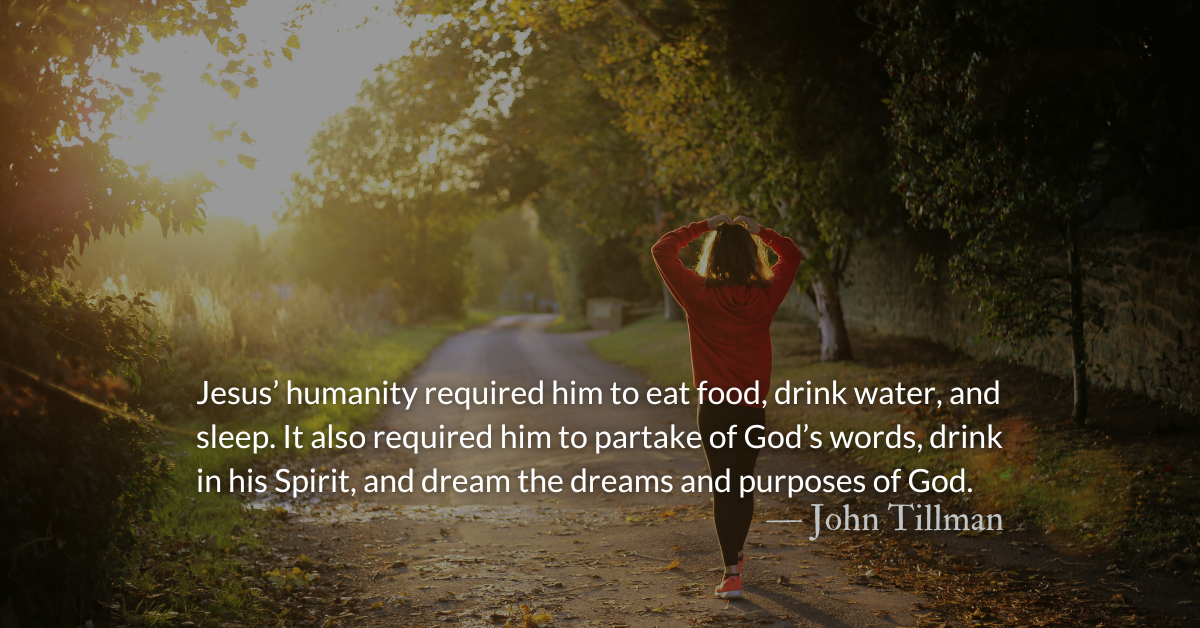
Jesus’ humanity required him to eat food, drink water, and sleep. It also required him to partake of God’s words, drink in his Spirit, and dream the dreams and purposes of God. Because he did this, Jesus was able to set his face “like flint” toward Jerusalem and his suffering.

Oh, that this would be true of us! That our tongues (and typing fingers) would be well-instructed! That our mind would wake to the Spirit’s whispering! That our ears would be tuned to his melodies! That our faces would be set like flint against trouble, knowing his flint-like face stands beside us!

We have crosses to carry both now and in the future. This is how we do it—imitate Jesus. Pray we never face the physical sufferings Jesus did. But by following his life-giving, scripture devouring, Spirit empowering, pattern of connecting to God, we can do whatever Jesus calls us to.

Divine Hours Prayer: The Small Verse

The earth is the Lord’s and all the fullness thereof, the world and we who dwell within. Thanks be to God — Traditional

– From The Divine Hours: Prayers for Summertime by Phyllis Tickle.

Read more: Discipline for the Anxious

The benefits of meditation can help in a crisis but are no quick fix. Meditation is not a fast-acting antidote…but an inoculation to be taken ahead of time.

Read more: Breathing Prayers

The social, financial, and mental health costs of this sickness are pushing our culture to the end of the ability of the “human spirit” to endure.
A Word for the Weary

We are happy to welcome ministry-focused college and seminary students from around the country and overseas to write in June of 2020 for The Park Forum. Each of them is pursuing a career in ministry and received free coaching on their writing as a part of the program. For more information about the program and a profile of each of our student writers, visit our Student Writers Month page.

Today’s student writer is Joshua B. Fikkert, a student at Covenant Theological Seminary.

Scripture Focus: Isaiah 50:6-10
6 I offered my back to those who beat me,
    my cheeks to those who pulled out my beard;
I did not hide my face
    from mocking and spitting.
7 Because the Sovereign Lord helps me,
    I will not be disgraced.
Therefore have I set my face like flint,
    and I know I will not be put to shame.
8 He who vindicates me is near.
    Who then will bring charges against me?
    Let us face each other!
Who is my accuser?
    Let him confront me!
9 It is the Sovereign Lord who helps me.
    Who will condemn me?
They will all wear out like a garment;
    the moths will eat them up.
10 Who among you fears the Lord
    and obeys the word of his servant?
Let the one who walks in the dark,
    who has no light,
trust in the name of the Lord
    and rely on their God.

Reflection: A Word for the Weary
By Joshua B. Fikkert

Christians are in exile in this world (1 Peter 2:11). We long for the new Heaven and the new Earth, and this longing is heightened in this current season. From the frustrations of life in a global pandemic to the pain of racial and systemic injustice, we are confronted on a daily basis with the reality that this fallen world is not what we are made for. 

The exiles from Judah felt this type of pain, and they cried out, wondering if God had abandoned them and if deliverance would come. In Isaiah 50, God responds to this question. He tells them he has not divorced them nor sold them into slavery. God has not forsaken them, and because of his love, he will redeem them.

Then, the great redeemer, the Suffering Servant speaks. He proclaims a word that “will sustain the weary” (Isaiah 50:4). However, the message of the Servant is unexpected. He will not save through conquest but through humility, meekness, and suffering. 

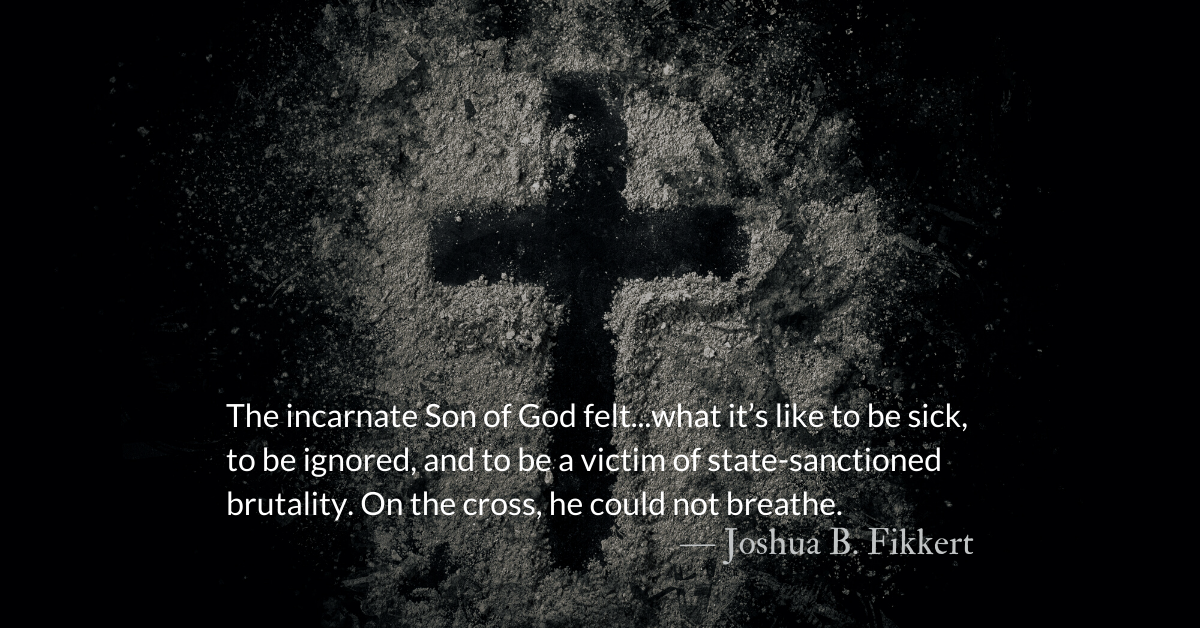
Instead of merely answering the doubts and questions of the exiles from afar, he shows up and identifies as an exile, as one of us. The incarnate Son of God felt every part of what it’s like to be human. He felt what it’s like to be sick, to be ignored, and to be a victim of state-sanctioned brutality. On the cross, he could not breathe. 

However, the good news of the Suffering Servant is not just that he suffers with us but also that he is vindicated for us (1 Timothy 3:16). The injustice and the suffering he experienced bodily is reversed by his resurrection. No harm can touch him, no charge can be leveled against him, no opposition can stand before him (1 Corinthians 15:25). The good news is that Jesus reigns.

A day is coming, and we pray soon, when the righteous, the innocent, and the oppressed will receive their vindication. No harm will touch them. No pain will befall them. For those who walk in a sleepless night of terror and darkness, the nightmare will end. “There will be no more night. They will not need the light of a lamp or the light of the sun, for the Lord God will give them light. And they will reign for ever and ever” (Revelation 22:5).

Divine Hours Prayer: The Greeting
To you, O Lord, I lift up my soul; my God, I put my trust in you; let me not be humiliated, nor let my enemies triumph over me. Let none who look to you be put to shame. — Psalm 25.1-2

– Divine Hours prayers from The Divine Hours: Prayers for Summertime by Phyllis Tickle

Today’s Readings
Isaiah 50 (Listen – 2:09) 
Revelation 20 (Listen – 2:49)

Read more about Transcendent Peace and Rest
There is security unattainable even by those with stockpiles of resources. Christians can rest in God.

Read more about This Present Age
There was never an age of this earth in which evil did not wreak havoc, governments did not mishandle justice, and in which the church, in one capacity or another did not fail to fully live out the gospel.

Show Buttons
Hide Buttons
Spur a spiritual rhythm of refreshment right in your inbox
By joining this email list you are giving us permission to send you devotional emails each weekday and to communicate occasionally regarding other aspects of the ministry.
100% Privacy. We don't spam.