Mary, the Called One — Joy of Advent

Links for today’s readings:

Read: Ezra 8 Listen: (5:40)
Read: Revelation 7 Listen: (2:56)

Scripture Focus: Luke 1:26-38

26 In the sixth month of Elizabeth’s pregnancy, God sent the angel Gabriel to Nazareth, a town in Galilee, 27 to a virgin pledged to be married to a man named Joseph, a descendant of David. The virgin’s name was Mary. 28 The angel went to her and said, “Greetings, you who are highly favored! The Lord is with you.”

29 Mary was greatly troubled at his words and wondered what kind of greeting this might be. 30 But the angel said to her, “Do not be afraid, Mary; you have found favor with God. 31 You will conceive and give birth to a son, and you are to call him Jesus. 32 He will be great and will be called the Son of the Most High. The Lord God will give him the throne of his father David, 33 and he will reign over Jacob’s descendants forever; his kingdom will never end.”

34 “How will this be,” Mary asked the angel, “since I am a virgin?”

35 The angel answered, “The Holy Spirit will come on you, and the power of the Most High will overshadow you. So the holy one to be born will be called[a] the Son of God. 36 Even Elizabeth your relative is going to have a child in her old age, and she who was said to be unable to conceive is in her sixth month. 37 For no word from God will ever fail.”

38 “I am the Lord’s servant,” Mary answered. “May your word to me be fulfilled.” Then the angel left her.

Revelation 7:12

“Amen!
Praise and glory
and wisdom and thanks and honor
and power and strength
be to our God for ever and ever.
Amen!”

Reflection: Mary, the Called One — Joy of Advent

By Jon Polk

With the angelic proclamation, “Greetings, you who are highly favored!”, we have our first introduction to Mary in Luke’s Gospel. Because of this lofty declaration, we often think of Mary as the model of obedience, the picture of a perfect follower of God.

Now to be sure, being selected to bear the Son of God is indeed a high honor, but the extraordinary thing about Mary was that she was so ordinary. Living in a small village, not in the religious center of Jerusalem, she was a young girl in a culture that valued age and men. She later refers to herself as poor and lowly.

God chooses Mary because she has nothing. When she asks of the angel, “How will this be?”, it is a practical question. She’s old enough to know how these things work and she knows that there’s a step missing in the process.

Mary discovers a lesson that all Christians must learn. When God calls us, we are not capable in ourselves of accomplishing the task. Only God can provide what we need. Through miraculous intervention, Mary goes from unwed virgin to the mother of the Christ child. God called and God made it happen.

By embracing her calling, Mary becomes a partner with God in literally bringing the Kingdom here on earth. Without God’s intervention, Mary could not become pregnant. Without Mary as a human mother, Jesus could not be born as one of us. This is God’s design, for us to work together with God to give life to the Kingdom here on earth.

God’s call transforms us from people who are incapable on our own to those for whom, with God’s help, nothing is impossible. We, like Mary, have been chosen by God, not because of anything we have or have done, but because God wants to have a relationship with us. Like Mary, we are indeed highly favored children of God.

Let us recognize the gifts God has given us and remember how truly favored we are. Listen closely for your calling from God and be quick to obey, even when you don’t fully understand the whys and the hows. During this season of Advent, may we use what God has given us to breathe life into the Kingdom here on earth, both now and all year long.

Divine Hours Prayer: The Refrain for the Morning Lessons

On this day the Lord has acted; we will rejoice and be flad in it. — Psalm 118.24

– From The Divine Hours: Prayers for Autumn and Wintertime by Phyllis Tickle.

Read more about Mary’s Story — Love of Advent

God can dramatically transform, and God can dramatically indwell. No matter our story, we belong within the love of Jesus.

Support Our Work

Year-end giving provides half of our support through the year. Please consider becoming a donor and getting us off to a great start in the new year.

Silent Night — Carols of Advent Joy

Scripture Focus: Psalm 136:23-26
23 He remembered us in our low estate
His love endures forever.
24 and freed us from our enemies.
His love endures forever.
25 He gives food to every creature.
His love endures forever.
26 Give thanks to the God of heaven.
His love endures forever.

Matthew 1:22-23
22 All this took place to fulfill what the Lord had said through the prophet: 23 “The virgin will conceive and give birth to a son, and they will call him Immanuel” (which means “God with us”).

Reflection: Silent Night — Carols of Advent Joy
By Jon Polk

Silent Night holds the distinction of being the world’s most recorded Christmas song. There are over 137,000 known recorded versions of the carol!

There are classics like Bing Crosby’s version or the Mormon Tabernacle Choir’s rendition. There are also gospel, rap and heavy metal versions! The song has universal appeal and speaks to our longing for peace and hope in a dark world.

During the famous “Christmas Truce” of 1914, when British and German troops in World War I voluntarily ceased fighting on Christmas Day, one of the carols that they sang together was Silent Night.

Silent night! Holy night!
All is calm, all is bright
’round yon virgin mother and child!
Holy infant, so tender and mild,
sleep in heavenly peace,
sleep in heavenly peace.

The song was born out of a period of insecurity and instability. Following the Napoleonic Wars, a young Catholic priest, Father Joseph Mohr arrived at the parish in the village of Oberndorf, Austria. He composed the text of the song for performance on Christmas Eve in 1818.

Mohr gave the lyrics to Franz Gruber, a schoolteacher and organist, asking him to compose a melody. As the story goes, the organ at the church in Oberndorf had been damaged by a recent flood and was out of commission at the time, leading Gruber to compose the music on guitar.

Karl Mauracher, who serviced the organ at the church, was apparently so taken by the song that he took the carol back with him to his village. Folk singers from Mauracher’s hometown included the song in their performances. One group, the Rainers, ultimately introduced the song to the U.S. on a tour in 1839.

Since then, the carol has become popular in all corners of the world. In 2011, UNESCO declared the song an intangible cultural heritage, stating

The song addresses the human desire for all-encompassing peace, conveys a feeling of fellowship, and promotes interpersonal exchange and mutual understanding.

Worldwide, the song is embraced as a call to peace for our world. We Christians know that peace comes from the Prince of Peace, the baby born on that night.

Ironically, the night itself was likely anything but silent – a newborn infant, surrounded by animals, in a barn, in a crowded city. But as we sing it, the song reminds us, for a few moments at least, of the need for peace in our own chaotic world. 

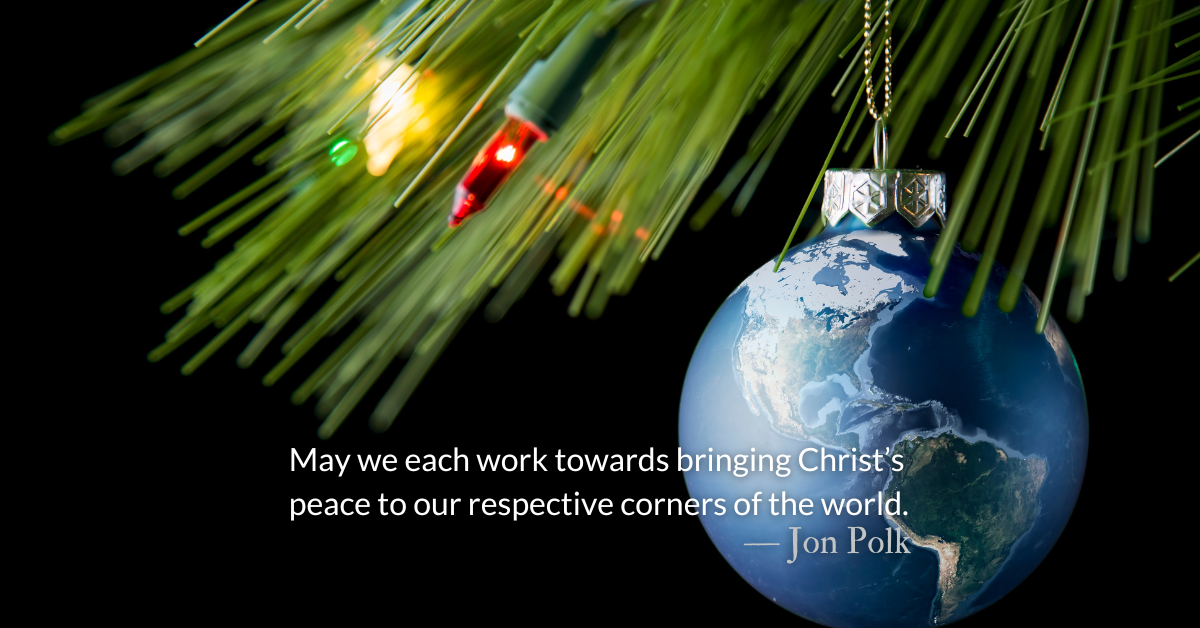
May the words not be merely hopes and dreams but may we each work towards bringing Christ’s peace to our respective corners of the world.

Silent night! Holy night!
Wondrous star, lend thy light;
with the angels let us sing
“Alleluia” to our King:
“Christ the Savior is born!
Christ the Savior is born.”

Listen: Silent Night by Sandra McCracken 
Read: Lyrics from Hymnary.org

Divine Hours Prayer: The Refrain for the Morning Lessons
Everyone will stand in awe and declare God’s deeds; they will recognize his works. — Psalm 64.9

– From The Divine Hours: Prayers for Summertime by Phyllis Tickle.


Today’s Readings
2 Chronicles 26  (Listen 4:00)
Psalms 135-136 (Listen 4:23)

This Weekend’s Readings
2 Chronicles 27-28  (Listen 6:27), Psalms 137-138 (Listen 2:42)
2 Chronicles 29  (Listen 6:49), Psalms 139 (Listen 2:26)
2 Chronicles 30  (Listen 4:56), Psalms 140-141 (Listen 2:44)

Read more about Pause To Read
Listen to the 1st full episode of our new podcast, Pause to Read, out today. Please subscribe, share the episodes, and give a rating/review to help others find the show.

Read more about Supporting Our Work
No matter the date or the size of a donation, we are thankful for it, however, time is running out to donate in 2023. Please consider giving to support our work before the end of the year.

While Shepherds Watched Their Flocks — Carols of Advent Joy

Scripture Focus: Psalm 132:10-12
10 For the sake of your servant David,
    do not reject your anointed one.
11 The Lord swore an oath to David,
    a sure oath he will not revoke:
“One of your own descendants
    I will place on your throne.
12 If your sons keep my covenant
    and the statutes I teach them,
then their sons will sit
    on your throne for ever and ever.”

Luke 2:20
20 The shepherds returned, glorifying and praising God for all the things they had heard and seen, which were just as they had been told.

Reflection: While Shepherds Watched Their Flocks — Carols of Advent Joy
By Jon Polk

While Shepherds Watched Their Flocks may hold the distinction as the only Christmas carol written by a British Poet Laureate.

Nahum Tate was born in Dublin, Ireland. Tate was the son of an Irish pastor, Faithful Teate, and both of his grandfathers were also ministers. Despite a history of clergy in his family, Nahum instead pursued a literary career. 

Tate attended Trinity College, Dublin, and graduated in 1672. Within a few years, he moved to London and began making a living as a writer. 

Tate wrote and published a collection of poems but primarily focused his writing on stage plays. After writing a few original plays, he turned his attention to creating adaptations of Shakespeare’s works. His rewrite of the tragedy, King Lear, concluded with a happy ending and was so successful that it became the preferred performance version for over a hundred years.

Due to his significant contributions to the arts, Nahum Tate was named Poet Laureate of England in 1692, a title he held for twenty-two years.

Prior to 1700, church music in English consisted exclusively of Psalms. In 1696, Tate collaborated with Nicholas Brady to update the traditional settings of the Psalter, producing the New Version of the Psalms of David.

Around the same time, Tate wrote the lyrics for While Shepherds Watched Their Flocks, a Christmas carol based on the angel’s proclamation in Luke 2.

While shepherds watched their flocks by night,
all seated on the ground,
an angel of the Lord came down,
and glory shone around.

When Tate and Brady published a Supplement to the New Version of the Psalms in 1700, they included sixteen hymns not based on Psalm texts. While Shepherds Watched was the only Christmas hymn in the collection, thereby making it officially the first Christmas carol approved for usage in the Anglican Church. Prior to that, most carols had roots in folk music and were considered too secular for church services.

The fact that the lyrics were drawn directly from the scriptural account in Luke worked in the hymn’s favor and helped it gain acceptance for congregational singing.

The heavenly babe you there shall find
to human view displayed,
all simply wrapped in swaddling clothes
and in a manger laid.

Tate’s carol is one of the first known hymnic descriptions of this glorious event. Of the sixteen new hymns in the Supplement, it is the only one still sung today. It is a blessed and simple reminder of the moment when the divine birth announcement was delivered quite unexpectedly to humble peasants.

All glory be to God on high,
and to the earth be peace;
to those on whom his favor rests
goodwill shall never cease.

Listen: While Shepherds Watched Their Flocks by Andrew Peterson
Read: Lyrics from Hymnary.org

Divine Hours Prayer: The Refrain for the Morning Lessons
Truly, his salvation is very near to those who fear him, that his glory may dwell in our land. — Psalm 85.9

– From The Divine Hours: Prayers for Summertime by Phyllis Tickle.


Today’s Readings
2 Chronicles 25  (Listen 5:12)
Psalms 132-134 (Listen 2:42)

Read more about Pause To Read
The 1st full episode of our new podcast, Pause to Read, is out tomorrow morning. Please subscribe, share the episodes, and give a rating/review to help others find the show.

Read more about Supporting Our Work
People across the world read The Park Forum for free because of faithful donors of both large and small amounts. Help us thank them with a message or become a donor yourself.

Hark! The Herald Angels Sing — Carols of Advent Joy

Scripture Focus: Psalm 130:7-8
7 Israel, put your hope in the Lord,
    for with the Lord is unfailing love
    and with him is full redemption.
8 He himself will redeem Israel
    from all their sins.

Luke 2:13-14
13 Suddenly a great company of the heavenly host appeared with the angel, praising God and saying, 14 “Glory to God in the highest heaven, and on earth peace to those on whom his favor rests.”

Reflection: Hark! The Herald Angels Sing — Carols of Advent Joy
By Jon Polk

One has to wonder whether the iconic Christmas carol, Hark! The Herald Angels Sing, would be as popular today if it still retained its original opening line, “Hark how all the Welkin rings, Glory to the King of Kings.”

If you don’t know – and you probably don’t – welkin is an archaic English word that means the sky or the heavens, the highest celestial realm inhabited by God and angels. 

Already a theologically dense hymn, its usage would have likely been hindered by the inclusion of an unfamiliar and arcane term in the first line. Thankfully, what we have instead has now become comfortably familiar.

Hark! the herald angels sing,
“Glory to the new-born King;
Peace on earth, and mercy mild;
God and sinners reconciled.”

Written by Charles Wesley in 1739, less than a year after his evangelical conversion, the song bears the marks of this eager new convert wanting to clearly express the fullness of his faith.

Hail the heaven-born Prince of Peace!
Hail the Sun of righteousness!
Light and life to all He brings,
Risen with healing in His wings!

As students, Charles Wesley, his brother John, and friend George Whitefield were members of the infamous “Holy Club” at the University of Oxford in the 1730s. All three were founders and leaders of the early Methodist movement. It should come as no surprise that Wesley’s Christmas hymn is rich with theological proclamations.

Veiled in flesh the Godhead see,
Hail the incarnate Deity!
Pleased as man with man to dwell,
Jesus our Immanuel.

Scriptural references abound in the hymn, in particular, names or titles referring to Christ: Immanuel, Prince of Peace, Sun of Righteousness, Desire of Nations, Second Adam. Wesley presents the gospel message loud and clear, expanding on the glorious announcement to the shepherds by the angelic host.

Mild He lays His glory by,
Born that man no more may die;
Born to raise the sons of earth;
Born to give them second birth.

But what happened to the Welkin?

Wesley’s brother John published the carol, originally titled Hymn for Christmas-Day, in his 1739 collection, Hymns and Sacred Poems. Wesley also shared the song with George Whitefield who many years later included it in his 1754 compilation, Collections of Hymns for Social Worship.

Whitefield made a number of lyrical changes to the song before publication. Fortunately, one of the most notable modifications was to remove the reference to “Hark how all the Welkin rings” in favor of the more accessible phrase, “Hark, the Herald Angels sing.”

Whether it is from the Welkin or the Herald Angels, the good news of Jesus’ birth rings out with joy for all people.

With angelic hosts proclaim,
“Christ is born in Bethlehem.”

Listen: Hark! The Herald Angels Sing by Norman Hutchins
Read: Lyrics from Hymnary.org

Divine Hours Prayer: The Greeting
Your love, O Lord, reaches to the heavens, and your faithfulness to the clouds. — Psalm 36.5

– From The Divine Hours: Prayers for Summertime by Phyllis Tickle.


Today’s Readings
2 Chronicles 24  (Listen 5:07)
Psalms 129-131 (Listen 1:45)

Read more about Pause To Read
The 1st full episode of our new podcast, Pause to Read, is out tomorrow morning. Please subscribe, share the episodes, and give a rating/review to help others find the show.

Read more about Supporting Our Work
It is donors just like you who fund our ad-free content that brings biblical devotionals to inboxes across the world.

O Little Town of Bethlehem — Carols of Advent Joy

Scripture Focus: Psalm 126:1-3
1 When the Lord restored the fortunes of Zion,
    we were like those who dreamed.
2 Our mouths were filled with laughter,
    our tongues with songs of joy.
Then it was said among the nations,
    “The Lord has done great things for them.”
3 The Lord has done great things for us,
    and we are filled with joy.

Micah 5:2
2 “But you, Bethlehem Ephrathah,
    though you are small among the clans of Judah,
out of you will come for me
    one who will be ruler over Israel,
whose origins are from of old,
    from ancient times.”

Reflection: O Little Town of Bethlehem — Carols of Advent Joy
By Jon Polk

The endearing carol, O Little Town of Bethlehem, was written in 1868 for the Sunday School children of Philadelphia’s Church of the Holy Trinity. Phillips Brooks, rector of Holy Trinity wrote the lyrics and Lewis H. Redner, church organist, contributed the music.

Phillips Brooks was born in Boston, attended Harvard University, and was ordained an Episcopal priest in 1859. Brooks relocated to Philadelphia where he served as rector for Church of the Advent for three years before moving to Holy Trinity shortly after the start of the American Civil War.

Brooks preached against slavery, ministered to African American troops, and advocated for granting equal rights to freedmen. When the funeral train carrying Abraham Lincoln’s casket stopped in Philadelphia, Brooks was selected to deliver the local eulogy.

Following those tumultuous years, in August 1865, the church sent Brooks abroad for a year where he traveled through Europe and arrived in the Holy Land in December.

After two weeks in Jerusalem, he traveled on horseback out to Bethlehem on Christmas Eve. There Brooks took part in the Christmas Eve service at the ancient basilica built over the traditional location of the Nativity. He was so moved by the experience that he wrote about it to the congregation back in Philadelphia.

I remember especially on Christmas Eve, when I was standing in the old church at Bethlehem, close to the spot where Jesus was born, when the whole church was ringing hour after hour with the splendid hymns of praise to God…

The memory of visiting Bethlehem stayed with him, and three years later, he wrote the lyrics to O Little Town of Bethlehem for the church Christmas service in 1868. You can hear the peaceful tranquility of his experience expressed in the opening stanza.

O little town of Bethlehem,
How still we see thee lie!
Above thy deep and dreamless sleep
The silent stars go by

Brooks gave his lyrics to organist Lewis Redner, asking him to compose a tune. Redner was occupied with preparations for the Christmas service and had not written the tune by Saturday night. Stressed about the performance the next day, he fell asleep, only to be awakened by what he said was an angel whispering the tune in his ear. Redner commented, “Neither Mr. Brooks nor I ever thought the carol or the music to it would live beyond that Christmas of 1868.”

The carol has endured long since then for its sanguine simplicity and because it reminds us of the profound meaning of the birth of a child in the little town of Bethlehem.

O holy Child of Bethlehem!
Descend to us, we pray;
Cast out our sin, and enter in,
Be born in us today!

Listen: Little Town by Amy Grant
Read: Lyrics from Hymnary.org

Divine Hours Prayer: The Request for Presence
Bow your heavens, O Lord, and come down; touch the mountains, and they shall smoke. — Psalm 144.5

– From The Divine Hours: Prayers for Summertime by Phyllis Tickle.


Today’s Readings
2 Chronicles 22-23  (Listen 6:51)
Psalms 126-128 (Listen 1:58)

Read more about Pause To Read
The trailer for our podcast, Pause to Read, is available now and the 1st full episode (approximately 5 minutes) is out Friday. Please subscribe and share the episodes.

Read more about Supporting Our Work
Our ad-free biblical devotional content isn’t free to produce or share with inboxes across the world. Please consider joining our donors.