

Links for today’s readings:
Nov 3 Read: Ezekiel 34 Listen: (5:11) Read: 1 Timothy 6 Listen: (3:16)
Scripture Focus: Ezekiel 34.2-6
2 Woe to you shepherds of Israel who only take care of yourselves! Should not shepherds take care of the flock? 3 You eat the curds, clothe yourselves with the wool and slaughter the choice animals, but you do not take care of the flock. 4 You have not strengthened the weak or healed the sick or bound up the injured. You have not brought back the strays or searched for the lost. You have ruled them harshly and brutally. 5 So they were scattered because there was no shepherd, and when they were scattered they became food for all the wild animals. 6 My sheep wandered over all the mountains and on every high hill. They were scattered over the whole earth, and no one searched or looked for them.
Reflection: Tendencies of Unfaithful Shepherds
By John Tillman
God comforted Ezekiel, who sang the song of God’s love faithfully and beautifully to people who refused to listen and obey. Then God confronted the prophets and priests who were unfaithful.
To modern ears, Ezekiel’s description sounds like flamboyant, prosperity gospel hucksters with pockets and clothing as gilded as their voices. This extreme visual, however, can cause us to miss deeper problems. God is less concerned with the wealth of the shepherd than with the health of the flock.
In reality, most pastors live fiscally and morally responsible lives. Yet, a pastor can abuse power without ever accumulating a fleet of private jets. A pastor can abuse trust without ever being exposed in a sex scandal. Unfaithful shepherds place their own security and power before the health of the flock. Caring for others as a shepherd almost always goes against our self-preservation instincts.
In a beautiful pre-visualization of Jesus’ earthly ministry, God tells Ezekiel that he, himself, will come to the scattered sheep. He himself will search for them, gather them, heal them, and care for them.
Wise shepherds could draw from this passage a self-assessment tool:
- Are the weak strengthened or are the “sleek and strong” subjecting the weak?
- Are the sick healed or do the healthy shame the sick?
- Are the hurts of the wounded bound up or are the angry ignored so they will limp away alone?
- Are people treated tenderly or is failure or dissent crushed with authority and malice?
- Are the strays and the lost brought home or do those who called this home stray?
Jesus had compassion on the masses because they were “harassed and helpless, like sheep without a shepherd.” (Matthew 9.35-38) Those who should have been binding up the weak, were instead “binding up heavy burdens” and not lifting a finger to help. (Matthew 23.1-12)
The religious leaders of Jesus’ day and Ezekiel’s fellow prophets became unfaithful shepherds for similar reasons. Power and recognition were more attractive to them than service and selflessness. Control and authority were grasped by them rather than mercy and humility. Law and order were enforced by them rather than doing justice and righteousness. Unfaithful shepherds have these tendencies in common.
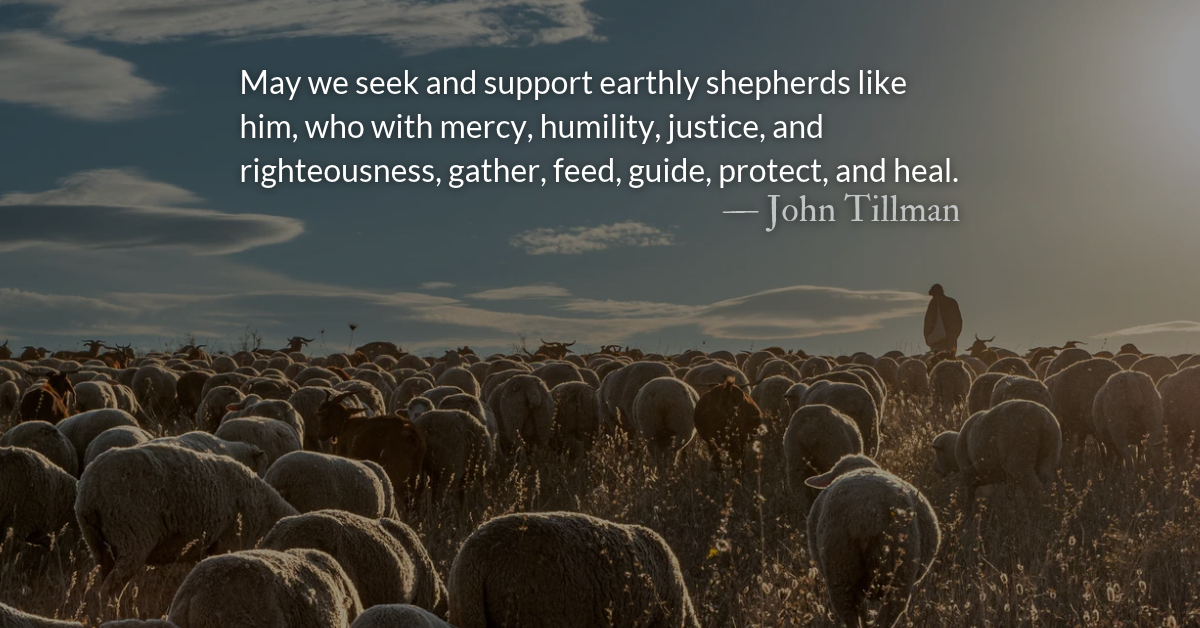
May we, and our shepherds be more like Jesus. May we seek and support earthly shepherds like him, who with mercy, humility, justice, and righteousness, gather, feed, guide, protect, and heal.
Divine Hours Prayer: The Call to Prayer
Worship the Lord in the beauty of holiness; let the whole earth tremble before him. — Psalm 96.9
– From The Divine Hours: Prayers for Autumn and Wintertime by Phyllis Tickle.
Read more: Prayer for Faithful Shepherds
May our shepherds be more like Jesus and, under their guidance, may we be so as well.
Read more: The Purpose of Power
The idea that the rich can’t be bought is a fallacy. In some cases, saying the rich can’t be bought is like saying an alcoholic won’t want another drink.

