Break the Silence

Links for today’s readings:

Jun 5  Read: Malachi 4 Listen: (1:06) Read: Psalms 92-93 Listen: (2:09)

Links for this weekend’s readings:

Jun 6  Read: Isaiah 1 Listen: (4:36) Read: Psalm 94 Listen: (2:08)
Jun 7  Read: Isaiah 2 Listen: (3:00) Read: Psalms 95-96 Listen: (2:37)

Scripture Focus: Malachi 4.1-6

1 “Surely the day is coming; it will burn like a furnace. All the arrogant and every evildoer will be stubble, and the day that is coming will set them on fire,” says the Lord Almighty. “Not a root or a branch will be left to them. 2 But for you who revere my name, the sun of righteousness will rise with healing in its rays. And you will go out and frolic like well-fed calves. 3 Then you will trample on the wicked; they will be ashes under the soles of your feet on the day when I act,” says the Lord Almighty.

4 “Remember the law of my servant Moses, the decrees and laws I gave him at Horeb for all Israel. 5 “See, I will send the prophet Elijah to you before that great and dreadful day of the Lord comes. 6 He will turn the hearts of the parents to their children, and the hearts of the children to their parents; or else I will come and strike the land with total destruction.”

Reflection: Break the Silence

By John Tillman

Christians and Jews agree on some writings that we both call “scripture” or “God’s Word.”

The Jewish arrangement of these texts, which we call the Old Testament, is different. We close with the shorter prophetic books, ending with Malachi. They close with Daniel, Ezra-Nehemiah (as one united book), and Chronicles. However, Christian and Jewish sources agree that Malachi was the last prophet chronologically. They also agree that prophecy fell silent following Malachi.

No prophets saw dramatic visions. No one said confidently, “Thus saith the Lord.” However, the silence wasn’t total.

People still prayed and God still answered. Wise teachers, scholars, and scribes still wrote new books. But no one held the intertestamental books with the same reverence as Malachi and his predecessors. 

God’s people, living between the testaments, recognized a difference in what they and we call “God’s Word” and the other spiritual and religious writings. The scriptures from which God had spoken become all the more important during this period of silence. 

Some silences of God might be him politely allowing us to speak first. Some silences of God are him waiting patiently for us to pass on what we already heard. Some silences of God are him asking us to spend the silence by deepening our understanding of his scriptures.

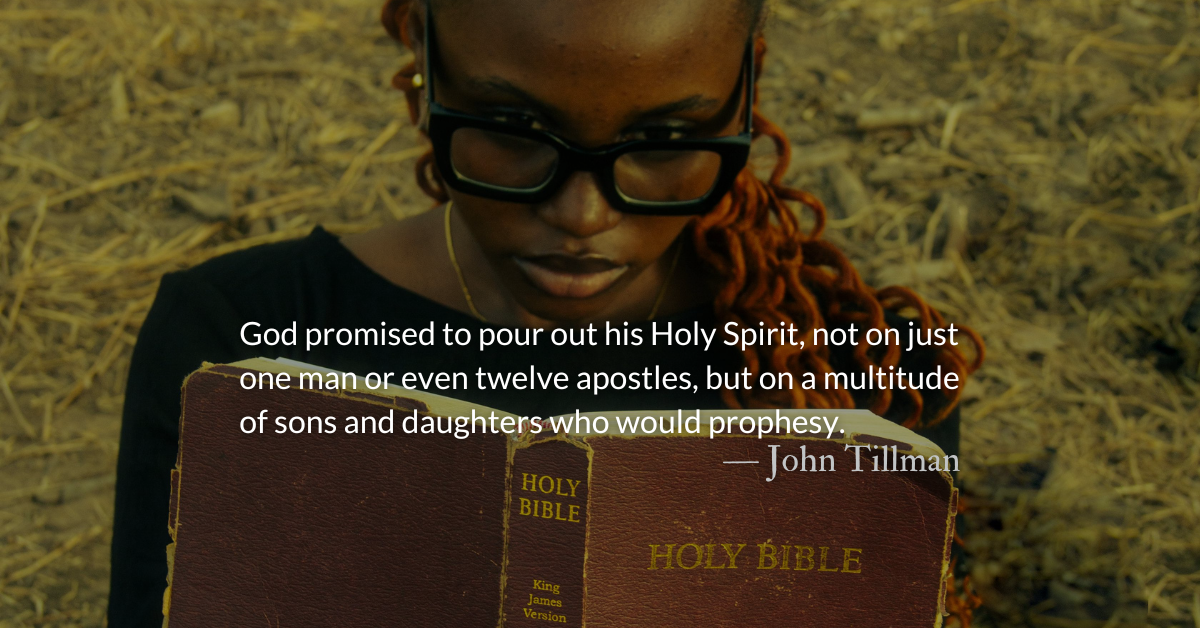
God promised on Malachi’s final page that it would not be the last page of prophecy to his people. God promised to break the silence. Jesus said John the Baptizer was, if we will accept it, the “Elijah” that Malachi promised (Luke 1.17; Matthew 11.14; 17:12). But John didn’t end the silence alone. Through Joel, God promised to pour out his Holy Spirit, not on just one man or even twelve apostles, but on a multitude of sons and daughters who would prophesy (Acts 2.16-21; Joel 2.28-32).

All God’s children are part of breaking the silence.

Are you fulfilling the promises God made through Malachi and Joel? Are you fulfilling the promises made through John the Baptizer and Jesus? Are you participating in God’s promise to break the silence?

Here’s some quick guidance as to how.

Devote yourself to prayer and God’s word. (Acts 2.42-47) Eat this book. (Eze 3.1-4; Rev 10.8-9) Open your mouth. God will fill it. (Psalm 81.10; Eze 2.7-10) Open your mind. God will transform it. (Rom 12.2;  1 Cor 2.13-16; 2 Cor 3.18)

Adjust your life to scripture, not scripture to your life. Trim your life like the wick of a lamp, (Luke 12.35; Matt 25.7-9) then watch the Holy Spirit ignite it, shining the light of truth and salvation.

Break the silence.

Divine Hours Prayer: A Reading

The Song of Zechariah

Blessed be the Lord, the God of Israel; for he has visited his people, he has set them free, and he has established for us a saving power in the house of his servant David, just as he proclaimed by the mouth of his holy prophets from ancient times, that he would save us from our enemies, and from the hands of all those who hate us, and show faithful love to our ancestors and so keep in mind his holy covenant. This was the oath he swore to our father Abraham, that he would grant us, free from fear, to be delivered from the hands of our enemies, to serve him in holiness and uprightness in his presence all our days. And you, little child, you shall be called the prophet of the Most High, for you will go before the Lord to prepare a way for him, to give his people knowledge of salvation through the forgiveness of their sins, because of the faithful love of our God in which the rising Sun has come from on high to visit us, to give light to those who live in darkness and the shadow dark as death, and to guide our feet into the way of peace. — Luke 1:68-79

– From The Divine Hours: Prayers for Summertime by Phyllis Tickle.

Read more: Destiny of Grass vs Cedars 

There are purposes for the flourishing of the wicked and one of them is that one day the world will see them fall.

Consider Supporting Our Work

Our work needs more support from people just like you. Please consider becoming a donor to support our ad-free biblical content.

The “Last Words” of a Testament

Scripture Focus: Malachi 4.4-6
4 “Remember the law of my servant Moses, the decrees and laws I gave him at Horeb for all Israel.
5 “See, I will send the prophet Elijah to you before that great and dreadful day of the Lord comes. 6 He will turn the hearts of the parents to their children, and the hearts of the children to their parents; or else I will come and strike the land with total destruction.”

2 Chronicles 36.23
23 “This is what Cyrus king of Persia says:
“‘The Lord, the God of heaven, has given me all the kingdoms of the earth and he has appointed me to build a temple for him at Jerusalem in Judah. Any of his people among you may go up, and may the Lord their God be with them.’”

Reflection: The “Last Words” of a Testament
By Erin Newton

What do you say to a loved one when you know you won’t see them for a while? Do you warn them of impending dangers? Do you encourage them? Do you offer a bit of advice?

Malachi 4 closes the Old Testament, at least in the Protestant Bible. These verses mark the end of God’s revelation through the prophets and open the period of “silence.” The Hebrew Bible, arranged differently, ends with 2 Chronicles. This variation of “last words” reveals God’s steadfast and unchanging nature.

2 Chronicles 36 ends with Cyrus’s proclamation to restore the Jerusalem temple. The final words are a promise—“May the Lord their God be with them.” God with us—Immanuel. Although the Hebrew Bible ends with this promise and does not continue with the testimony of that same Immanuel, God has always promised to be with his people.

The “last words” of Malachi 4 are an encouragement, a warning, and an instruction.

The instruction: “Remember the law of Moses.” A reminder not to neglect the word of God. For centuries, the people had warped the message of God using divine words for personal benefit. It is a call to be more than familiar with the words on the page—to remember the words is to judge and apply them rightly.

The warning: “I will send the prophet Elijah to you before that great and dreadful day.” The days ahead, though the sun rises with healing (v. 2), are marked for judgment. These “last words” herald a time when all spiritual procrastination will meet a deadline. The coming day would draw a line between apathetic and repentant hearts.

The encouragement: “He will turn the hearts of the parents to their children, and the hearts of the children to their parents.” The last words are words of peace. Formerly one family, the people of Judah, were torn apart by exile but reunited a century later. The returning people and those who remained in the last were at odds with one another (read Ezra and Nehemiah). God promises to reconcile the family of God.

God’s “last words” are true for us today. We must remember his word and turn our hearts to peace and repentance. The promised Elijah has come, and the peace has been set in motion by Christ. Why do we continue to sow animosity in the family of God? Let us take heed to remember these “last words.”


Divine Hours Prayer: A Reading
Jesus taught us, saying: “Whoever holds to my commandments and keeps them is the one who loves me; and whoever loves me will be loved by my Father, and I shall love him and reveal myself to him.” — John 14.21


– From The Divine Hours: Prayers for Summertime by Phyllis Tickle.


​Today’s Readings
Malachi 4 (Listen 1:06)
Psalm 92-93 (Listen 2:09)

Read more about Destiny of Grass vs Cedars
The writer sees through the illusion that worldly power and success indicate heavenly endorsement. So should we.

Apply or tell a student!
One spot left! (and overflow available) #StudentWritersMonth orientation begins this weekend! #FreeCoaching, seminars by special guests, published work, and a scholarship/stipend.

Beyond Secular Santa—Epiphany

Last Day to Donate in 2020: Time never runs out to donate to our ministry and we will be as blessed to receive your donations on January 1st as in December, but for 2020 tax purposes, time IS running out to make donations for this year. Follow the link to our support page to find information about donations and our donation link. 

You can also follow this link to write a thank you note to our donors who make it possible for us to continue this ministry. If our ministry is important to you or to your church, but you can’t support us financially, thanking our donors is a great way to show your gratitude as well as participate in our community and help us out.

Merry Christmas and Happy New Year!

Peace,
John

Scripture Focus: Malachi 4.1-3
1 “Surely the day is coming; it will burn like a furnace. All the arrogant and every evildoer will be stubble, and the day that is coming will set them on fire,” says the Lord Almighty. “Not a root or a branch will be left to them. 2 But for you who revere my name, the sun of righteousness will rise with healing in its rays. And you will go out and frolic like well-fed calves. 3 Then you will trample on the wicked; they will be ashes under the soles of your feet on the day when I act,” says the Lord Almighty. 

John 21.17-19
17 The third time he said to him, “Simon son of John, do you love me?” 

Peter was hurt because Jesus asked him the third time, “Do you love me?” He said, “Lord, you know all things; you know that I love you.” 

Jesus said, “Feed my sheep. 18 Very truly I tell you, when you were younger you dressed yourself and went where you wanted; but when you are old you will stretch out your hands, and someone else will dress you and lead you where you do not want to go.” 19 Jesus said this to indicate the kind of death by which Peter would glorify God. Then he said to him, “Follow me!” 

Reflection: Beyond Secular Santa—Epiphany
By John Tillman

Secular Santa is just the kind of god some people want. 

Santa talks a big game about rewarding the good and punishing the bad, but in the end no one ever gets coal. He’s kindly and jolly and sweet but ultimately meaningless because he never truly stands against evil. That’s fine if the worst “evil” you’ve experienced is pestering from your siblings in a happy suburban home. But for those who have experienced true evil, a winking, smiling expression of justice that never punishes anyone is unsatisfying.

Santa (as typically defined in westernized culture) is really just a god of self-gratification through whom we expect to have our desires and wants fulfilled by magic that comes without a price. Santa is the prosperity gospel version of Jesus. Be good and be blessed. Name it and claim it.

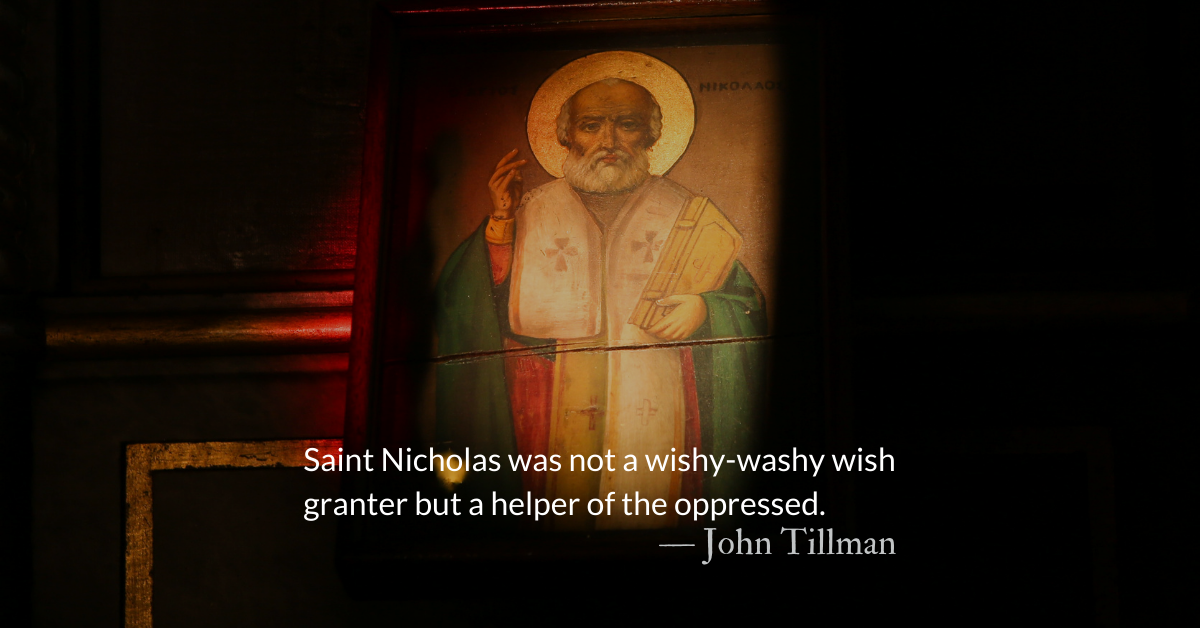
In Santa’s defense, even he has been dumbed down. Saint Nicholas was not a wishy-washy wish granter but a helper of the oppressed. He used wealth to free the enslaved and impoverished not to pile up possessions for the already rich. He is also remembered humorously for “punching heretics” after losing his temper and slapping Arius at the council of Nicea

Even “Santa” has deeper meaning for the mature. The point of “Santa” becomes not to get gifts but to give them. We become like Santa, a giver of gifts to others. When practiced properly, even secular Santa traditions point us to Christ, sanctification, and discipleship.

As much as we may desire trinkets and toys from a magical gift-giver, what we all truly desire at heart is justice. Our sin-sick souls echo the sighs of the earth, seeking restoration and release from the curse of Adam. That day is coming, Malachi assures us. The “sun of righteousness will rise” and evil will be crushed and burned. Jesus is coming to town. On that day, we’ll frolic and play in ways no scene of Christmas morning can compare to. 

In the meantime, we wait and work. Like Peter, we are called to maturity, to transition from a recipient of grace to a granter of it. For mature believers, we are to feed his sheep rather than ourselves. We are called to follow Jesus in every way possible. We must take up our cross rather than lay burdens on others. We must stretch out our hands to work and establish justice or die trying.

Divine Hours Prayer: A Reading
And now I saw heaven open, and a white horse appear; its rider was called Trustworthy and True; in uprightness he judges and makes war. His eyes were flames of fire, and he was crowned with many coronets; the name written on him was known only to himself, his cloak was soaked in blood. He is known by the name, the Word of God. Behind him, dressed in linen of dazzling white, rode the armies of heaven on white horses. From his mouth came a sharp sword with which to strike at unbelievers; he is the one who will rule them with an iron scepter, and tread out the wine of the Almighty’s fierce retribution. On his cloak and on his thigh a name was written: King of kings and Lord of lords. — Revelation 19.11-16

– Divine Hours prayers from The Divine Hours: Prayers for Autumn and Wintertime by Phyllis Tickle

Today’s Readings
Malachi 4 (Listen -1:06) 
John 21 (Listen – 3:58)

New Year’s Day Readings
Genesis 1 (Listen -4:55) 
Matthew 1 (Listen – 3:29)

Weekend’s Readings
Genesis 2 (Listen -3:42) Matthew 2 (Listen – 3:18)
Genesis 3 (Listen -4:14) Matthew 3 (Listen – 2:17)

Read more about End of Year Giving and Supporting our work
Today is the last day to give this year! Don’t miss your chance in 2020 to support our 2021 content with a one-time or recurring gift.

Read more about Christmas is Upside Down :: Epiphany
Christ’s declaration in Nazareth must echo through each of us. The Spirit of the Lord that was upon him, longs to manifest himself in us.

Recalling the Failures

John 21.17-19
He said to him, “Simon son of John, do you love me?”
Peter was hurt because Jesus asked him the third time, “Do you love me?” He said, “Lord, you know all things; you know that I love you.”
Jesus said, “Feed my sheep….Then he said to him, “Follow me!”

Reflection: Recalling the Failures
By John Tillman

There are many meanings of the word recall.

Industries recall products that are flawed, defective, or dangerous. Employees and representatives can be recalled from their positions when they have an embarrassing failure.

At this reflective time of year we, individually and collectively, recall both good memories and bad. We tend to focus on the bad.

Christ sees more failure in us than even we know, yet he re-calls us—he calls us to himself again, and again, and again. Christ re-calls the failures.

It is not just Peter who is reinstated in the last chapter of John’s gospel and our last reading of this year. Other disciples who failed famously are there—Thomas who doubted, Nathanael the cynical elitist, the power-hungry sons of Zebedee. These confused and doubtful disciples are going back to the familiar when they are met by a familiar face on the shore.

Once in a parable, Jesus said, “they will not be convinced even if someone rises from the dead,” and he meant it. One thing that rings so true about the gospel accounts is that the disciples are slow to believe and understand what has happened, even after seeing Jesus alive.

The resurrected Jesus is patient with them, staying around, appearing to the disciples over and over. He slowly and lovingly works to overcome their doubts and fears and reissue his call on their lives. And he is lovingly patient with us as well.

Christ’s message of reinstatement is for all of us. He doesn’t see our failures as the world sees them.

The world calls us a bad debt. Jesus redemptively reinvests in us.
The world sees us as the sum of our shortcomings. Jesus adds himself to our equation and calls us to our eternal future.
The world wants to put us back in our place after failure. Jesus comes to us with a second (third, fourth, fifth…) calling.
The world wants us to compare our calling to others. Jesus rejects comparisons and personally invites us to a unique path.

The failures of the past year, or any year, are not our end, but our beginning. Jesus brings hope to our aftermath. Hope amidst our confusion. Jesus speaks calm and welcoming words to the anger prone. He feeds the weary and hungry. He comforts the hurting and troubled. He washes away the doubts of the disbelieving.

Jesus has a following—a following of failures. Join us, won’t you?

*When looking back at your year, do so with insight into your failures from the Holy Spirit, but also with his redemptive grace and love. The Prayer of Examen is a wonderful tool of reflective prayer. We recommend it daily or weekly. But the practice can be adapted to review this year in the light of God’s grace. For more information about the prayer, follow this link. Take your time in an examen prayer, especially when reviewing a long period. Set aside time this evening or tomorrow to spend in this practice.

Prayer: The Greeting
Happy are they whom you choose and draw to your courts to dwell there! They will be satisfied by the beauty of your house, by the holiness of your temple. — Psalm 65:4

– Prayer from The Divine Hours: Prayers for Autumn and Wintertime by Phyllis Tickle.

Prayers from The Divine Hours available online and in print.

Today’s Readings
Malachi 4 (Listen – 1:06)
John 21 (Listen – 3:58)

Tomorrow’s Readings (Happy New Year!)
Genesis 1 (Listen – 4:55)
Matthew 1 (Listen – 3:29)

Additional Reading
Read More about Prayer for Busy People
Central to the practice of healthy, gospel-centered prayer is the awareness of God’s presence in and around our lives. The Prayer of Examen, was designed to be prayed even when the necessities of life made other forms of prayer impossible.

Read More about The Beautiful Feet of Lepers
This is the gospel—that terrorists can be healed and saved and the rejects of society can bring the news of salvation and the testimony of victory unimaginable to their city.

How far will you travel in God’s Word this year?
On January 1st we restart our two year Bible reading plan in Genesis and the Gospel of Matthew. Join us on the journey. We read the Old Testament over two years and the New Testament and Psalms each year.

Read with us at a sustainable pace. Subscribe and invite friends to join you using this link.

Where will a journey through the Bible take your faith in the coming year? Jesus calls each of us, saying, “Follow me.”

Support our Work
End of Year giving and monthly giving each play a large part in keeping The Park Forum ad-free and helping us to be able to continue producing fresh content.
Support the spiritual development of thousands of readers, feeding Christ’s sheep across the world, by making a donation today or joining our monthly donors.

Show Buttons
Hide Buttons
Spur a spiritual rhythm of refreshment right in your inbox
By joining this email list you are giving us permission to send you devotional emails each weekday and to communicate occasionally regarding other aspects of the ministry.
100% Privacy. We don't spam.