Firefall of the Spirit

Scripture Focus: Acts 2:1-4
1 When the day of Pentecost came, they were all together in one place. 2 Suddenly a sound like the blowing of a violent wind came from heaven and filled the whole house where they were sitting. 3 They saw what seemed to be tongues of fire that separated and came to rest on each of them. 4 All of them were filled with the Holy Spirit and began to speak in other tongues as the Spirit enabled them.

Reflection: Firefall of the Spirit
By Jilian Brown

In the ten days following the ascension, Jesus’ disciples clung to His promise, “I am going to send you what my Father has promised; but stay in the city until you have been clothed with power from on high.” (Luke 24.49) What sort of power? Would it be physical power or characterized by an inner knowing? Surely the disciples could not guess what form their “clothing” would take.Pentecost, or the Feast of Weeks, was the grain festival fifty days after Passover. (Leviticus 23.15) Due to its late spring date, this festival was often the most heavily attended by Jewish foreigners due to favorable weather and travel conditions. This was an optimal time for the message of Christ to go forth to many nations. The tongues of fire which swept through the upper room and landed on each person present were reminiscent of the guiding presence of God in the burning bush with Moses and the pillar of fire for the wandering Israelites. It was unmistakable that these flames were His spirit falling.

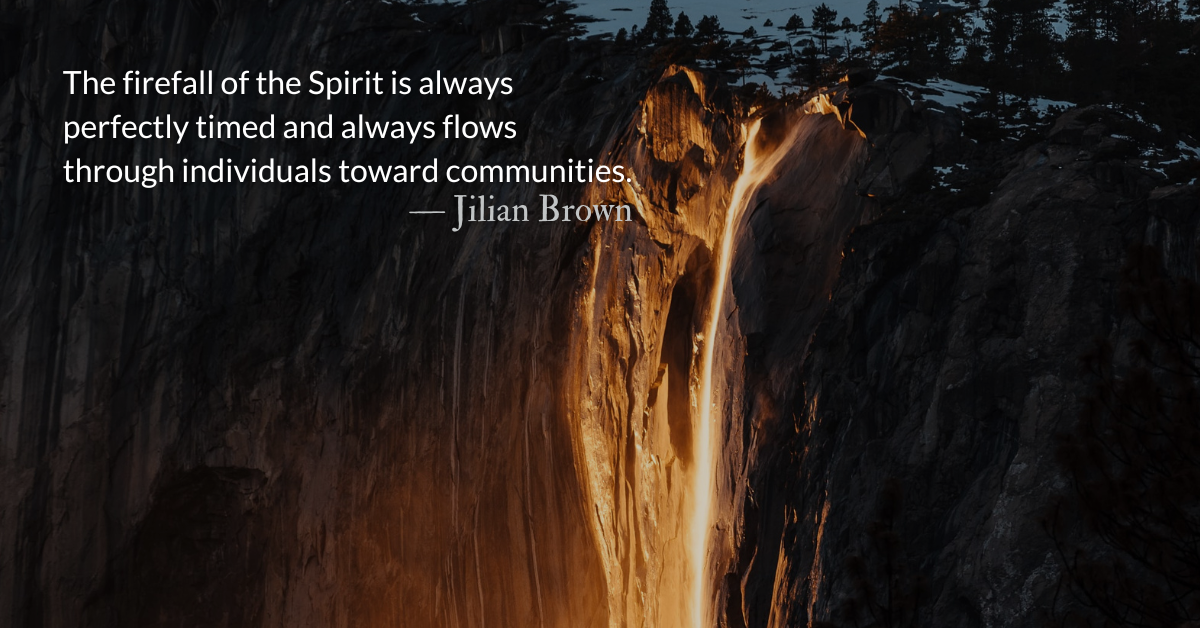
In Yosemite National Park, there is a phenomenon called “Firefall.” It only takes place around the second week of February and only if conditions are perfect. If winter snowfall was adequate that year and the temperature is warm enough to melt the snow, the runoff at Horsetail Fall is hit by sunset light to create the miraculous illusion of a fire waterfall. 

The conditions were not only perfect, but pre-ordained that Pentecost day. The harvest of souls was ready and the gift of the indwelling Holy Spirit upon the disciples sparked the birth of Christ’s church. The three thousand added that day were able to take the saving message of Christ back to their corners of the world where His grace was able to pour forth on the nations just as Joel prophesied. (v.17-21)

The firefall of the Spirit is always perfectly timed and always flows through individuals toward communities. The gifts of the indwelling Holy Spirit are available to all who will “repent and be baptized.” (v.38) Our fire may take the shape of a hand of service or a dollar sign of generosity instead of a tongue of language, but every gift is given for the purpose of building up the church. (Ephesians 4.11-16) What is your firefall? To whom is it flowing? It is meant to be shared.

Divine Hours Prayer: The Call to Prayer
Bless God in the congregation; bless the Lord, you that are of the fountain of Israel. — Psalm 68.26


Today’s Readings

Isaiah 44 (Listen – 5:12)
Acts 2 (Listen – 6:35)

This Weekend’s Readings
Isaiah 45 (Listen – 4:39)Acts 3 (Listen – 3:33)
Isaiah 46 (Listen – 2:12)Acts 4 (Listen – 5:15)

Read more about Too Much to Hold
“God raised him from the dead, freeing him from the agony of death, because it was impossible for death to keep its hold on him.”
Patience and Urgency

Scripture Focus: Acts 1.3-8
3 After his suffering, he presented himself to them and gave many convincing proofs that he was alive. He appeared to them over a period of forty days and spoke about the kingdom of God. 4 On one occasion, while he was eating with them, he gave them this command: “Do not leave Jerusalem, but wait for the gift my Father promised, which you have heard me speak about. 5 For John baptized with water, but in a few days you will be baptized with the Holy Spirit.”

6 Then they gathered around him and asked him, “Lord, are you at this time going to restore the kingdom to Israel?”

7 He said to them: “It is not for you to know the times or dates the Father has set by his own authority. 8 But you will receive power when the Holy Spirit comes on you; and you will be my witnesses in Jerusalem, and in all Judea and Samaria, and to the ends of the earth.”

From John: Student Writers month is here! Between today, July 15, and continuing through August 10th, you’ll be hearing from ministry students. These students have joined our program to receive free writing coaching, seminars by special guests, and the experience of working for a ministry client. Not only will you be blessed by their writing, you have the opportunity to bless them. Approximately 90% of donations to The Park Forum during this time will be directed to scholarships/stipends for these talented students. Give during this time to support our ministry and theirs.

Reflection: Patience and Urgency
By Savannah Green

The Holy Spirit. A member of the Trinity, a gift to believers, and yet often a mystery. We hear the phrases, “The Spirit told me…” and “Where is the Spirit leading us?” in Christian communities. But what do we mean when we say this? Do we know what we are saying? Do we know the power of the Spirit working inside of us?

Acts 1:3-8 takes place between the resurrection and ascension of Christ. Jesus, we see in verse 3, appeared many times to the disciples over a span of 40 days. When Jesus was with the disciples, there was one thing he spoke of often: the kingdom of God. 

In verses 4-5, Jesus tells the disciples to wait for the Holy Spirit. They must remain in Jerusalem until they are baptized with the Spirit. When the disciples expected commands of action for the kingdom of God, Jesus commanded them to wait.

The disciples were in waiting. They were in anticipation. They hoped for restoration of the earthly kingdom of Israel, but Jesus spoke of something else. He spoke of a spiritual restoration of the kingdom where God reigns over the hearts of women and men. Spiritual restoration requires the Holy Spirit, the main character in Acts. Throughout this book, we see how the Spirit transforms the disciples’ perspective of the kingdom of God. Jesus redirects the disciples’ away from earthly power. Now, the disciples wait for the Holy Spirit, anticipating a spiritual kingdom. 

But why wait? Perhaps the disciples wondered why they must wait to begin proclaiming the kingdom. Isn’t this good news worth sharing now with urgency?

Urgency needs guidance and power. “But you will receive power when the Holy Spirit comes upon you…” The Holy Spirit empowers kingdom proclamation and service. The gospel is worth sharing now with urgency, The Spirit fuels the urgency to witness to others. 

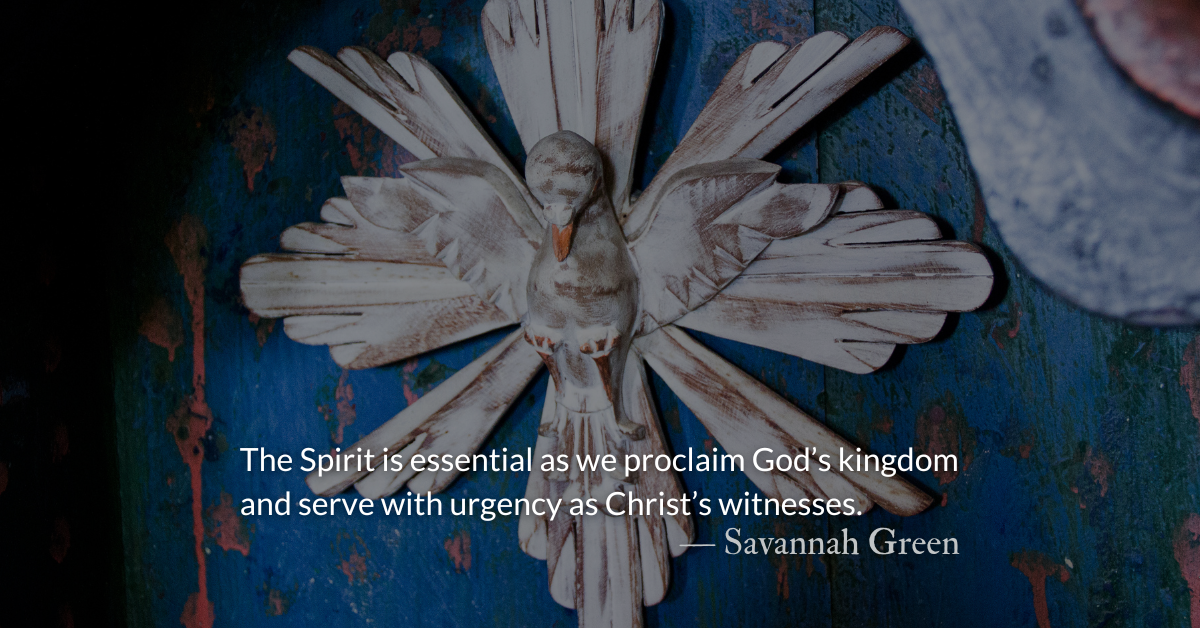
We can hear the command “you will be my witnesses” just as the disciples did. Letting the Spirit shape our lives testifies to God’s reign over our hearts. This is not something we can do on our own. Jesus’ command to wait reveals the necessity of the Spirit. The Spirit is essential as we proclaim God’s kingdom and serve with urgency as Christ’s witnesses.

Divine Hours Prayer: A Reading
Jesus taught us, saying: “I am the true vine, and my Father is the vinedresser. Every branch in me that bears no fruit he cuts away, and every branch that does bear fruit he prunes to make it bear even more. You are pruned already, by means of the word that I have spoken to you.” — John 15.1-3

Today’s Readings
Isaiah 43 (Listen – 4:06)
Acts 1 (Listen – 3:58)

Read more about Fruitful in Suffering
We can be fruitful in the land of our suffering, not by our own cleverness, craft, or scheming, but by the Holy Spirit.

Separateness Not Superiority

Scripture Focus: Leviticus 11.47
47 You must distinguish between the unclean and the clean,

Acts 10.15
15 The voice spoke to him a second time, “Do not call anything impure that God has made clean.” 

Reflection: Separateness Not Superiority
By John Tillman

The Israelites were charged with making distinctions between holy things and unholy things. One of the ways this was carried out was in dietary laws.

To modern sensibilities the dietary laws seem strange and puzzling. (Pigs are unclean but crickets are on the menu?) These regulations may have been given, partly, for health reasons or may have had to do with the animals being used as sacrifices in the worship of other gods. The new nation needed defining cultural touchstones that would remind them of who, and whose, they were. The dietary laws were a part of building this culture. 

God’s regulations often include practical concerns not just spiritual concerns. However, the practical “why” is always less important than the spiritual act of obedience. Obeying the command to “be holy” is what makes us able to be a light to the world. No holiness, no light. However, over time, the idea of being separate engendered a sense of superiority.

Throughout the Old Testament law we see the principle that uncleanness transfers by touch from one thing or person to another. In Jesus, the disciples saw a new thing. Jesus touched the unclean and made them clean. (Matthew 8.2-4) Jesus touched lepers, Samaritans, the demon possessed, and even the dead. The unholy became holy. The dead became alive. Rather than them making him unclean, he made them clean. Like the coal taken from the altar that cleansed Isaiah’s unclean lips, Jesus cleansed what was unclean. (Isaiah 6.7)

Today we, like the Israelites, are charged with keeping ourselves holy. (Matthew 5.48; 1 Peter 1.15) There are sensible and practical ways that we can separate ourselves from the cultural flow of unclean philosophies, practices, or theology. But we must not allow our separateness to breed superiority. Believing God about what is unclean, means believing him about what is clean and about what may be made clean.

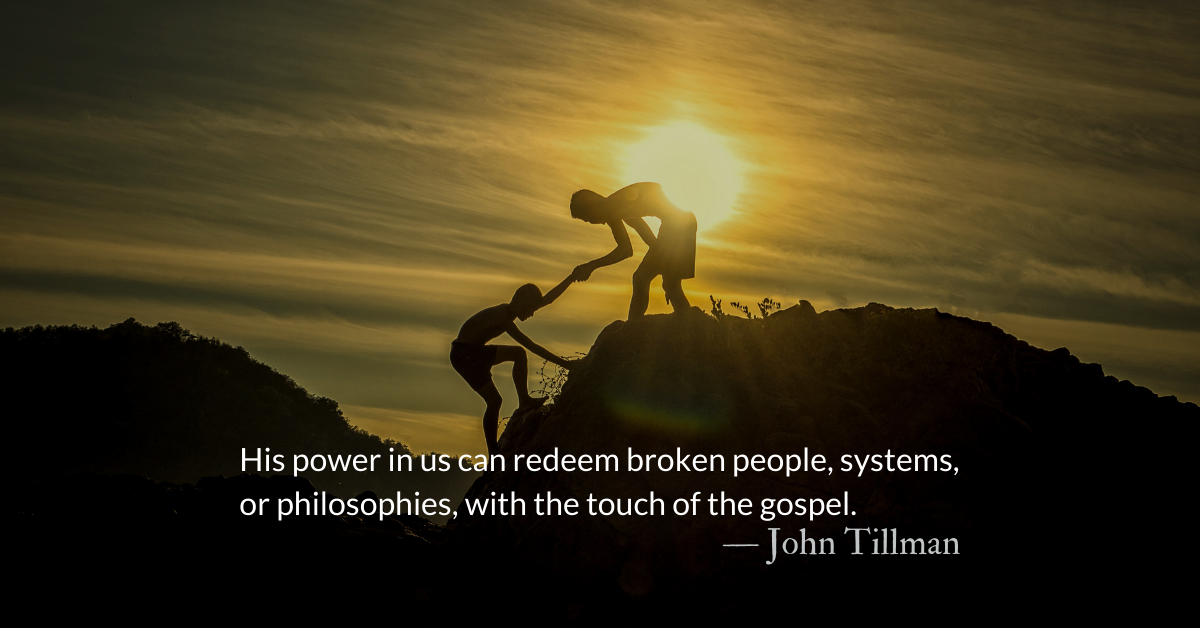
The Spirit of Christ is within us and we are his body. We have Christ’s power to touch the unclean and make them clean. His power in us can redeem broken people, systems, or philosophies, with the touch of the gospel. 

God shows no favoritism but instead accepts those who acknowledge him and do what is right. Like Peter, if we open our eyes, we may find many things and people around us that seem unclean that God desires us to touch and make clean.

Divine Hours Prayer: The Refrain for the Morning Lessons
Truly, his salvation is very near to those who fear him, that his glory may dwell in our land. — Psalm 85.9

– Divine Hours prayers from The Divine Hours: Prayers for Springtime by Phyllis Tickle

Today’s Readings
Leviticus 11-12 (Listen – 7:20)
Psalms 13-14 (Listen – 1:43)

Read more about Much Demanded
God judges those with little lightly and those with much heavily. This should be sobering to us who are greatly privileged.

Read more about Unprecedented
They have taken for granted the immense privilege and wealth they have as people chosen by God.

Unprecedented Spirit

Scripture Focus: Joel 2.32
And everyone who calls 
on the name of the LORD will be saved; 
for on Mount Zion and in Jerusalem 
there will be deliverance, 
as the LORD has said, 
even among the survivors 
whom the LORD calls. 

Psalm 142.5
5 I cry to you, LORD; 
I say, “You are my refuge, 
my portion in the land of the living.” 

Acts 2.39
39 The promise is for you and your children and for all who are far off—for all whom the Lord our God will call.”

Reflection: Unprecedented Spirit
By John Tillman

When joyous prophets pour into the streets, people want to know why. This is especially true if this joy comes at a time of suffering, a time of oppression, and a time of sadness.
 
This was the situation in Jerusalem when the Holy Spirit directed Peter to Joel to describe the experience of being filled with the Spirit of God and explain why men and women, sons and daughters, were prophesying in the streets. (Acts 2.2-21

Peter’s audience would have also been familiar with the locust images in Joel’s description of the Babylonian invasion. The Roman legions Peter’s contemporaries were familiar with would, perhaps be an even better visual match than the Babylonians had been for Joel’s images of locusts marching in perfect rows of chitinous, armored doom.

Joel’s prophecy was multilayered in meaning. It referred to the near future of the Babylonian invasion. It also foresaw the far future in which the Lord’s armies will destroy evil, dispelling and disposing of the armies of the opposing empires of this world. Afterward, God will cause growth and abundance to replace barrenness and want.  

God himself will repay the suffering caused by evil upon the earth. The explanation for the significance of this prophecy’s fulfillment is also a part of Peter’s Pentecost sermon. God’s victory over evil, his repayment for loss, and the coming of the Holy Spirit to all who call upon him are all direct outcomes of the death and resurrection of Jesus. 

The very Spirit promised in Joel and poured out in Acts is a deposit, a guarantee, of the inheritance God has for each of us in Christ. (2 Corinthians 1.22; 5.5; Ephesians 1.13-14)

No matter the disaster that seems to surround us or is on its way, there is time to turn to the Lord. There is a time when he will relent. There is always a time when the Lord will relent.

But relenting only comes after repenting. No matter what we have done in the past, up to and including murdering his only son, we can repent and return to God. And the time for repentance is now. It is always now. 

The pouring out of God’s Spirit comes after repentance. It always comes after repentance.

May that day be soon.

And everyone who calls on the name of the LORD will be saved… — Joel 2.32

Divine Hours Prayer: A Reading
Jesus taught us, saying: “Remain in me, as I in you. As a branch cannot bear fruit all by itself, unless it remains part of the vine, neither can you unless you remain in me. I am the vine, you are the branches.” — John 15.4-5

– Divine Hours prayers from The Divine Hours: Prayers for Autumn and Wintertime by Phyllis Tickle

Today’s Readings
Joel 2 (Listen – 5:26)
Psalm 142 (Listen – 1:01)

Read more Rend Your Hearts
God will replace what is lost—including replacing our hearts of stone with the pierced-heart of Jesus.

Read more about The Radical Procedure of the Gospel
It’s lovely to think of God giving us a new heart and putting a new Spirit within us. But it is terrifying to admit to the diagnoses that would lead to such a radical procedure.

Doing Unassailable Good

Scripture Focus: Titus 3.1-2
Remind the people to be subject to rulers and authorities, to be obedient, to be ready to do whatever is good, to slander no one, to be peaceable and considerate, and always to be gentle toward everyone.

Acts 4.16, 21
“What are we going to do with these men?” they asked. “Everyone living in Jerusalem knows they have performed a notable sign, and we cannot deny it…They could not decide how to punish them, because all the people were praising God for what had happened.

Reflection: Doing Unassailable Good
By John Tillman

In Titus chapter 2 Paul said to “show integrity, seriousness and soundness of speech that cannot be condemned, so that those who oppose you may be ashamed because they have nothing bad to say about us.” And today, in Titus 3.2, he implores us to, “slander no one, to be peaceable and considerate, and always to be gentle toward everyone.”

In today’s climate of tweetstorms, rants, fake news, and the never-ending escalation of meaningless arguments, it may seem impossible to take Paul’s words to heart. Is it really possible to live in such a way that our critics would have nothing to say? That they would be ashamed to have accused us? 

Can we really be expected not to counter-attack those who attack us with falsehoods? Rather than turning the other cheek, we prefer that if they slander us in the left-wing news, we must slander them in the right-wing news. And vice-versa.

Living in our current culture of social media outrage (and the monetization of that outrage by social media companies) we tend to answer Paul by saying, “Sorry, Paul. That’s not possible or practical.” And it may not be possible. Not without a miracle, anyway.

In Acts chapter 4, we read of Peter and John before the Sanhedrin after performing a miraculous healing. Despite the fact that Peter and John proclaimed a resurrection that the Sanhedrin was paying bribes to cover up, they could not ignore the goodness of what Peter and John had done.

We cannot, without compromising the gospel, please everyone. This is demonstrated by the suffering and death that Peter and John eventually experience. But when the church acts in incontrovertibly beneficial ways on behalf of the community, those who oppose us will confess the goodness of our works, even if they deny the goodness of our gospel.

Christians need to repent from seeking to speak stridently enough to destroy our enemies. Instead, we need to seek to act miraculously, benefiting our communities, living out Christ’s model of servanthood, and enacting his resurrection before the world.

Peter and John were drawn to their miracle on their way to afternoon prayer. Perhaps one reason we do so few miracles in our world is that we are so seldom “on our way” to prayer as Peter and John were. 

In your prayer life today, what miraculous, unassailable good will the Holy Spirit draw you to enact?

Divine Hours Prayer: The Greeting
O God, you know my foolishness, and my faults are not hidden from you. — Psalm 69.6

– Divine Hours prayers from The Divine Hours: Prayers for Springtime by Phyllis Tickle.Today’s Readings
Ecclesiastes 11 (Listen – 2:33) 
Titus 3 (Listen -2:04)

This Weekend’s Readings
Ecclesiastes 12 (Listen – 2:38) Philemon (Listen -2:52)
Song of Songs 1 (Listen – 2:33) Hebrews 1 (Listen -2:15)

Read more about Choosing Gentleness Over Violence
We cannot continue posting and liking things that are resentful, quarrelsome, and the opposite of gentle, yet expect to represent Christ and the Gospel in the world.

Read more about Paul’s Stance on Gentleness
Ad-hominem attacks, meanness, violent language, and unkindness are not rhetorical tools that should be in the arsenal of Christians in the public square.


Show Buttons
Hide Buttons
Spur a spiritual rhythm of refreshment right in your inbox
By joining this email list you are giving us permission to send you devotional emails each weekday and to communicate occasionally regarding other aspects of the ministry.
100% Privacy. We don't spam.