The Long Journey to Maturity

Scripture: Hebrews 6.11-12
We want each of you to show this same diligence to the very end, so that what you hope for may be fully realized. We do not want you to become lazy, but to imitate those who through faith and patience inherit what has been promised.

Reflection: The Long Journey to Maturity
By Jon Polk

“Now I know my ABCs. Next time won’t you sing with me?”

Letters of the alphabet are the elementary building blocks of language. The learner must comprehend the sounds of letters before combining letters to make works, before combining words to make sentences, and so on.

Once the student has mastered a language, it would be foolish and useless to continue to rehearse the very basic ABCs.

Like language learning, there are no shortcuts to spiritual maturity, but how will we know when we have arrived? We must move past merely knowing the basic teachings about Christ’s life, death and resurrection and beyond simply acknowledging our need for faith and repentance.

To be sure, no one but our sinless high priest Jesus will ever be fully spiritually mature in this lifetime, but there are some indicators to help us know we are headed in the right direction.

As rain-soaked land is expected to produce a bountiful crop, the mature Christian should produce what Paul describes to the Galatians as the fruits of the spirit, i.e. God-honoring, selfless character traits. As land that produces thorns instead of crops is worthless, James declares that faith that does not produce actions is dead, useless.

Marks of spiritual maturity include character growing in likeness to God and actions that demonstrate our love for God and care for his people. In reality, we can never truly arrive; this is a never-ending process.

In his book, A Long Obedience in the Same Direction, Eugene Peterson describes discipleship—the process by which we mature spiritually—as a lifelong journey:

For recognizing and resisting the stream of the world’s ways there are two biblical designations for people of faith that seem useful: disciple and pilgrim. Disciple says we are people who spend our lives apprenticed to our master, Jesus Christ. Pilgrim tells us that we are people who spend our lives going someplace, going to God, and whose path for getting there is the way, Jesus Christ.

Indeed, the journey of spiritual maturity is a one-way trip. We are warned of the dangers of falling away after tasting the goodness of God. Our calling is to diligently work until the end of our lives, moving forward ever onwards towards maturity.

As the writer of the anonymous hymn succinctly stated, “I have decided to follow Jesus, no turning back, no turning back.”

Prayer: A Reading
Let all who seek you rejoice and be glad in your; let those who love your salvation say forever, “Great is the Lord!” — Psalm 70.4

– Prayer from The Divine Hours: Prayers for Springtime by Phyllis Tickle.

Full prayer available online and in print.

Today’s Readings
Song of Songs 6 (Listen – 1:48)
Hebrews 6 (Listen – 2:58)

Remember Jesus Christ

Scripture: 2 Timothy 2:8
Remember Jesus Christ, raised from the dead, descended from David. This is my gospel.

Reflection: Remember Jesus Christ
By Jon Polk

Instructions to remember are commonplace across the landscape of Scripture.

Remember the Sabbath day by keeping it holy. (Ex. 20:8)
Remember that you were slaves in Egypt and the Lord your God redeemed you. (Deut. 15:15)
These days should be remembered and observed in every generation. (Est. 9:28)
Remember the law of my servant Moses. (Mal. 4:4)
This is my body, which is for you; do this in remembrance of me. (1 Cor. 11:24)

Remembering in Scripture is often a calling to focus on God’s commands or to recall God’s intervention in history.

The apostle Paul in his role as mentor encourages his protégé, the young minister Timothy, that when doing the work of the gospel, we must “Remember Jesus Christ, raised from the dead, descended from David.” Paul also tells Timothy to “Keep reminding God’s people of these things.”

Why? Because apparently many in the church were arguing about unimportant matters.

The most commonly quoted verse from 2 Timothy 2, “Do your best to present yourself to God as a worker approved,” is nestled between injunctions to cease “quarreling about words” and to “avoid godless chatter.”

When public discourse becomes volatile and contentious, it is far too easy for us to become distracted by matters of lesser importance. To become God’s workers who “correctly handle the word of truth,” we must focus on remembering God’s faithfulness to us, particularly through the resurrected Christ. Remembering helps us to keep the main thing the main thing.

Remembering the good news of the risen Christ provides perspective for our lives.

Remembering the resurrection also recalls Christ’s suffering and reminds us that we may experience suffering, too.

Remembering the Messiah who was in the lineage of David encourages us that God can and will work through the frailness of our own humanity.

The call to remember Jesus Christ as our focus, our goal and our hope, is echoed by a phrase in the Barmen Declaration, written in 1934 by Karl Barth and the Confessing Church in response to powers seeking to use the church in service of the nation of Germany:

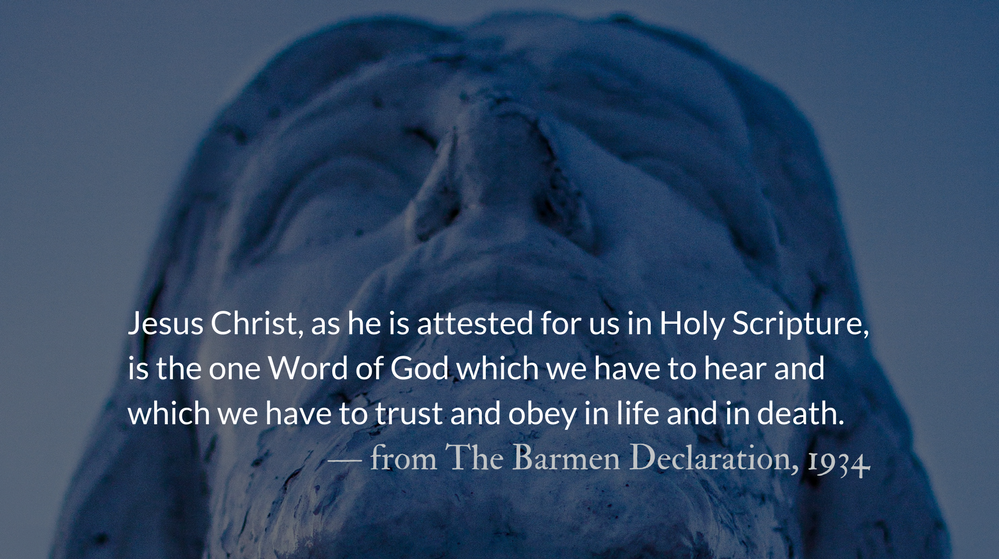
Jesus Christ, as he is attested for us in Holy Scripture, is the one Word of God which we have to hear and which we have to trust and obey in life and in death.

As the shadow of Easter Sunday begins to lengthen, let us diligently continue to remember.

Prayer: The Refrain for the Morning Lessons
My eyes are upon the faithful in the land, that they may dwell with me. — Psalm 101.6

– Prayer from The Divine Hours: Prayers for Springtime by Phyllis Tickle.

Full prayer available online and in print.

Today’s Readings
Ecclesiastes 6 (Listen – 1:44)
2 Timothy 2 (Listen – 3:17)

Crucified, By Nature

Scripture: 1 Corinthians 1:18, 23-24
For the message of the cross is foolishness to those who are perishing, but to us who are being saved it is the power of God. We preach Christ crucified: a stumbling block to Jews and foolishness to Gentiles, but to those whom God has called, both Jews and Greeks, Christ the power of God and the wisdom of God.

Reflection: Crucified, By Nature
By Jon Polk

Foolishness. That’s right, complete, utter foolishness. It is hard for us to grasp how foolish, offensive and shameful crucifixion was in the ancient world. The cross itself has become such a centerpiece in our churches, a sanitized symbol of our faith, that it is easy for us to forget what an unfathomable notion it would have been for Jesus to be crucified.

Crucifixion was regarded by Roman society as brutal, disgusting and abhorrent, reserved for convicted slaves, terrorists and egregious criminals. It could never be imposed on a Roman citizen, it was never used as punishment for more “respectable” crimes, and it was never mentioned in polite conversation because it was so offensive.

When we preach Christ crucified, we are not telling a story of how Christ died, but we tell the story of a crucified Christ, our Liberating King put to death as a criminal in the most disturbing way possible. To preach a crucified Christ is to proclaim a King whose very nature is wrapped up in sacrifice. Crucifixion is not simply something that happened to Jesus, it is a mark that describes his very character. Even in his resurrected and glorified body, Jesus still bears the marks of his crucifixion.

Some may ask why Jesus had to die. The answer is a clarification: Jesus did not have to die, he chose to die. Surely God could have chosen any number of ways to rescue and redeem humanity that did not involve the death of his Son. But he didn’t. He chose death. He chose self-sacrifice.

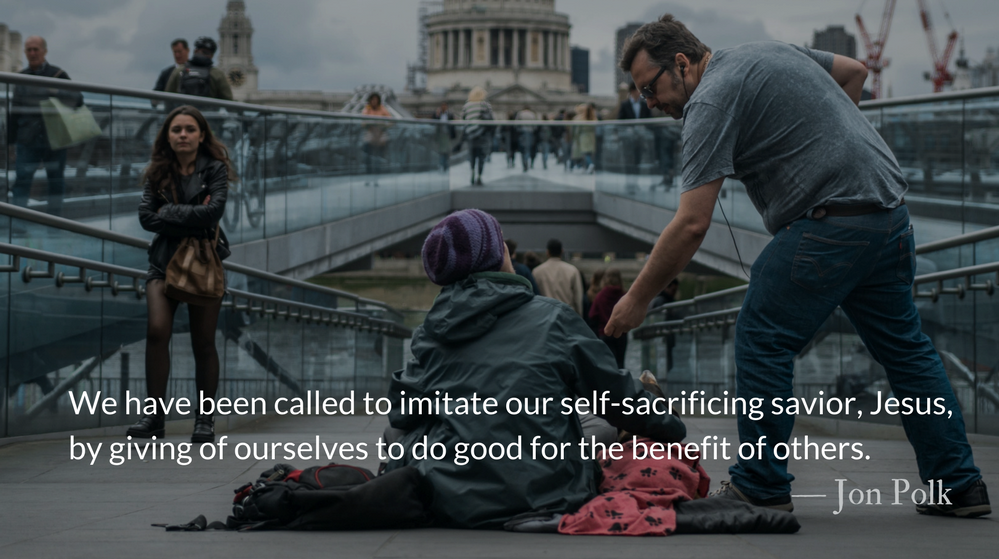
For Paul, Christ crucified is more than a means of salvation. It affects every aspect of the Christian life. If it is in God’s very nature to be self-sacrificial, and Jesus is our example of living life as God intended, then we must conclude that the Christian life is also in its very nature self-sacrificing.

Regarding this passage, Martin Luther writes:

For since, in the wisdom of God, the world did not know God through wisdom, it pleased God through the folly of what we preach to save those who believe. Now it is not sufficient for anyone, and it does him no good to recognize God in his glory and majesty, unless he recognizes him in the humility and shame of the cross. Thus God destroys the wisdom of the wise. For this reason true theology and recognition of God are in the crucified Christ.

Editor’s Note:
Across the world on this day, the church celebrates Ash Wednesday and begins the period of fasting and introspection called Lent. On this day many believers receive a cross, rubbed on the forehead using ashes from last year’s Palm Sunday. Upon receiving the cross, many are instructed to, “Repent, and believe in the Gospel”.

May each of us keep the offensive and brutal cross at the front of our minds, not only today but each day. May we be daily marked with the shame of Christ’s cross and the power of his Gospel.  —  John

The Refrain for the Morning Lessons
The same stone that the builders rejected has become the chief cornerstone. — Psalm 118.22

– From The Divine Hours: Prayers for Springtime by Phyllis Tickle.

Full prayer available online and in print.

Today’s Readings
Job 13 (Listen – 2:27)
1 Corinthians 1 (Listen – 4:03)

Forward-Looking Remembering

Scripture: Esther 9:20-22
Mordecai recorded these events, and he sent letters to all the Jews throughout the provinces of King Xerxes, near and far, to have them celebrate annually… the time when the Jews got relief from their enemies, and… when their sorrow was turned into joy and their mourning into a day of celebration. He wrote them to observe the days as days of feasting and joy and giving presents of food to one another and gifts to the poor.

Reflection: Forward-Looking Remembering
By Jon Polk

A visit to the National Mall in Washington, D.C. is a testament to the significant power of memory. In the heart of the United States’ capital are numerous monuments dedicated to the memory of great historical figures – Lincoln, Washington, King and others – and significant human sorrows – World War II, the Vietnam War, the Holocaust. Standing in front of the impressive white marble statue of the great American president Abraham Lincoln, one cannot help but be overwhelmed with a sense of history that goes far beyond the memory of personal life experiences.

Many of us have our own memorials in a prominent place in our home: the refrigerator door. There on that sleek magnetic surface, the faces of family and friends stare back at us from treasured moments that have come and gone. There, kindergarten artwork is treated like a rare, priceless Van Gogh. There we find notes and cards that remind us of the ones we love.

At the conclusion of the story of Esther, her uncle Mordecai instructs the Jews to annually celebrate by remembering the attempted genocide and their escape from it. This inaugurates the Jewish Festival of Purim, a memorial of the time when sorrow turned to joy and mourning to celebration.

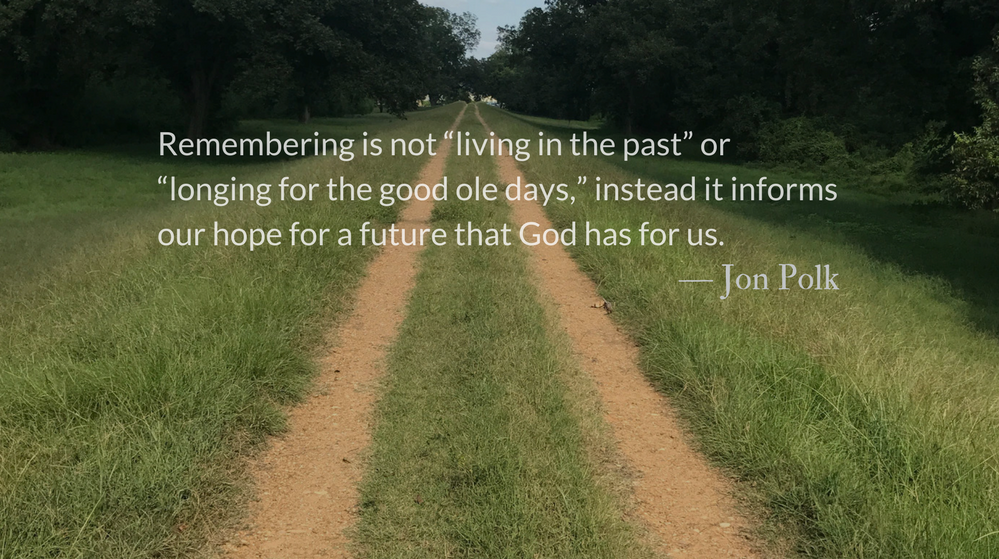
Remembering is not “living in the past” or “longing for the good ole days,” instead it informs our hope for a future that God has for us. At Purim, the Jews were to look back to the story of Esther and their deliverance in order to look forward to find a hope for their future. This remembering caused them to not only feast and celebrate, but also to give gifts to the poor. Memory of God’s favor on us should compel us to share that same grace with others.

It is often noted that Esther is the one book in the Bible where God is not specifically mentioned. Reading the story with the benefit of hindsight reveals that God was indeed present and working behind the scenes.

We would be wise to regularly recall God’s intervention and provision in our own lives, giving thanks and praise for how God has delivered us and cared for us, especially in those times when we may have not been able to immediately recognize his presence.

What spiritual memories are we hanging on the refrigerator doors of our hearts that we look to regularly for hope and to say, “Thanks be to God”?

The Greeting
Your testimonies are very sure, and holiness adorns your house, O Lord, forever and for evermore. — Psalm 62.6

– From The Divine Hours: Prayers for Autumn and Wintertime by Phyllis Tickle.

Full prayer available online and in print.

Today’s Readings
Esther 9 (Listen – 5:34)
Romans 4 (Listen – 4:08)

Detoured by the Holy Spirit

Scripture: Acts 16.6-7
Paul and his companions traveled throughout the region of Phrygia and Galatia, having been kept by the Holy Spirit from preaching the word in the province of Asia. When they came to the border of Mysia, they tried to enter Bithynia, but the Spirit of Jesus would not allow them to.

Reflection: Detoured by the Holy Spirit
By Jon Polk

Paul, Silas and Timothy intended to go and spread the message of Christ in some very major and influential cities in Asia Minor, cities that had access to roads and commerce which would help the gospel message spread. While this certainly sounds like a smart idea, God had other plans for them in Macedonia. God often changes the plans of even those with the best intentions.

Scottish pioneer medical missionary and explorer David Livingstone had hoped to travel to China as a missionary, but the Opium Wars kept him from going. He later met a missionary on leave from South Africa who convinced him to go there instead. It was there that Livingstone laid the groundwork for several major European missionary efforts to Africa.

Adoniram Judson, one of the first American missionaries to travel overseas, initially began his work in India, but along with many others, he was ordered out of the country by the British East India Company. He then moved to Burma, where he started a number of churches and translated the Bible into Burmese.

The legendary William Carey, called the “father of modern missions,” wanted to go to the Polynesian Islands, but God had directed another missionary there, so William Carey ended up in India instead. While there, he helped form the Baptist Missionary Society, one of the first major modern mission sending organizations.

Sometimes we like to think we have everything in our life so planned out that all we need to do is pray to God and ask him to bless our plans. We expect everything to unfold exactly as we’ve scripted it, but in reality that is almost never the case. Often, it is the interruptions, the redirections, and the unexpected changes that shape and mold us most. When following God, we need to be ready and willing to take a detour in unexpected directions.

This is the perspective that Paul, Silas and Timothy had to have as they were time and again redirected by God on their travels. This perspective helps keep us in touch with God’s leading in our lives, allowing him to take us where he pleases, rather than us trying to find the easiest or shortest path between two points. Growth can occur most along the twisting, winding path and God knows the way much better than we do.

The Greeting
Out of Zion, perfect in its beauty, God reveals himself in glory.— Psalm 50.2

– From The Divine Hours: Prayers for Autumn and Wintertime by Phyllis Tickle.

Full prayer available online and in print.

Today’s Readings
Nehemiah 6 (Listen – 3:19)
Acts 16 (Listen – 5:53)