

Links for today’s readings:
Aug 17 Read: Jeremiah 11 Listen: (4:09) Read: Galatians 2 Listen: (3:44)
Scripture Focus: Jeremiah 11.14-16
14 “Do not pray for this people or offer any plea or petition for them, because I will not listen when they call to me in the time of their distress.
15 “What is my beloved doing in my temple
as she, with many others, works out her evil schemes?
Can consecrated meat avert your punishment?
When you engage in your wickedness,
then you rejoice.”
16 The Lord called you a thriving olive tree
with fruit beautiful in form.
But with the roar of a mighty storm
he will set it on fire,
and its branches will be broken
Reflection: From Worthless to World-Changing
By John Tillman
In Jeremiah’s day, worship thrived, but the city’s and nation’s spiritual condition was flatlined. Josiah’s revival had brought soaring attendance and restored worship practices, but the effects didn’t last long.
If Jeremiah evaluated Jerusalem’s worship as an industry, he might call it booming. People and priests ate holy, consecrated meals at the temple. He could smell the meat of sacrifices burning and cooking, hear prayers and songs, and measure the economic activity of buying and selling animals, grain, oil, and wine for the offerings. But that isn’t how God evaluates worship. God looked at all these activities and asked Jeremiah, “What are they doing?” (Jer 11.15)
What made God question their worship? What made it worthless instead of world-changing?
Sometimes God condemns worshipers for cheating him by offering sick, deformed, or dying animals (Mal 1.8). But that issue doesn’t appear in Jeremiah’s writings. The problem wasn’t corrupt ceremonies in the temple but corrupt hearts in the worshipers and corrupt actions in the city. Jeremiah condemned idol worship, wickedness, and evil schemes.
Modern people don’t often build idol statues but don’t let that give you a false sense of superiority. We just express idolatry differently. If all our idols were visible statues, our cities would be littered with them.
Would God ever look at our worship activities and say, “What are they doing?”
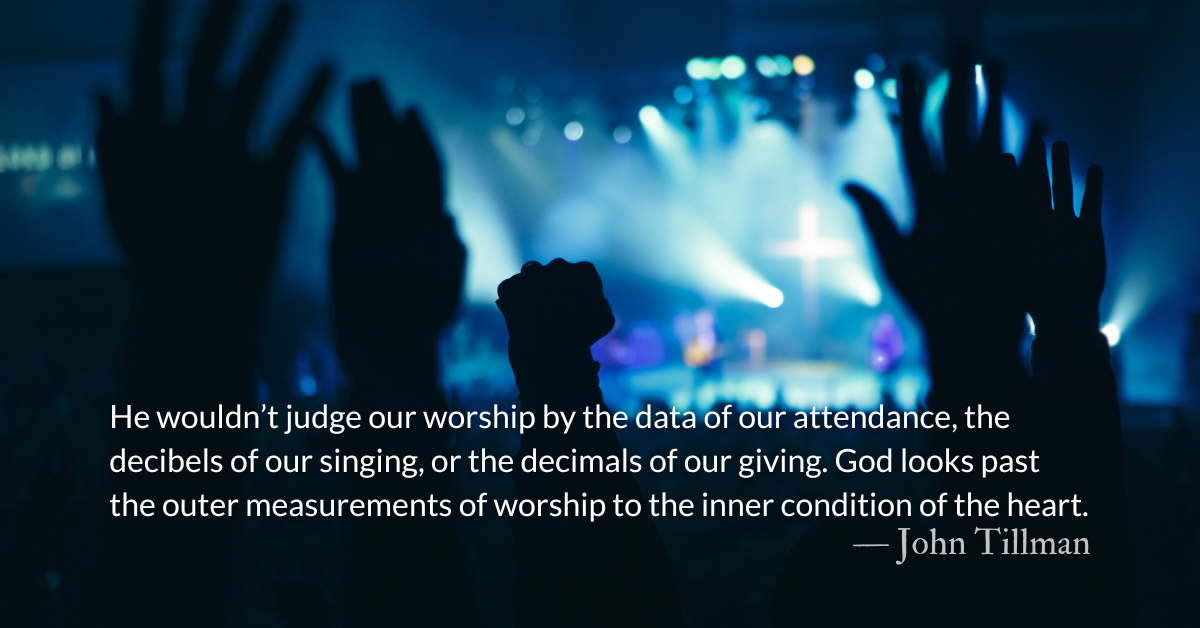
If he did, he wouldn’t judge our worship by the data of our attendance, the decibels of our singing, or the decimals of our giving. God looks past the outer measurements of worship to the inner condition of the heart (1 Sam 16.7). Heart condition is measured by different data. Out of the heart, the mouth speaks and the person acts (Matt 15.18-19; Luke 6.45; Pro 17.3; 21.2; 27.19).
Worship should make you ask the same question God asked: What am I doing?
Look for idolatry in yourself the way God does—look at the results. The idol of indifference makes us shrug at injustice against others. The idol of favoritism fuels oppression of enemies. The idol of violence celebrates war. The idol of gluttony (whether for wealth, pleasure, food, or drink) results in starvation.
Jeremiah called often for changes in society but none of that was possible without changes of the heart. Outward changes, whether in your personal life or community, grow from inward changes. Allow God to change you and your world can change.
True worship changes your world, beginning with the inner world of the heart.
Divine Hours Prayer: The Request for Presence
Hear the voice of my prayer when I cry out to you, when I lift up my hands to your holy of holies. — Psalm 28.2
– From The Divine Hours: Prayers for Summertime by Phyllis Tickle.
Read more: Apotheosis of Politics
The way the founding fathers (or current want-to-be leaders) are venerated as if they were apostles or Moses or Jesus, frightens me.
Read more: To Kill a Prophet
There is a risk when you confront bad behavior or rebuke fellow believers. Sin has a way of infecting our hearts…

