Links for today’s readings:
Mar 2 Read: Proverbs 21 Listen: (3:12) Read: Mark 11 Listen: (3:59)
Scripture Focus: Mark 11.12-22
12 The next day as they were leaving Bethany, Jesus was hungry. 13 Seeing in the distance a fig tree in leaf, he went to find out if it had any fruit. When he reached it, he found nothing but leaves, because it was not the season for figs. 14 Then he said to the tree, “May no one ever eat fruit from you again.” And his disciples heard him say it. 15 On reaching Jerusalem, Jesus entered the temple courts and began driving out those who were buying and selling there. He overturned the tables of the money changers and the benches of those selling doves, 16 and would not allow anyone to carry merchandise through the temple courts. 17 And as he taught them, he said, “Is it not written: ‘My house will be called a house of prayer for all nations’? But you have made it ‘a den of robbers.’” 18 The chief priests and the teachers of the law heard this and began looking for a way to kill him, for they feared him, because the whole crowd was amazed at his teaching. 19 When evening came, Jesus and his disciples went out of the city. 20 In the morning, as they went along, they saw the fig tree withered from the roots. 21 Peter remembered and said to Jesus, “Rabbi, look! The fig tree you cursed has withered!” 22 “Have faith in God,” Jesus answered.
Matthew 21.18-20
18 Early in the morning, as Jesus was on his way back to the city, he was hungry. 19 Seeing a fig tree by the road, he went up to it but found nothing on it except leaves. Then he said to it, “May you never bear fruit again!” Immediately the tree withered. 20 When the disciples saw this, they were amazed. “How did the fig tree wither so quickly?” they asked.
Reflection: The Discrepancy of the Fig Tree
By John Tillman
Biblical trustworthiness does not mean every scene is like a word-for-word transcript from a video recording.
Mark and Matthew’s accounts of the cursed fig tree differ in chronology. Matthew’s fig tree is cursed the morning following cleansing the temple and Jesus’ teaching about it happens when it withers before the disciples’ eyes. Mark’s fig tree is cursed on the way to cleanse the temple and Peter notices it withered the next morning. Jesus says slightly different things in each account but the main message is the same.
The chronological discrepancy does not threaten the historicity or inerrancy/reliability of the scripture or what it teaches.
First of all, there’s no reason the two can’t be harmonized. Matthew’s “immediately” doesn’t necessarily mean the tree withered all in an instant. There’s no reason it couldn’t have begun visibly withering immediately with the process being completed (and commented on by Peter) the next morning.
Secondly, gospel authors made narrative decisions for reasons of symbolism and structure. They grouped events and teachings for pedagogical purposes. John’s gospel is so thematic and non-chronological (with unique events no one else recorded) we separate it from the “synoptic” gospels. Yet, Mark, Matthew, and Luke also made unique choices about what events and teachings to include and in what order.
These facts of human editorial discretion should not distress us because they did not distress the early church. The early church considered these gospel accounts inspired by the Holy Spirit with the discrepancies. They considered them accurate, trustworthy, and authoritative scripture. We should too.
So what’s the lesson? The fig tree discrepancy that concerns Jesus is the discrepancy between outward posturing and the true fruit of faith. Truly flourishing faith produces deeds.
In both Matthew and Mark the lesson of the fig tree comes the morning after cleansing the temple. The fig tree symbolizes the temple, which symbolizes the spiritual life of the nation and individuals. The temple and the fig tree appear to be flourishing from a distance but Jesus found no fruit. John the Baptizer warned them to “produce fruit in keeping with repentance.” Jesus’ curse is the ax blow John prophesied. (Matthew 3.8-10)
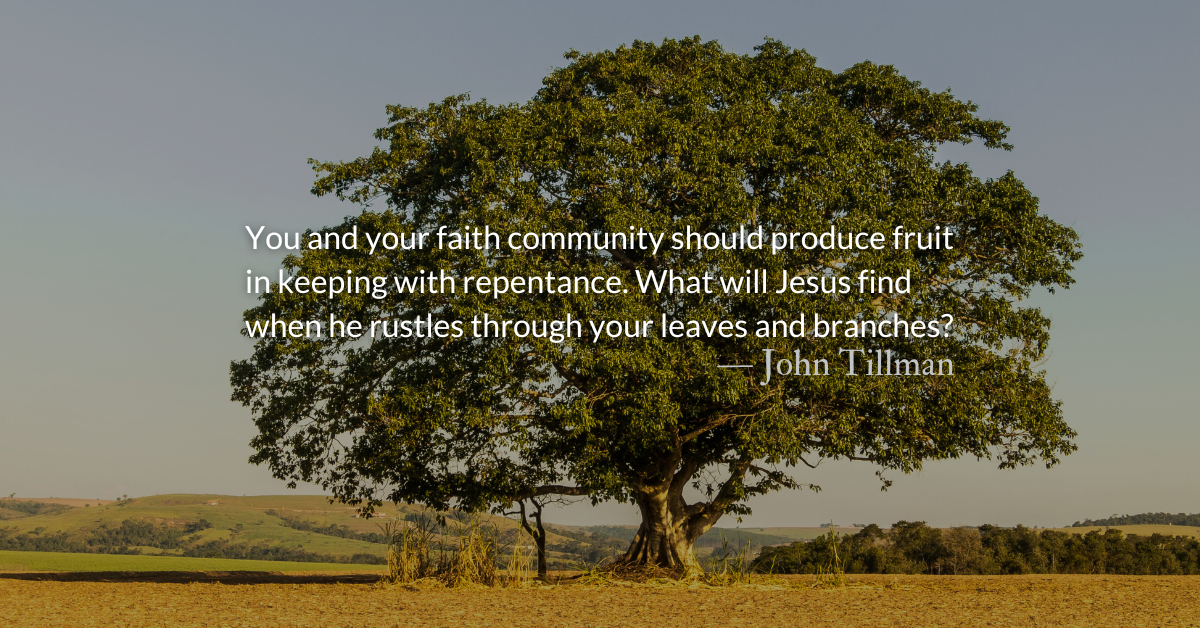
Whether instantly or over time, Jesus will “curse” communities that fail the fruit test, removing his lampstand from them. (Revelation 2.5) You and your faith community should produce fruit in keeping with repentance. What will Jesus find when he rustles through your leaves and branches?
Divine Hours Prayer: The Greeting
Show me your ways, O Lord, and teach me your paths. Lead me in your truth and teach me for you are the God of my salvation; in you have I trusted all the day long. — Psalm 3.8
– From The Divine Hours: Prayers for Springtime by Phyllis Tickle.
Read more: Figs Out of Season
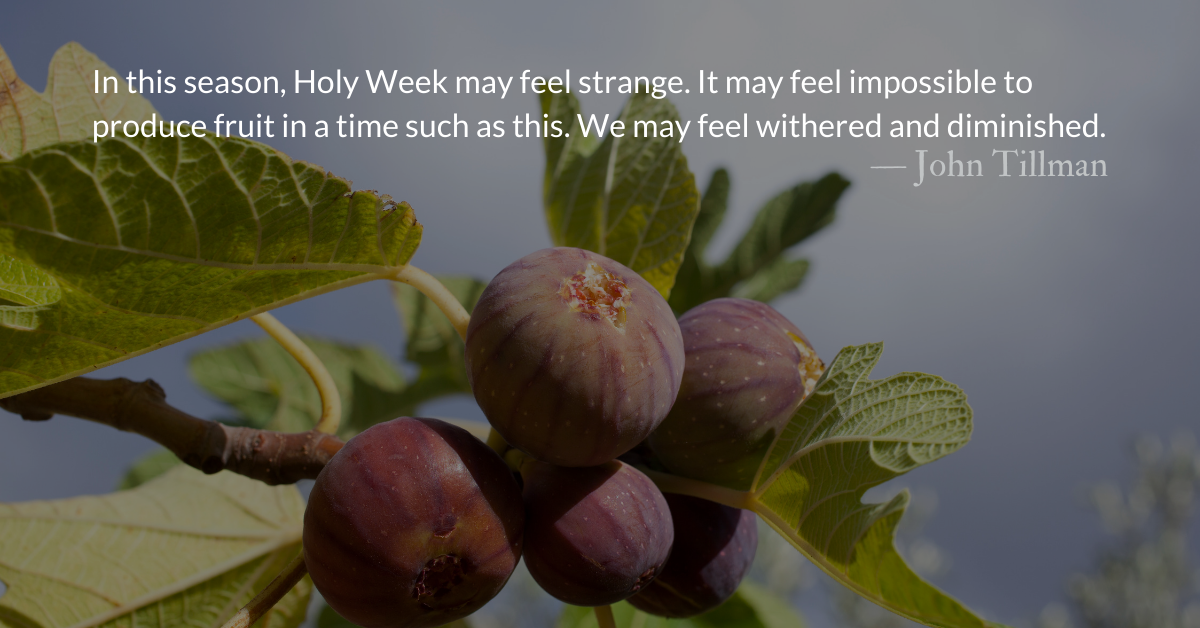
We may even feel that we are experiencing the chastisement of Christ that the out-of-season fig tree experienced. We may feel withered and diminished.
Read more: Both Parts of Justice
Biblical justice is taking responsibility for the good of others and restoring damage that you cause or fail to prevent.