

Links for today’s readings:
Sep 21 Read: Jeremiah 48 Listen: (7:31) Read: 2 Corinthians 7 Listen: (2:58)
Scripture Focus: Jeremiah 48.31-32, 36, 47
31 Therefore I wail over Moab,
for all Moab I cry out,
I moan for the people of Kir Hareseth.
32 I weep for you, as Jazer weeps,
you vines of Sibmah.
Your branches spread as far as the sea;
they reached as far as Jazer.
The destroyer has fallen
on your ripened fruit and grapes.
36 “So my heart laments for Moab like the music of a pipe;
it laments like a pipe for the people of Kir Hareseth.
The wealth they acquired is gone.
47 “Yet I will restore the fortunes of Moab
in days to come,”
declares the Lord.
Here ends the judgment on Moab.
Reflection: Weeping Over Enemies?
By John Tillman
The closing chapters of Jeremiah turn the prophet’s eye toward Jerusalem’s enemies, and the depictions of destruction are chilling. Egypt, Philistia, Moab, Ammon, Edom, and Babylon all get scathing messages, predicting downfall and destruction.
We love stories in which a hero rides into town and brutally defeats the wicked. Vengeful justice stories are near universal. You can find them in many cultures and genres. We cheer gunslingers, kung-fu masters, impossible-to-defeat spies, unstoppable soldiers, and rogue cops who enforce bloody justice.
We love these violent vengeance-wreaking heroes because we have a deep longing for justice. For those who have been punched, shot at, chased, or otherwise violently oppressed, the violent descriptions of God’s justice are less problematic. But even those who have never experienced violence like to see bullies get knocked down.
Is that what is happening here in Jeremiah? Not exactly.
These are dark and violent passages about God’s justice and judgment being poured out, but mixed into many of these messages are expressions of grief and mourning. Jeremiah echoes passages in Isaiah that mourn these same events of judgment (Isa 16.6-12).
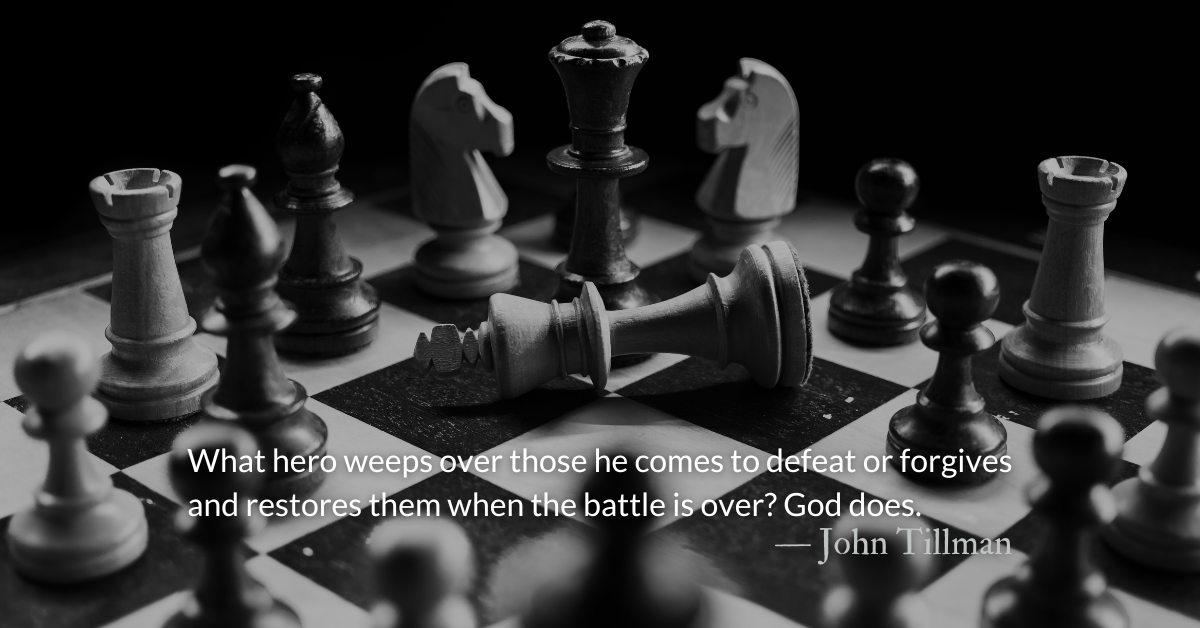
God, Jeremiah, and Isaiah wept for these enemies. In many cases, there are even promises of restoration and healing for these enemy nations. That doesn’t neatly fit into our conception of the hero-epic. What hero weeps over those he comes to defeat or forgives and restores them when the battle is over? God does.
God is not a heartless, bloody enforcer of vengeance. He is compassionate and slow to anger. Neither is God a soft, pushover who winks at evil and downplays suffering. He does not allow the guilty to go unpunished. God shows no favoritism. He desires all nations, even enemies, to come to him to have life.
All these things are true of God at the same time and we cannot escape their implications for us. We must leave room for God’s judgment, for he will not allow evil to persist indefinitely even though he still loves and mourns the evildoers. However, most of the time, it is easier for us to identify with God’s wrath than his love. We must leave vengeance to God, and continue to love our enemies even when it is necessary to resist and oppose them. And should we live to see enemies fall, let us celebrate our salvation, but pray for their repentance and restoration.
Divine Hours Prayer: The Request for Presence
Protect me, O God, for I take refuge in you; I have said to the Lord, “You are my Lord, my good above all other.” — Psalm 16.1
– From The Divine Hours: Prayers for Summertime by Phyllis Tickle.
Readers’ Choice is Coming!
Readers’ Choice is when we ask you to share your favorite Park Forum posts from this year. What posts challenged you?
https://forms.gle/Kj12Ziy4C9gQg8Xm7
Read more: Our Vengeance is Repentance
God promises Jeremiah that even Israel’s enemies, used by God to punish them, will be restored by God if they turn to him.

